The Brute in a Suit
There are fast cars, and then there are Aston Martins. If a Ferrari is a sharp Italian stiletto, an Aston Martin is a brass knuckle hidden inside a velvet glove. It is aggressive, loud, and incredibly powerful, yet it carries itself with a dignity that commands respect rather than just attention.
For the American driver, Aston Martin offers a unique proposition: the ability to cross continents at 200 mph without punishing your spine. These are "Grand Tourers" in the truest sense of the phrase. They are designed to look as good parked in front of a valet stand in Miami as they do tearing up the backroads of the Blue Ridge Mountains. It is the brand for the driver who wants performance but refuses to sacrifice elegance.
A Century of Turbulence and Triumph
Founded in 1913 by Lionel Martin and Robert Bamford, the company has survived seven bankruptcies, two world wars, and constant ownership changes. Yet, the badge remains untarnished. The golden era began in 1947 when Sir David Brown bought the company. He gave his initials to the legendary "DB" series, creating the lineage that would eventually birth the most famous car in the world: the DB5.
The connection to James Bond is impossible to ignore. Since Goldfinger in 1964, 007 and Aston Martin have been inseparable. This pop culture dominance has cemented the brandâs image as the vehicle of choice for the sophisticated rebel.
Design: The Golden Ratio
Aston Martins are widely considered the most beautiful cars on sale. This isn't an accident; it is math. Designers use the "Golden Ratio" (1:1.618) to dictate the proportions of the bodywork. The result is a silhouette that looks naturally correct to the human eye. Whether it is the predatory stance of the Vantage or the regal lines of the DBS, these cars are sculptures first and machines second.
The Engine Room: V12s and AMG V8s
Historically, Aston Martin was defined by its wailing V12 engines. While the V12 is becoming an endangered species (still found in flagship models), the brand has formed a strategic technical partnership with Mercedes-AMG.
Most modern Astons (like the Vantage and DB12) utilize a hand-built 4.0L Twin-Turbo V8 from AMG. But here is the trick: Aston Martin engineers take that German engine and "British-ify" it. They change the intake, the exhaust, and the tuning to ensure it doesn't sound like a Mercedes. It sounds like an Astonâraspy, deep, and thunderous.
The Heavy Hitters
The current lineup is a blend of traditional sports cars and necessary modern utility.
The DB12: The Super Tourer
Aston Martin doesn't call the DB12 a Grand Tourer; they call it a "Super Tourer." It replaces the DB11 and brings a massive jump in interior quality (finally ditching the old Mercedes infotainment for a bespoke system) and performance. It is the core of the brandâfast, luxurious, and stunning.
The Vantage: The Hunter
This is the entry-level drug. The Vantage is smaller, sharper, and angrier than the DB series. It is a direct rival to the Porsche 911. If the DB12 is a tuxedo, the Vantage is a leather jacket. It is built for corners, featuring an electronic rear differential and a chassis that loves to slide.
The DBX: The Savior
Like Porsche with the Cayenne, Aston Martin needed an SUV to survive. The DBX is the result. It is arguably the best-handling SUV in its class. It drives like a lifted sports car rather than a truck. The DBX707 is the high-performance variant, boasting nearly 700 horsepower and capable of embarrassing supercars in a straight line while carrying the kids to soccer practice.
The Valhalla: The Future
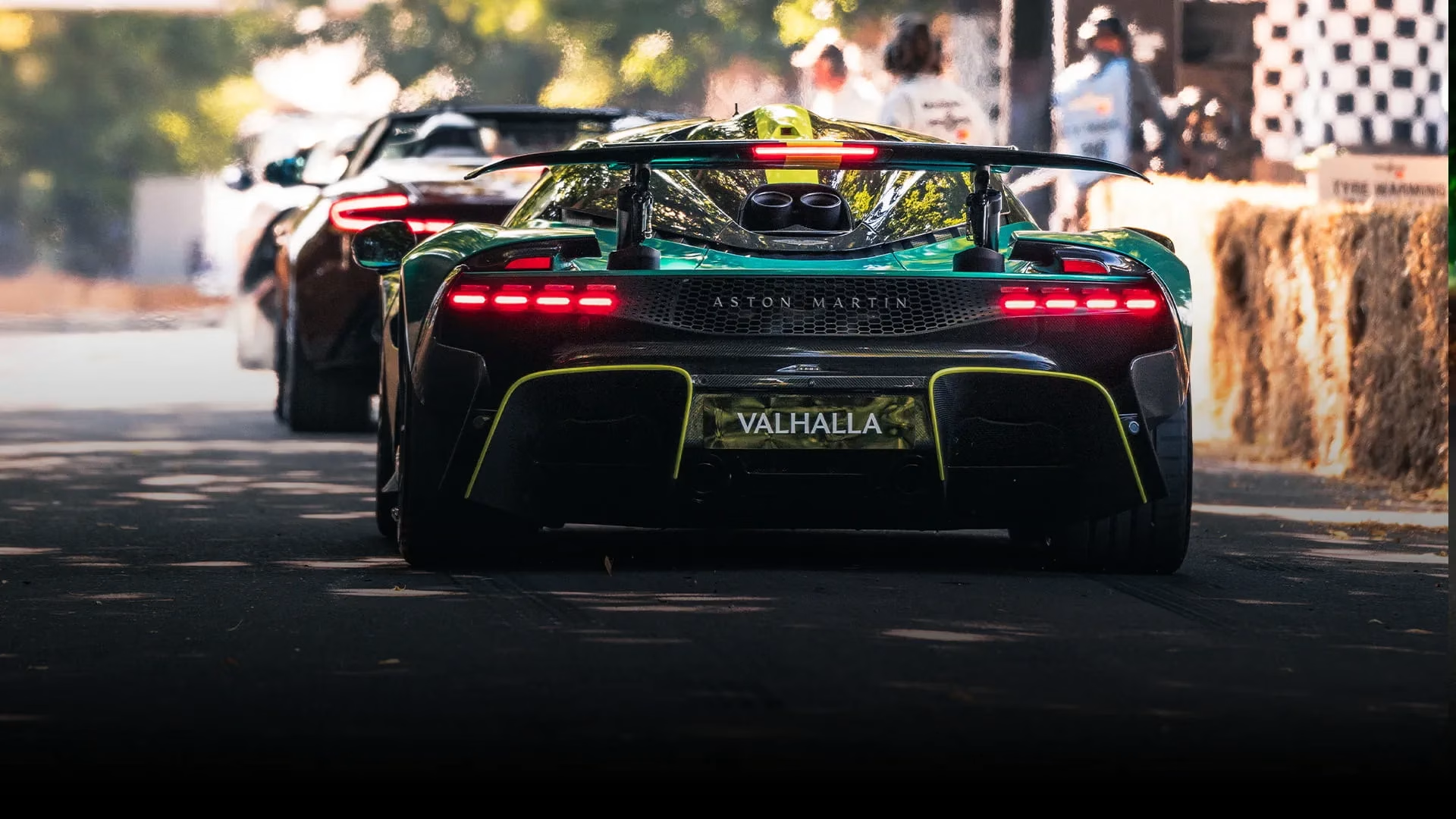
Moving away from the front-engine tradition, the Valhalla is a mid-engine hybrid supercar designed to fight Ferrari and McLaren on the track. It represents the new, tech-forward direction of the brand.
Buying Advice: The Depreciation Curve
Letâs be honest: Aston Martins are expensive to buy and expensive to own. However, like many luxury cars, they suffer from steep initial depreciation.
- The "Smart" Buy: A used Vantage or DB11 can often be found for half its original MSRP after a few years. This represents incredible value for the performance you get.
- Maintenance: Do not skip it. These are high-strung machines. The partnership with Mercedes has vastly improved electronic reliability (the Achilles' heel of older Astons), but parts are still priced for billionaires.
- The Experience: Buying an Aston Martin is buying into a legacy. You aren't just a driver; you are a custodian of British history.
If you want a car that wins track days, buy a Porsche GT3. If you want a car that wins hearts and makes every arrival a cinematic event, buy an Aston Martin.