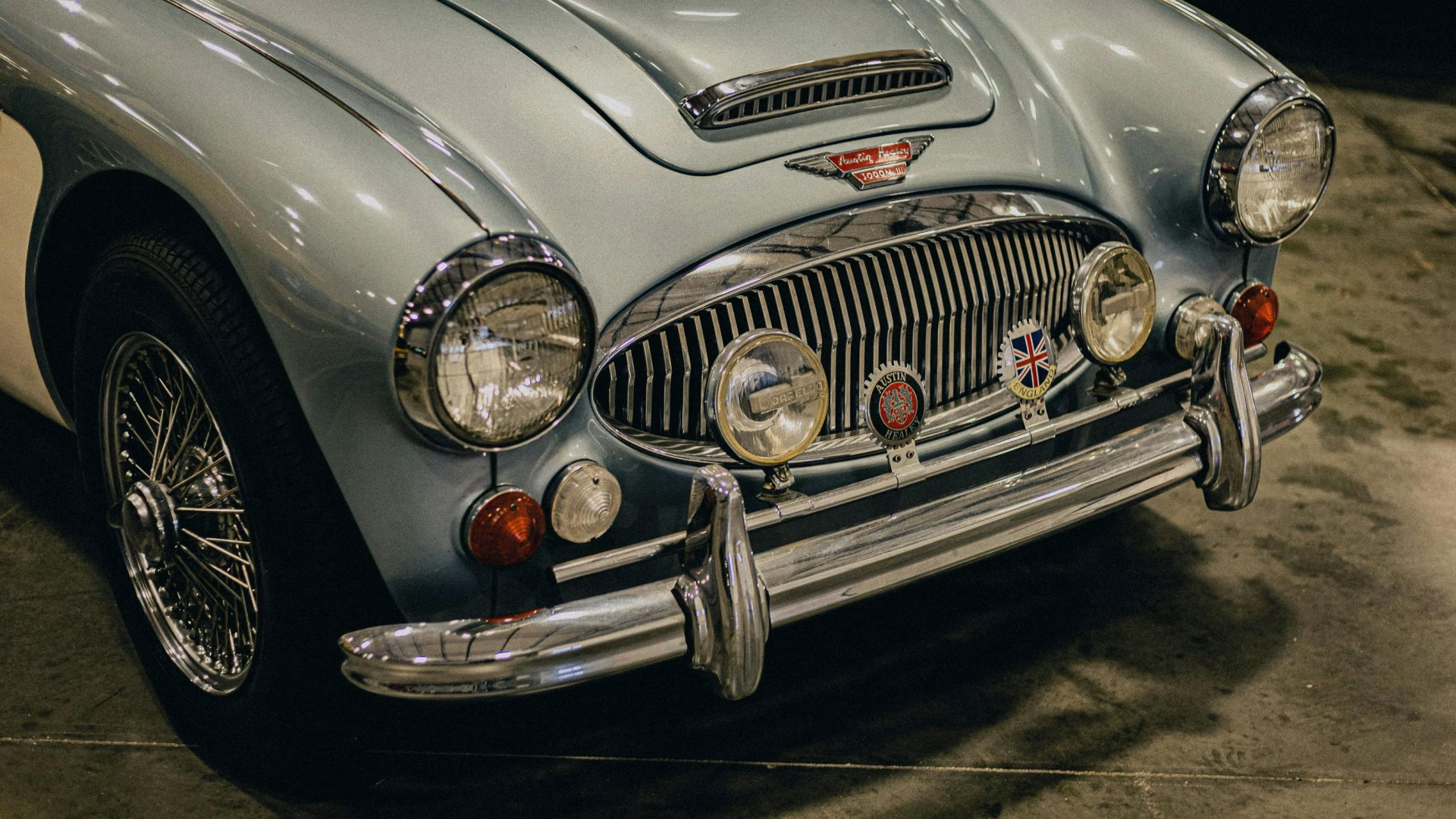
The "Big Healey" Experience
If the MG was the sports car for the university student, and the Jaguar E-Type was for the executive, the Austin-Healey was for the adventurer. It was famously described as a "hairy-chested" sports car. Why? Because driving a "Big Healey" (the 100 or the 3000) is a wrestling match. The steering is heavy, the clutch is firm, and the heat radiating from the transmission tunnel warms your leg like a fireplace.
But that physicality is exactly why American enthusiasts worship this brand. An Austin-Healey doesn't isolate you from the mechanical action; it puts you right in the middle of it. When you engage the electric overdrive on a long straight and listen to that big engine rumble, you understand why these cars were the darlings of the US export market in the 1950s and 60s.
A Deal Made in 20 Minutes
The company exists because of a fortunate timing. In 1952, Donald Healey, a rally driver and engineer, built a prototype using Austin parts. He showed it at the London Motor Show. Leonard Lord, the boss of Austin, saw it, loved it, and allegedly struck a deal with Healey over dinner that same night. They would combine Austinâs money and factories with Healeyâs design and engineering. The Austin-Healey 100 was born.
The Three Icons
The lineage is simple but significant. Knowing the difference between them is key to understanding the market.
The 100 (BN1 & BN2): The Purest
The original. It has a windshield that can fold flat against the hood for better aerodynamics (and looking cool). It used a 2.6L 4-cylinder engine. It is raw, beautiful, and arguably the best looking of the bunch because of its clean lines without exterior door handles.
The 3000: The Legend
This is the definitive "Big Healey." Introduced in 1959, it featured a 2.9L inline-six engine. It had torque for days. The MkIII (BJ8) is the most civilized, featuring a proper convertible top (instead of a "erector set" frame), roll-up windows, and a walnut dashboard. It was a grand tourer that could cruise at 100 mph all day.
The Sprite: The Bugeye
On the complete opposite end of the spectrum was the Sprite. The Mk1 is famously known in the US as the "Bugeye" (or "Frogeye" in the UK) because its headlights mount on top of the hood. It looks like it is smiling at you. It was cheap, simple, and featured a tiny 948cc engine. It taught an entire generation how to race. It is impossible to drive a Bugeye without grinning.
The SCCA Dominance
Austin-Healeys weren't just cruisers; they were racers. In the United States, they dominated SCCA (Sports Car Club of America) events. They were tough. The chassis frame was strong, and the engines were essentially tractor units tuned for speedâmeaning they were nearly indestructible. That racing pedigree is what keeps the values high today.
Buying Advice: The "Scuttle Shake" Factor
If you are in the market for a Big Healey, you need to know about scuttle shake. Because the car is a convertible with a separate chassis, the body can flex over bumps, causing the windshield frame (scuttle) to shimmy. It is a characteristic of the car, but excessive shaking means the chassis is tired.
- Rust: The enemy. Check the chassis outriggers and the "doglegs" (the bottom of the fenders in front of the rear wheels).
- Heat: The cockpit gets hot. Very hot. Most owners install extra insulation under the carpet. Consider it a feature for winter driving.
Austin-Healey died in 1972 when safety regulations and the merger into British Leyland killed the vibe. But today, pulling up in a two-tone Austin-Healey 3000 is a statement. It says you appreciate the mechanical soul of the pastâand you have the muscles to steer it.