
The Nurburgring Mandate: Hunting the European Benchmark
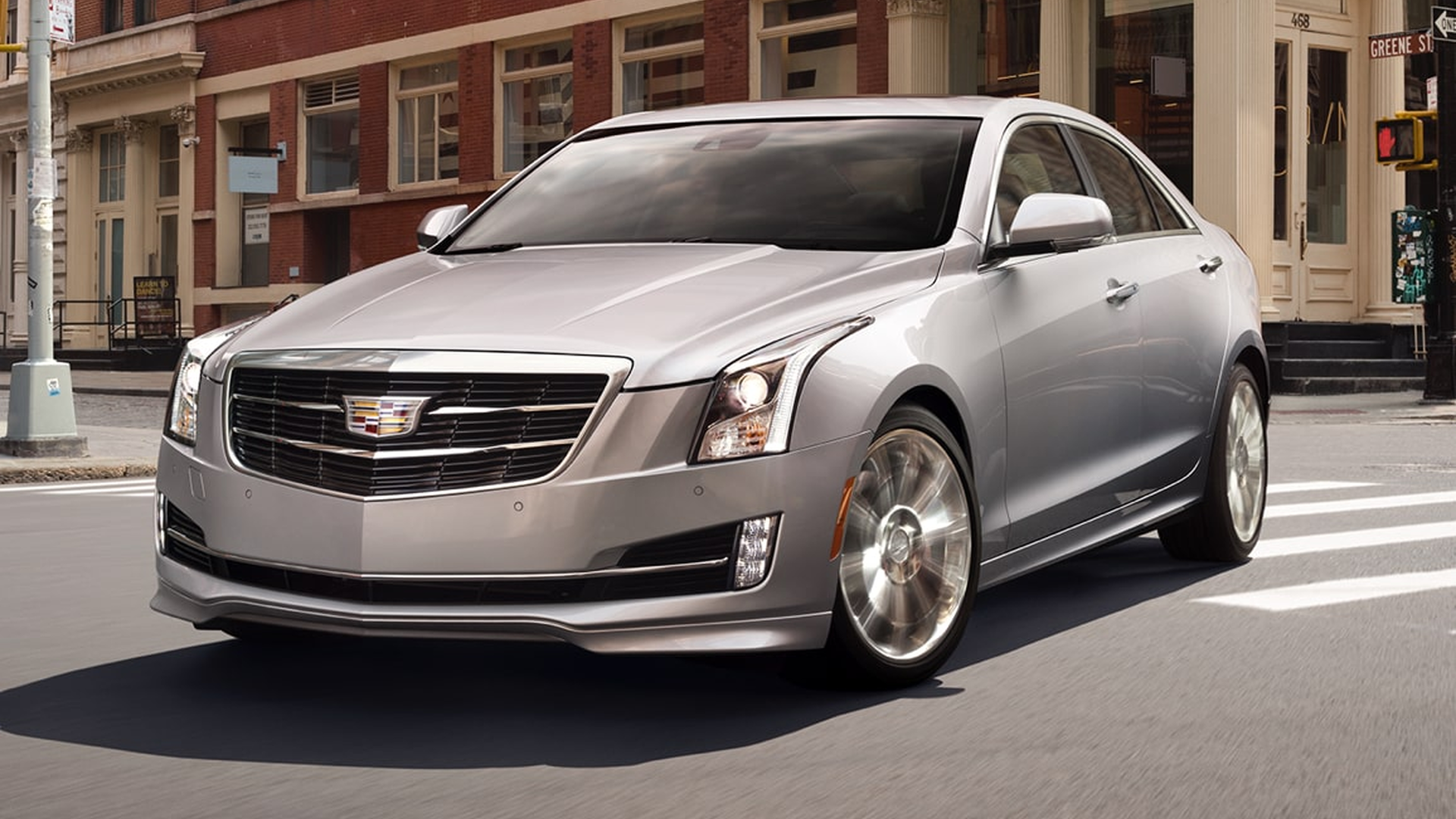
Prior to 2013, the American automotive industry lacked a genuine, uncompromised response to the legendary BMW 3 Series. Cadillac sedans of the early 2000s were largely front-wheel-drive or heavily compromised by shared, multi-purpose platforms. The Cadillac ATS violently disrupted this narrative. General Motors executives issued a specific, uncompromising mandate: build a compact sport sedan capable of dominating the Nurburgring Nordschleife. Engineers started with an entirely blank digital canvas, discarding every existing corporate chassis to create a machine dedicated solely to dynamic superiority and visceral driver engagement.
The resulting vehicle prioritized kinetic response above all other metrics. By physically shrinking the exterior dimensions and pushing the wheels to the absolute extreme corners of the chassis, designers eliminated heavy overhangs. This created a tightly tailored, aggressive profile that sliced through the atmosphere. The steep rake of the windshield and the sharp, functional crease of the rear trunk lid actively managed the aerodynamic slipstream, reducing high-speed lift while cementing the brand's sharp Art and Science design philosophy.
The Alpha Architecture: A Masterclass in Metallurgy
The mechanical soul of the ATS relies entirely on the first generation of the legendary Alpha platform. This longitudinal-engine, RWD architecture represents a massive leap in modern metallurgical application. To shed critical mass without sacrificing the unyielding structural rigidity required for high-performance track driving, structural metallurgists deployed a highly complex, multi-material matrix. The unibody safety cage features massive quantities of advanced high-strength steel and ultra-high-strength martensitic steel alloys.
During the robotic assembly process, the factory supplemented traditional spot welds with hundreds of feet of aerospace-grade structural adhesive applied directly along the primary chassis seams. This dual-bonding technique drastically increased the overall torsional stiffness of the unibody shell. Because the core steel chassis completely refuses to flex or twist over broken urban pavement, the independent suspension components can absorb brutal impacts with absolute mathematical precision.
To achieve a near-perfect 50/50 weight distribution, Cadillac engineers obsessively targeted grams, not just pounds. They utilized magnesium engine mount brackets, natural-fiber door trim panels, and a cast-iron differential housing specifically engineered to balance the physical weight of the front-mounted aluminum engine block over the rear axle.
Suspension Kinematics: The Double-Pivot Strategy
Achieving razor-sharp turn-in response requires highly specialized front axle geometry. The ATS utilizes a highly modified MacPherson strut front suspension featuring a double-pivot lower design. Instead of a single, heavy lower control arm, two completely separate steel links connect the steering knuckle directly to the front subframe. This creates a virtual steering axis that sits much closer to the true center of the front wheel. This physical geometry significantly reduces the scrub radius, allowing the sedan to initiate sharp directional changes instantaneously while remaining completely stable during heavy, high-speed panic braking.
The rear of the vehicle is anchored by a highly complex five-link independent suspension. The five physically separate high-strength steel links manage vertical wheel travel and lateral toe control completely independently. When the driver attacks a sweeping off-ramp, the multi-link setup forcibly keeps the rear tires planted flat against the asphalt. This prevents the rear end from stepping out unpredictably over severe mid-corner bumps, providing the driver with immense confidence to aggressively apply throttle long before reaching the exact apex of the corner.
Magnetic Ride Control and Brembo Clamping Force
Models equipped with the highly desirable FE3 sport suspension package deploy General Motors' absolute finest dynamic hardware: Magnetic Ride Control. The physical shock absorbers contain a specialized magneto-rheological fluid filled with microscopic iron particles. Optical and gyroscopic sensors read the road surface topography up to 1,000 times per second. An electromagnetic coil surrounding the damper instantly alters the viscosity of the fluid. The digital system aggressively stiffens the outside shocks during heavy cornering to crush severe body roll, and softens them entirely to absorb harsh bridge expansion joints on the interstate.
Shedding kinetic energy safely requires massive thermal capacity. Cadillac partnered directly with Brembo to equip the ATS with high-performance braking hardware. Standard on most trims, the front axle features fixed four-piston aluminum calipers clamping down on massive ventilated rotors. This specialized hardware provides a rock-solid, incredibly consistent brake pedal feel that entirely resists thermal fade during sustained canyon carving.
Propulsion Dynamics: The 2.0L LTG Turbo Core
While early base models offered a naturally aspirated 2.5-liter engine, the true foundational powerplant of the ATS is the highly acclaimed 2.0-liter LTG turbocharged inline-four. Cast completely from lightweight aluminum to minimize critical mass over the front axle, this engine utilizes high-pressure direct fuel injection and dual overhead camshafts. To completely eradicate the sluggish throttle response associated with older turbocharged engines, engineers utilized a twin-scroll turbocharger bolted directly to the exhaust manifold.
The exhaust gas routing is physically separated inside the manifold. Cylinders one and four feed into one scroll, while cylinders two and three feed into the second. This preserves exhaust pulse kinetic energy, spinning the turbine wheel instantly the exact moment the driver demands heavy acceleration. To manage the immense thermal load generated by forced induction, the LTG features specialized sodium-filled exhaust valves that actively pull heat away from the combustion chamber.
2.0L LTG Turbocharged Engine Specifications
- Engine Block Architecture
- Inline 4-Cylinder, Sand-Cast Aluminum Block and Cylinder Head
- Displacement
- 1998 cm3
- Valvetrain
- Dual Overhead Cam, 16 valves, continuously variable valve timing
- Peak Horsepower
- 272 hp @ 5,500 RPM
- Peak Torque (2015+ Models)
- 295 lb-ft @ 3,000 - 4,600 RPM
Atmospheric Power: The 3.6L V6
Buyers demanding superior, immediate throttle response without the inherent mechanical whine of a turbocharger opted for the 3.6-liter naturally aspirated V6. Early models utilized the LFX variant, while later years upgraded to the highly refined LGX block. These engines entirely reject forced induction, relying instead on precise atmospheric tuning, massive airflow, and high-compression pistons. Generating up to 335 horsepower, the V6 provides a deeply visceral exhaust howl as it climbs toward its high-RPM redline, offering a completely different driving personality tailored for traditional premium buyers.
Transmission Technology: The Manual Resurgence
Cadillac understood that capturing true driving enthusiasts required offering three pedals. The ATS was uniquely available with a Tremec 6-speed manual transmission mated to the 2.0-liter turbocharged engine. This highly robust gearbox featured short, precise throws and a perfectly weighted clutch pedal, transforming the compact sedan into a deeply engaging analog machine. For buyers preferring two pedals, power routed through a Hydra-Matic 6L45 6-speed automatic, which was eventually replaced by an advanced 8L45 8-speed automatic for tighter gear spacing and improved highway cruising efficiency.
The ATS Coupe: Tailored Aggression
For the 2015 model year, Cadillac introduced the ATS Coupe. Designers refused to execute a lazy conversion by simply removing the rear doors from the sedan. The Coupe utilizes entirely unique exterior sheet metal; only the hood is shared with the four-door variant. Engineers physically widened the front and rear track by nearly an inch to lower the vehicle's roll center and aggressively enhance lateral grip. The roofline sits lower, and the aggressive rear haunches wrap tightly around staggered high-performance tires, creating a highly intimidating, muscular presence on the asphalt.
The ATS-V: A Violent Apex Predator
The Cadillac ATS-V entirely transcends the standard luxury segment, existing as a terrifyingly fast, highly focused track weapon explicitly engineered to hunt the BMW M3. Engineers discarded the standard engines entirely, physically shoehorning a heavily fortified 3.6-liter twin-turbocharged LF4 V6 into the engine bay. This powerplant borders on megalomania.
The LF4 utilizes ultra-lightweight titanium connecting rods that allow the engine to rev with extreme violence. Low-inertia titanium-aluminide turbine wheels inside the twin turbochargers spin to 160,000 RPM, forcing heavily compressed atmospheric air down into the forged pistons. To manage the immense heat generated by compressing that much oxygen, the engine utilizes a highly advanced water-to-air intercooling system, guaranteeing consistent intake temperatures even during punishing track sessions.
LF4 Twin-Turbo V6 Specifications (ATS-V)
- Engine Architecture
- 60-degree V6, Aluminum Block, Titanium Connecting Rods
- Displacement
- 3564 cm3
- Aspiration
- Twin Turbochargers with Liquid-to-Air Intercooling
- Peak Horsepower
- 464 hp @ 5,850 RPM
- Peak Torque
- 445 lb-ft @ 3,500 RPM
- 0-60 mph Acceleration
- 3.8 seconds
ATS-V Kinematics and Aerodynamic Downforce
Power routes exclusively to the rear wheels through either a heavily reinforced 8-speed automatic or a massive Tremec TR6060 6-speed manual transmission. The manual gearbox features active rev-matching and No-Lift Shift programming, allowing the pilot to keep the accelerator pinned directly to the floorboard while executing lightning-fast upshifts to maintain peak turbo boost pressure. An Electronic Limited-Slip Differential (eLSD) actively vectors torque across the rear axle, violently pushing the vehicle out of tight apexes.
Aerodynamics dictate track survival. The ATS-V features highly functional, massive mesh front grilles that flow critical ambient air directly into specialized heat exchangers. Buyers optioning the Carbon Fiber package received a deep front splitter, functional hood vent, and an aggressive rear spoiler. These components are not cosmetic; they physically generate substantial aerodynamic downforce, crushing the vehicle into the pavement at speeds exceeding 150 mph to maintain absolute high-speed stability.
Interior Ergonomics and CUE Technology
The interior architecture balances focused telemetry with meticulous cut-and-sewn luxury. The driver sits deeply within highly bolstered Recaro performance seats, gripping a thick-rimmed steering wheel backed by cold-touch magnesium paddle shifters. Cadillac acoustic engineers utilized thick acoustic-laminated front glass and liquid-applied sound deadeners to aggressively isolate the cabin from NVH factors.
The center stack introduced the controversial but highly advanced Cadillac User Experience (CUE) infotainment system. Discarding traditional analog buttons, the interface utilized an 8-inch high-resolution touchscreen and an entirely capacitive-touch control panel below it. The system featured haptic feedback, providing a physical, localized pulse to the user's fingertip to confirm a digital command had been registered. Behind the motorized climate control faceplate, engineers hid a secret, rubberized storage cubby perfect for securing smartphones and digital devices out of sight.
The Enduring Legacy of the ATS
The Cadillac ATS completely shattered the long-standing assumption that an American manufacturer could not engineer a world-class, compact luxury sport sedan. By stubbornly prioritizing the highly rigid rear-wheel-drive Alpha architecture, Cadillac preserved the visceral, communicative driving dynamics that pure automotive enthusiasts demand. From the incredibly balanced twin-scroll turbocharged base models to the reality-bending violence of the twin-turbo ATS-V, the vehicle provided a masterclass in varied kinetic propulsion. It successfully laid the unshakeable mechanical foundation for the modern era of Cadillac performance, directly birthing the highly acclaimed CT4 and cementing its status as a legend of American engineering.