
The Bespoke Renaissance: Reclaiming the Standard of the World
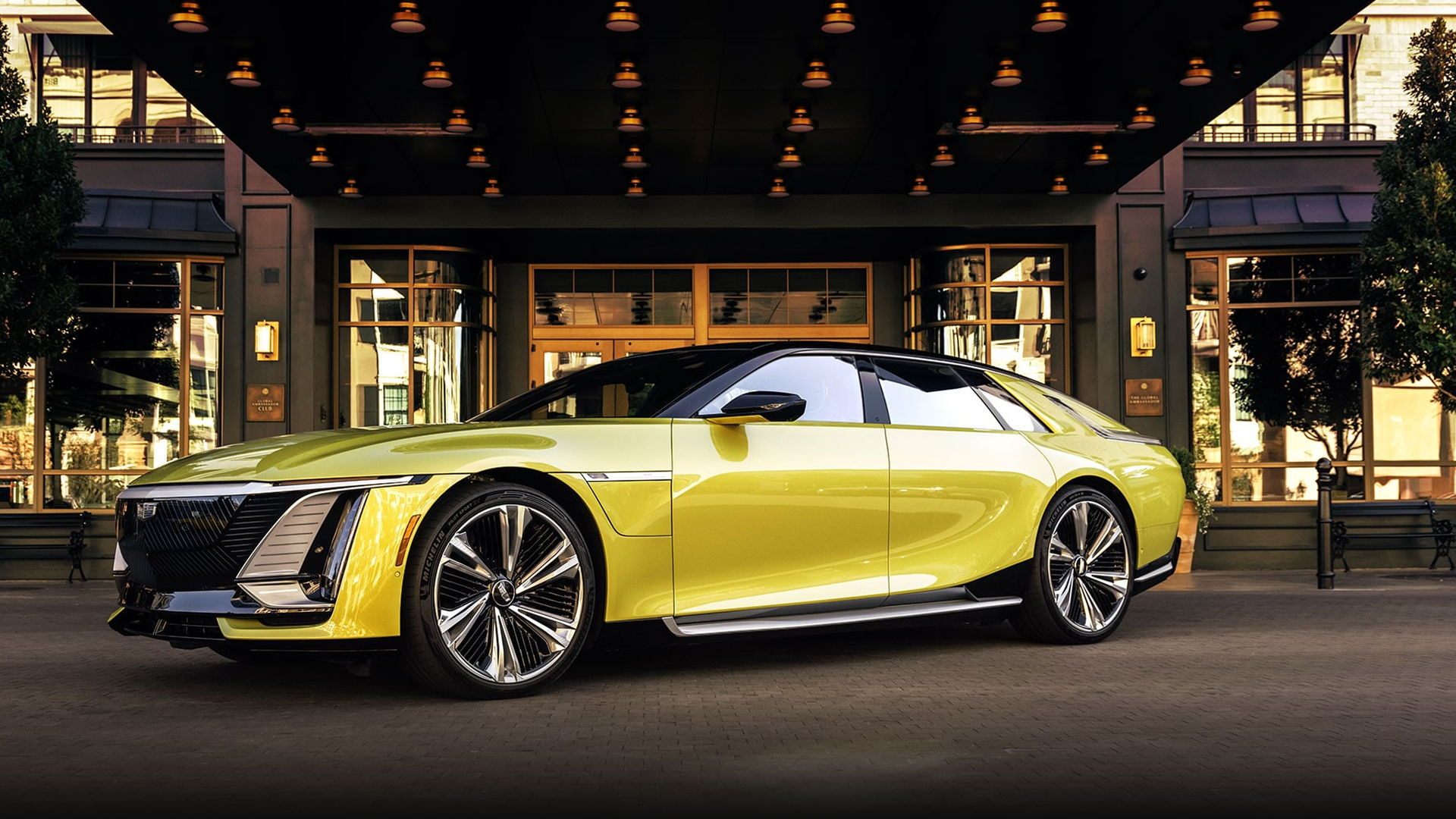
The Cadillac CELESTIQ represents a violent paradigm shift for the American automotive industry. For decades, the brand relied on high-volume production to satisfy global demand, leaving the absolute top tier of the ultra-luxury segment to established European marques. The CELESTIQ explicitly rejects this mass-market compromise. By returning to the brand's pre-war roots of true bespoke coachbuilding-echoing the legendary V16-powered land yachts of the 1930s-Cadillac engineered a machine that exists completely outside the traditional automotive hierarchy. This highly exclusive, hand-built electric fastback sedan fuses the immense technological arsenal of the modern General Motors engineering portfolio with hyper-obsessive artisanal craftsmanship. It serves as a rolling kinetic sculpture, designed entirely to dominate the zero-emission era while offering an unparalleled level of individualized luxury.
The Global Technical Center: A Masterclass in Artisanal Assembly
To execute a vehicle of this magnitude, Cadillac completely bypassed traditional assembly line mechanics. Production takes place exclusively at the Artisan Center, a highly specialized, clean-room environment housed deep within the historic General Motors Global Technical Center campus in Warren, Michigan. The manufacturing pace is intentionally agonizing; the facility limits production to an absolute maximum of two vehicles per day. A dedicated team of master builders hand-assembles every single unit.
The purchasing process mimics high-end horology or luxury yacht commissioning. Buyers engage directly with a personal concierge and a dedicated design team to dictate the exact material finishes, bespoke exterior hues, and unique interior cabin treatments. Clients can request specific wood veneers sourced from their own property or custom leather dye matches to perfectly replicate a specific heirloom. This extreme level of personalization guarantees that no two CELESTIQ models will ever share the exact same physical configuration, entirely cementing its status as a singular, highly collectible piece of mechanical art.
The CELESTIQ marks the very first time since the brand's inception that a production Cadillac is hand-built at the Global Technical Center, completely isolating its assembly from the volume-driven demands of standard commercial factories.
Advanced Metallurgy: Mega-Castings and Additive Manufacturing
Beneath the meticulously tailored exterior lies an engineering matrix heavily reliant on cutting-edge metallurgical fabrication. Cadillac utilizes 115 distinct 3D-printed components throughout the vehicle architecture. Engineers leveraged multiple additive manufacturing techniques, including binder jetting and selective laser sintering, to produce complex structural elements, highly intricate cosmetic trim pieces, and the stunning aluminum center of the steering wheel. This process allows designers to create geometric shapes that are physically impossible to forge using traditional steel stamping or plastic injection molding.
The primary chassis architecture discards hundreds of individual stamped steel parts in favor of six massive precision sand-cast aluminum components. These mega-castings act as the foundational nodes of the vehicle's spaceframe. By consolidating massive sections of the lower structure into single, rigid aluminum blocks, engineers drastically reduced mechanical complexity, eliminated hundreds of potential weld-failure points, and exponentially increased the torsional stiffness of the underlying chassis. This creates an unyielding physical foundation necessary for absolute suspension precision.
The Ultium Platform: Structural Rigidity and Unibody Dynamics
The mechanical bedrock of this ultra-luxury sedan is the highly scalable Ultium skateboard architecture. The vehicle packages a massive 111-kWh battery pack securely between the front and rear axles. Unlike traditional electric vehicles where the battery simply sits inside the frame, the CELESTIQ utilizes the battery enclosure as a fully stressed, load-bearing mechanical member of the unibody shell. By bolting the high-voltage pack directly into the primary aluminum crash rails, engineers achieved unprecedented structural rigidity.
A perfectly rigid chassis is the absolute prerequisite for luxury dynamics. Because the unibody completely refuses to flex or groan when subjected to severe lateral g-forces or decaying urban infrastructure, the independent suspension components can absorb brutal impacts with absolute mathematical precision. The chassis completely isolates the passenger cabin from the chaotic road surface below, ensuring the physical vibrations of the asphalt never reach the human occupants.
Bimodal Propulsion: Dual-Motor AWD and Kinetic Force
Propelling a highly contented, hand-built sedan requires devastating mechanical force. The CELESTIQ utilizes a dual-motor AWD architecture. Heavy-duty permanent magnet synchronous motors sit directly on both the front and rear axles. Because there is no physical, heavy steel driveshaft connecting the wheels, the central traction computers can digitally vector torque between the four wheels in a matter of microseconds, guaranteeing flawless mechanical grip regardless of severe weather or slick pavement conditions.
The electric stators generate a combined 600 horsepower and 640 lb-ft of instantaneous torque. When the driver demands heavy acceleration, the power inverters flood the motors with maximum amperage. The massive fastback squats heavily on its rear suspension and launches with extreme violence, executing the zero to 60 mph sprint in a highly aggressive 3.8 seconds. This brutal, unbroken wave of electric thrust completely eliminates the mechanical hesitation and gear-hunting associated with traditional internal combustion luxury sedans.
Ultium Powertrain and Performance Specifications
- Drive Architecture
- Dual-Motor eAWD, Front and Rear Permanent Magnet Synchronous Motors
- Maximum Power Output
- 600 horsepower (Estimated)
- Peak Torque
- 640 lb-ft of torque (Estimated)
- Acceleration (0-60 mph)
- 3.8 seconds
- Battery Capacity
- 111-kWh Lithium-Ion (NCMA Chemistry)
- Target Driving Range
- 300 miles on a single charge
Energy Storage and Thermal Management
Achieving a 300-mile driving range while moving massive luxury components requires highly dense energy storage. The 111-kWh battery pack utilizes advanced Nickel Cobalt Manganese Aluminum (NCMA) cell chemistry. This specific formulation drastically reduces the reliance on rare-earth cobalt while significantly increasing the energy density per individual cell. To manage the extreme heat generated during rapid discharge events and high-speed interstate cruising, the pack relies on an advanced liquid-cooling loop.
The thermal management system features a dedicated heat pump that actively scavenges waste heat radiating from the power electronics and the electric motors. The computer directly channels this captured thermal energy into the passenger cabin to warm the occupants during severe winter driving. This highly efficient loop preserves precious battery voltage that would otherwise be wasted on traditional resistive electric heaters, maintaining the vehicle's driving range even in sub-zero temperatures. The electrical architecture supports 200-kW DC fast charging, allowing the vehicle to aggressively pull 78 miles of range from a public charging station in just 10 minutes.
Kinematic Supremacy: Magnetic Ride and Active Mitigation
Kinematic perfection demands highly active hydraulic and pneumatic intervention. The vehicle rides on an Adaptive Air Suspension system, completely replacing traditional coiled steel springs with heavy-duty pneumatic air bladders. This system constantly self-levels the chassis, compensating for passenger weight, and can physically drop the ride height at high speeds to reduce aerodynamic drag. Paired directly with the air springs is Magnetic Ride Control 4.0.
The physical shock absorbers contain a specialized magneto-rheological fluid filled with microscopic iron particles. Optical and gyroscopic sensors read the road surface topography every single millisecond. An electromagnetic coil surrounding the damper instantly alters the viscosity of the fluid, stiffening the outside shocks during heavy cornering to crush severe body roll, and softening them entirely to absorb harsh bridge expansion joints. The CELESTIQ also utilizes Active Roll Control technology. The digital computer physically decouples the front and rear anti-roll bars during straight-line cruising to maximize ride comfort, instantly reconnecting and applying massive torsional counter-force the exact moment the driver throws the vehicle into a sharp corner.
To mask the massive physical footprint of the sedan, engineers integrated Active Rear Steering. At low speeds, heavy-duty actuators physically angle the rear wheels up to 3.5 degrees out of phase with the front wheels. This mechanical action drastically shrinks the turning radius, allowing the flagship to navigate tight downtown parking structures and narrow urban alleys with the agility of a compact crossover.
Aerodynamic Sculpting and Carbon Fiber Architecture
The sweeping fastback profile completely rejects the traditional three-box sedan silhouette. To achieve this dramatic visual statement without adding thousands of pounds of sheet metal, the exterior body panels are molded entirely from lightweight, aerospace-grade carbon fiber. This advanced composite material sheds critical mass while allowing designers to execute deep, aggressive surface tension and razor-sharp body creases that traditional stamped steel simply cannot replicate.
Aerodynamic efficiency dictates every physical curve. The front fascia lacks a traditional internal combustion radiator grille, allowing engineers to perfectly seal the front end. The vehicle entirely lacks physical exterior door handles. Occupants simply press a discreet button, and the power doors automatically deploy open. This creates a perfectly smooth, uninterrupted fuselage, preventing turbulent air from generating low-pressure drag pockets along the side of the vehicle.
The Suspended Particle Device Smart Glass Roof
The roof of the CELESTIQ entirely abandons solid metal or heavy mechanical sunshades in favor of a massive, fixed Smart Glass panel. This architectural marvel represents the absolute bleeding edge of automotive material science, utilizing Suspended Particle Device (SPD) technology. Millions of microscopic light-absorbing particles are suspended within a thin film sandwiched between the massive glass panels.
The entire roof is physically divided into four distinct digital quadrants. Each passenger can individually alter the exact opacity of their specific quadrant. By passing a low-voltage electrical current through the film, the particles align to let light through, or scatter to block it completely. The occupants command this system via their digital touchscreens, ranging the glass from completely transparent to entirely opaque. This completely eliminates the need for a physical headliner while managing extreme solar heat gain and ambient UV light intrusion with precise digital control.
The 55-Inch Digital Cockpit and Interior Symphony
The interior architecture abandons analog luxury entirely. The dashboard is dominated by a staggering 55-inch total diagonal pillar-to-pillar LED display. This continuous sheet of polarized glass spans the entire width of the cabin. To prevent the driver from being distracted by the passenger's media playback, the right side of the screen utilizes an active digital privacy filter. By manipulating the pixel illumination angle, the passenger's display turns entirely black from the pilot's viewing angle while remaining perfectly visible to the passenger. Rear executives command their specific environment through an 11-inch touchscreen mounted precisely on the center console, alongside dual 12.6-inch high-definition media displays perfectly integrated into the front seatbacks.
Cadillac acoustic engineers approached the CELESTIQ cabin as a dedicated sound studio. Extremely thick acoustic-laminated glass and specialized liquid-applied sound deadener create a rolling sensory deprivation chamber. To fill this engineered silence, the vehicle features an exclusive AKG Studio Reference audio system. This bespoke acoustic hardware utilizes an astonishing 38 individual precision speakers. Audio engineers embedded speakers directly into the headrests to create isolated audio zones for each occupant. Supported by three massive high-voltage amplifiers, the system delivers highly immersive 360-degree spatial audio. The hardware also features advanced Active Noise Cancellation, physically neutralizing the low-frequency rumble of concrete highways by broadcasting precise opposing soundwaves through the cabin speakers.
Ultra Cruise and Autonomous Capabilities
Protecting the occupants of a heavily customized, multi-million dollar flagship requires a massive digital shield. The CELESTIQ acts as a rolling digital sensor array, featuring high-resolution 360-degree cameras, ultrasonic parking sensors, and long-range radar. It serves as the primary launch platform for Ultra Cruise, the absolute next evolution of General Motors' ADAS technology. Utilizing precision LiDAR mapping, advanced sensor fusion, and a highly powerful 5-nanometer Snapdragon compute architecture, the vehicle possesses the physical hardware capability for point-to-point true hands-free driving in the vast majority of all driving scenarios across the United States.
The Definitive American Flagship
The Cadillac CELESTIQ shatters the established paradigms of the global luxury market. By completely rejecting the physical compromises of mass production in favor of hyper-obsessive bespoke craftsmanship, it achieves a level of exclusivity rarely seen outside of European hypercars. Leveraging the immense power of the 800-volt Ultium architecture, massive precision mega-castings, and a fully digital pillar-to-pillar cockpit, it delivers a driving experience that is violently fast yet perfectly serene. The CELESTIQ stands as a highly intelligent, intensely capable engineering marvel, fiercely reclaiming the title of the Standard of the World for the electric age.