
The First Generation (2003-2007): The Sigma Paradigm Shift
Prior to 2003, Cadillac possessed a lineup dominated by heavy, front-wheel-drive vehicles targeting an aging demographic. The introduction of the CTS completely shattered this corporate complacency. General Motors executives recognized that competing against established European luxury marques required a dedicated, uncompromised Rear-Wheel Drive (RWD) sport sedan. The resulting vehicle introduced the world to Cadillac's "Art and Science" design philosophy-a visually aggressive, stealth-fighter aesthetic characterized by razor-sharp body creases and vertical headlights that completely rejected the soft, rounded styling of the late 1990s.
The mechanical foundation of the first-generation CTS was the entirely new Sigma architecture. This highly rigid, steel unibody platform was engineered specifically for longitudinal engine placement and rear-wheel propulsion. To guarantee world-class handling dynamics, engineers spent thousands of grueling hours tuning the suspension kinematics directly on the Nürburgring Nordschleife in Germany. The fully independent suspension, featuring a multi-link rear setup, successfully isolated the cabin from harsh impacts while completely neutralizing the terrifying mid-corner wallow that plagued earlier American luxury sedans.
Early propulsion relied on a 3.2-liter LA3 V6 engine generating 220 horsepower, later replaced by a significantly more potent 3.6-liter LY7 V6 producing 255 horsepower. Crucially, Cadillac signaled its commitment to driving purists by offering a highly engaging 5-speed (and later 6-speed) manual transmission alongside the standard automatic.
The First CTS-V: The V8 Insurgency
The standard CTS proved the Sigma chassis was highly capable, but it lacked the absolute kinetic force required to terrorize the German establishment. In 2004, Cadillac unleashed the CTS-V, officially launching the high-performance V-Series sub-brand. Engineers aggressively discarded the V6, physically stuffing a massive 5.7-liter LS6 V8-pulled directly from the C5 Chevrolet Corvette Z06-into the engine bay. Later models received the 6.0-liter LS2.
Generating a brutal 400 horsepower, this naturally aspirated pushrod engine delivered a visceral, muscular exhaust howl entirely foreign to the luxury segment. Power routed exclusively to the rear wheels through a heavy-duty Tremec T-56 6-speed manual transmission; no automatic was offered. Upgraded Brembo brakes, thicker anti-roll bars, and specialized performance tires transformed the CTS-V into a raw, highly communicative track weapon that violently disrupted the luxury hierarchy.
The Second Generation (2008-2013): Sigma II and Global Acclaim
The second-generation CTS debuted for the 2008 model year, riding on the heavily revised Sigma II architecture. The track was physically widened by a full two inches, aggressively pushing the wheels out to the absolute corners of the fenders. This wider stance drastically lowered the vehicle's roll center, exponentially increasing lateral grip. Designers refined the Art and Science aesthetic, introducing a massively aggressive shield grille and sweeping the vertical LED taillights upward to visually widen the rear stance.
Under the hood, the standard 3.6-liter V6 received advanced high-pressure direct fuel injection. By spraying atomized fuel directly into the combustion chamber under immense pressure, engineers cooled the intake charge, allowing for a higher compression ratio. This resulted in a staggering 304 horsepower and significantly improved highway fuel efficiency. Buyers in severe winter climates could also option an advanced BorgWarner All-Wheel Drive (AWD) system that actively vectored torque to the front axle the exact millisecond rear wheel slip was detected.
The LSA Supercharged V8: The 556-Horsepower Apex
The second-generation CTS-V remains one of the most terrifyingly fast sedans ever produced. Cadillac entirely abandoned natural aspiration, utilizing the heavily fortified 6.2-liter LSA V8 engine. The technological centerpiece of the LSA was a massive 1.9-liter Eaton twin-four-lobe supercharger. Pushing heavy atmospheric boost into the cylinders, the engine generated a reality-bending 556 horsepower and 551 lb-ft of torque.
To manage this immense kinetic energy, the CTS-V deployed General Motors' absolute finest dynamic hardware: Magnetic Ride Control. The physical shock absorbers contained a specialized magneto-rheological fluid. Optical sensors read the road surface topography 1,000 times per second, using an electromagnetic charge to instantly stiffen the dampers and physically crush severe body roll during extreme cornering. This mechanical violence allowed the heavy sedan to lap the Nürburgring in 7:59.32, cementing its status as the fastest production V8 sedan in the world at the time of its release.
6.2L LSA Supercharged V8 Specifications
- Engine Architecture
- 90-degree V8, Cast Aluminum Block
- Displacement
- 6162 cm3
- Aspiration
- Roots-Type Supercharger with Liquid-to-Air Intercooling
- Peak Horsepower
- 556 hp @ 6,100 RPM
- Peak Torque
- 551 lb-ft @ 3,800 RPM
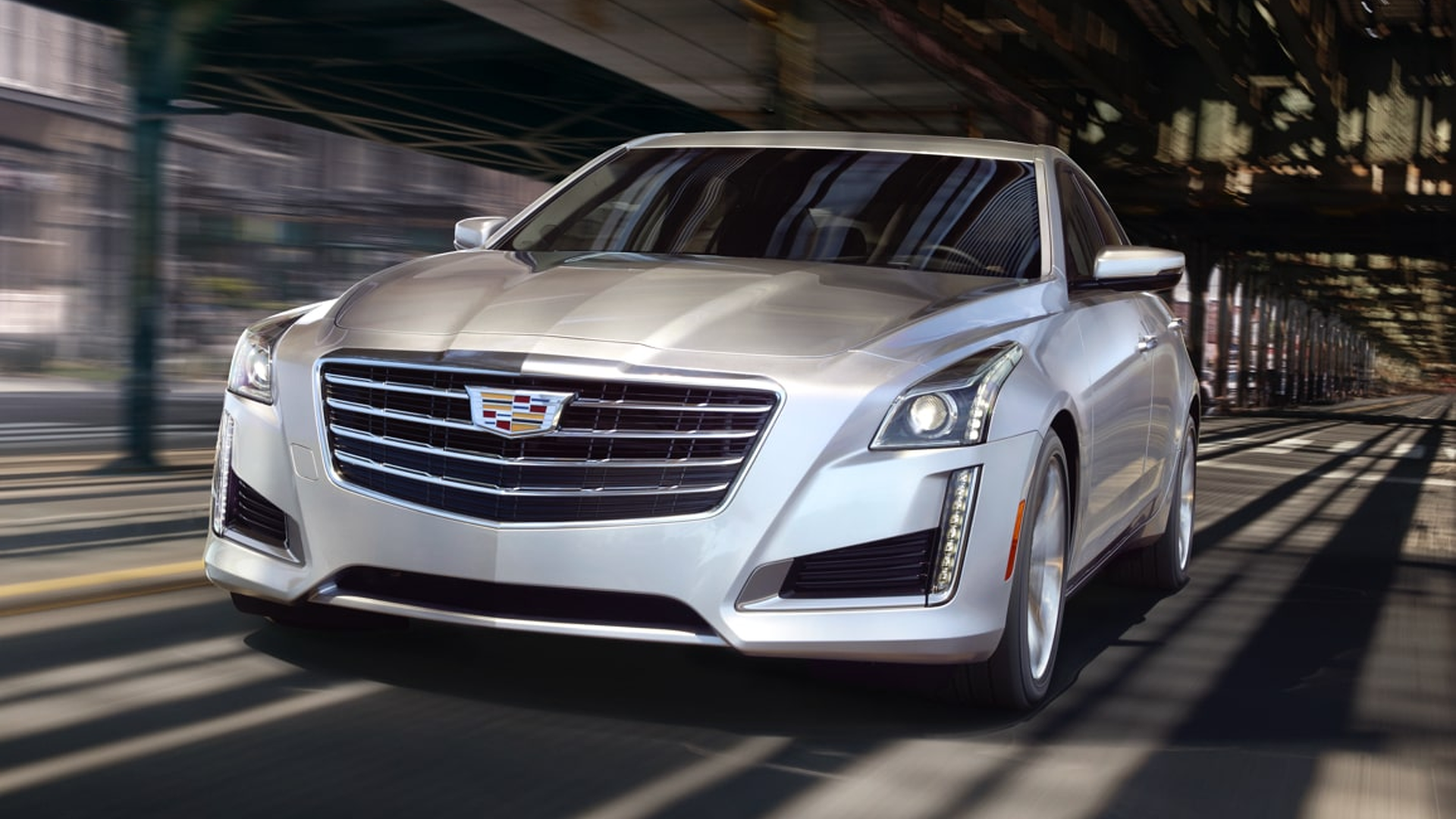
The Third Generation (2014-2019): The Alpha Ascension
For its third and final generation, the CTS executed a massive physical growth spurt, transitioning from a large compact into a true mid-size executive sedan. To prevent the vehicle from becoming a heavy, lumbering cruiser, engineers abandoned the aging Sigma platform entirely. The 2014 CTS migrated to the highly lauded, ultra-rigid Alpha architecture.
Structural metallurgists deployed massive quantities of aerospace-grade aluminum and advanced high-strength martensitic steel throughout the unibody shell. This obsessive focus on mass reduction resulted in a chassis that was physically larger than its predecessor but remarkably lighter than its direct German competitors. Because the core steel chassis completely refused to flex under heavy lateral loading, the standard MacPherson strut front and five-link rear suspension provided the driver with immediate, unfiltered feedback directly from the tire contact patches.
Forced Induction and the V-Sport Variant
The third-generation CTS fully embraced the era of forced induction. The base engine became a potent 2.0-liter turbocharged inline-four generating 272 horsepower. The naturally aspirated 3.6-liter V6 remained available, producing 321 horsepower.
However, the absolute sweet spot of the lineup was the newly introduced V-Sport trim. This model housed the LF3 3.6-liter twin-turbocharged V6. By physically bolting two low-inertia turbochargers directly to the cylinder heads, engineers entirely eliminated turbo lag. The LF3 produced a staggering 420 horsepower and 430 lb-ft of torque. Power routed through a highly aggressive 8-speed automatic transmission into a heavy-duty Electronic Limited-Slip Differential (eLSD), which actively vectored torque across the rear axle to violently push the sedan out of tight canyon apexes.
The LT4 CTS-V: The Final 640-HP Chapter
The final iteration of the CTS-V borders on absolute megalomania. Cadillac ripped the hand-built 6.2-liter LT4 supercharged V8 directly out of the Chevrolet Corvette Z06. Utilizing titanium intake valves, forged aluminum pistons, and a massive 1.7-liter supercharger spinning at 20,000 RPM, this engine generated a brutal 640 horsepower and 630 lb-ft of torque. To shed massive kinetic energy, the vehicle featured colossal Brembo brakes featuring two-piece front rotors designed to fight severe thermal fade during sustained track abuse. This mechanical violence launched the luxury sedan from zero to 60 mph in 3.6 seconds, achieving a staggering top speed of 200 mph.
The Enduring Legacy
The Cadillac CTS completely rewrote the rulebook for the American automotive industry. Over the course of three distinct generations, it stubbornly refused to compromise on driving dynamics, proving definitively that a domestic manufacturer could engineer a highly rigid, communicative rear-wheel-drive platform capable of humiliating European royalty on the race track. From the disruptive styling of the original Sigma chassis to the reality-bending 200 mph top speed of the final LT4-powered CTS-V, the CTS remains a highly collectible, intensely capable machine that single-handedly rescued the Cadillac brand from obscurity and successfully initiated the modern era of the American sport sedan.