
The 1959 Genesis: Aerospace Aesthetics and Absolute Excess
The 1959 Cadillac DeVille debuted as a standalone series by completely ignoring aerodynamic restraint and embracing pure visual dominance. Harley Earl's legendary aerospace-inspired design language reached its absolute zenith with this specific model. The exterior sheet metal featured towering 39-inch tailfins housing dual bullet-style taillights that directly mimicked the glowing exhaust plumes of fighter jets. Designers draped the massive RWD chassis in acres of heavy chrome plating, creating a rolling sculpture that commanded absolute authority on the newly minted American interstate system.
To propel this heavy steel leviathan, engineers utilized a highly refined 390 cubic-inch overhead-valve V8. This naturally aspirated cast-iron powerplant prioritized subterranean torque delivery, allowing the massive coupe and sedan to execute effortless highway passing maneuvers. A smooth-shifting four-speed Hydra-Matic automatic transmission routed the kinetic force to the rear live axle, establishing the effortless cruising dynamics that would define the nameplate for decades.
Early General Motors aerodynamicists theorized that the towering 1959 tailfins transcended mere styling; the massive vertical surface area actively operated as high-speed directional stabilizers, physically planting the rear axle against the asphalt during severe crosswinds.
390 Cubic-Inch V8 Specifications
- Engine Block Architecture
- 90-degree V8, Cast-Iron Block and Cylinder Heads
- Displacement
- 6390 cm3
- Peak Horsepower
- 325 hp @ 4,800 RPM
- Peak Torque
- 430 lb-ft @ 3,100 RPM
- Induction System
- Four-Barrel Carter or Rochester Carburetor
The 1965 Perimeter Frame Redesign: Lowering the Roll Center
Entering the mid-1960s, Cadillac executed a highly strategic structural pivot. Engineers completely discarded the traditional, heavy X-frame architecture that had underpinned previous generations. The 1965 DeVille transitioned to a highly rigid, fully boxed perimeter frame. By pushing the heavy steel structural rails to the extreme outer edges of the chassis, metallurgists successfully lowered the interior floor pan. This architectural shift drastically reduced the vehicle's center of gravity, significantly improving lateral stability and cornering grip without sacrificing the legendary, cloud-like ride quality.
Under the hood, engine displacement began its relentless upward trajectory. The 1968 model year introduced the massive 472 cubic-inch (7.7-liter) V8. This engine block was cast with incredibly thick internal walls, providing immense structural rigidity to handle the intense internal cylinder pressures required to push a 4,800-pound luxury sedan to highway speeds with zero mechanical hesitation.
The 1970s: Maximum Width and the 500 Cubic-Inch Behemoth
The 1971 redesign pushed the physical dimensions of the DeVille to the absolute legal limits of American roadways. The exterior width swelled to nearly 80 inches, creating an incredibly broad shoulder line and a cavernous interior capable of easily seating six adults in absolute palatial comfort. To manage the immense mass of this generation, engineers deployed heavy-duty finned cast-iron brake drums, eventually transitioning to massive ventilated front disc brakes to fight severe thermal fade during aggressive mountain descents.
The displacement wars peaked in 1975 when the DeVille received the gargantuan 500 cubic-inch (8.2-liter) V8 as standard equipment. This naturally aspirated titan held the record as the largest passenger car engine ever mass-produced in the United States. It focused entirely on low-end grunt, generating a staggering 400 lb-ft of torque barely above idle. This immense twisting force allowed the heavy sedan to surge forward off the line with the terrifying authority of a freight train.
8.2-Liter V8 Specifications
- Engine Block Architecture
- 90-degree V8, Cast-Iron Block
- Displacement
- 8193 cm3 (500 Cubic Inches)
- Peak Torque
- 400 lb-ft @ 2,000 RPM
- Induction
- Four-Barrel Rochester Quadrajet
The 1977 Downsizing: A Masterclass in Packaging Efficiency
The severe global fuel crises of the 1970s forced Cadillac engineers to radically rethink the luxury formula. The 1977 DeVille executed a brutal, highly successful downsizing program. Engineers shaved nearly 1,000 pounds of heavy sheet metal and steel from the chassis and chopped 9.8 inches off the overall length. Through brilliant interior packaging and the optimization of door panel concavity, the vehicle actually gained interior headroom and rear-seat legroom despite its significantly smaller exterior footprint.
This generation also witnessed aggressive, albeit problematic, technological experimentation to meet strict federal emissions and fuel economy mandates. The 1981 model year introduced the infamous L62 V8-6-4 engine. This system attempted to pioneer variable displacement, utilizing computer-controlled solenoids to physically deactivate intake and exhaust valves on specific cylinders under light aerodynamic loads. While the mechanical theory was incredibly sound, the primitive processing power of the early ECU failed to manage the rapid mechanical transitions smoothly. The vehicle lurched and hesitated violently during highway cruising, forcing Cadillac to rapidly abandon the technology.
The 1985 Transverse Revolution: Transitioning to Front-Wheel Drive
The 1985 model year brought the most controversial architectural shift in the nameplate's long history. General Motors aggressively downsized the C-body platform, rotating the engine 90 degrees to sit transversely between the front wheels. By adopting a FWD layout, engineers entirely eliminated the interior transmission tunnel, creating a perfectly flat cabin floor. However, this transverse layout mimicked economy cars and forced designers to abandon the long, commanding hood proportions that historically defined the DeVille silhouette.
Propulsion relied on the highly problematic HT-4100 4.1-liter V8. To drastically reduce mass over the front axle, metallurgists utilized a die-cast aluminum engine block paired with traditional cast-iron cylinder heads. This severe metallurgical mismatch caused differing rates of thermal expansion. The resulting friction and dissimilar metal corrosion frequently led to catastrophic head gasket failures and main bearing wear. Producing a meager 135 horsepower, this engine severely damaged the vehicle's dynamic reputation among traditional luxury buyers demanding effortless acceleration.
The 1994 K-Body Renaissance: The Northstar V8 Awakens
Cadillac fought aggressively to reclaim its lost prestige with the massive 1994 redesign. The new DeVille stretched its footprint on the K-body platform, reviving the muscular, sweeping profile of a true executive sedan. The absolute mechanical savior of this generation arrived in the form of the legendary 4.6-liter Northstar V8.
This highly advanced powerplant featured an all-aluminum block, dual overhead camshafts, and four valves per cylinder. It completely eradicated the anemic performance of the 1980s. The engine screamed to a 6,000 RPM redline, delivering a thrilling, high-pitched exhaust howl completely foreign to traditional Cadillac buyers. To manage 300 horsepower channeling exclusively through the front wheels in the high-performance Concours trim, engineers deployed the Continuously Variable Road Sensing Suspension (CVRSS).
This active damping system utilized optical and gyroscopic sensors to read the road surface topography. The digital computer aggressively adjusted the hydraulic valving inside the physical shock absorbers in mere milliseconds, physically crushing severe body roll during heavy cornering while remaining perfectly compliant on broken urban pavement.
4.6L LD8 Northstar V8 Specifications
- Engine Block Architecture
- Transverse 90-degree V8, Die-Cast Aluminum Block and Heads
- Displacement
- 4565 cm3
- Valvetrain
- Dual Overhead Cam, 32 valves
- Peak Horsepower (Concours)
- 300 hp @ 6,000 RPM
- Peak Torque
- 295 lb-ft @ 4,400 RPM
The Final Chapter (2000-2005): Night Vision and Digital Dominance
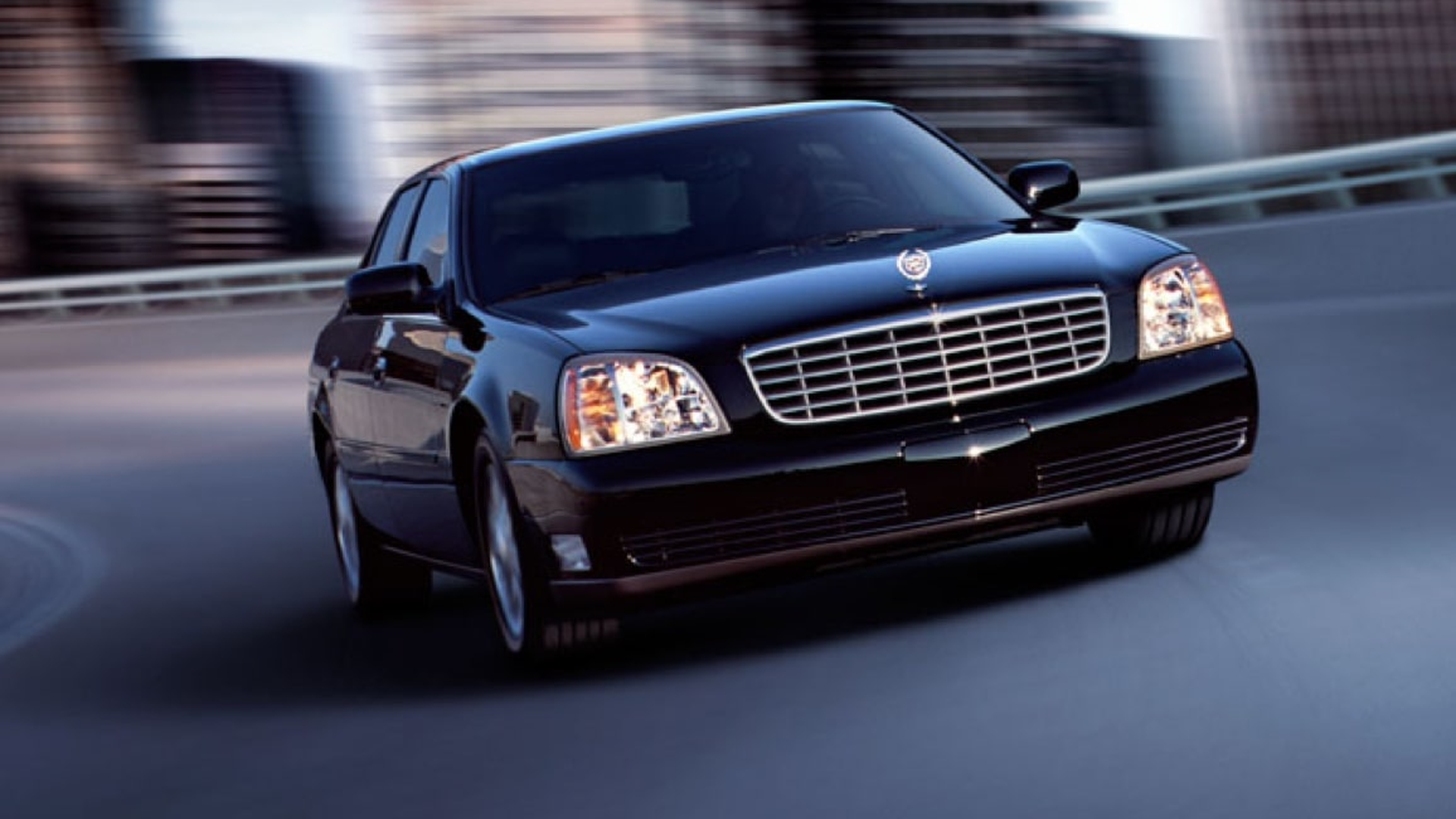
The eighth and final generation of the DeVille debuted for the 2000 model year on the highly rigid G-platform. Acoustic engineers packed the hollow unibody pillars with thick sound-deadening foam and deployed acoustic-laminated glass, aggressively isolating the passenger cabin from high-frequency wind noise and tire roar to create a rolling sensory deprivation chamber. Designers modernized the exterior aesthetic by outfitting the vehicle with incredibly bright LED taillights, a feature that significantly improved following-distance safety and became a modern Cadillac hallmark.
The absolute crowning engineering achievement of this era was the introduction of factory-integrated thermal imaging. Sourced directly from military defense contractors, the Night Vision system utilized a specialized infrared camera mounted physically behind the front grille. This sensor detected the precise heat signatures of pedestrians and wildlife far beyond the reach of the standard halogen headlights. A digital processor translated this thermal data into a crisp, monochromatic image projected directly onto the lower windshield via a HUD. This allowed the pilot to maintain absolute situational awareness on pitch-black rural highways without suffering severe eye fatigue.
The Enduring Legacy of the American Land Yacht
Cadillac officially retired the DeVille nameplate at the end of the 2005 model year, rebranding its heavily revised successor as the DTS to align with a modern alphanumeric corporate naming strategy. However, the legacy of the DeVille remains permanently etched into the foundation of American automotive history. It served as the crucial, unbroken bloodline that carried the brand from the towering chrome excess of the 1950s through the severe fuel crises of the 1970s, culminating in the hyper-advanced digital era of the early 21st century. By aggressively pushing the boundaries of displacement, unibody packaging efficiency, and aerospace-derived technology, the Cadillac DeVille proved definitively that traditional American luxury could successfully adapt and dominate across five decades of radical industrial change.