
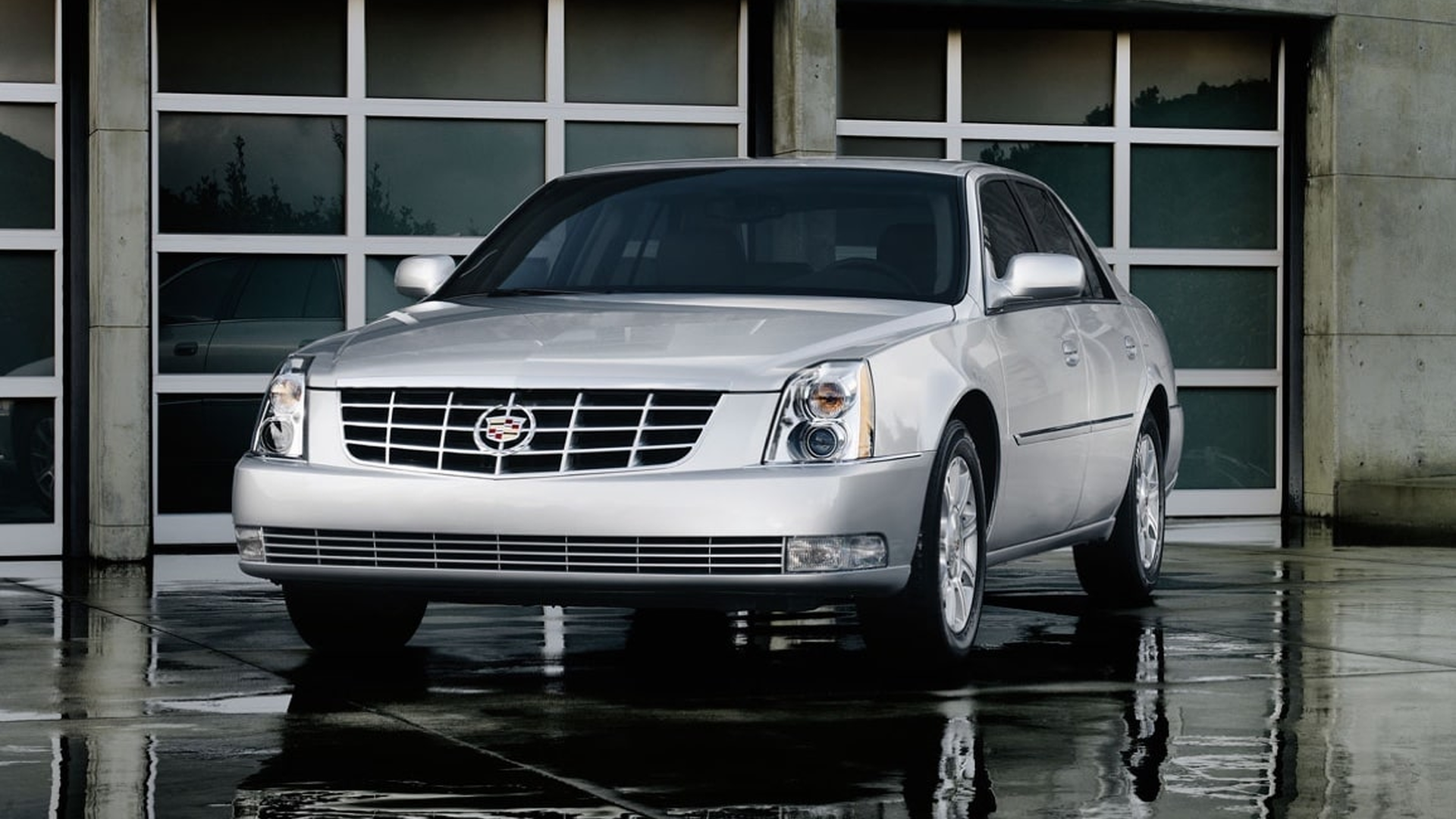
The Alphanumeric Pivot: Retiring a Legendary Nameplate
For the 2006 model year, General Motors executed a massive corporate renaming strategy, entirely abandoning traditional heritage monikers to align with the alphanumeric naming conventions utilized by elite European marques. The legendary DeVille nameplate, a foundational pillar of American automotive luxury for nearly five decades, was officially retired. Its direct successor emerged as the Cadillac DTS, an acronym derived from the DeVille Touring Sedan trim level of the preceding generation. Designers rejected the soft, rounded organic shapes of the early 2000s, aggressively adopting the brand's sharp Art and Science design philosophy.
The exterior sheet metal of the DTS projected absolute executive authority. The front fascia featured a massive, egg-crate grille flanked by vertically stacked High-Intensity Discharge (HID) Xenon headlamps that pierced the darkness with a brilliant, blue-white beam. The rear profile retained the signature Cadillac vertical lighting architecture, utilizing heavily concentrated LED taillights that provided instantaneous illumination and significantly improved following-distance safety. This tightly tailored, highly architectural aesthetic successfully modernized the vehicle without alienating the core demographic demanding a commanding, full-size physical footprint.
Architectural Foundations: Refining the Front-Wheel-Drive Platform
The underlying mechanical foundation of the DTS relied on the highly proven K-body architecture. Unlike the emerging rear-wheel-drive sport sedans in the Cadillac portfolio, the DTS stubbornly retained a longitudinal FWD layout. This specific engineering decision prioritized absolute interior volumetric capacity. By entirely eliminating the massive steel driveshaft and rear differential required for rear-wheel propulsion, engineers secured a perfectly flat cabin floor, creating a cavernous passenger compartment capable of comfortably transporting five or six adults on transcontinental highway journeys.
To combat the severe chassis flex common in massive sedans, structural metallurgists heavily reinforced the unibody. The entire front suspension and powertrain assembly bolted directly to a specialized, hydroformed steel subframe. Engineers utilized highly pressurized water to physically expand a single steel tube inside a die to create this cradle, guaranteeing absolute uniform metal thickness and immense rigidity. Six advanced hydraulic mounts isolated this entire subframe from the main body shell, violently crushing mechanical vibrations and harsh road impacts before they could resonate into the passenger compartment.
Propulsion Dynamics: The Zenith of the Northstar V8
Propulsion for the heavy luxury sedan fell entirely to the legendary 4.6-liter Northstar V8. By the launch of the DTS in 2006, Cadillac engineers had successfully rectified the catastrophic head-bolt thread failures that plagued earlier iterations of this aluminum powerplant. The updated engine utilized a highly rigid two-piece die-cast aluminum block, dual overhead camshafts, and four valves per cylinder, representing the absolute zenith of this specific engine family before its ultimate retirement.
Cadillac offered the Northstar in two highly specific configurations. The standard LD8 variant focused entirely on relaxed, subterranean torque delivery, generating 275 horsepower and providing effortless highway merging capability while prioritizing fuel efficiency. Buyers seeking a more aggressive kinetic response opted for the high-output L37 variant, standard on the Performance trim. By deploying more aggressive camshaft profiles and a higher compression ratio, the L37 produced nearly 300 horsepower, pushing the engine to a thrilling 6,000 RPM redline.
Both engines routed power through the heavy-duty Hydra-Matic 4T80-E four-speed automatic transaxle. While European competitors had moved to six- or seven-speed gearboxes, the massive torque of the Northstar V8 allowed the DTS to utilize wide gear spacing, executing incredibly smooth, nearly imperceptible shifts that perfectly matched the relaxed cruising demeanor of the chassis.
4.6L L37 Northstar V8 Specifications (Performance Trim)
- Engine Block Architecture
- Transverse 90-degree V8, Die-Cast Aluminum Block and Heads
- Displacement
- 4565 cm3
- Valvetrain
- Dual Overhead Cam, 32 valves
- Peak Horsepower
- 292 hp @ 6,300 RPM
- Peak Torque
- 288 lb-ft @ 4,500 RPM
- Fuel Delivery
- Sequential Multi-Port Fuel Injection
Suspension Kinematics: Managing Mass with Magnetic Precision
Controlling a 4,000-pound front-wheel-drive sedan requires highly sophisticated dynamic intervention. Standard DTS models utilized a heavily revised MacPherson strut front suspension with massive aluminum lower control arms to reduce unsprung weight. The rear featured an independent multi-link setup utilizing an automatic pneumatic leveling system. An onboard air compressor actively pumped heavy-duty rear air shocks to maintain a perfectly level ride height regardless of heavy luggage or full passenger loads, ensuring the headlights always pointed safely down the road.
The true magic of the DTS chassis emerged in the Performance models equipped with Magnetic Ride Control. The physical shock absorbers discarded traditional valving, utilizing a specialized magneto-rheological fluid filled with microscopic iron particles. Optical and gyroscopic sensors read the road surface topography up to 1,000 times per second. The central suspension computer applied a precisely calculated electromagnetic charge to the damper coils, instantly altering the physical viscosity of the fluid. The system aggressively stiffened the outside shocks during heavy highway off-ramp cornering to crush severe body roll, then softened them entirely the exact millisecond the vehicle returned to a straight, broken urban street.
The structural authority and immense interior volume of the DTS platform made it the obvious foundation for the 2006 Presidential State Car. Operating under the codename "Stagecoach," the heavily armored, custom-built limousine utilized DTS exterior styling cues, projecting American executive power across the globe.
Acoustic Isolation and the Rolling Sensory Deprivation Chamber
Cadillac acoustic engineers approached the DTS cabin as a dedicated sound studio. Their primary objective was the absolute eradication of NVH factors. They deployed a patented technology known as Quiet Steel for the critical dashboard plenum-the physical barrier separating the engine bay from the cabin. This material sandwiches a specialized viscoelastic acoustic polymer directly between two layers of high-strength steel, absorbing and physically neutralizing the high-frequency mechanical whine of the V8 engine.
Thick, acoustic-laminated glass was fitted to the windshield and front passenger doors to aggressively combat severe wind rush at high speeds. Engineers packed the hollow unibody pillars with expanding acoustic foam baffles and laid heavy liquid-applied sound deadener across the entire floor pan to completely mute tire roar. The result was a rolling sensory deprivation chamber, allowing occupants to converse in whispered tones while cruising safely at 80 miles per hour.
Bespoke Craftsmanship: The DTS Platinum Edition
To combat the ultra-premium offerings from German and Japanese competitors, Cadillac introduced the highly exclusive DTS Platinum edition late in the production cycle. This trim level discarded standard materials, executing a masterclass in bespoke interior craftsmanship. Occupants sat on hand-cut-and-sewn Tuscany semi-aniline leather hides featuring precise French stitching. Genuine, highly polished light burled walnut wood veneers anchored the door panels, steering wheel, and center console. A premium Alcantara microfiber suede headliner spanned the entire roof, adding a deep, tactile richness to the cabin while further absorbing stray acoustic reflections.
The Platinum models featured a heavily upgraded digital interface, including a high-resolution touchscreen navigation system, standard tri-zone automatic climate control, and heated and ventilated front seats featuring highly complex pneumatic massage rollers embedded directly into the lumbar support bladders. The exterior received exclusive 18-inch chrome-plated alloy wheels and subtle platinum badging, telegraphing its elite status to informed automotive enthusiasts without resulting in gaudy ostentation.
The Enduring Legacy of the Final American Land Yacht
The Cadillac DTS officially ceased production in May 2011, marking the definitive end of an incredible automotive era. With its retirement, the brand completely abandoned the massive, front-wheel-drive, V8-powered sedan architecture. The automotive industry violently shifted its focus toward smaller, highly turbocharged engines and the massive global surge in sport utility vehicle demand, driven primarily by strict federal mandates demanding drastic reductions in fleet-wide CO2 emissions.
The vehicle that eventually replaced it, the Cadillac XTS, relied on a significantly smaller V6 engine and a completely different architectural philosophy. The DTS stands today as the absolute final guardian of the traditional American land yacht formula. By stubbornly providing massive physical dimensions, peerless ride comfort, and the smooth, surging thrust of a naturally aspirated V8 engine, the DTS perfectly executed the exact parameters of classic domestic luxury. It remains a highly sought-after machine on the secondary market for driving purists who demand the uncompromised comfort and undeniable presence that only a traditional full-size Cadillac can deliver.