
The 1953 Genesis: A Golden Anniversary Masterpiece
General Motors executives conceived the Cadillac Eldorado to celebrate the brand's fiftieth anniversary in 1953. Operating as an ultra-exclusive, low-production coachbuilt convertible, it debuted alongside the Oldsmobile Fiesta and Buick Skylark. Designers aggressively chopped the beltline, entirely hiding the convertible top mechanism beneath a flush-fitting metal tonneau cover. The defining architectural element was a massive, panoramic wraparound glass windshield, a feature that instantly rendered competing luxury cars visually obsolete.
Under the hood, the 1953 Eldorado housed a 331 cubic-inch overhead valve V8. Engineers extracted 210 horsepower from this cast-iron block, routing the kinetic force through a four-speed Hydra-Matic automatic transmission. Cadillac built only 532 units during this inaugural year, immediately establishing the Eldorado nameplate as the absolute pinnacle of American personal luxury and guaranteeing its status as a highly sought-after OEM collectible.
The 1959 Biarritz and the Zenith of Aerospace Design
By 1959, Harley Earl's aerospace-inspired design language reached its absolute, unapologetic zenith. The Eldorado Biarritz convertible featured the tallest tailfins ever fitted to a production automobile, towering exactly 39 inches above the pavement and culminating in dual bullet-style taillights mimicking the exhaust plumes of fighter jets. Designers draped the massive exterior in acres of heavy chrome plating, completely ignoring aerodynamic restraint in favor of extreme visual dominance.
To propel this heavy steel leviathan, engineers bored the standard Cadillac V8 out to 390 cubic inches (6390 cm3). The Eldorado received a specialized Tri-Power induction system, utilizing three dual-barrel Rochester carburetors. This aggressive fuel delivery setup generated 345 horsepower and 435 lb-ft of torque.
The 1959 tailfins transcended mere styling; early General Motors aerodynamicists theorized that the massive vertical surface area actively operated as high-speed directional stabilizers, physically planting the rear axle against the asphalt during cross-country highway runs.
The 1967 Paradigm Shift: The Unified Powerplant Package
The 1967 redesign violently disrupted the traditional mechanical layout of the American luxury coupe. Sharing the advanced E-body architecture with the Oldsmobile Toronado, the Eldorado adopted a highly unconventional longitudinal FWD system known internally as the Unified Powerplant Package.
Instead of running a heavy steel driveshaft the entire length of the chassis, engineers mounted the massive 429 cubic-inch V8 longitudinally, completely parallel to the front wheels. A heavy-duty Morse link chain transferred engine torque a full 180 degrees backwards into the three-speed Turbo-Hydramatic 425 transmission, which sat precisely tucked underneath the driver's side of the engine block. This incredibly compact transaxle design completely eliminated the interior transmission tunnel, creating a perfectly flat cabin floor capable of comfortably seating six adults.
To handle the immense weight sitting directly over the front axle, engineers discarded traditional front coil springs. They deployed a heavy-duty torsion bar front suspension, heavily reinforcing the front subframe to isolate the cabin from violent torque steer. To arrest the massive kinetic energy generated by this heavy platform, the factory deployed heavy-duty finned brake drums, soon replacing them with highly ventilated front disc brakes to fight severe thermal fade during aggressive mountain descents.
The 500 Cubic Inch Behemoth: Maximum Displacement
The displacement wars of the early 1970s forced Cadillac engineers to push internal combustion geometry to its absolute physical limit. For the 1970 model year, the Eldorado received an exclusive 500 cubic-inch (8.2-liter) V8. This cast-iron titan held the record as the largest passenger car engine ever mass-produced in the United States until the introduction of the Dodge Viper decades later.
This naturally aspirated engine focused entirely on subterranean torque delivery rather than high-RPM horsepower. It generated a staggering 550 lb-ft of torque at just 3,000 RPM. This immense twisting force allowed the heavy coupe to execute effortless high-speed passing maneuvers on the interstate without ever forcing the transmission to downshift.
1970 8.2-Liter V8 Specifications
- Engine Block Architecture
- 90-degree V8, Cast-Iron Block and Cylinder Heads
- Displacement
- 8193 cm3 (500 Cubic Inches)
- Peak Horsepower (Gross)
- 400 hp @ 4,400 RPM
- Peak Torque (Gross)
- 550 lb-ft @ 3,000 RPM
- Induction
- Four-Barrel Rochester Quadrajet Carburetor
The 1979 Downsizing and the Independent Rear Suspension
The severe fuel crises of the 1970s and the introduction of strict federal emissions mandates choked the massive 500 V8, physically forcing Cadillac to reduce engine displacement and dramatically shrink the overall footprint of the vehicle. The 1979 Eldorado moved to a completely redesigned, significantly smaller E-body platform.
Engineers shaved hundreds of pounds of heavy sheet metal and steel from the chassis. This generation introduced a fully independent rear suspension, completely discarding the heavy solid rear axle. This specific geometric upgrade drastically improved ride quality over broken urban pavement and massively increased trunk volume by dropping the rear floor pan. Acoustic engineers packed the hollow unibody pillars with thick sound-deadening foam, aggressively isolating the passenger cabin from high-frequency wind noise and tire roar to create a rolling sensory deprivation chamber.
To manage tailpipe CO2 emissions and increase fuel efficiency, the factory replaced archaic carburetors with Digital Electronic Fuel Injection. This system relied on primitive but highly effective microprocessors to precisely meter fuel delivery based on real-time atmospheric density and throttle position.
The Transverse Shift and the HT-4100 Era
The 1986 model year witnessed the most controversial architectural shift in the nameplate's history. General Motors aggressively downsized the E-body platform again, rotating the engine 90 degrees to sit transversely between the front wheels. This layout mimicked economy cars, completely abandoning the long, commanding hood proportions that historically defined the Eldorado silhouette.
Propulsion relied on the highly problematic HT-4100 4.1-liter V8. Engineers attempted to reduce mass by utilizing a die-cast aluminum engine block paired with traditional cast-iron cylinder heads. This severe metallurgical mismatch caused differing rates of thermal expansion and dissimilar metal corrosion, frequently leading to catastrophic head gasket failures and main bearing wear. While the chassis offered advanced digital vacuum-fluorescent dashboards and a complex automatic leveling air suspension, the severe lack of kinetic force-producing a meager 130 horsepower-severely damaged the vehicle's reputation among traditional luxury buyers demanding effortless acceleration.
The Northstar Revolution: The Eldorado Touring Coupe
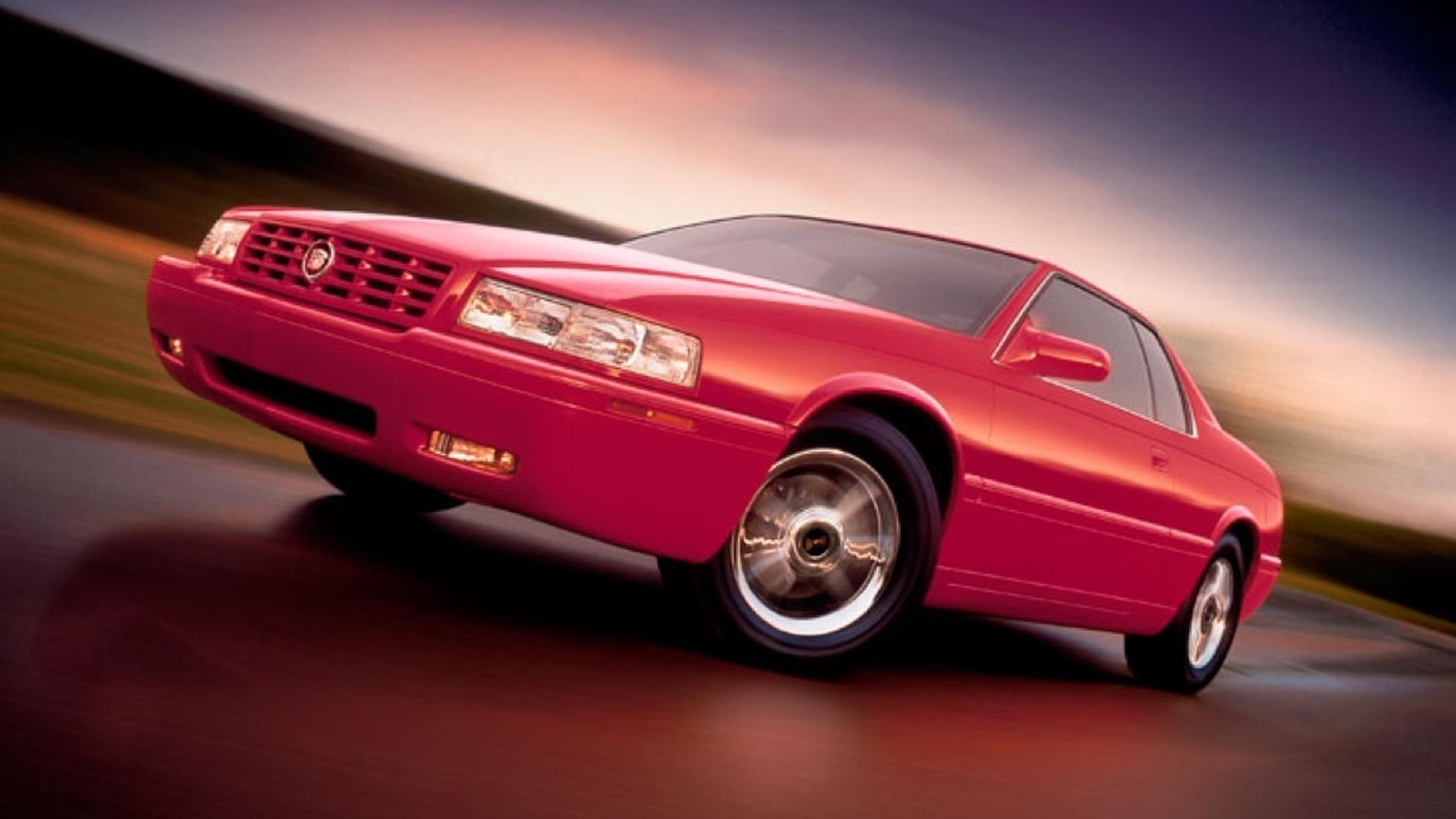
Cadillac fought aggressively to reclaim its lost prestige with the massive 1992 redesign. The new Eldorado stretched its footprint, reviving the muscular, sweeping profile of a true grand touring coupe. The absolute mechanical savior of this generation arrived for the 1993 model year: the 4.6-liter Northstar V8.
This highly advanced powerplant featured an all-aluminum block, dual overhead camshafts, and four valves per cylinder. It completely eradicated the anemic performance of the 1980s. The flagship Eldorado Touring Coupe (ETC) utilized the high-output L37 variant of the Northstar, generating a thrilling 300 horsepower. The engine screamed to a 6,000 RPM redline, delivering a visceral exhaust note completely foreign to traditional Cadillac buyers.
To manage this massive influx of power through the front wheels, engineers deployed the Continuously Variable Road Sensing Suspension. This early active damping system utilized optical and gyroscopic sensors to read the road surface topography. It aggressively adjusted the hydraulic valving inside the shock absorbers in mere milliseconds to physically crush body roll during heavy cornering while remaining perfectly compliant on the highway. The ETC also featured an incredibly advanced traction control network. If the wheel speed sensors detected the front tires breaking traction on slick pavement, the engine control module instantly severed fuel to specific cylinder injectors, retarding spark timing to physically pull torque back and restore mechanical grip.
4.6L L37 Northstar V8 Specifications
- Engine Block Architecture
- Transverse 90-degree V8, Die-Cast Aluminum Block and Heads
- Displacement
- 4565 cm3
- Valvetrain
- Dual Overhead Cam, 32 valves
- Peak Horsepower (ETC)
- 300 hp @ 6,000 RPM
- Peak Torque
- 295 lb-ft @ 4,400 RPM
- Transmission
- Hydra-Matic 4T80-E 4-Speed Automatic Transaxle
The Final Chapter: 2002 Collector Series
As the global automotive market violently shifted its preference toward heavy luxury sport utility vehicles, sales of large, two-door personal luxury coupes plummeted. Cadillac officially terminated Eldorado production at the end of the 2002 model year, closing a legendary 50-year production run. To directly honor the half-century legacy of the nameplate, the factory released a highly limited run of exactly 1,596 Collector Series editions.
These final vehicles received bespoke exhaust tuning specifically engineered to replicate the deep, visceral burble of the original 1953 model. Designers applied specialized Aztec Red paint-the identical visual hue used on the inaugural 1953 concept car-bringing the historic automotive bloodline full circle. The Cadillac Eldorado remains a rolling monument to American automotive excess and engineering ambition. From the towering aerospace tailfins of the late 1950s to the staggering displacement of the massive 500 cubic-inch V8 and the high-RPM technological brilliance of the Northstar era, this legendary coupe permanently defined the absolute outer limits of personal luxury vehicle design.