
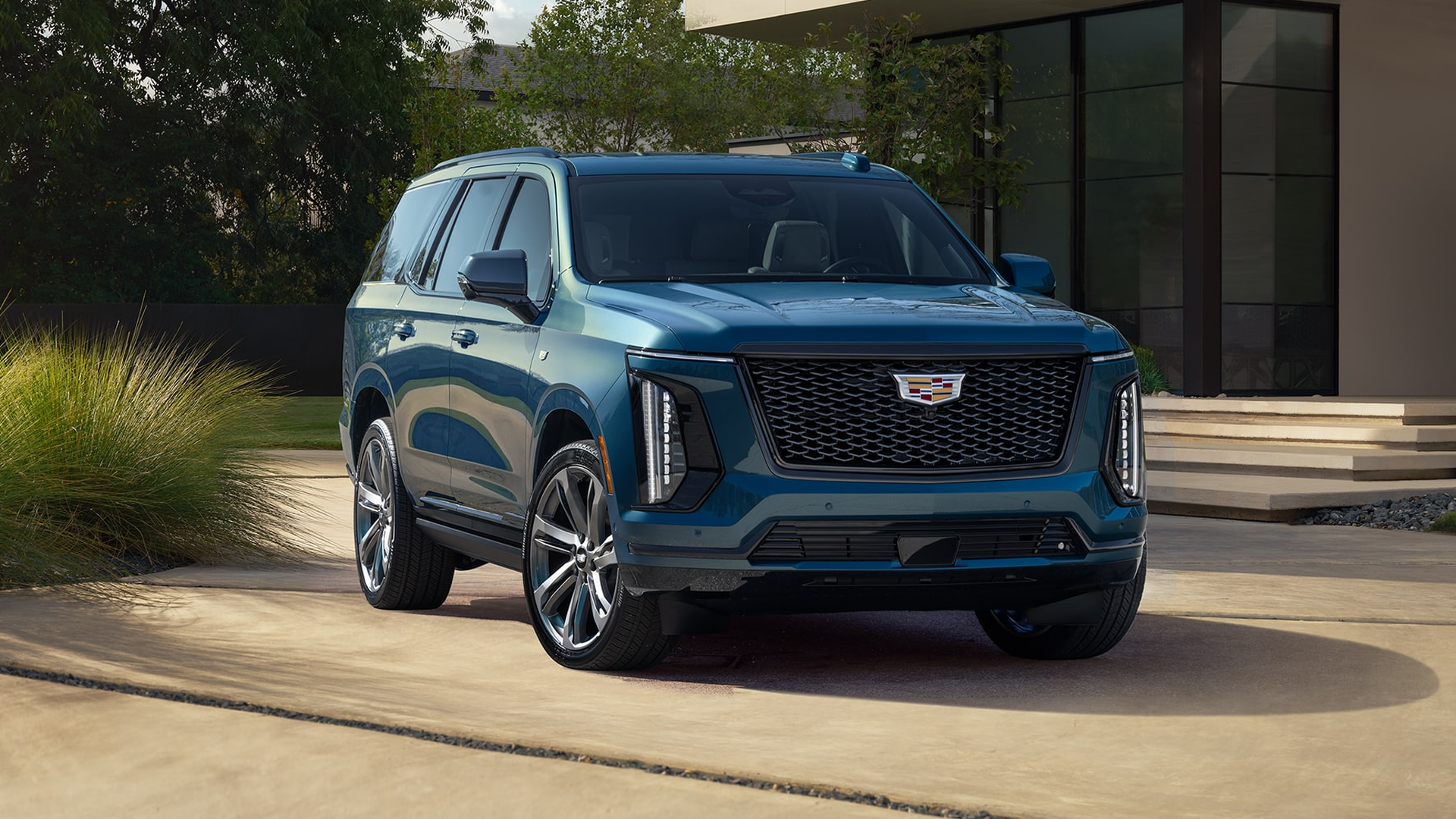
The GMT400 Genesis: A Rushed Response to a Shifting Market
Prior to the late 1990s, the concept of a dedicated, high-end luxury sport utility vehicle barely existed within the American market. General Motors operated under the rigid assumption that premium buyers exclusively desired traditional, low-slung luxury sedans. The unexpected and explosive success of the Lincoln Navigator in 1998 sent shockwaves through the executive boardrooms in Detroit. Facing a severe competitive deficit, Cadillac engineers executed one of the fastest vehicle development programs in modern automotive history. The 1999 Cadillac Escalade, riding on the heavy-duty GMT400 truck platform, went from concept to production line in under ten months.
Because the development cycle was incredibly compressed, the original Escalade was essentially a highly optioned GMC Yukon Denali featuring a unique front fascia and exclusive interior trims. Propulsion relied entirely on the proven 5.7-liter L31 Vortec V8, a cast-iron block pushing 255 horsepower and 330 lb-ft of torque. Power routed through a heavy-duty 4L60-E 4-speed automatic transmission into the advanced AutoTrac selectable four-wheel-drive system. While automotive purists heavily criticized its obvious truck roots and solid rear axle, the vehicle resonated instantly with a wealthy, image-conscious demographic demanding massive physical presence on the asphalt. The Escalade sold out immediately, officially initiating the brand's resurrection.
The GMT800 Era: Forging a Distinct Visual Identity
By the 2002 model year, Cadillac possessed the capital and engineering time to develop the Escalade into a bespoke luxury product. Built upon the massively upgraded GMT800 architecture, the second-generation SUV introduced the world to Cadillac's "Art and Science" design philosophy. Designers completely abandoned the soft, rounded curves of the 1990s, replacing them with sharp, aggressive character lines, massive vertical taillights, and a prominent shield-style chrome grille. This specific visual aggression transformed the Escalade from a capable family hauler into a dominant cultural icon.
Mechanical capabilities expanded significantly. Engineers installed the high-output 6.0-liter LQ9 V8 engine, generating a commanding 345 horsepower. This powerplant utilized high-flow aluminum cylinder heads and increased compression to provide brutal off-the-line acceleration, allowing the heavy SUV to physically outrun many dedicated sports cars of the era. To manage this massive kinetic energy, the Escalade featured the Road Sensing Suspension (RSS) system, an early precursor to modern active damping that utilized optical sensors to adjust shock valving in real-time. A heavy-duty BorgWarner transfer case provided full-time all-wheel drive, completely eliminating the need for the driver to manually engage four-wheel traction during severe weather events.
The GMT900 Architecture: Aerodynamics and the 6.2L V8
The 2007 Escalade, utilizing the highly refined GMT900 platform, focused intensely on aerodynamic efficiency and interior acoustic isolation. Designers aggressively raked the windshield back to a 57-degree angle, physically tripping the boundary layer of air to reduce massive wind noise at interstate speeds. The panel gaps were tightened to microscopic tolerances, and the doors wrapped entirely over the rocker panels to prevent dirt and slush from intruding into the cabin.
The heart of the GMT900 Escalade was the introduction of the legendary 6.2-liter L92 V8. This entirely new, all-aluminum engine block integrated Variable Valve Timing (VVT), allowing the ECU to dynamically alter camshaft phasing based on throttle input. This resulted in a staggering 403 horsepower and 417 lb-ft of torque. The engine mated to the cutting-edge 6L80 6-speed automatic transmission. The massive gear spread provided a steep first gear for explosive acceleration while offering dual overdrive gears to drop the engine RPM to a whisper during 80 mph highway cruising.
The K2XX Vault: Direct Injection and Magnetic Ride
Debuting for the 2015 model year, the K2XX-generation Escalade adopted a monolithic, almost architectural aesthetic highlighted by massive vertical LED light blades. To improve crash survivability and reduce structural twisting, metallurgists deployed massive quantities of advanced high-strength steel throughout the boxed ladder frame and passenger safety cage. Engineers aggressively targeted Noise, Vibration, and Harshness (NVH) by injecting liquid-applied sound deadener directly into the floor pan channels and installing thick acoustic-laminated front glass, creating a rolling sensory deprivation chamber.
Under the hood, the 6.2-liter V8 evolved into the L86 variant, featuring direct fuel injection and Active Fuel Management. Under light aerodynamic loads, the computer collapsed the hydraulic valve lifters, physically deactivating four cylinders to operate as a V4, drastically cutting tailpipe CO2 emissions. This generation also perfected the integration of Magnetic Ride Control across the entire model lineup, forever changing how heavy body-on-frame vehicles handled imperfect pavement.
The T1XX Revolution: The Death of the Solid Rear Axle
The fifth-generation Escalade, built on the T1XX architecture, executed the most radical mechanical paradigm shift in the nameplate's history. For decades, the Escalade relied on a live solid rear axle. While incredibly durable for extreme towing, a solid axle forces the left and right rear wheels to react to impacts simultaneously, creating a harsh, jittery ride over broken pavement and consuming massive amounts of physical space beneath the cargo floor.
Cadillac engineers entirely discarded the solid axle, engineering a highly complex multi-link Independent Rear Suspension (IRS). This massive steel architecture features three distinct lateral arms and one massive longitudinal arm per side. This geometry allows each rear wheel to articulate completely independently. When the left rear tire strikes a massive pothole, the right rear tire remains perfectly planted on the asphalt, entirely eliminating terrifying mid-corner axle hop.
The transition to an Independent Rear Suspension was not merely a handling upgrade; it was a packaging masterstroke. By eliminating the massive differential housing clearance required by a solid axle, engineers dropped the interior floor pan by over five inches, creating genuine, adult-sized legroom in the third row and expanding maximum cargo volume by an astonishing 68 percent in standard-wheelbase models.
The 6.2L L87 V8: Dynamic Fuel Management
The standard propulsion system for the modern Escalade remains the naturally aspirated 6.2-liter V8, specifically the L87 variant. This masterpiece of traditional American engineering rejects the lag of forced induction, relying instead on massive displacement and advanced cylinder deactivation software. The Dynamic Fuel Management system completely abandons the old 8-cylinder or 4-cylinder binary setup. Instead, the computer calculates torque demand 80 times per second and can actively switch between 17 different cylinder firing patterns. The vehicle can cruise down the highway firing on only two cylinders, seamlessly reigniting the remaining six in milliseconds the moment the driver demands heavy acceleration.
6.2L L87 V8 Powertrain Specifications
- Engine Block Architecture
- 90-degree V8, Cast Aluminum Block and Cylinder Heads
- Displacement
- 6162 cm3
- Valvetrain
- Overhead Valve (Pushrod), 16 valves, Variable Valve Timing
- Peak Horsepower
- 420 hp @ 5,600 RPM
- Peak Torque
- 460 lb-ft @ 4,100 RPM
- Transmission
- Hydra-Matic 10L80 10-Speed Automatic
The 3.0L Duramax: Low-End Torque and Maximum Efficiency
Recognizing the massive fuel consumption inherent to full-size SUVs, Cadillac introduced an entirely different mechanical approach for buyers prioritizing efficiency and extreme highway range: the 3.0-liter Duramax inline-six turbodiesel. The inline-six architecture provides perfect primary and secondary engine balance, resulting in an incredibly smooth, vibration-free power delivery that rivals premium V12 engines.
The Duramax block is cast from lightweight aluminum but features thick, heavy-duty iron cylinder liners to withstand the extreme cylinder pressures generated by compression ignition. A variable geometry turbocharger constantly alters the pitch of its internal exhaust vanes, spooling the compressor wheel instantly at low engine speeds. This highly advanced diesel engine generates the exact same 460 lb-ft of torque as the massive 6.2L V8, but delivers it at a subterranean 1,500 RPM, making it the superior powertrain choice for executing low-speed towing maneuvers or navigating steep mountain grades.
3.0L Duramax Turbodiesel Specifications
- Engine Block Architecture
- Inline 6-Cylinder, Aluminum Block with Iron Liners
- Aspiration
- Variable Geometry Turbocharger with Liquid-to-Air Intercooler
- Peak Horsepower
- 277 hp @ 3,750 RPM
- Peak Torque
- 460 lb-ft @ 1,500 RPM
- Highway Range Capability
- Up to 600+ miles on a single tank
The Escalade-V: Supercharged Megalomania
For two decades, the Escalade relied on naturally aspirated power. The Escalade-V violently disrupts that tradition, transforming the heavy luxury cruiser into a terrifyingly fast track-capable machine. Engineers ripped the LT4 supercharged V8 engine directly out of the Cadillac CT5-V Blackwing sedan and recalibrated it specifically to manage the massive curb weight of the Escalade.
The centerpiece of the LT4 is a colossal 2.65-liter TVS four-lobe supercharger sitting directly atop the intake manifold. Driven by a heavy-duty serpentine belt, the supercharger spins at up to 20,000 RPM, forcing highly compressed atmospheric air down into the forged aluminum pistons. To manage the immense heat generated by compressing that much oxygen, the engine utilizes a massive dedicated liquid-to-air intercooler. The resulting mechanical violence generates 682 horsepower, launching the three-ton, brick-shaped SUV from zero to 60 mph in a physics-defying 4.4 seconds.
Kinematic Mastery: Magnetic Ride and Adaptive Air Suspension
Controlling the immense kinetic energy of a full-size SUV over decaying urban infrastructure requires unprecedented digital intervention. The Escalade employs the fourth generation of Magnetic Ride Control. The shock absorbers contain a specialized magneto-rheological fluid filled with microscopic iron particles. Sensors constantly monitor suspension travel, lateral g-forces, and steering input, reading the road surface every single millisecond. An electromagnetic coil surrounding the damper instantly alters the viscosity of the fluid, stiffening the outside shocks during heavy cornering to crush body roll and softening them entirely to absorb harsh bridge expansion joints.
Working directly in tandem with the magnetic dampers is the Adaptive Air Ride suspension. This system completely replaces traditional coiled steel springs with massive pneumatic air bladders. An onboard electric compressor constantly adjusts the air pressure at each corner, automatically leveling the vehicle when an 8,000-pound trailer drops onto the rear hitch. The system can physically raise the entire chassis up to two inches for clearing deep snow or lower it by two inches to drastically reduce aerodynamic drag during high-speed interstate cruising, while simultaneously dropping the step-in height to allow passengers to enter the cabin effortlessly.
The Digital Command Center: OLED Supremacy and AKG Audio
The interior architecture of the modern Escalade abandons traditional analog luxury, introducing an intensely futuristic digital environment. The dashboard is entirely dominated by a staggering 38-inch total diagonal curved Organic Light Emitting Diode (OLED) display. This technology completely eliminates the need for heavy, power-hungry backlighting. Every single pixel illuminates independently, creating absolute, perfect blacks and an infinite contrast ratio that prevents blinding glare during night driving.
The central display integrates Augmented Reality navigation. A high-definition optical camera mounted behind the rearview mirror captures a live video feed of the road ahead and projects it directly onto the digital gauge cluster, overlaying dynamic blue arrows precisely onto the active street the driver needs to turn down. Acoustic engineering reached its zenith with the exclusive AKG Studio Reference audio system. Utilizing 36 speakers and three separate amplifiers, the system delivers immersive 360-degree spatial audio. Microphones embedded in the cabin actively capture the voices of the front passengers and seamlessly broadcast them through the rear speakers, allowing normal conversation volumes regardless of highway speed.
Super Cruise and Towing Kinematics
Protecting the modern family requires a massive suite of ADAS hardware. The Escalade acts as a rolling digital sensor array, but the crown jewel is the Super Cruise system. Operating as the industry's premiere true hands-free driving technology, Super Cruise relies on highly precise LiDAR map data spanning hundreds of thousands of miles of divided interstates. When engaged, the vehicle autonomously manages acceleration, braking, and lane-centering, and can even execute autonomous lane changes to pass slower-moving traffic. An infrared camera firmly mounted on the steering column constantly monitors the pilot's eye movements, ensuring strict human attention remains on the road ahead.
Despite the extreme luxury, the Escalade retains its fundamental truck capabilities. The heavy-duty ladder frame and powerful V8 engines allow for a maximum towing capacity of 8,200 pounds. To manage this massive kinetic load safely, the rear axle features an Electronic Limited Slip Differential (eLSD). If the digital traction computer detects the right rear wheel slipping on a wet boat ramp, the eLSD aggressively clamps a hydraulic clutch pack, transferring up to 100 percent of available engine torque directly to the left rear wheel that still maintains physical traction.
The Cultural Legacy and Global Dominance
The Cadillac Escalade completely transcends the traditional definition of an automobile, existing simultaneously as an elite engineering platform and a highly visible pop culture phenomenon. For a quarter of a century, it has consistently proven that intense luxury, massive volumetric utility, and severe towing capability can successfully coexist on a single chassis. By continuously pushing the absolute boundaries of propulsion mechanics, digital cabin architecture, and autonomous driving software, the Escalade ensures its undisputed reign over the full-size American luxury segment will endure for decades to come.