
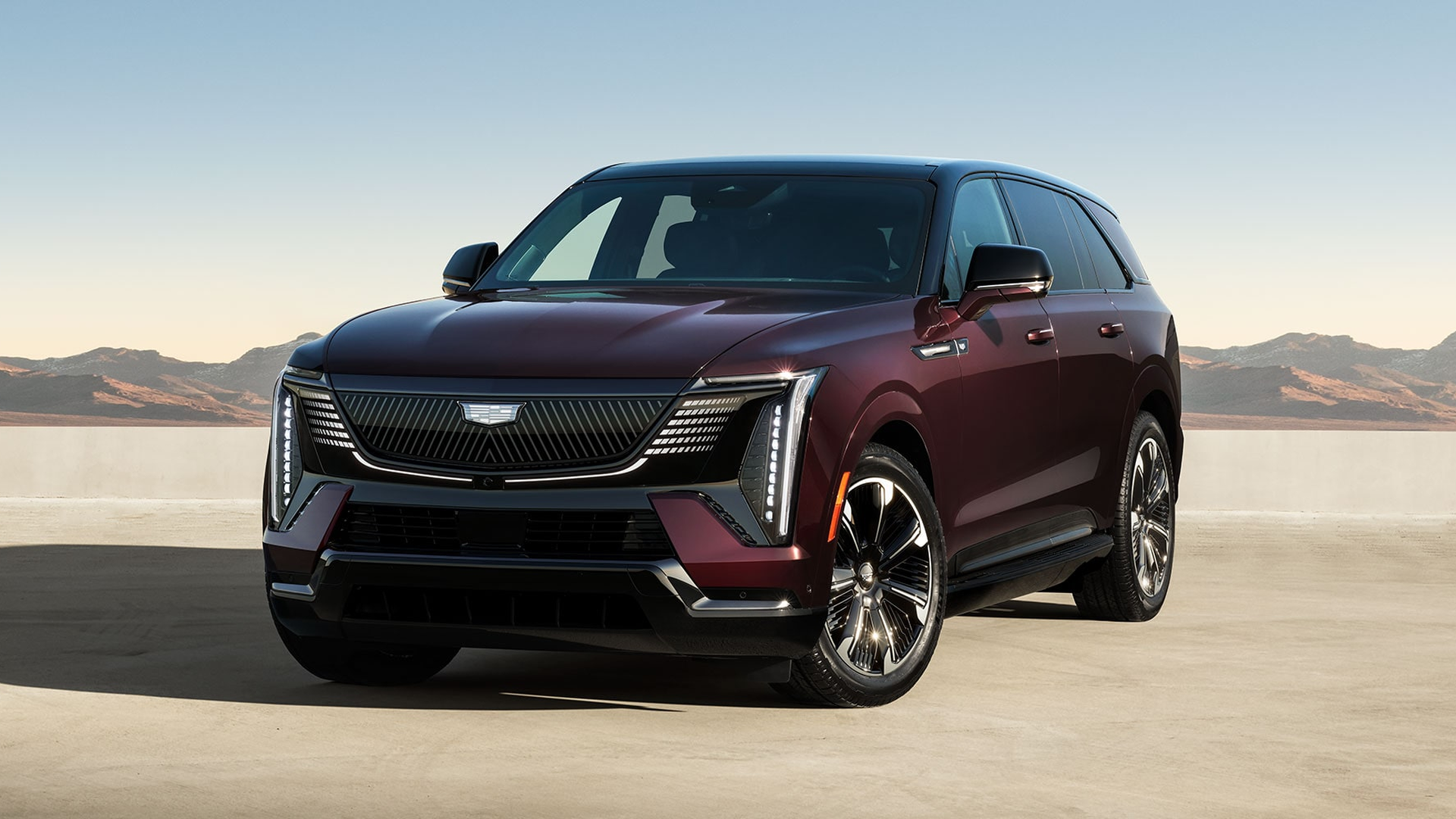
The Electric Reckoning of an American Icon
The Cadillac Escalade historically dominated the full-size luxury segment through sheer physical mass and brute-force V8 internal combustion. The Escalade IQ executes a violent pivot away from that legacy, entirely discarding the archaic body-on-frame truck architecture that defined the nameplate for a quarter-century. Engineers started with a blank digital canvas to create a machine that honors the imposing presence of the original while fundamentally rewriting the physics of propulsion. By leveraging the highly scalable Ultium platform, Cadillac forged a native electric leviathan that delivers hypercar-level acceleration, absolute acoustic serenity, and a palatial three-row interior, successfully future-proofing the brand's most critical flagship.
The Ultium Platform and Structural Metallurgy
Traditional gasoline-powered SUVs bolt a steel body onto a heavy ladder frame. The Escalade IQ rejects this compromise entirely. It utilizes a dedicated electric skateboard architecture where the massive battery pack operates as a fully stressed, load-bearing mechanical member of the chassis. To achieve the immense structural rigidity required to manage a vehicle of this physical footprint, structural metallurgists deployed advanced high-strength steel and extruded aluminum throughout the unibody safety cage.
During the robotic assembly process at the Factory ZERO Detroit-Hamtramck Assembly Center, machines apply continuous beads of aerospace-grade structural adhesive along the primary weld seams. This dual-bonding metallurgical strategy drastically increases the torsional stiffness of the overall shell. A completely rigid chassis refuses to flex or twist when the heavy vehicle traverses off-camber terrain or severe urban potholes. Because the unibody remains completely stable, the independent suspension components can absorb brutal impacts with absolute mathematical precision, isolating the passenger cabin entirely from the chaotic road surface below.
The Escalade IQ abandons the archaic truck roots of its predecessors, utilizing the 24-module battery pack itself as a fundamental structural component to achieve an unprecedented 15 percent increase in torsional rigidity over its gasoline-powered counterparts.
Aerodynamic Sculpting for Massive Range
Overcoming atmospheric drag represents the greatest enemy of electric vehicle range. Designers faced the monumental task of smoothing the airflow over a vehicle with the aerodynamic profile of a brick. The exterior sheet metal of the Escalade IQ features aggressive, calculated surface tension. The front fascia lacks a traditional internal combustion radiator grille, allowing engineers to completely seal the front end. Active aerodynamic shutters located low in the bumper open only when the thermal management system requires ambient air to cool the battery heat exchangers, snapping shut at highway speeds to create a seamless aerodynamic shield.
The wheels are pushed aggressively to the extreme corners, utilizing highly optimized, flush-faced 24-inch alloy rims that prevent turbulent air from churning within the wheel wells. The flush side glass and completely flat underbelly prevent the suspension components from acting as aerodynamic parachutes. A sharply trailing roofline spoiler physically trips the boundary layer of air detaching from the rear glass, neutralizing the massive low-pressure drag wake that typically plagues square-backed utility vehicles. These microscopic adjustments lower the coefficient of drag by a staggering 15 percent compared to previous generations, allowing the massive SUV to carve efficiently through the atmosphere while entirely eliminating tailpipe CO2 emissions.
Bimodal Propulsion and Velocity Max
Propelling an ultra-luxury vehicle of this magnitude requires devastating mechanical force. The Escalade IQ utilizes a dual-motor AWD architecture. Permanent magnet synchronous motors sit on both the front and rear axles. Because there is no physical, heavy steel driveshaft connecting the wheels, the central traction computers can digitally vector torque in a matter of microseconds, reacting to slick winter pavement far faster than traditional hydraulic clutches ever could.
The powertrain operates primarily in a standard configuration for smooth, effortless city driving. However, engaging Velocity Max alters the entire digital profile of the vehicle. The inverters flood the electric stators with maximum amperage, unlocking the full potential of the battery pack. In this aggressive drive mode, the vehicle generates a staggering 750 horsepower and 785 lb-ft of instantaneous torque. The massive SUV squats on its rear suspension and launches from zero to 60 mph in under 4.0 seconds, generating off-the-line thrust that violently humiliates dedicated European sports cars.
Ultium Powertrain Specifications
- Drive Architecture
- Dual-Motor eAWD, Front and Rear Permanent Magnet Synchronous Motors
- Maximum Power Output
- 750 hp (Velocity Max Mode)
- Peak Torque
- 785 lb-ft (Velocity Max Mode)
- Battery Capacity
- 200+ kWh, 24-Module Lithium-Ion
- Estimated Driving Range
- 450 miles
- Maximum Towing Capacity
- 8,000 lbs
800-Volt Architecture and Bidirectional Charging
Achieving a targeted 450-mile driving range requires an astronomical volume of energy storage. The Escalade IQ packages a 24-module, 200-kWh Ultium battery pack securely between the axles. To manage the extreme heat generated during rapid discharge and high-speed highway cruising, the pack utilizes an advanced liquid-cooling loop. A specialized thermal heat pump captures waste heat from the power electronics and directly channels it into the passenger cabin to warm the occupants during winter driving, preserving precious battery voltage that would otherwise be wasted on resistive electric heaters.
The vehicle operates on a true 800-volt electrical architecture. When connected to a 350-kW DC fast-charging station, the thick liquid-cooled cables can force up to 100 miles of driving range into the battery cells in just 10 minutes. The crossover also features Vehicle-to-Home (V2H) bidirectional charging capabilities. During a severe residential power grid failure, the Escalade IQ can reverse its electrical flow, operating as a massive external power bank capable of running a standard American household for several days.
Kinematic Supremacy: Magnetic Ride and Arrival Mode
Managing the immense curb weight of a full-size electric SUV requires highly advanced suspension hardware. The vehicle rides on an independent front and rear Adaptive Air Suspension system. This pneumatic hardware can physically raise the chassis up to 1 inch for clearing deep snow or lower it by 2 inches to reduce aerodynamic drag during high-speed interstate cruising.
Paired directly with the air springs is Magnetic Ride Control 4.0. The shock absorbers contain a specialized magneto-rheological fluid filled with microscopic iron particles. Sensors read the road surface topography every millisecond. An electromagnetic coil surrounding the damper instantly alters the viscosity of the fluid, stiffening the outside shocks during heavy cornering to crush body roll and softening them entirely when traversing broken cobblestone streets.
To negotiate incredibly tight urban parking structures, engineers integrated Four-Wheel Steer technology. At low speeds, the rear wheels physically turn in the opposite direction of the front wheels, drastically shrinking the turning diameter to a compact 39.4 feet. Cadillac pushed this mechanical hardware even further by introducing Cadillac Arrival Mode. This specific digital program allows all four wheels to angle in the exact same direction, allowing the massive SUV to glide diagonally into a parallel parking space, an engineering feat that completely redefines low-speed maneuverability.
The 55-Inch Digital Cockpit
The interior architecture abandons traditional analog luxury entirely, favoring an intensely digital, futuristic environment. The dashboard features a jaw-dropping 55-inch total diagonal pillar-to-pillar LED display. This continuous sheet of polarized glass stretches from the driver's left A-pillar across the entire cabin to the passenger's right A-pillar. Powered by the Snapdragon Cockpit Platform, the system renders high-definition vehicle telemetry, complex navigation mapping, and streaming media with absolute cinematic clarity.
Cadillac acoustic engineers approached the Escalade IQ cabin as a dedicated sound studio. By utilizing thick acoustic-laminated glass and eliminating the internal combustion engine entirely, they created a rolling sensory deprivation chamber. To fill this silence, buyers can equip the Executive Second Row package with a 40-speaker AKG Studio Reference audio system. This acoustic hardware utilizes amplifiers driving speakers embedded directly into the front headrests, delivering immersive 360-degree spatial audio that rivals professional recording studios.
The Executive Second Row and Cargo Volumetrics
True luxury dictates absolute passenger comfort in every seating position. The available Executive Second Row package transforms the rear cabin into a mobile boardroom. It replaces the standard bench seat with two massive, highly contoured captain's chairs featuring 16-way power adjustability, active heating, ventilation, and complex pneumatic massage functions. Rear executives deploy dual stowable tray tables and command their climate and audio preferences through individual 12.6-inch personal screens.
Removing the massive V8 engine from the front of the vehicle freed up massive amounts of physical space. Cadillac repurposed this void to create the eTrunk. This cavernous, motorized front storage compartment offers 12 cubic feet (ft3) of highly secure, weather-proof cargo volume. It easily swallows two golf bags or large luggage sets, entirely separating dirty gear from the pristine leather interior of the main cabin. When the power-folding third-row seats are laid completely flat, the interior swallows massive payload demands, proving that extreme luxury does not require sacrificing genuine utility.
Super Cruise and the Digital Shield
Protecting the modern family requires a massive suite of ADAS hardware. The Escalade IQ acts as a rolling sensor array, integrating high-resolution radar, ultrasonic sensors, and external optical cameras. The crown jewel of this technological arsenal is the standard Super Cruise system. Operating as the industry's first true hands-free driving technology, Super Cruise relies on highly precise LiDAR map data spanning hundreds of thousands of miles of divided interstates across North America.
When engaged, the vehicle autonomously manages acceleration, aggressive braking, and lane-centering. It can even execute autonomous lane changes to pass slower-moving traffic without any physical input from the pilot. A small infrared camera mounted firmly on the steering column constantly monitors the driver's eye movements and head position. If the digital system detects the driver is looking away from the road for too long, it triggers escalating visual and audible alerts, ensuring that the human pilot remains highly attentive while dramatically reducing the physical fatigue associated with cross-country road trips.
The Cadillac Escalade IQ entirely resets the global benchmark for the full-size luxury utility segment. By completely rejecting internal combustion in favor of a hyper-advanced 800-volt Ultium architecture, it delivers a driving experience that is violently fast yet completely serene. From its pillar-to-pillar digital displays and true hands-free driving capabilities to its diagonal-driving Arrival Mode, the IQ stands as a highly intelligent, intensely capable machine engineered to dominate the zero-emission era.