
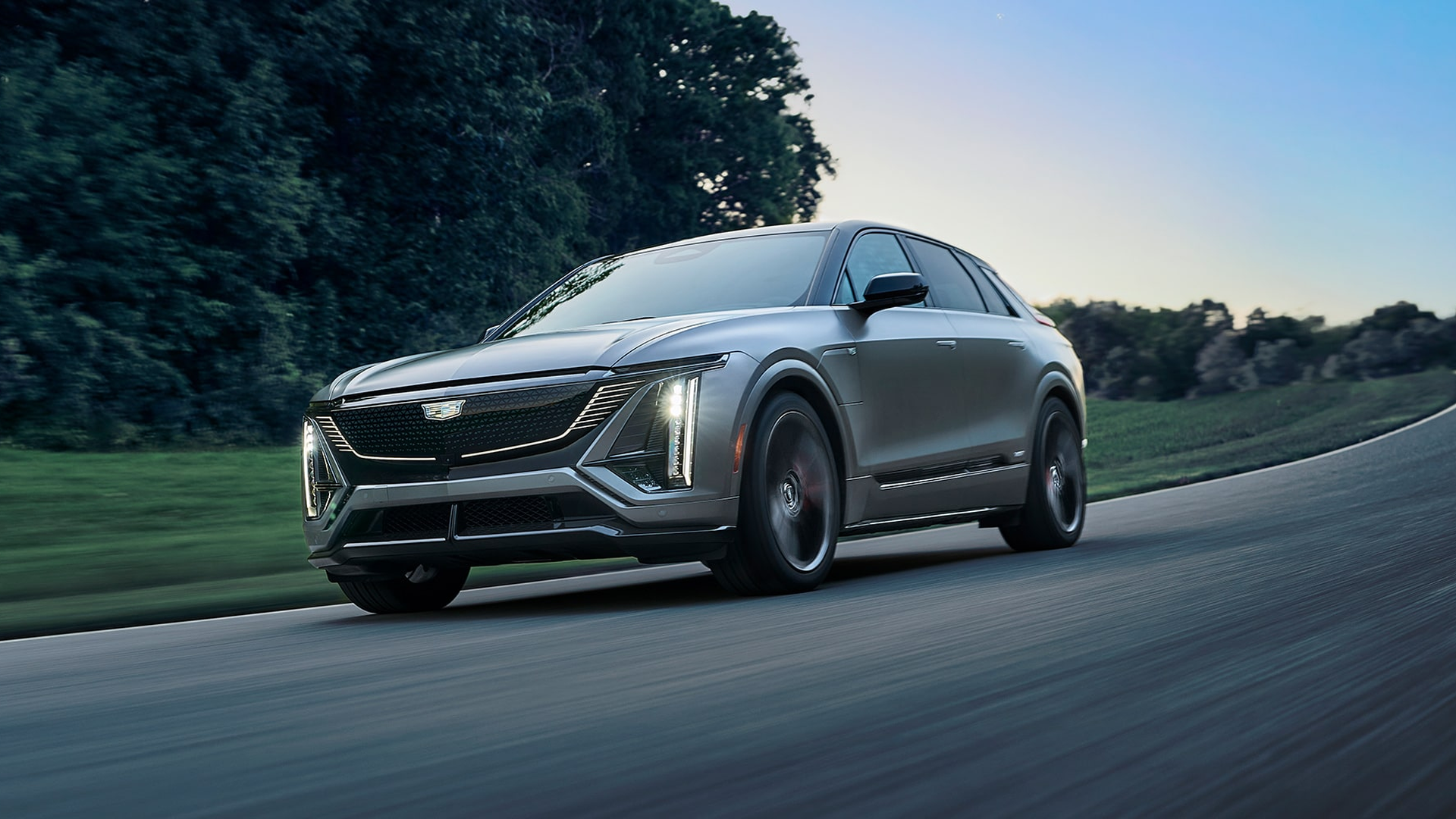
Forging a New Standard: The Ultium Architecture
Cadillac abandoned iterative development to create the LYRIQ, executing a total architectural reinvention. They discarded the heavy, compromised internal combustion chassis and engineered a dedicated unibody skeleton around the GM Ultium platform. This highly scalable architecture physically integrates the massive high-voltage battery pack directly into the floorpan, acting as a stressed structural member rather than dead payload. By fusing the structural extrusions of the pack housing with the primary chassis rails, metallurgical engineers achieved unprecedented torsional rigidity. You pilot the crossover through sweeping canyon curves, and the chassis simply refuses to twist or shudder, keeping the massive wheels perfectly aligned against the asphalt.
This structural foundation completely alters the geometric center of gravity. Pushing the heavy battery cells low to the ground and stretching the wheelbase neutralizes the top-heavy pendulum effect that typically plagues traditional sport utility vehicles. The resulting weight distribution approaches a near-perfect 50/50 balance, providing sports sedan agility within a highly pragmatic crossover footprint.
The Cadillac LYRIQ represents the absolute tipping point for the brand. It proves that American luxury no longer requires a mechanical V8; true premium execution is now defined by near-silent electric thrust and digital sophistication.
Transforming Spring Hill: The Manufacturing Renaissance
Bringing the LYRIQ into production required a massive logistical and financial overhaul of General Motors' historic manufacturing footprint. The company invested two billion dollars to completely retool the Spring Hill Assembly plant in Tennessee, transitioning the facility from building traditional internal combustion engines to manufacturing highly advanced electric architectures. This industrial metamorphosis involved ripping out antiquated hydraulic stamping presses and installing cutting-edge robotic megacasting machinery. The factory floor was heavily modified to accommodate the marriage process of the massive Ultium battery pack to the unibody skeleton, an operation that requires absolute millimeter precision to ensure the structural integrity of the final vehicle.
High-Voltage Chemistry: NCMA Cell Technology
Energy density dictates the hierarchy of the electric vehicle segment. The LYRIQ utilizes a massive 102-kWh lithium-ion battery pack featuring highly advanced NCMA pouch cells. By heavily doping the cathode chemistry with aluminum, chemical engineers drastically reduced the reliance on expensive, volatile rare-earth metals like cobalt by over 70 percent compared to previous generation batteries. This distinct chemical formulation increases the thermal stability of the pack while maximizing volumetric energy density, targeting over 300 miles of driving range on a single charge.
Managing the extreme thermal friction generated during 190-kW direct-current fast charging requires severe thermodynamic control. The LYRIQ employs a sophisticated energy recovery system and heat pump architecture. This specific thermal loop actively scavenges waste heat generated by the spinning electric motors and high-voltage power inverters. It routes this thermal energy directly into the passenger cabin to warm occupants, completely eradicating the need for highly inefficient resistive heating elements that actively destroy winter driving range.
Propulsion Kinematics: Rear-Wheel Drive and Dual-Motor Dynamics
Cadillac offers the LYRIQ in two distinct propulsion topologies. The base configuration honors the brand's classic driving dynamics by utilizing a single permanent magnet synchronous motor mounted directly to the rear subframe. This rear-wheel-drive architecture produces a highly responsive 340 horsepower and 325 lb-ft of torque. Because the front tires are completely relieved of propulsion duties, the steering feel remains razor-sharp and utterly devoid of torque steer during heavy acceleration from a dead stop.
Drivers demanding absolute traction select the Dual Motor AWD variant. Engineers integrate a secondary electric motor to the front axle, pushing combined output to a staggering 500 horsepower and 450 lb-ft of torque. The onboard digital traction control system calculates grip micro-adjustments 1,000 times per second, seamlessly vectoring massive amperage between the front and rear tires. You pin the accelerator to the floorboard on slick winter pavement, and the heavy crossover violently launches without a single degree of tire slip, utilizing brute electric force to command the asphalt.
LYRIQ Dual Motor AWD Specifications
- Motor Architecture
- Dual Permanent Magnet Synchronous Motors
- Battery Capacity
- 102 kWh NCMA Lithium-Ion
- Peak Horsepower
- 500 hp
- Peak Torque
- 450 lb-ft
- Peak DC Fast Charging Rate
- 190 kW
Regen on Demand and Kinetic Recovery
Shedding kinetic energy safely and efficiently transforms the driving experience. The LYRIQ integrates a true one-pedal driving system, allowing the pilot to accelerate and brake entirely through the accelerator pedal. Lift off the throttle, and the electric motors violently reverse their magnetic polarity, functioning as heavy-duty generators. This physical resistance converts the vehicle's forward momentum directly back into electrical energy, forcing it into the battery pack and massively reducing tailpipe CO2 output during heavy urban traffic.
Cadillac engineers elevated this system by integrating the Regen on Demand paddle directly into the steering wheel. The driver manually pulls the pressure-sensitive paddle to engage aggressive regenerative braking without ever touching the friction brake pedal. Pull the paddle hard, and the crossover dives into the apex, scrubbing speed entirely through magnetic resistance. If emergency stopping power is required, the digital brake-by-wire module seamlessly engages the massive physical brake calipers, clamping down on heavily ventilated iron rotors to halt the vehicle instantly.
Suspension Geometry and Passive Damping
Isolating the passenger cabin from the chaos of decaying American infrastructure requires highly complex suspension kinematics. The LYRIQ utilizes a five-link independent front and rear suspension geometry. This specific multi-link architecture precisely controls wheel camber and toe during extreme lateral cornering, ensuring the massive 22-inch alloy wheels maintain an optimal physical contact patch with the road surface.
Rather than relying on heavy, complex air suspension systems, Cadillac deployed premium passive dampers. These highly advanced shock absorbers feature internal twin-tube valving that physically reacts to suspension input frequencies. Hit a harsh, high-frequency expansion joint, and the internal valve opens to swallow the impact. Pitch the crossover into a sweeping curve, and the low-frequency body roll forces the valve closed, drastically stiffening the shock to keep the heavy chassis completely flat.
Aerodynamic Sculpting and Dynamic Lighting
Punching a mid-size crossover profile through the atmosphere dictates fuel efficiency. Wind tunnel testing shaped every square millimeter of the LYRIQ's exterior sheet metal. The traditional open front grille is entirely eradicated, replaced by a striking Black Crystal shield that dramatically reduces aerodynamic drag. Flush-mounted door handles retreat entirely into the doors at highway velocities. The aggressively sloped windshield and highly sculpted rear roofline spoiler actively manage the slipstream, directing turbulent air cleanly off the rear hatch to minimize the low-pressure drag wake.
The Black Crystal shield is not merely an aerodynamic plug; it serves as a dynamic visual communicator. Because electric vehicles do not require massive volumes of ambient air to cool a hot engine block, designers transformed the traditional grille real estate into a three-dimensional polycarbonate canvas. Backlit by dozens of individual LED modules, the shield executes a complex lighting choreography as the owner approaches the vehicle. The light sequence ripples outward from the central Cadillac crest, cascading down the vertical daytime running lights in a highly orchestrated greeting sequence that physically merges digital technology with exterior automotive styling.
Acoustic Isolation and the Digital Cabin
Reducing atmospheric drag inherently reduces wind roar, but true luxury demands absolute acoustic isolation. The LYRIQ cabin functions as a rolling anechoic chamber. Engineers utilized thick acoustic laminated glass on the windshield and front side windows. Heavy-duty mastic sound deadening lines the floorpan and inner wheel wells. To combat the distinct low-frequency hum of rolling tires, the vehicle deploys a highly advanced Active Noise Cancellation system. Microphones embedded in the cabin detect unwanted acoustic frequencies, and the system instantly broadcasts inverse sound waves through the audio speakers to physically phase-cancel the droning road noise.
Spatially, the lack of a transmission tunnel radically opens the cabin. The center console floats between the front seats, offering massive storage volume beneath the primary armrest. Passengers experience generous legroom, with rear occupants gaining the distinct advantage of a completely flat floorpan. Engineers optimized the heating, ventilation, and air conditioning (HVAC) system to operate with extreme acoustic stealth. By utilizing wider ducting and variable-speed blower motors, the system floods the cabin with temperature-controlled air without producing the loud, rushing wind noise that typically accompanies high-fan settings in lesser vehicles.
The interior architecture completely rejects analog tradition. The dashboard curves aggressively toward the driver, housing a continuous 33-inch diagonal high-resolution advanced LED display. This massive, single piece of curved glass completely bridges the instrument cluster and the central infotainment command center. Utilizing a stunning 9K resolution output, the screen is capable of emitting over one billion specific colors, rendering vehicle telemetry, predictive mapping, and multi-zone climate functions with the processing speed of a premium tablet. Authentic materials define the tactile experience. Open-pore wood trim lines the door panels, featuring intricate, laser-etched patterns that illuminate softly at night. The AKG Studio Audio system completely envelops the passengers, utilizing 19 specifically placed speakers-including high-frequency tweeters embedded directly into the front seat headrests-to create a fully immersive, three-dimensional acoustic environment.
Super Cruise: Hands-Free Highway Autonomy
Autonomous highway navigation requires flawless, instantaneous sensor fusion. The LYRIQ features the Super Cruise driver assistance platform, utilizing a highly advanced array of exterior cameras, high-resolution radar, and precision LiDAR map data. This system allows for genuine hands-free driving on hundreds of thousands of miles of compatible divided interstates across North America. It actively monitors surrounding traffic patterns, safely executing automatic lane changes to bypass slower vehicles without requiring a single physical steering input from the pilot.
Safety protocols remain absolute. A dedicated infrared camera mounted securely on the steering column constantly tracks the driver's eye movement and head position. The system requires absolute visual engagement with the road ahead. If the pilot becomes distracted or falls asleep, the vehicle issues escalating visual and audible warnings, vibrates the safety alert seat, and will ultimately bring the heavy crossover to a complete, controlled stop on the shoulder of the highway, flashing the hazard lights and automatically contacting emergency services. The Cadillac LYRIQ proves that zero-emission propulsion does not require sacrificing luxury; it actively enhances it, creating a highly capable, structurally advanced machine that sets a devastating new benchmark for the American premium segment.