
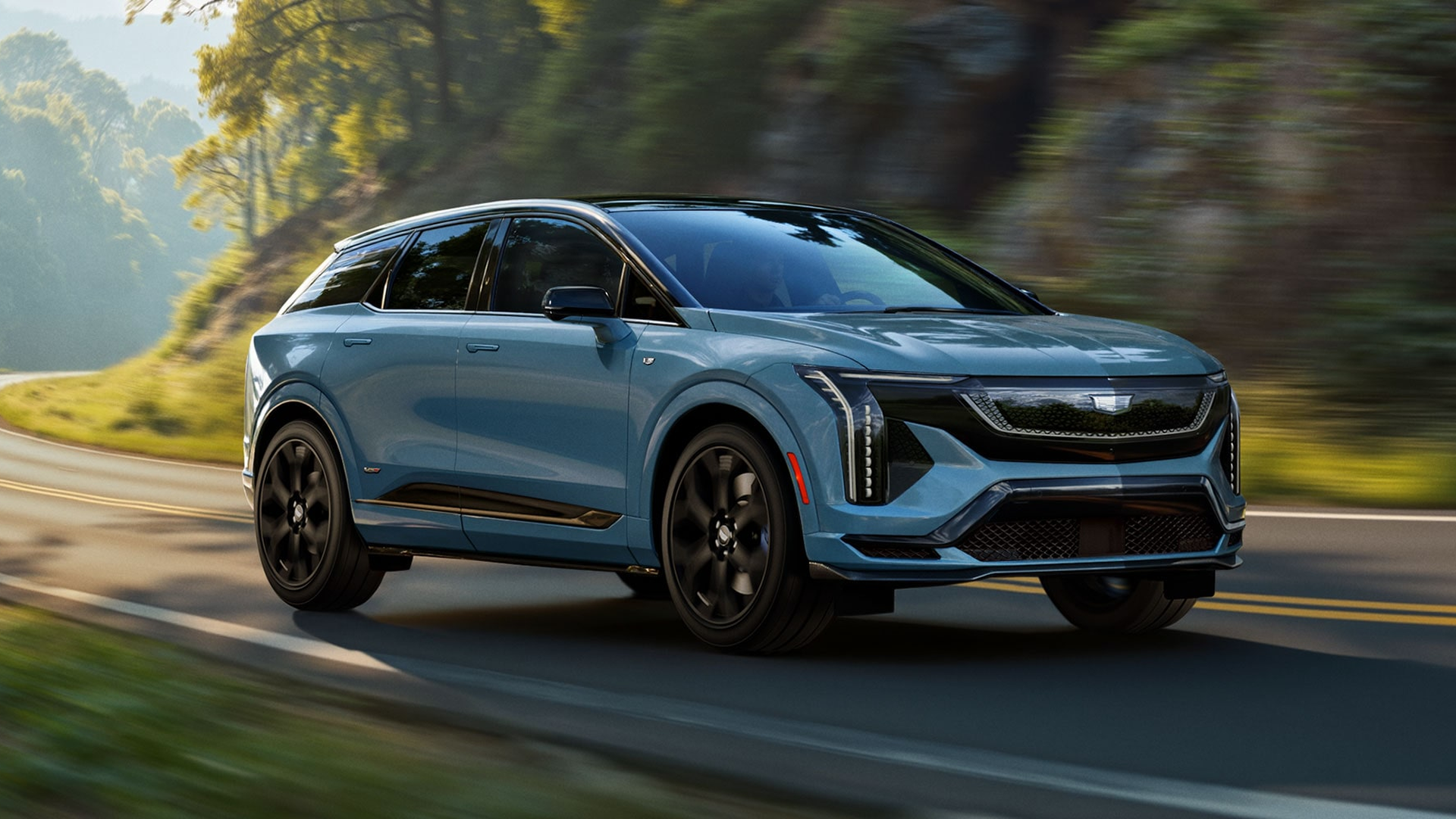
Forging a New Standard: The Ultium Architecture
The Cadillac OPTIQ does not utilize a repurposed, compromised internal combustion chassis. It rides on a dedicated, clean-sheet electric vehicle architecture. The massive 85-kWh high-voltage battery pack functions as a fully integrated, stressed structural member of the floorpan. This physical integration drastically increases the vehicle's torsional rigidity. You pitch the compact SUV into a tight canyon apex, and the unibody shell refuses to flex. The suspension geometry remains perfectly aligned under extreme lateral loads, keeping the massive tires glued to the asphalt. This unyielding structural foundation entirely eradicates the high-frequency squeaks and structural shudders that plague aging, bolt-together crossover architectures.
This structural foundation completely alters the geometric center of gravity. Pushing the heavy battery cells low to the pavement and stretching the wheelbase neutralizes the top-heavy pendulum effect that typically plagues traditional sport utility vehicles. The resulting weight distribution approaches a near-perfect balance, providing genuine sports sedan agility within a highly pragmatic, urban-friendly footprint.
The transition to the Ultium platform represents the most aggressive engineering pivot in Cadillac's century-long history, fundamentally rewriting the physics of how mass, torque, and structural rigidity interact on the pavement.
Powertrain Topologies and Instantaneous Thrust
Motivation arrives through multiple distinct powertrain configurations, each tailored to specific performance demands. The standard rear-wheel-drive (RWD) variant utilizes a single permanent magnet synchronous motor to produce a highly responsive 315 horsepower and 332 lb-ft of torque. Because the front tires are completely relieved of propulsion duties, the steering feedback remains razor-sharp, completely immune to the torque steer that ruins the driving dynamics of lesser compact crossovers.
The base rear-wheel-drive powertrain is not a sluggish economy variant. Producing 315 horsepower, it represents a massive leap in standard equipment output compared to the turbocharged four-cylinder engines that dominated this segment for a decade. The instant torque delivery inherent to electric motors means the OPTIQ effortlessly merges into high-speed interstate traffic, providing the pilot with absolute confidence in any passing situation.
Drivers demanding absolute traction and explosive acceleration opt for the dual-motor All-Wheel Drive (AWD) setup. This architecture integrates a secondary motor to the front axle, pushing combined output to a staggering 440 horsepower and 498 lb-ft of torque. The onboard digital traction control system calculates grip micro-adjustments 1,000 times per second. It seamlessly vectors massive amperage between the front and rear tires. You pin the accelerator to the floorboard on slick winter pavement, and the OPTIQ violently launches without a single degree of tire slip, utilizing brute electric force to command the asphalt.
OPTIQ Dual Motor AWD Specifications
- Motor Architecture
- Dual Permanent Magnet Synchronous Motors
- Battery Capacity
- 85 kWh Usable Lithium-Ion
- Peak Horsepower
- 440 hp
- Peak Torque
- 498 lb-ft
- EPA Estimated Range
- 303 miles
High-Voltage Chemistry and Thermodynamic Management
Energy density dictates the physical capabilities of the modern electric vehicle. The OPTIQ utilizes advanced nickel-cobalt-manganese-aluminum (NCMA) pouch cells packaged within its 85-kWh usable pack. By heavily doping the cathode chemistry with aluminum, chemical engineers drastically reduced the reliance on expensive, volatile rare-earth metals while simultaneously increasing the thermal stability of the battery structure. This massive energy reserve targets a maximum driving range exceeding 300 miles on a single charge.
Cooling an 85-kWh pack during heavy direct-current fast charging requires severe thermodynamic control. The OPTIQ employs a sophisticated energy recovery system and heat pump architecture. This specific thermal loop actively scavenges waste heat generated by the spinning electric motors and high-voltage power inverters. It routes this thermal energy directly into the passenger cabin to warm occupants. This brilliantly eradicates the need for highly inefficient resistive electric heaters that physically destroy winter driving range. Connected to a 150-kW fast charger, the vehicle absorbs enough amperage to recover up to 79 miles of driving range in a mere 10 minutes.
Kinetic Recovery and One-Pedal Driving
Shedding kinetic energy safely and efficiently transforms the urban driving experience. The OPTIQ integrates a true one-pedal driving system, allowing the pilot to accelerate and brake entirely through the accelerator pedal. Lift off the throttle, and the electric motors violently reverse their magnetic polarity, functioning as heavy-duty generators. This physical resistance converts the vehicle's forward momentum directly back into electrical energy. It forces the current into the battery pack, massively reducing tailpipe CO2 output and entirely eliminating brake pad wear during heavy stop-and-go traffic.
Cadillac engineers elevated this system by integrating the Regen on Demand paddle directly into the steering wheel. The driver manually pulls the pressure-sensitive paddle to engage aggressive regenerative braking without ever touching the friction brake pedal. Pull the paddle hard, and the crossover dives into the apex, scrubbing speed entirely through magnetic resistance. If emergency stopping power is required, the digital brake-by-wire module seamlessly engages the massive physical brake calipers, clamping down on heavily ventilated iron rotors to halt the vehicle instantly.
Suspension Kinematics and Cornering Dynamics
Isolating the passenger cabin from the chaos of decaying American infrastructure requires highly complex suspension kinematics. The OPTIQ utilizes a fully independent suspension geometry at all four corners. Up front, MacPherson struts provide precise steering feedback, specifically tuned to manage the heavy mass of the electric drive unit. The rear architecture employs a sophisticated multi-link setup. This specific multi-link design precisely controls wheel camber and toe during extreme lateral cornering. It ensures the massive 20-inch or optional 21-inch alloy wheels maintain an optimal physical contact patch with the road surface.
Rather than relying on heavy, complex air suspension systems that frequently fail over long-term ownership, Cadillac deployed premium passive dampers. These highly advanced shock absorbers feature internal twin-tube valving that physically reacts to suspension input frequencies. Hit a harsh, high-frequency expansion joint, and the internal valve opens to swallow the impact entirely. Pitch the crossover into a sweeping, high-speed curve, and the low-frequency body roll forces the valve closed. This action drastically stiffens the shock absorber, fighting centrifugal force to keep the heavy chassis completely flat. The resulting ride quality is a masterful contradiction: supple over broken urban pavement, yet violently aggressive when attacking a mountain road.
AC Charging and Home Integration
While direct-current fast charging dominates road trip logistics, daily usability relies heavily on alternating-current home charging solutions. The OPTIQ is equipped with a standard 11.5-kW onboard charging module. Connected to a dedicated 240-volt Level 2 home charging station, this hardware replenishes the 85-kWh battery pack completely overnight, adding approximately 33 miles of range per hour. Buyers demanding faster home turnaround times can option the high-capacity 19.2-kW onboard charging module. This heavy-duty hardware pulls massive amperage from a hardwired residential EVSE, pushing up to 55 miles of range per hour into the lithium-ion cells.
Aerodynamic Sculpting and NVH Isolation
Punching a crossover profile through the atmosphere dictates highway fuel efficiency. Wind tunnel testing shaped every square millimeter of the OPTIQ's exterior sheet metal. The traditional open front grille is entirely eradicated, replaced by a striking Black Crystal shield that dramatically reduces aerodynamic drag. Flush-mounted door handles retreat entirely into the doors at highway velocities. The aggressively sloped windshield and highly sculpted rear roofline actively manage the slipstream. They direct turbulent air cleanly off the rear hatch to minimize the low-pressure drag wake.
The Black Crystal shield is not merely an aerodynamic plug; it serves as a dynamic visual communicator. Because electric vehicles do not require massive volumes of ambient air to cool a hot engine block, designers transformed the traditional grille real estate into a three-dimensional polycarbonate canvas. Backlit by dozens of individual LED modules, the shield executes a complex lighting choreography as the owner approaches the vehicle. The light sequence ripples outward from the central Cadillac crest, cascading down the vertical daytime running lights in a highly orchestrated greeting sequence that physically merges digital technology with exterior automotive styling.
Reducing atmospheric drag inherently reduces wind roar, but true luxury demands absolute acoustic isolation. The OPTIQ cabin functions as a rolling anechoic chamber. Engineers utilized thick acoustic laminated glass on the windshield and front side windows. Heavy-duty mastic sound deadening lines the floorpan and inner wheel wells. The vehicle deploys a highly advanced Active Noise Cancellation system. Microphones embedded in the cabin detect unwanted acoustic frequencies. The system instantly broadcasts inverse sound waves through the audio speakers to physically phase-cancel the droning road noise.
The Digital Cabin and Sensory Execution
The interior architecture completely rejects analog tradition. The dashboard curves aggressively toward the driver, housing a continuous 33-inch diagonal high-resolution advanced LED display. This massive, single piece of curved glass completely bridges the instrument cluster and the central infotainment command center. Utilizing a stunning 9K resolution output, the screen renders vehicle telemetry, predictive mapping, and multi-zone climate functions with the processing speed of a premium tablet. Google built-in integration provides flawless, native voice command capabilities, eliminating the frustrating latency of outdated proprietary infotainment systems.
Spatially, the lack of a mechanical transmission tunnel radically opens the cabin. The center console floats between the front seats, offering massive storage volume beneath the primary armrest. Passengers experience generous legroom, boasting a segment-best 37.8 inches of second-row legroom. Folding the rear seats flat exposes 57 ft3 of maximum cargo volume. Materials reflect true luxury execution. Authentic open-pore wood trim lines the door panels, accented by laser-etched metal speaker grilles. The AKG Studio Audio system utilizes 19 specifically placed speakers to create a fully immersive, Dolby Atmos-enabled three-dimensional acoustic environment.
Super Cruise and Autonomous Integration
Autonomous highway navigation requires flawless, instantaneous sensor fusion. The OPTIQ features the Super Cruise driver assistance platform. The software utilizes a highly advanced array of exterior cameras, high-resolution radar, and precision LiDAR map data. This system allows for genuine hands-free driving on hundreds of thousands of miles of compatible divided interstates across North America. It actively monitors surrounding traffic patterns. It safely executes automatic lane changes to bypass slower vehicles without requiring a single physical steering input from the pilot.
Safety protocols remain absolute. A dedicated infrared camera mounted securely on the steering column constantly tracks the driver's eye movement and head position. The system requires absolute visual engagement with the road ahead. If the pilot becomes distracted or falls asleep, the vehicle issues escalating visual and audible warnings. It vibrates the safety alert seat. Ultimately, it brings the heavy crossover to a complete, controlled stop on the shoulder of the highway, flashing the hazard lights and automatically contacting emergency services. The Cadillac OPTIQ dominates the entry-level luxury segment by refusing to compromise. It merges the visceral, instantaneous thrust of the Ultium platform with the meticulous, highly calibrated digital sanctuary expected of a modern American flagship.