
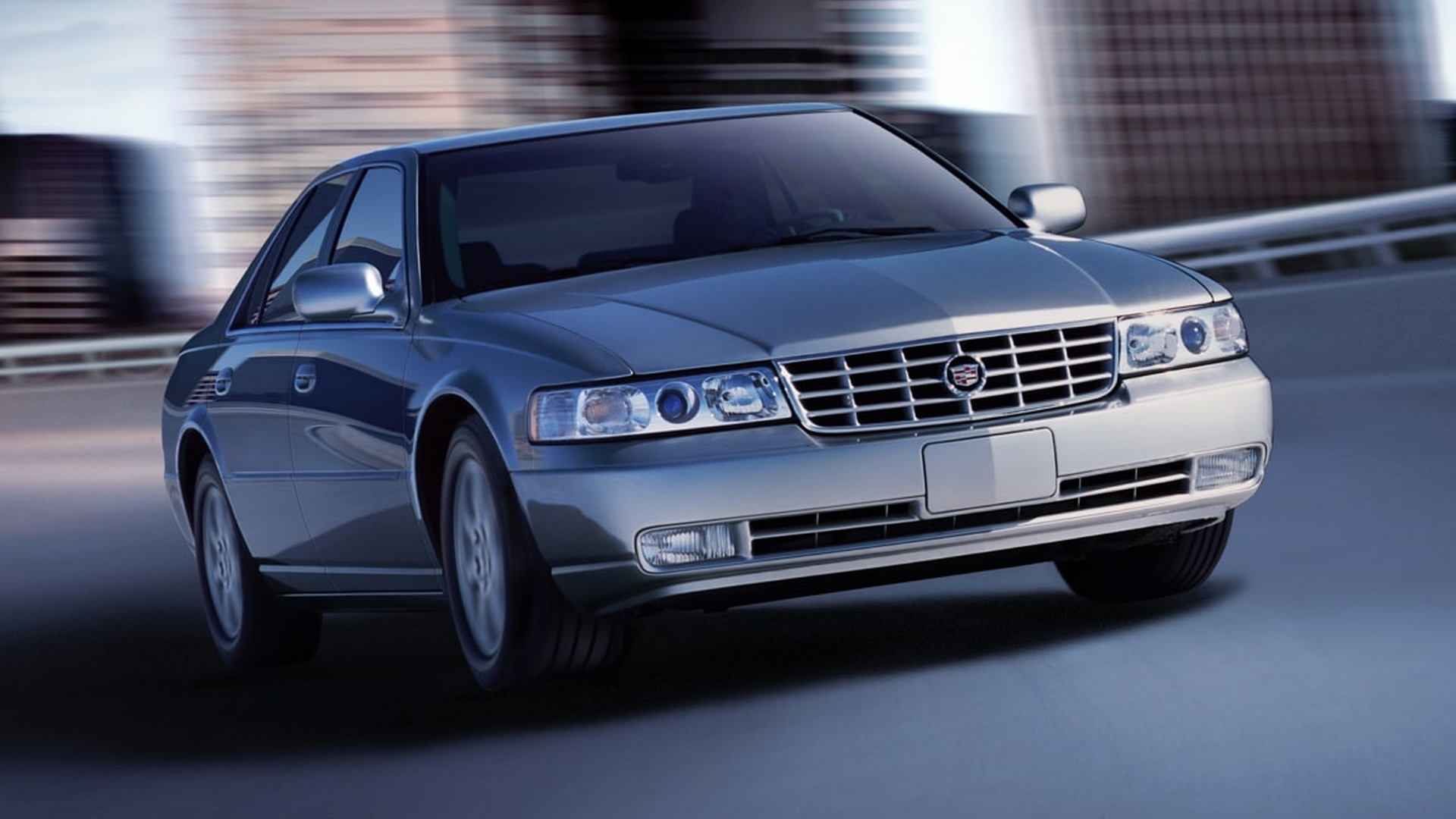
The K-Body Genesis: A Calculated Strike Against Europe
By the mid-1970s, the American luxury automotive landscape faced a severe existential threat. A new demographic of wealthy buyers completely rejected the massive, softly sprung domestic land yachts of the era, actively migrating toward the tightly tailored, highly communicative sedans produced by Mercedes-Benz and BMW. General Motors executed a rapid, surgical counter-offensive. Debuting in 1975 as a 1976 model, the Cadillac Seville explicitly targeted this European insurgency. It was the smallest, most expensive sedan in the Cadillac portfolio, instantly establishing a new paradigm that equated premium status with advanced engineering and precise exterior dimensions rather than sheer physical volume.
To accelerate the development cycle, engineers utilized the existing rear-wheel-drive X-body architecture as a foundational starting point. However, Cadillac metallurgists and structural engineers heavily modified this platform, entirely redesigning the suspension mounting points, widening the track, and deploying massive quantities of acoustic insulation to completely isolate the passenger cabin from NVH factors. The resulting K-body architecture provided a rock-solid mechanical foundation. The Seville tracked perfectly straight at high highway speeds, completely neutralizing the terrifying mid-corner wallow that historically plagued heavy American luxury vehicles.
Propulsion relied on a highly modified 350 cubic-inch (5.7-liter) Oldsmobile V8 engine. Cadillac engineers entirely discarded traditional carburetors, equipping this cast-iron powerplant with a highly advanced Bendix electronic fuel injection system. This system utilized primitive but effective analog microprocessors to meter fuel delivery based on real-time atmospheric density and throttle position. It generated 180 horsepower, delivering incredibly smooth, hesitation-free acceleration while drastically reducing tailpipe CO2 emissions compared to its carbureted siblings.
The 1976 Cadillac Seville was the very first American production vehicle to offer standard electronic fuel injection. This massive technological leap entirely eliminated the cold-start stalling and high-altitude power loss that plagued traditional luxury cars of the 1970s.
The Bustle-Back Era: Radical Aesthetics and FWD Transition
For the second generation, introduced in 1980, Cadillac executed a radical aesthetic and mechanical pivot. Designers penned the infamous "bustle-back" rear styling, drawing direct visual inspiration from the classic coachbuilt Hooper bodies of 1930s Rolls-Royce models. The razor-sharp front clip flowed into a severely sloping rear trunk lid, creating a polarizing but undeniably striking silhouette that commanded absolute attention on the asphalt.
Beneath the controversial sheet metal, the Seville transitioned to the E-body FWD architecture, sharing its mechanical layout with the Eldorado. Engineers mounted the engine longitudinally but routed power completely parallel to the front wheels via a heavy-duty chain drive. This unified powerplant package completely eliminated the interior transmission tunnel, creating a perfectly flat cabin floor that massively increased passenger volume.
This era also witnessed highly ambitious, albeit problematic, engineering experimentation. To combat severe federal fuel economy mandates, Cadillac introduced the L62 V8-6-4 engine for the 1981 model year. This system utilized computer-controlled solenoids to physically deactivate the intake and exhaust valves on specific cylinders under light aerodynamic loads. While the theory of variable displacement was incredibly sound, the primitive processing power of early 1980s ECU hardware failed to manage the mechanical transitions smoothly. The vehicle lurched and hesitated violently during highway cruising, forcing Cadillac to rapidly abandon the technology until computing power could catch up decades later.
The Era of Downsizing: Transverse Layout and the Birth of STS
The 1986 model year brought a massive structural downsizing. Responding to industry forecasts predicting soaring fuel prices, the third-generation Seville shrank drastically in every physical dimension. Engineers rotated the engine 90 degrees to sit transversely between the front wheels, mimicking the layout of traditional economy cars to maximize interior volume within a highly compact footprint. Early models utilized the aluminum-block HT-4100 4.1-liter V8, which generated a meager 130 horsepower and struggled to propel the vehicle with the authority expected of a premium luxury sedan.
However, this generation salvaged its legacy by introducing the Seville Touring Sedan (STS) in 1988. Recognizing that the standard Seville was too softly sprung to compete dynamically with the BMW 5 Series, Cadillac engineers aggressively recalibrated the suspension kinematics. The STS featured thicker anti-roll bars, specifically tuned steering gear for heavier, more communicative feedback, and a highly restrictive exhaust system to extract slightly more power from the V8. The STS trim completely rejected heavy chrome trim and whitewall tires, adopting a monochromatic, stealthy exterior aesthetic that signaled a renewed commitment to the serious driving enthusiast.
The Northstar Revolution: Reclaiming Global Authority
The 1992 redesign executed a violent course correction, entirely rescuing the nameplate from obscurity. Designers stretched the wheelbase and widened the track, reviving the muscular, commanding proportions of a true executive sedan. The Seville achieved massive global critical acclaim, specifically for the high-performance STS variant, which entirely closed the dynamic gap between American and European sport sedans.
The absolute mechanical savior of this generation arrived for the 1993 model year: the 4.6-liter Northstar V8. This highly advanced powerplant completely eradicated the anemic performance of the 1980s. The engine featured a highly rigid two-piece die-cast aluminum block, dual overhead camshafts, and four valves per cylinder. The high-output L37 variant utilized in the STS generated a thrilling 300 horsepower. The engine screamed to a 6,000 RPM redline, delivering a visceral, high-pitched exhaust howl completely foreign to traditional Cadillac buyers.
4.6L L37 Northstar V8 Specifications
- Engine Block Architecture
- Transverse 90-degree V8, Die-Cast Aluminum Block and Heads
- Displacement
- 4565 cm3
- Valvetrain
- Dual Overhead Cam, 32 valves
- Peak Horsepower (STS)
- 300 hp @ 6,000 RPM
- Peak Torque
- 295 lb-ft @ 4,400 RPM
- Transmission
- Hydra-Matic 4T80-E 4-Speed Automatic Transaxle
Kinematic Supremacy: CVRSS and StabiliTrak
To manage 300 horsepower channeling exclusively through the front wheels, engineers deployed the Continuously Variable Road Sensing Suspension (CVRSS). This early active damping system utilized multiple optical and gyroscopic sensors to read the road surface topography. It aggressively adjusted the hydraulic valving inside the physical shock absorbers in mere milliseconds to physically crush body roll during heavy cornering while remaining perfectly compliant on broken urban pavement.
In 1997, Cadillac introduced StabiliTrak to the Seville STS. This highly advanced stability control matrix operated as a digital safety net. If steering wheel angle sensors and chassis yaw sensors detected the vehicle entering an uncontrollable skid on slick asphalt, the system instantly applied individual brake calipers to specific wheels while simultaneously pulling engine timing. This aggressive digital intervention physically rotated the heavy sedan back onto its intended trajectory, completely neutralizing terrifying spin-outs.
The Final Generation: Global Export and Magnetic Ride Control
The fifth and final generation of the Seville debuted for the 1998 model year. Built upon the highly rigid G-body platform, this iteration was the very first Cadillac explicitly engineered for global export in both left-hand and right-hand drive configurations. Designers tightened the exterior sheet metal, resulting in a sleeker, highly aerodynamic profile that drastically reduced wind noise at sustained Autobahn speeds.
The interior architecture focused intensely on tactile luxury and advanced digital telemetry. The dashboard featured an electro-luminescent analog gauge cluster that remained completely invisible until the ignition was engaged. The seats utilized highly complex pneumatic bladders that continuously adjusted lumbar support based on seating pressure, aggressively fighting driver fatigue during cross-country transcontinental touring.
The absolute crowning engineering achievement of the Seville's lifespan arrived in the 2002 STS: the debut of Magnetic Ride Control (MagneRide). Replacing the CVRSS system, MagneRide shock absorbers contained a specialized magneto-rheological fluid filled with microscopic iron particles. An electromagnetic coil surrounding the damper instantly altered the viscosity of the fluid, aggressively stiffening the outside shocks during heavy cornering to crush severe body roll, and softening them entirely to absorb harsh bridge expansion joints. This provided an incredibly wide dynamic bandwidth, allowing the heavy sedan to ride like a traditional luxury car on the interstate while gripping the asphalt like a dedicated sports car in the canyons.
The Seville Legacy
Cadillac officially retired the Seville nameplate in 2004, rebranding its successor simply as the STS to align with a new alphanumeric corporate naming strategy. However, the legacy of the Seville is permanently etched into American automotive history. It served as the crucial bridge between the massive land yachts of the 1970s and the hyper-advanced, globally competitive sport sedans of the modern era. By aggressively pushing the boundaries of electronic fuel injection, variable valve timing, active suspension kinematics, and unibody rigidity, the Cadillac Seville proved definitively that American engineers could successfully execute a highly intelligent, intensely capable executive sedan worthy of the global stage.