
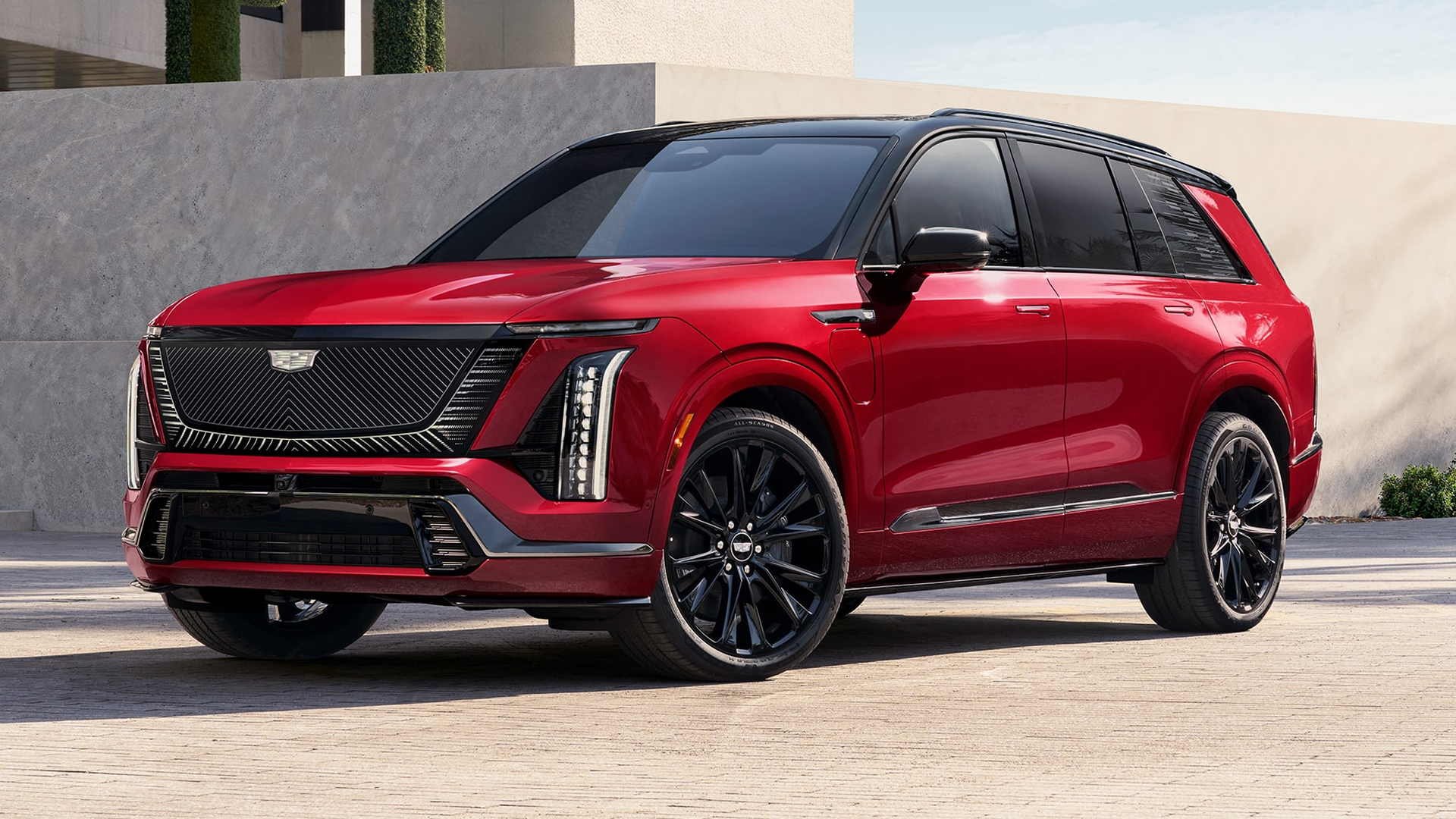
Forging the Three-Row EV Paradigm
Cadillac identified a severe packaging void within their electric portfolio, recognizing that large families required substantial volumetric capacity without the immense exterior footprint of a full-size, truck-based platform. They executed a brilliant mechanical pivot by engineering the VISTIQ. This vehicle utilizes the highly scalable OEM Ultium platform, stretching the unibody architecture to perfectly accommodate three rows of adult-sized seating. By pushing the massive 23-inch forged aluminum wheels to the absolute extreme corners of the chassis, designers maximized the interior wheelbase while radically reducing front and rear overhangs. This geometric strategy ensures the vehicle retains the aggressive, low-slung stance of a dedicated performance machine rather than adopting the bloated proportions of a traditional family hauler.
The transition from internal combustion architecture to the Ultium platform represents the most aggressive engineering pivot in Cadillac's 120-year history, fundamentally rewriting the physics of how mass, torque, and structural rigidity interact on the pavement.
Ultium Structural Metallurgy and Megacasting
Traditional internal combustion architectures rely on heavy steel frame rails that inevitably flex under severe lateral loads. The VISTIQ discards this antiquated approach entirely. The massive high-voltage battery pack does not simply bolt to the floorpan as dead weight; it functions as a fully integrated, stressed structural member of the chassis. Engineers utilized advanced megacasting techniques to form the front and rear subframes out of single pieces of aluminum, drastically reducing the total part count and eliminating hundreds of robotic spot welds.
This metallurgical integration exponentially increases the overall torsional rigidity of the vehicle. You pitch the heavy SUV into a steep, sweeping highway off-ramp, and the chassis refuses to twist. The suspension geometry remains perfectly aligned under load, keeping the massive tires planted firmly against the asphalt. This unyielding rigidity completely eradicates the high-frequency squeaks and structural shudders that typically plague aging three-row utility vehicles.
Dual-Motor Propulsion and Velocity Max
Motivation arrives via a highly advanced dual-motor AWD powertrain. Engineers placed a highly efficient permanent magnet synchronous motor on both the front and rear axles. This configuration completely eliminates the heavy, parasitic mechanical driveshaft found in legacy sport utility vehicles. The onboard computers digitally vector torque between the front and rear tires in a matter of milliseconds, reacting to wheel slip on slick winter asphalt faster than physical mechanical linkages ever could.
Combined output rests at a staggering 615 horsepower and 649 lb-ft of torque. Engaging the specific Velocity Max driving mode pre-conditions the battery pack for maximum amperage discharge. You bury the accelerator pedal, and the heavy three-row hauler violently launches from zero to 60 mph in a verified 3.7 seconds. This brutal, instantaneous thrust pins occupants deep into their premium leather seats, easily humiliating dedicated sports cars in a straight line.
Ultium Powertrain Technical Specifications
- Motor Architecture
- Dual Permanent Magnet Synchronous Motors
- Total System Horsepower
- 615 hp
- Total System Torque
- 649 lb-ft
- Acceleration (0-60 mph)
- 3.7 seconds (Velocity Max Mode)
- Drivetrain
- Digital All-Wheel Drive
Active Rear Steer and Kinematic Agility
Navigating a lengthy three-row SUV through congested urban environments typically requires the turning radius of a commercial bus. Cadillac engineers mitigated this physical limitation by equipping the VISTIQ with an Active Rear Steer system. At low speeds, heavy-duty electric actuators articulate the rear tires up to 3.5 degrees in the exact opposite direction of the front wheels. This mechanical manipulation artificially shrinks the wheelbase, allowing the large vehicle to pivot effortlessly into tight parking spaces and execute aggressive U-turns.
At highway velocities, the system completely shifts phases. The rear wheels turn slightly in the exact same direction as the front wheels. This creates a diagonal "crab walk" effect, executing seamless, gliding lane changes that completely eradicate the unsettling rear-end sway typically associated with tall, heavy vehicles. Adaptive Air Ride suspension pairs with standard continuous damping control, analyzing road surface impacts 500 times per second to constantly adjust the hydraulic shock absorber valves, swallowing harsh pavement imperfections before they transfer kinetic energy into the passenger cabin.
High-Voltage Chemistry and Thermodynamic Management
Energy density dictates the absolute hierarchy of the modern electric vehicle segment. The VISTIQ utilizes advanced NCMA pouch cells packaged within a 102-kWh usable pack. By heavily doping the cathode chemistry with aluminum, engineers drastically reduced the reliance on expensive, volatile cobalt while simultaneously increasing the thermal stability of the battery structure. This massive energy reserve targets a maximum driving range of 300 miles on a single charge.
Cooling a 102-kWh pack during maximum direct-current fast charging generates severe thermal friction. The vehicle employs a highly sophisticated thermodynamic heat pump system. This specific architecture physically scavenges waste heat generated by the spinning electric motors and the power inverters, routing it directly into the cabin to warm occupants. This brilliantly eradicates the need for highly inefficient resistive electric heaters, physically preserving valuable driving range during brutal winter temperatures.
Brake-By-Wire and Kinetic Recovery
Shedding kinetic energy safely requires robust mechanical hardware augmented by digital intelligence. The VISTIQ utilizes a true brake-by-wire system. Depressing the brake pedal sends a highly encrypted digital signal to a central braking ECU, completely bypassing traditional hydraulic fluid linkages. The software instantly calculates the exact volume of deceleration that can be achieved via regenerative braking.
The permanent magnet motors violently reverse their polarity, acting as heavy-duty generators. This converts the vehicle's forward momentum directly back into electrical energy, forcing it back into the lithium-ion battery and massively reducing tailpipe CO2 output. If the driver demands absolute stopping power, the digital module seamlessly engages the massive front six-piston calipers, clamping down on heavily ventilated iron rotors to halt the 6,000-pound SUV mechanically.
Aerodynamic Sculpting and Acoustic Isolation
Punching a massive three-row hole through the atmosphere requires severe aerodynamic optimization. Wind tunnel testing shaped every square inch of the VISTIQ's exterior sheet metal. Flush-mounted door handles retreat entirely into the doors at speed. A completely sealed, smooth undercarriage prevents turbulent air from churning beneath the floorpan. The aggressively sloped windshield and tapered rear roofline actively manage the slipstream, reducing the low-pressure wake that typically drags behind boxy utility vehicles.
Reducing atmospheric drag inherently reduces wind noise, but Cadillac demanded absolute silence. The cabin functions as a rolling anechoic chamber. Engineers utilized thick acoustic laminated glass on the windshield and all side windows. Heavy-duty mastic sound deadening lines the inner wheel wells. Active Noise Cancellation technology utilizes the interior audio microphones to detect low-frequency tire drone, instantly broadcasting inverse sound waves through the speakers to physically phase-cancel the offending acoustic frequencies.
Interior Architecture and the 33-Inch Display
The interior environment completely rejects analog tradition. The dashboard curves aggressively toward the driver, housing a continuous 33-inch diagonal high-resolution LED display. This single piece of curved glass completely bridges the instrument cluster and the central infotainment command center. Utilizing a stunning 9K resolution output, the screen renders vehicle telemetry, predictive mapping, and multi-zone climate functions with the processing speed of a premium tablet.
Packaging three rows of seating required obsessive spatial engineering. Engineers optimized the floorpan to deliver a completely flat floor, providing third-row occupants with genuine legroom rather than forcing their knees into their chests. Folding the second and third rows flat exposes over 80 ft3 of maximum cargo volume. Materials reflect true luxury execution. Authentic open-pore wood trim lines the center console, heavily accented by woven carbon fiber and intricate, laser-etched metal speaker grilles. The AKG Studio Audio system utilizes 23 specifically placed speakers-including high-frequency tweeters embedded directly into the front seat headrests-to create a fully immersive, 3D surround sound experience.
Bidirectional Power and V2H Capabilities
The pragmatic utility of the VISTIQ extends far beyond simple transportation. The vehicle incorporates sophisticated bidirectional charging hardware, essentially functioning as a rolling energy vault. Through Vehicle-to-Home (V2H) integration, owners can plug the SUV directly into a compatible residential electrical panel.
During a severe grid blackout or natural disaster, the massive 102-kWh pack reverses its energy flow, pushing high-voltage alternating current back into the house. A fully charged VISTIQ possesses the exact chemical capacity to power a standard American home's essential appliances, including heavy-duty refrigerators and HVAC systems, for several days without requiring a noisy, fuel-burning backup generator.
Super Cruise and Advanced Sensor Fusion
Autonomous highway driving requires flawless, instantaneous sensor integration. The VISTIQ features the Super Cruise driver assistance platform, utilizing a highly advanced array of exterior cameras, high-resolution radar, and precision LiDAR map data. The system allows for genuine hands-free driving on hundreds of thousands of miles of divided American highways. It actively monitors surrounding traffic patterns, automatically executing seamless lane changes to pass slower vehicles without requiring any physical steering input from the pilot.
Safety protocols remain absolute. A dedicated infrared camera mounted securely on the steering column constantly tracks the driver's eye movement and head position. The system requires absolute visual engagement with the road ahead; if the driver looks away at a smartphone or falls asleep, the vehicle issues escalating visual and audible warnings before safely bringing the heavy SUV to a complete, controlled stop on the shoulder of the highway.