
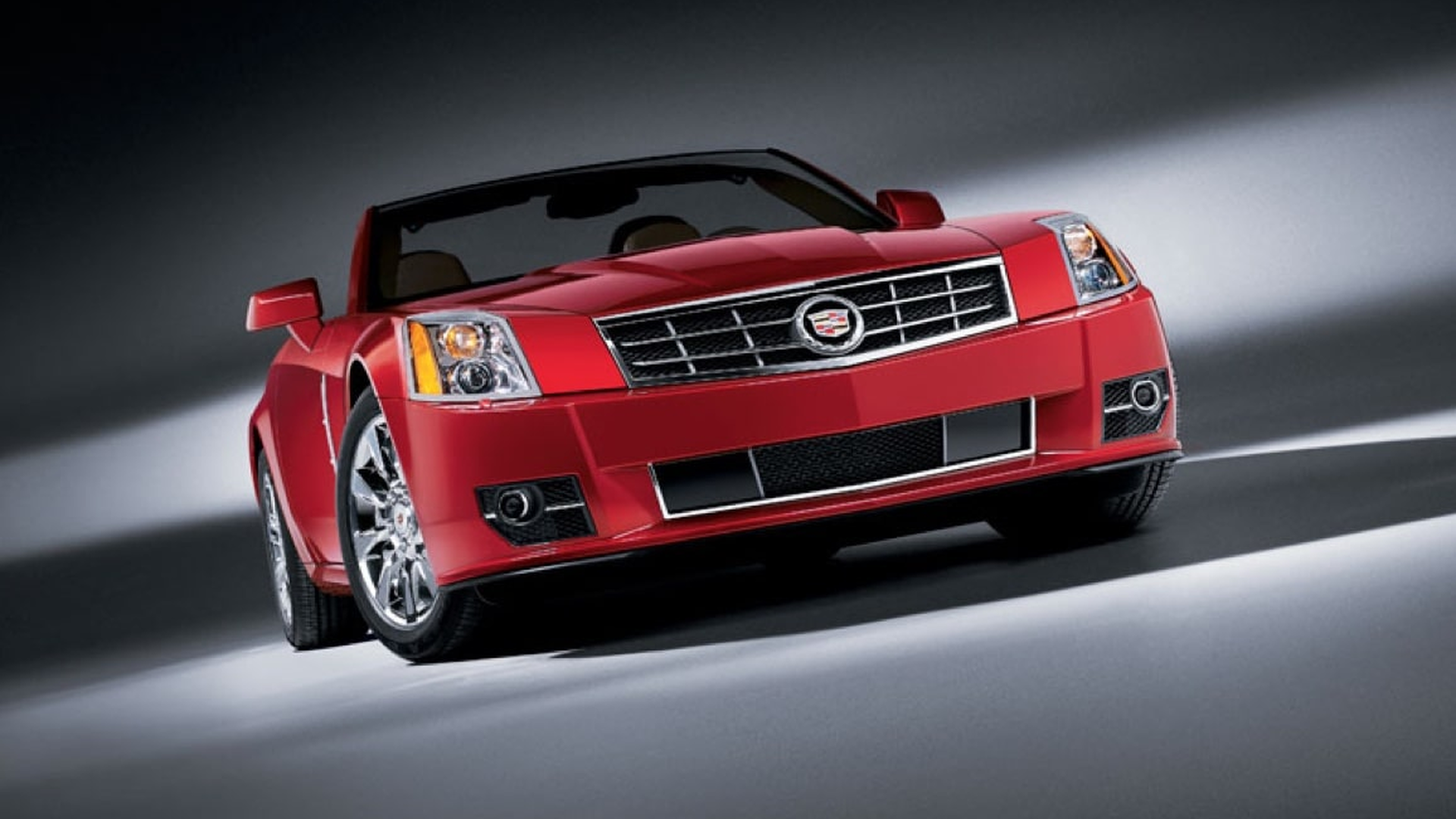
The Evoq Concept and the Art and Science Revolution
General Motors recognized a critical void at the absolute top of the Cadillac lineup at the dawn of the 21st century. To aggressively redefine the brand and directly challenge established European luxury roadsters, designers penned the 1999 Evoq concept car. The public reaction to its razor-sharp, stealth-fighter aesthetic was overwhelming, prompting executives to green-light a production variant. The resulting Cadillac XLR emerged as the ultimate expression of the brand's new "Art and Science" design language. To guarantee world-class performance metrics, engineers completely bypassed traditional luxury car platforms, choosing instead to build the roadster alongside the Chevrolet Corvette at the specialized Bowling Green, Kentucky assembly plant.
This decision provided the XLR with an incredibly potent mechanical foundation. Designers utilized the highly lauded Y-body architecture, heavily modifying it into the specialized V-body specifically for Cadillac. This unique packaging allowed the XLR to maintain the aggressive, low-slung proportions of a dedicated sports car while incorporating the complex hydraulic systems required for a luxury retractable hardtop and the acoustic insulation demanded by premium buyers.
Structural Metallurgy and the Hydroformed Perimeter Frame
True dynamic capability relies entirely on chassis rigidity. The XLR utilizes a hydroformed steel perimeter frame. Instead of welding multiple stamped steel pieces together, metallurgists utilized highly pressurized water to physically expand a single steel tube inside a massive die. This advanced manufacturing process maintains absolute uniform metal thickness throughout the frame rails, creating an unyielding structural backbone without adding unnecessary mass. Because the primary steel frame completely refuses to twist under heavy lateral cornering, the suspension components can execute their precise geometries flawlessly.
To shed critical weight from the upper structure, engineers entirely rejected traditional stamped steel body panels. The exterior of the XLR is molded from specialized sheet molded composite (SMC) plastics and reinforced fiberglass. This composite construction completely eliminates the threat of parking lot door dings and rust, while allowing designers to cast the razor-sharp body creases that define the exterior aesthetic. The hood and roof panels are pressed from aerospace-grade aluminum to further lower the vehicle's center of gravity.
In a brilliant engineering maneuver to aggressively isolate the cabin from NVH frequencies without adding heavy layers of steel, the XLR floorboards are constructed using a specialized composite sandwich featuring a natural balsa wood core. This ultra-lightweight material naturally absorbs high-frequency vibrations before they can resonate into the passenger compartment.
Transaxle Packaging and Absolute Weight Distribution
The mechanical layout of the XLR dictates its superior handling characteristics. Rather than bolting the transmission directly to the back of the front-mounted engine, engineers utilized a transaxle configuration. A heavy-duty aluminum torque tube physically connects the engine block to the transmission, which is mounted squarely between the rear wheels. This highly deliberate mechanical separation violently shifts the heavy mass of the gearbox off the front axle.
The result is a near-perfect 50/50 front-to-rear weight distribution. When the pilot throws the heavy luxury roadster into a sweeping canyon corner, the chassis pivots precisely around the driver's hips. This layout entirely neutralizes the heavy, nose-dive sensation typical of traditional front-engine luxury coupes, providing the driver with immediate, balanced feedback from both the front steering tires and the rear drive wheels.
Propulsion Dynamics: The 4.6L Northstar V8
Powering the standard XLR is the highly refined 4.6-liter Northstar V8 engine, specifically the LH2 variant. Cast completely from lightweight aluminum, this engine features dual overhead camshafts and four valves per cylinder. To maximize atmospheric efficiency across the entire powerband, the LH2 utilizes continuously Variable Valve Timing (VVT) on both the intake and exhaust camshafts. This allows the central ECU to alter the physical breathing characteristics of the engine in real-time. The engine idles smoothly in dense city traffic, yet breathes deeply to deliver a surging rush of high-RPM horsepower when the driver merges onto a fast-moving interstate.
Power routes directly to the rear transaxle, which initially utilized the 5L50-E 5-speed automatic transmission. For the 2007 model year, Cadillac upgraded the powertrain to the significantly more advanced 6L50 6-speed automatic. This newer gearbox featured tighter gear spacing, keeping the Northstar V8 locked perfectly within its optimum torque curve during aggressive acceleration, while providing a deep overdrive gear to drastically reduce engine noise and maximize fuel efficiency during steady-state highway cruising.
4.6L LH2 Northstar V8 Specifications
- Engine Architecture
- 90-degree V8, Cast Aluminum Block and Cylinder Heads
- Displacement
- 4565 cm3
- Valvetrain
- Dual Overhead Cam, 32 valves, Variable Valve Timing
- Peak Horsepower
- 320 hp @ 6,400 RPM
- Peak Torque
- 310 lb-ft @ 4,400 RPM
Kinematics of the Retractable Hardtop
The defining visual and functional element of the XLR is its complex retractable hardtop. Designed and engineered in partnership with Car Top Systems (CTS) of Germany, the roof transforms the vehicle from a sealed, weather-tight coupe into an open-air roadster in under 30 seconds. The structural frame of the folding roof is cast entirely from lightweight magnesium and aluminum to prevent the mechanism from becoming dangerously top-heavy.
Activating the roof triggers a highly choreographed kinematic ballet. A specialized, high-pressure hydraulic pump drives a series of synchronized mechanical cylinders. The rear decklid hinges entirely backward, exposing the trunk cavity. The two-piece aluminum roof unlatches from the windshield header, folds precisely in half like a clamshell, and stacks neatly into the rear storage compartment before the decklid powers flush against the bodyline. Because the roof relies on solid aluminum and acoustic glass rather than traditional canvas, it completely eliminates the harsh wind roar and fabric ballooning that plagues soft-top convertibles at high speeds.
Suspension Kinematics: Magnetic Ride Control
Isolating a premium cabin from broken urban infrastructure while maintaining razor-sharp cornering grip requires unprecedented dynamic intervention. The XLR utilizes Short/Long Arm (SLA) double-wishbone suspension geometry at all four corners. However, it entirely discards heavy coiled steel springs in favor of transverse composite leaf springs. This unique setup drastically lowers the unsprung weight of the vehicle, allowing the wheels to react to pavement imperfections significantly faster.
The true magic of the chassis lies in the standard Magnetic Ride Control system. The physical shock absorbers contain a specialized magneto-rheological fluid filled with microscopic iron particles. Optical sensors read the road surface topography up to 1,000 times per second. An electromagnetic coil surrounding the damper instantly alters the viscosity of the fluid. The digital system aggressively stiffens the outside shocks during heavy cornering to crush severe body roll, and softens them entirely to absorb harsh bridge expansion joints, providing an incredibly wide dynamic bandwidth.
The XLR-V: Supercharged Megalomania
For buyers demanding absolute kinetic supremacy, Cadillac unleashed the XLR-V. This model violently disrupted the grand touring formula, transforming the relaxed cruiser into a terrifyingly fast apex predator designed to hunt the Mercedes-Benz SL55 AMG. Engineers discarded the standard naturally aspirated engine, physically shoehorning the 4.4-liter LC3 supercharged Northstar V8 into the engine bay.
The technological centerpiece of the LC3 is a massive positive-displacement Roots-type supercharger built by Eaton. This compressor sits directly inside the engine valley, utilizing an integrated intake manifold and four separate Laminova tube intercoolers. As the supercharger forces highly compressed atmospheric air down into the cylinders, the liquid-cooled intercooler tubes aggressively strip the massive thermal heat away, ensuring a dense, highly explosive oxygen charge. This mechanical violence generates a staggering 443 horsepower, launching the heavy roadster from zero to 60 mph in a blistering 4.6 seconds.
4.4L LC3 Supercharged V8 Specifications (XLR-V)
- Engine Architecture
- 90-degree V8, Aluminum Block, Heavy-Duty Internals
- Displacement
- 4371 cm3
- Aspiration
- Roots-Type Supercharger with Liquid-to-Air Intercooling
- Peak Horsepower
- 443 hp @ 6,400 RPM
- Peak Torque
- 414 lb-ft @ 3,900 RPM
- Transmission
- Heavy-Duty 6L80 6-Speed Automatic Transaxle
Digital Telemetry and the Bespoke Cabin
The interior architecture of the XLR balances focused driving telemetry with meticulous luxury craftsmanship. The driver interfaces directly with a highly specialized analog gauge cluster designed exclusively for Cadillac by the Italian luxury house Bulgari. The dashboard features advanced Head-Up Display (HUD) technology, projecting critical vehicle speed, navigation routing, and audio information directly onto the windshield glass, allowing the pilot to read the data without ever taking their eyes off the road.
The XLR served as an early pioneer for advanced electronic convenience. It completely eliminated traditional exterior door handles and physical ignition key cylinders. Drivers gain entry via electronic touchpads hidden behind the doors, while a proximity-sensing key fob enables push-button ignition. To combat severe driving fatigue on long cross-country tours, the vehicle integrated an early iteration of radar-based Adaptive Cruise Control. A forward-facing radar emitter hidden behind the front grille actively bounces signals off the vehicle ahead, allowing the central computer to autonomously modulate the throttle and apply the ABS to maintain a precise following distance in heavy highway traffic.
The Enduring Legacy of the American Roadster
The Cadillac XLR represents a fiercely ambitious era in American automotive manufacturing. By aggressively pairing the unyielding mechanical capability of a dedicated sports car chassis with the intricate sophistication of a folding hardtop and a plush, high-tech cabin, Cadillac successfully executed a vehicle that defied traditional categorization. Its relatively short production run and low global volume make it an increasingly rare sight on modern roads. The striking, angular sheet metal remains completely immune to aging, looking just as futuristic today as it did when the original concept rotated on the auto show turntable. The XLR secures its permanent position as a highly collectible, intensely capable machine that boldly proved American engineers could build a world-class luxury roadster.