
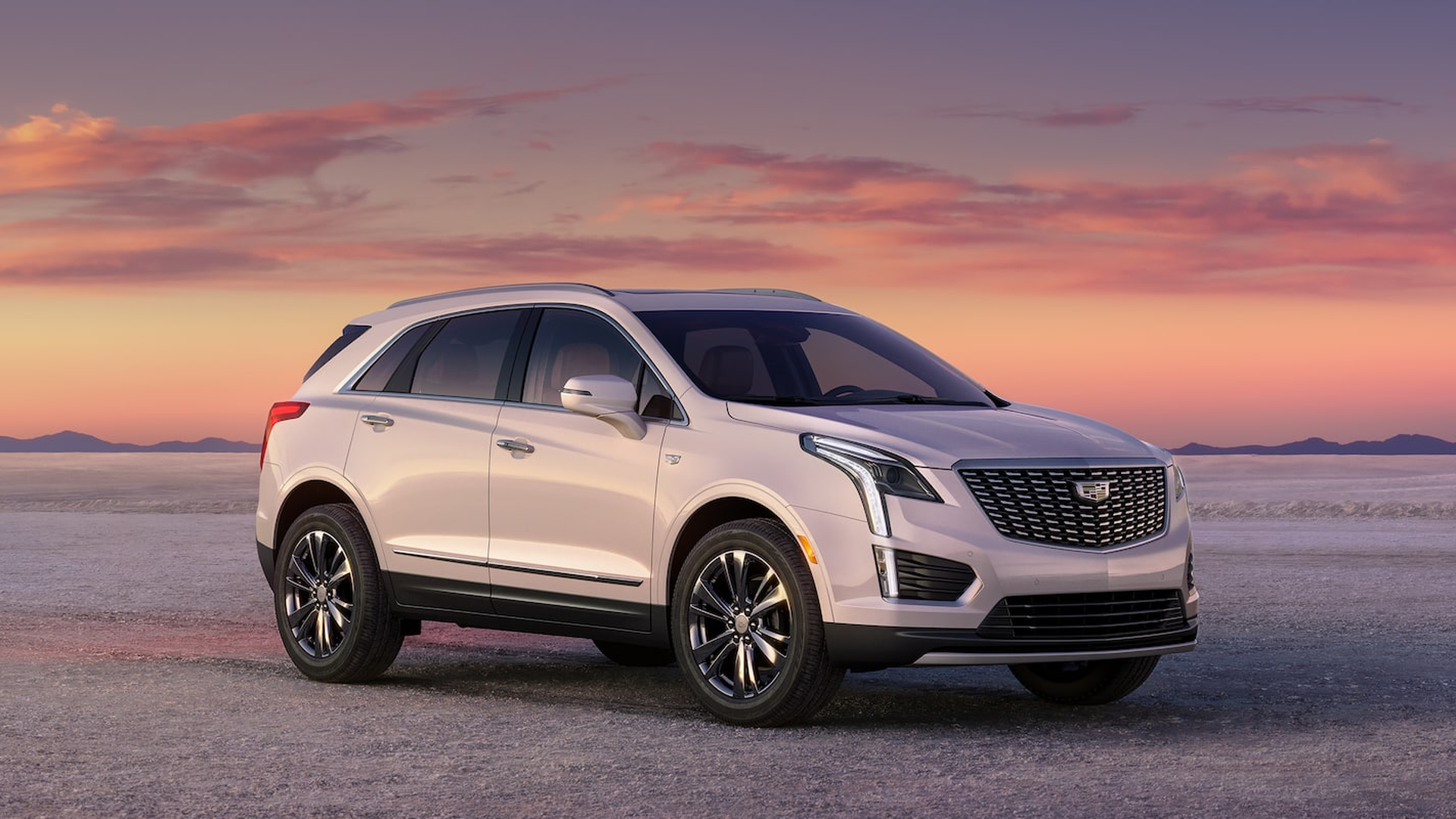
The SRX Successor: Redefining Mid-Size Luxury
The Cadillac XT5 debuted for the 2017 model year, tasked with an incredibly high-stakes corporate mission: replacing the SRX, which stood as the brand's best-selling vehicle globally. Rather than executing a simple cosmetic refresh, engineers initiated a fundamental tear-down of their mid-size crossover philosophy. The XT5 inaugurated the new "Crossover Touring" (XT) nomenclature and introduced a highly disciplined engineering regimen focused aggressively on mass reduction, structural rigidity, and refined driving dynamics.
Designers retained the brand's signature vertical lighting elements but pulled the sheet metal tight over the chassis, eliminating the bloated overhangs of the previous generation to create a distinctly tailored, athletic profile. The swept-back roofline cuts through the wind to eliminate cabin noise and reduce aerodynamic drag, establishing a rolling sanctuary for the modern American family. Every crease and sharp angle on the exterior serves a distinct aerodynamic purpose, guiding turbulent air smoothly past the glasshouse to maximize highway fuel efficiency.
The C1XX Architecture: The Science of Mass Reduction
Beneath the sharply creased exterior, the XT5 utilizes the regular-wheelbase variant of the General Motors C1XX platform. This transverse-engine unibody architecture represents a masterclass in modern metallurgical application. To shed dead weight without compromising crash safety, structural engineers deployed massive quantities of advanced high-strength steel and martensitic steel alloys throughout the passenger safety cage, A-pillars, and B-pillars.
Traditional spot welding was supplemented with extensive structural adhesives applied via robotics along the primary chassis seams. This dual-bonding technique drastically increases the torsional rigidity of the unibody. A stiffer chassis physically prevents the body from twisting when navigating off-camber driveways or deep urban potholes. Because the steel shell refuses to flex, the independent suspension components can articulate with absolute mathematical precision. The resulting engineering triumph saw the XT5 drop a staggering 278 pounds compared to the outgoing SRX, while simultaneously growing the interior passenger volume.
The intense focus on weight reduction allowed the XT5 to weigh in nearly 100 pounds lighter than its primary German competitors, directly translating into sharper lateral turn-in response and significantly shorter panic braking distances.
Propulsion Dynamics: The LGX V6 Masterpiece
At launch, Cadillac exclusively powered the North American XT5 with the highly acclaimed 3.6-liter LGX naturally aspirated V6. This engine completely rejects the inherent lag of forced induction, relying instead on precise atmospheric tuning, dual overhead camshafts, and high-pressure direct fuel injection. Cast entirely from lightweight aluminum, the block features a specialized structural oil pan designed to dampen high-frequency mechanical vibrations before they can transmit through the motor mounts into the steering column.
The technological hallmark of the LGX is its Active Fuel Management system. During steady-state highway cruising under low aerodynamic load, the ECU physically deactivates two of the six cylinders by seamlessly collapsing the hydraulic valve lifters. The engine operates entirely as a V4, drastically reducing internal pumping losses and cutting tailpipe CO2 emissions. The exact millisecond the pilot demands heavy acceleration to execute a passing maneuver, the dormant cylinders reignite, delivering a visceral, uninterrupted surge of power.
- 3.6L LGX V6 Powertrain Specifications
- Engine Architecture: 60-degree V6, Aluminum Block and Cylinder Heads
- Displacement
- 3649 cm3
- Valvetrain
- Dual Overhead Cam (DOHC), 24 valves, continuously variable valve timing
- Peak Horsepower
- 310 hp @ 6,600 RPM
- Peak Torque
- 271 lb-ft @ 5,000 RPM
- Maximum Towing Capacity
- 3,500 lbs (with factory heavy-duty cooling package)
Forced Induction: The LSY Turbocharged Inline-Four
To cater to buyers prioritizing absolute urban fuel efficiency, Cadillac eventually integrated the 2.0-liter LSY turbocharged inline-four into the XT5 lineup. This smaller displacement powerplant utilizes a twin-scroll turbocharger bolted directly to the cylinder head. Exhaust gases pulse through two completely separate volutes to spool the turbine wheel instantly, completely eradicating the sluggish throttle response associated with older turbocharged engines.
The LSY produces a highly responsive 237 horsepower and 258 lb-ft of torque. Because the forced-induction engine achieves its peak torque exceptionally early in the rev range, the crossover merges effortlessly onto fast-moving interstates without requiring extreme engine speeds. A unique tripower valvetrain provides three distinct operating modes: high valve lift for maximum power, low valve lift for optimized efficiency, and Active Fuel Management, which completely shuts down two cylinders during light-load conditions.
Transmission Technology and Electronic Precision Shift
Power from both engines routes through a highly calibrated automatic transaxle. Early models utilized an 8-speed automatic, but Cadillac quickly upgraded the architecture to the robust Hydra-Matic 9T65 9-speed automatic transmission. The multitude of gear ratios keeps the engine within its optimal power band at all times. A steep first gear provides explosive off-the-line thrust, while multiple deep overdrive gears drop the engine speed to a near-silent whisper at 75 mph on the interstate.
The XT5 was the first Cadillac to feature Electronic Precision Shift. This technology entirely eliminates the physical mechanical linkage between the cabin shifter and the transmission valve body. By replacing the bulky steel shift cable with electronic digital signals, packaging engineers freed up massive amounts of storage space directly beneath the center console, providing a hidden, rubberized compartment perfectly sized for handbags, umbrellas, or electronic tablets.
Conquering the Asphalt: Twin-Clutch AWD Mechanics
Standard luxury crossovers utilize passive, slip-and-grip all-wheel-drive systems that react far too slowly for high-performance applications. The XT5 Sport trim discards this basic hardware in favor of an advanced Twin-Clutch AWD system supplied by GKN. The rear axle lacks a traditional open differential; instead, it features two electronically controlled wet clutch packs.
This complex mechanical hardware enables true, active torque vectoring. When the driver attacks a sweeping off-ramp, the digital traction computer actively clamps the outside clutch pack, overdriving the outside rear wheel. This physical action forces the heavy crossover to rotate seamlessly around the apex, completely neutralizing front-end understeer. During dry highway cruising, the system physically disconnects the heavy steel rear driveshaft entirely. This stops the mechanical components from spinning, eliminating parasitic drag and significantly boosting overall fuel economy.
Suspension Geometry and Continuous Damping Control
Isolating the cabin from decaying urban infrastructure requires highly sophisticated suspension kinematics. The XT5 utilizes a MacPherson strut front setup engineered specifically to counteract torque steer, paired with a complex five-link independent rear suspension. The five-link design allows engineers to tune vertical wheel travel and lateral toe control completely independently, keeping the rear tires planted firmly on the pavement over mid-corner bumps.
Premium trims integrate Continuous Damping Control (CDC). Optical and gyroscopic sensors read the road surface topography every two milliseconds. The system instantly alters the magnetic fluid flow within the shock absorbers, stiffening the outside dampers during heavy cornering to crush body roll, and softening them entirely when traversing broken cobblestone streets. This active suspension system provides a masterclass in dynamic duality, seamlessly switching between a plush luxury cruiser and an aggressive canyon carver.
Acoustic Serenity: Engineering the Sanctuary
Cadillac acoustic engineers approached the XT5 cabin as a dedicated sound studio. They deployed thick acoustic-laminated front and side window glass to block high-frequency wind rushing. Specialized liquid-applied sound deadener was injected directly into the steel floor pan channels to absorb the low-frequency rumble generated by concrete highways and large commercial trucks.
The primary defense against powertrain noise relies on advanced Active Noise Cancellation technology. Microphones embedded perfectly flush in the headliner constantly monitor the cabin for resonant engine drone. The digital signal processor instantly analyzes these offending soundwaves and commands the Bose audio system to broadcast precise, opposing acoustic frequencies through the door speakers. This physical phenomenon neutralizes the harsh noise before it ever reaches the human ear, leaving only the pristine audio from the infotainment system.
Interior Ergonomics and Cargo Volumetrics
The physical cabin represents a massive departure from the plastic-heavy interiors of the early 2000s. Cut-and-sewn leather wraps the dashboard, offset by genuine open-pore wood veneers or authentic carbon-fiber trim panels. The driver grips a heated, leather-wrapped steering wheel, viewing critical telemetry through a highly configurable digital instrument cluster that integrates directly with the available Head-Up Display.
Pragmatism matches the luxury. The second-row seating features a 40/20/40 split-folding mechanism and sits on physical tracks, allowing the entire row to slide forward or backward up to 5.5 inches to prioritize either passenger legroom or rear cargo volume. Folding the rear seats completely flat exposes a massive 63 cubic feet of usable cargo space, easily swallowing bulky sports equipment, large luggage sets, or extensive antique store finds without requiring the pilot to fold the seats manually from the side doors.
Digital Armor: Radar, Cameras, and Thermal Imaging
Protecting the occupants requires a staggering array of digital hardware. The XT5 acts as a rolling sensor net, utilizing high-resolution radar and ultrasonic sensors to provide Full-Speed Forward Collision Warning with Active Automatic Emergency Braking. If the computer calculates an imminent rear-end collision and the driver fails to react, the hydraulic calipers clamp down autonomously to mitigate the impact severity or prevent the collision entirely.
To combat the hazards of absolute darkness, Cadillac offers an active Night Vision system. A specialized infrared sensor mounted securely behind the front grille detects heat signatures radiating from pedestrians or large wildlife far beyond the physical reach of the standard LED headlamps. The software projects a high-contrast thermal video feed directly into the gauge cluster, outlining potential biological hazards in bright yellow alert boxes long before they step into the active traffic lane.
The Enduring Legacy of the XT5
The Cadillac XT5 proved that an American manufacturer could successfully execute a premium mid-size crossover without heavily relying on massive V8 engines or archaic, truck-based architectures. By prioritizing unyielding unibody rigidity, sophisticated torque-vectoring all-wheel drive, and absolute acoustic serenity, the XT5 carved out a massive segment of the luxury market. It stands as a highly intelligent, beautifully tailored machine that executes the daily demands of the road with absolute mechanical grace, securing its position as a cornerstone of Cadillac's modern global renaissance.