
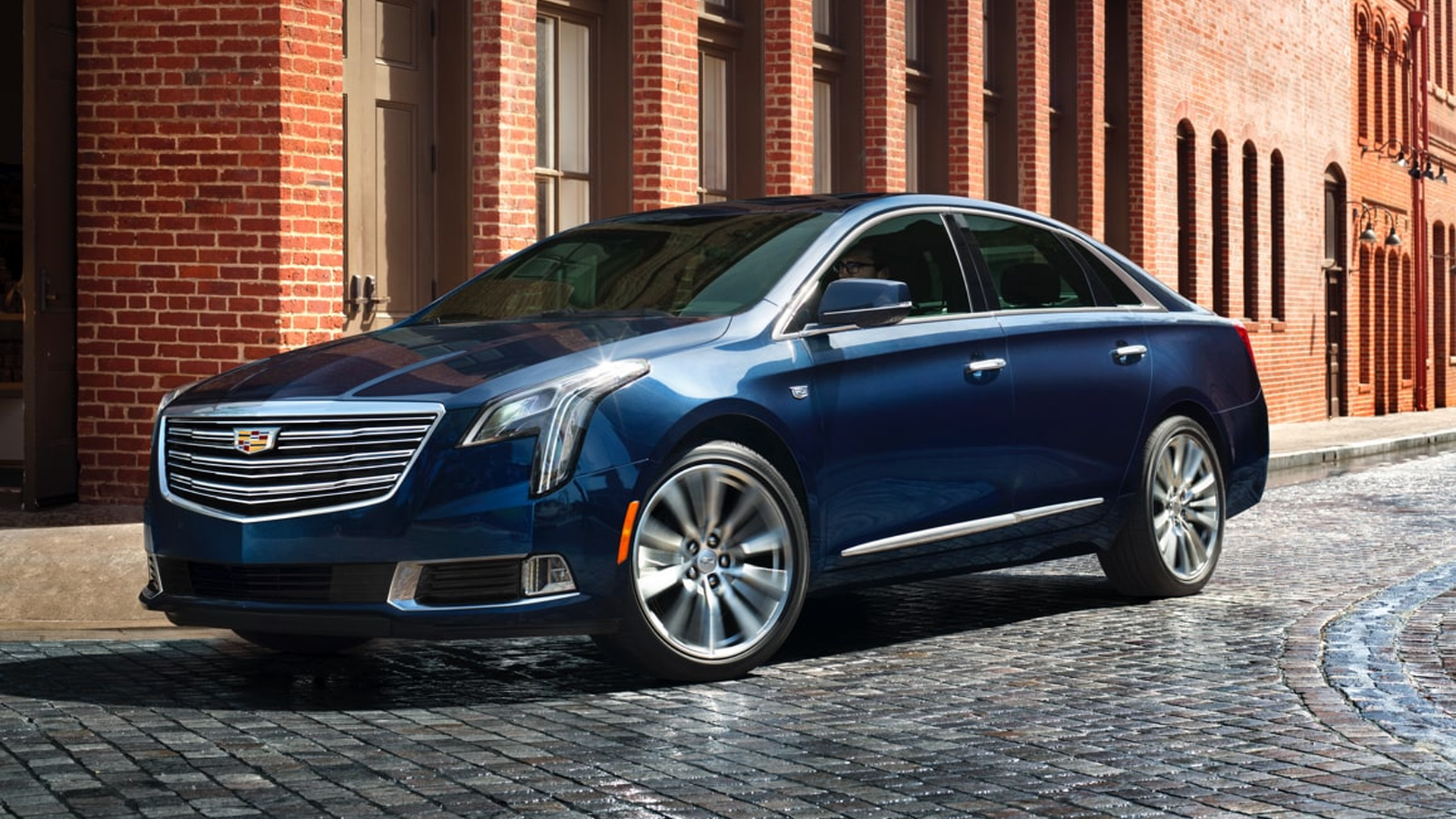
The Strategic Consolidation: Replacing Two Legends
The Cadillac XTS emerged for the 2013 model year carrying an immense corporate burden. General Motors actively phased out the massive, front-wheel-drive DTS and the rear-wheel-drive STS, tasking a single new vehicle with satisfying two entirely different consumer demographics. The American luxury brand required a machine that delivered the cavernous interior volume demanded by traditional fleet and livery buyers, while simultaneously executing the razor-sharp handling and aggressive aesthetics required to combat modern European executive sedans. The XTS accomplished this by stretching the highly versatile Epsilon II architecture to its absolute physical limits, creating a full-size luxury cruiser draped in the brand's striking Art and Science design language.
Structural Metallurgy and the Super Epsilon Architecture
To provide a commanding physical footprint, structural engineers utilized the long-wheelbase variant of the Epsilon II platform, internally referred to as Super Epsilon. This primarily FWD architecture provided massive packaging advantages. By eliminating the heavy longitudinal transmission tunnel required for rear-wheel-drive vehicles, designers secured a nearly flat cabin floor, drastically increasing rear-seat legroom and overall volumetric capacity. The trunk cavity swallowed a staggering 18 cubic feet of cargo, easily accommodating four professional golf bags.
Preventing a long-wheelbase front-wheel-drive sedan from exhibiting severe chassis flex requires intense metallurgical discipline. The XTS unibody utilizes massive quantities of ultra-high-strength martensitic steel and advanced boron alloys throughout the passenger safety cage and lower rocker panels. During the robotic assembly process, the factory applied structural adhesive directly along the primary chassis weld seams. This aerospace-inspired dual-bonding technique drastically increased the overall torsional stiffness of the unibody shell, providing the absolute mechanical foundation required for world-class suspension dynamics.
Suspension Kinematics: HiPer Strut and Magnetic Dominance
Channeling over 300 horsepower exclusively through the front wheels typically induces terrifying torque steer, violently ripping the steering wheel from the pilot's hands under heavy acceleration. Cadillac completely neutralized this physical threat by deploying the highly advanced HiPer Strut front suspension. This specialized MacPherson strut variant physically isolates the steering knuckle from the shock absorber. By creating a separated, dual-pivot axis, the geometry drastically reduces the spindle length and scrub radius. The front tires track perfectly straight under maximum throttle, entirely preserving steering purity.
The rear architecture relies on a specialized linked H-arm independent suspension paired with automatic pneumatic load leveling. A digital air compressor actively pumps the rear air springs to maintain a perfectly level ride height regardless of heavy luggage or full passenger loads. Working in perfect synchronization with this hardware is General Motors' crown jewel: Magnetic Ride Control.
The physical shock absorbers discard traditional valving, utilizing a specialized magneto-rheological fluid filled with microscopic iron particles. Optical and gyroscopic sensors read the road surface topography up to 1,000 times per second. The central suspension computer applies a precisely calculated electromagnetic charge to the damper coils, instantly altering the physical viscosity of the fluid. The system aggressively stiffens the outside shocks during heavy highway off-ramp cornering to crush severe body roll, then softens them entirely the exact millisecond the vehicle returns to broken urban pavement.
The precision of MagneRide is absolute. At 60 miles per hour, the system actively calculates and adjusts the damping force for every single inch of asphalt the vehicle covers, providing an incredibly wide dynamic bandwidth that blends traditional Cadillac comfort with modern sport sedan reflexes.
Atmospheric Propulsion: The 3.6L LFX V6
The foundational powerplant for the XTS is the highly refined 3.6-liter LFX V6. Cast entirely from lightweight aluminum, this engine utilizes dual overhead camshafts and continuously variable valve timing. To maximize thermal efficiency and kinetic response, engineers deployed high-pressure direct fuel injection. Highly atomized gasoline sprays directly into the combustion chamber under immense pressure. This rapidly cools the intake charge, allowing the engine to run a high compression ratio of 11.5:1. The engine generates 304 horsepower, providing effortless highway merging capability while keeping tailpipe CO2 emissions strictly within federal compliance parameters.
Power routes through the Hydra-Matic 6T70 six-speed automatic transaxle. This gearbox features wide gear spacing, executing incredibly smooth, nearly imperceptible shifts that perfectly match the relaxed cruising demeanor of the chassis. Buyers could also option an advanced AWD system utilizing a Haldex electronic coupling to route torque to the rear axle during severe winter weather.
3.6L LFX V6 Specifications
- Engine Block Architecture
- Transverse 60-degree V6, Cast Aluminum Block and Heads
- Displacement
- 3564 cm3
- Valvetrain
- Dual Overhead Cam, 24 valves, Variable Valve Timing
- Peak Horsepower
- 304 hp @ 6,800 RPM
- Peak Torque
- 264 lb-ft @ 5,200 RPM
The V-Sport Offensive: Twin-Turbo Supremacy
For buyers demanding absolute kinetic authority, Cadillac unleashed the XTS V-Sport. This model violently disrupted the full-size segment, replacing the standard engine with the LF3 3.6-liter twin-turbocharged V6. Engineers physically bolted two low-inertia turbochargers directly to the cylinder heads, entirely eliminating the turbo lag associated with long exhaust manifold routing. The compressor wheels force 12 psi of atmospheric boost down into the specialized forged aluminum pistons.
This mechanical violence generates a staggering 410 horsepower and 369 lb-ft of torque. To manage this massive wave of power, the V-Sport comes standard with the Haldex AWD system and a heavy-duty Electronic Limited-Slip Differential (eLSD). When accelerating aggressively out of a tight canyon apex, the digital ECU actively vectors torque across the rear axle, violently pushing the heavy sedan out of the corner by routing power specifically to the outside wheel with the most physical grip.
3.6L LF3 Twin-Turbo V6 Specifications (V-Sport)
- Engine Architecture
- Transverse 60-degree V6, Aluminum Block, Forged Internals
- Displacement
- 3564 cm3
- Aspiration
- Twin Turbochargers with Liquid-to-Air Intercooling
- Peak Horsepower
- 410 hp @ 6,000 RPM
- Peak Torque
- 369 lb-ft @ 1,900 - 5,600 RPM
- Transmission
- Heavy-Duty 6-Speed Automatic Transaxle
Acoustic Serenity and the Platinum Cabin
Cadillac acoustic engineers approached the XTS cabin as a dedicated sound studio. They deployed thick acoustic-laminated front glass and specialized liquid-applied sound deadener injected directly into the floor pan channels. The primary digital defense relies on the Bose AudioPilot Active Noise Cancellation system. Microphones embedded in the headliner detect resonant low-frequency engine droning. The digital signal processor instantly analyzes these offending soundwaves and commands the cabin speakers to broadcast precise, opposing acoustic frequencies, physically neutralizing the harsh noise before it reaches the human ear.
To combat ultra-premium German competitors, Cadillac offered the exclusive Platinum trim. This configuration executed a masterclass in bespoke interior craftsmanship. Occupants sit on hand-cut-and-sewn Opus semi-aniline leather hides. Genuine, highly polished wood veneers anchor the door panels and center console. A premium microfiber suede headliner spans the entire roof, adding a deep, tactile richness to the cabin while further absorbing stray acoustic reflections.
The Digital Command Center: CUE and Active Safety
The dashboard focuses entirely around the Cadillac User Experience (CUE) infotainment system. Discarding traditional analog buttons, the interface utilizes an 8-inch high-resolution touchscreen and a capacitive-touch control panel. The system features advanced haptic feedback, providing a physical, localized pulse to the user's fingertip to confirm a digital command had been registered. The primary driver interface abandons physical needles for a highly configurable 12.3-inch high-definition digital gauge cluster, allowing the pilot to prioritize specific telemetry, navigation mapping, or media data.
The XTS acts as a rolling digital sensor net. It utilizes high-resolution radar, ultrasonic sensors, and external optical cameras to actively monitor the surrounding environment. Cadillac introduced the highly innovative Safety Alert Seat with this vehicle. Instead of bombarding the driver with annoying auditory chimes, the ABS and lane departure modules trigger targeted haptic vibration motors embedded directly inside the driver's seat bolsters. If the vehicle drifts over the left lane marker, the left side of the seat vibrates, instantly commanding the driver's physical attention without startling the passengers.
Dominating the Livery Sector: The W20 Package
General Motors recognized that retiring the Town Car and DTS created a massive vacuum in the lucrative executive transport and black-car livery markets. Cadillac engineered specific commercial variants of the XTS, designated under the W20 coachbuilder package. These models featured heavy-duty alternators, highly fortified suspension components designed to survive punishing urban potholes, and specific wiring harnesses to accommodate aftermarket fleet telemetry. The factory also provided certified coachbuilders with specialized elongated chassis, allowing the seamless creation of stretched limousines and heavily armored diplomatic transport vehicles.
The Enduring Legacy
The Cadillac XTS successfully executed a highly complex strategic mission. It gracefully retired the aging DTS while introducing traditional Cadillac buyers to a hyper-advanced era of twin-turbocharged propulsion, magnetic suspension dynamics, and capacitive-touch digital interfaces. Production officially ceased in October 2019 at the Oshawa Assembly plant, ending the lineage of the transverse front-wheel-drive Cadillac flagship. Today, the XTS remains highly regarded as an incredibly comfortable, deceptively fast executive sedan that perfectly married the undeniable presence of classic American luxury with the absolute precision of modern automotive engineering.