Caterham: The Purest Driving Experience on Earth

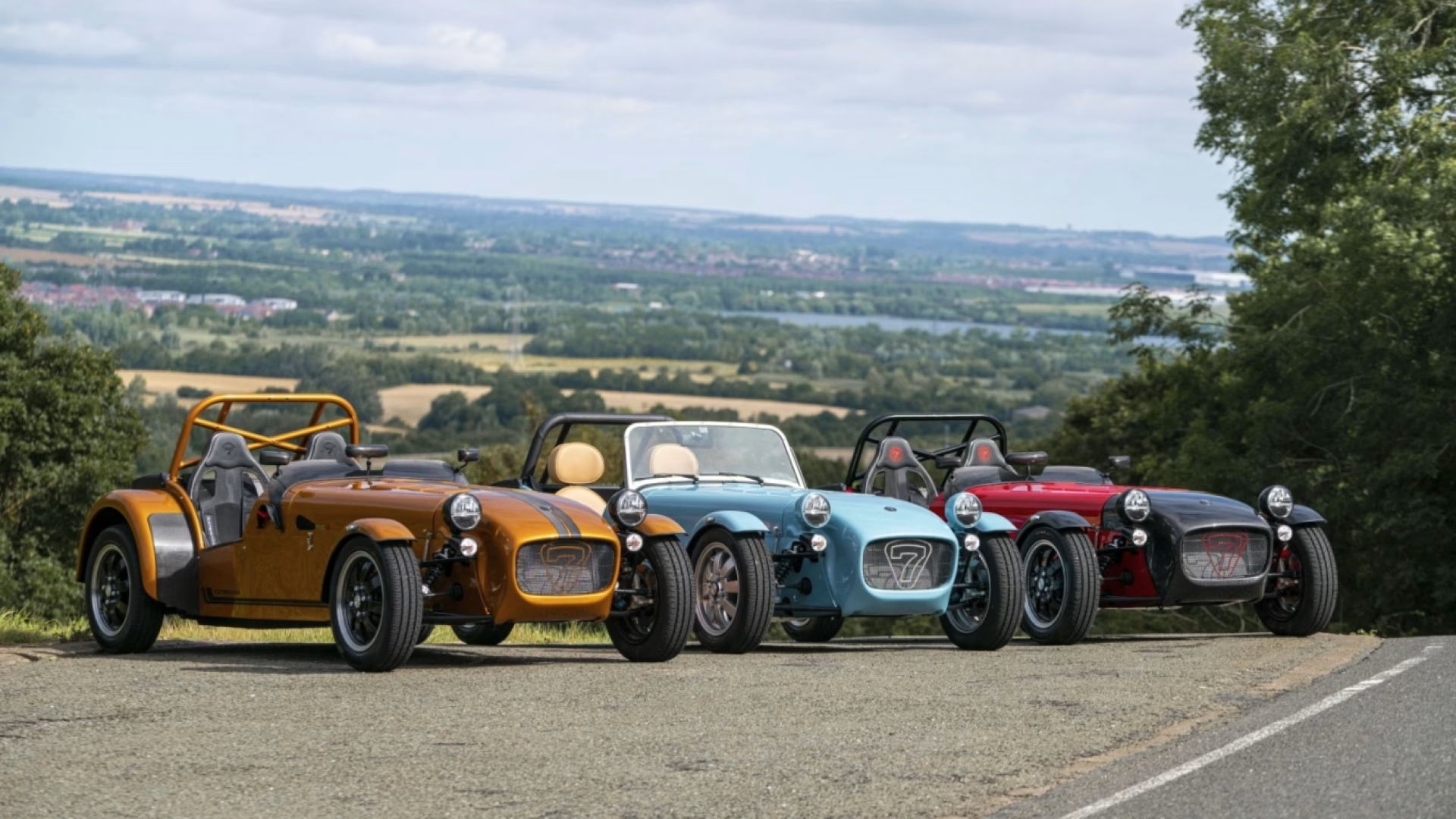
Caterham is the custodian of the legendary Seven. Born from Lotus roots, these lightweight missiles offer the most unfiltered driving experience money can buy. Whether built in your garage or bought ready-to-race, a Caterham is the ultimate antidote to the numb, digital modern car. It is not just a car; it is a mechanical extension of your body.

Caterham Hero Vehicle

Model Lineup

Explore the current production vehicles.

Seven (The Legend)

The legend. The icon. The purest driving experience on four wheels. As the official successor to the Lotus Seven, the Caterham is the ultimate expression of 'simplify, then add lightness.' It is not a car; it is a direct, unfiltered connection to the road.

Production 1973-Present

Seven 620R

The unhinged, supercharged monster. The 620R is the absolute pinnacle of the Seven's performance, a featherweight rocket with a sequential gearbox and a power-to-weight ratio that can humble hypercars. A true, road-legal track weapon for the brave.

Production 2013-Present

Seven 420 / 360

The sweet spot of the Caterham range. These models offer the perfect balance of thrilling power and sublime, lightweight handling. They are the quintessential choice for the enthusiast who wants a fast, engaging, and perfectly poised road and track car.

Production 2015-Present

Seven 170 / SuperSeven 600

The purest expression of the lightweight philosophy. Powered by a tiny Suzuki turbo engine, these featherweight models are all about momentum and cornering speed. The SuperSeven adds a dose of retro styling for the ultimate classic driving feel.

Production 2021-Present

Project V

The future of lightweight, electrified. Project V is a stunning, all-electric coupe concept that aims to preserve the brand's core values of lightness and driver engagement in a new, sustainable era. A bold and beautiful new chapter for Caterham.

Production Announced

21

A rare and beautiful attempt to create a more 'civilized' Caterham. The 21 was a more conventional roadster that clothed the brilliant Seven chassis in a curvaceous, modern body. A unique and fascinating piece of the brand's history.

Production 1994-1999

Superlight R500

The screaming, naturally-aspirated legend that famously humbled supercars on Top Gear. The R500 was a masterpiece of raw, high-revving performance, a track-focused weapon that cemented the Seven's reputation as the ultimate giant-killer.

Production 2008-2012

Author

HugeGarage Editor

Published

Updated

8 Min Read

The Car You Wear, Not Drive

In an era where modern sports cars are becoming heavy, digital, and insulated, Caterham stands as a defiant monument to the past. Driving a Caterham Seven is not like driving a Porsche or a Corvette. It is more like strapping a 4-cylinder engine to a skateboard. You don't get in a Caterham; you put it on like a pair of tight jeans. You sit inches off the ground, your elbow resting on the rear fender, with the exhaust pipe loud enough to wake the dead right next to your ear.

For the American enthusiast, Caterham represents the ultimate "driver's car." There is no power steering. No ABS. No traction control. It is just you, a steering wheel the size of a dinner plate, and physics. It is terrifying, exhausting, and absolutely glorious.

The Lotus Legacy: A 1957 Design That Won't Die

The Caterham Seven is essentially the Lotus Seven, designed by the genius Colin Chapman in 1957. When Chapman decided to move Lotus upmarket in 1973, he sold the rights to the Seven to Graham Nearn, the owner of Caterham Cars. Nearn saw what Chapman didn't: that there would always be a market for a simple, lightweight car that prioritized fun over comfort.

While the car looks like it's from the 50s, the engineering has quietly evolved. The chassis is stiffer, the suspension is sophisticated, and the engines are modern technological marvels. But the philosophy remains the same: "Simplify, then add lightness."

The "IKEA Car" Experience: Built, Not Bought

One of the coolest things about Caterham in the US market is the "kit car" aspect. Due to strict federal safety regulations, you often buy a Caterham as a rolling chassis (no engine/transmission) from a US dealer like Superformance or Rocky Mountain Caterham. You then buy the engine separately (usually a Ford Duratec) and install it yourself—or pay a shop to do it.

This loophole isn't just legal gymnastics; it creates a deep emotional bond. When you drive a car you bolted together yourself, every corner feels different. You know every nut and bolt. It is the ultimate garage project.

The Lineup: Mild to Mental

The lineup can be confusing, but it basically scales by horsepower and insanity.

The Seven 170 (The Purist)

Powered by a tiny 660cc Suzuki turbo engine (from a Japanese Kei car), this model weighs less than 1,000 lbs. It isn't fast in a straight line, but it is agile beyond belief. It adheres strictly to the original Chapman philosophy.

The Seven 360 and 420 (The Sweet Spots)

These use the 2.0L Ford Duratec engine. The 360 (approx 180 hp) is the perfect road car. The 420 (210 hp) starts to get serious, offering a power-to-weight ratio that rivals a Ferrari 458.

The Seven 620 (The Widowmaker)

This is the one you buy if you hate your tires. It features a supercharged 2.0L engine making 310 horsepower. That doesn't sound like much until you realize the car weighs as much as a grand piano. 0-60 happens in under 2.8 seconds. It is violent, frantic, and requires pro-level skills to drive fast without spinning.

The Future: Project V

Caterham shocked the world recently by announcing Project V. It is an all-electric coupe. Unlike the Seven, it has a roof, doors, and air conditioning. But it still prioritizes weight, aiming to be one of the lightest EVs ever made (under 2,700 lbs). It proves that even the most traditional car company knows the future is electric—but it doesn't have to be boring.

Buying Advice: Read the Fine Print

Buying a Caterham in America is an adventure. You are not walking into a dealership and driving off. You are ordering a chassis, selecting an engine, and navigating registration laws (often registering it as a "Specially Constructed Vehicle").

Do not buy this as your only car. It leaks when it rains. It has no trunk space. You will arrive at your destination smelling like gasoline and exhaust. But on a winding canyon road on a Sunday morning, there is no other machine on earth that makes you feel this alive.

Frequently Asked Questions

What is the connection between Caterham and Lotus?

The Caterham Seven is a direct evolution of the Lotus Seven, designed by Colin Chapman in 1957. When Lotus decided to end production in 1973, Caterham—who was a major Lotus dealer at the time—purchased the rights to the design.

Since then, Caterham has spent over 50 years refining the original "blueprint for fun," keeping the spirit of the lightweight 1950s racer alive while utilizing 21st-century materials and safety engineering.

Can you still build a Caterham as a kit car?

Yes, Caterham remains one of the few manufacturers that allows you to buy a car in boxes and build it yourself. This process typically takes about 80 to 100 hours of labor.

However, for the 2026 model year, specific new models like the Academy racer are initially factory-built to ensure technical compliance with new engine standards. Self-build kits for the wider range usually include the painted chassis, engine, gearbox, and all labeled components required to make the car road-legal.

What engine is in the 2026 Caterham Seven?

For 2026, Caterham has introduced a major shift in its powertrain lineup. While the 2.0L Ford Duratec remains in high-performance models like the 420 and 620, the entry-level and Academy cars now use a 1.3-liter turbocharged four-cylinder engine from Horse Powertrain.

This new turbo engine replaces the venerable Ford Sigma unit, offering 132 hp and a more linear torque curve specifically tuned by Caterham to maintain the car's characteristic "naturally aspirated" feel.

What is the Caterham Project V?

The Project V is Caterham’s first foray into the world of fully electric, closed-roof sports cars. Scheduled for launch in late 2025 or early 2026, it breaks the "Seven" mold with its elegant coupé bodywork.

Despite being an EV, it adheres to the brand's lightweight core, weighing just 1,190 kg. It features a 268 hp rear-mounted motor and a 55kWh battery, aimed at enthusiasts who want the Lotus-style handling with modern electric convenience.

What is the difference between S-Pack and R-Pack?

When configuring a Caterham, you generally choose between two distinct personalities:

  • S-Pack (Road): Focused on "comfort" (relatively speaking). It includes a full windshield, side doors, heater, and carpets.
  • R-Pack (Race): Focused on the track. It often includes a limited-slip differential (LSD), stiffer suspension, 4-point harnesses, and a lightweight composite dashboard, often ditching the windshield for a small "aeroscreen."
What is the Caterham 620R?

The 620R is the most extreme road-legal Seven ever produced. It features a supercharged 2.0L Ford Duratec engine producing 310 hp.

Given that the car weighs only about 610 kg, it has a power-to-weight ratio of over 500 hp per tonne—matching many modern hypercars. It uses a 6-speed sequential gearbox and is notorious for its brutal acceleration (0-60 mph in 2.79 seconds).

What is the Caterham Academy?

The Caterham Academy is a unique racing championship designed exclusively for novice drivers who have never held a racing license before.

The package includes a road-legal Seven Academy car, the racing license exam, and a full season of competition. It is widely considered the most accessible and "purest" entry point into the world of professional motorsport.

How do you get into a Caterham Seven?

Due to its low height and lack of traditional doors, getting in requires a specific technique: "Step, Slide, and Drop."

You step onto the seat or the floor (never the side panels), slide your legs into the narrow footwell, and drop into the bucket seat. Once inside, the cockpit is extremely snug, with the driver sitting just inches away from the rear axle, providing unmatched sensory feedback from the road.

Are Caterham cars safe?

Caterhams lack modern electronic aids like ABS, traction control, or airbags. Safety is provided through structural simplicity and a robust tubular steel space-frame chassis.

For track use, a full roll cage is highly recommended over the standard roll bar. The car's primary safety feature is its agility; its ability to stop and change direction instantly often allows a driver to avoid an accident that a heavier car would simply slide into.

What is the "SV" chassis?

The SV (Large Chassis) was introduced to accommodate drivers who are taller or broader. It adds approximately 10 cm in width and length to the standard (S3) chassis.

In addition to more interior shoulder room and a larger footwell, the SV chassis provides a slightly larger fuel tank and increased luggage space, making it the preferred choice for those planning long-distance touring or European "road trips."