There is a rivalry in America that predates the Super Bowl, arguably runs deeper than politics, and is debated in every garage from Detroit to Daytona: Ford versus Chevy. While the competition aims for the mind, Chevrolet has always aimed for the heart. Since 1911, the "Bowtie" has stood for a very specific promise: you donât need to be a millionaire to own a machine that can blow the doors off a European exotic or tow a mountain across the state line.
The Bowtie Identity: Performance for the People
Louis Chevrolet was a Swiss-born racing driver with a lead foot. William C. Durant was a marketing genius. Together, they created a paradox: a brand rooted in high-performance racing pedigree but sold to the everyday working family. This duality is why you see Chevrolets everywhere.
The brand's philosophy is best summarized by its engineering approach: High value, high simplicity, high output. While competitors often over-complicate with overhead cams and complex turbos, Chevrolet perfected the pushrod V8âa design so effective, compact, and reliable that it refuses to die.
The Engine That Changed the World: The Small Block V8
To understand Chevrolet, you must understand the Small Block V8. Introduced in 1955, it is arguably the most important piece of automotive engineering in history. It democratized horsepower.
In the modern era, this legacy evolved into the LS engine family. If you spend any time in car culture, you know the phrase "LS Swap the World." Why? Because Chevy built an engine that is physically compact, incredibly durable, and capable of making massive power with simple modifications. From the 5.3L Vortec in a work truck to the supercharged LS9 in a Corvette, this architecture is the "universal donor" of the car world. If it has wheels, someone has probably stuffed a Chevy LS engine into it.
The Icons: Pillars of the Brand
Chevroletâs lineup is vast, but four nameplates define its soul. These aren't just cars; they are cultural institutions.
1. The Corvette: Americaâs Sports Car
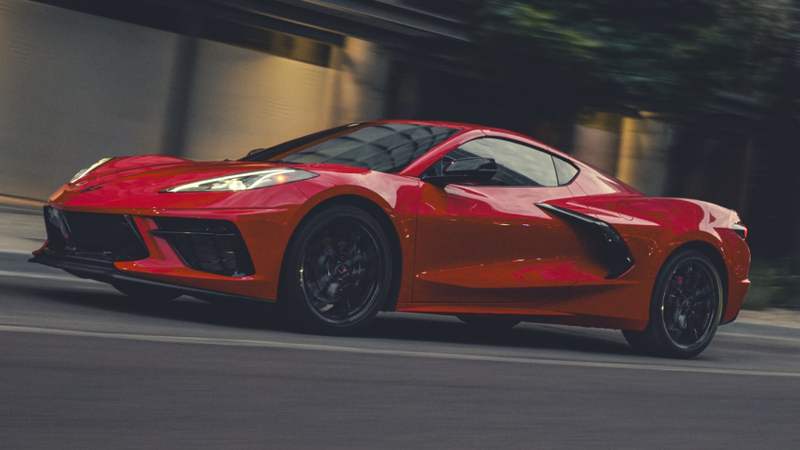
For decades, the Corvette was the "blue-collar hero"âa front-engine, rear-drive sledgehammer that could keep up with Porsches for half the price. But with the introduction of the C8 generation, Chevy did the unthinkable: they moved the engine to the middle.
The C8 Corvette isn't just good "for an American car"; it is a global supercar killer. It launches from 0-60 faster than cars costing three times as much. It proved that Chevrolet isn't afraid to kill its own traditions to chase speed. Whether itâs the high-revving flat-plane crank Z06 or the electrified E-Ray, the Corvette remains the technological flagship of General Motors.
2. The Silverado: Like a Rock
If the F-150 is the "innovator" with its aluminum body, the Chevy Silverado is the "traditionalist." Chevy fans value the durability of the roll-formed high-strength steel bed. They trust the naturally aspirated V8s.
The Silverado (and its heavy-duty brother, the Silverado HD) is built on the premise of proven reliability. It introduces tech where it mattersâlike the Super Cruise hands-free towing assistant or the invisible trailer camera viewâbut keeps the mechanicals robust and familiar. Itâs the truck you buy when you want to hit 300,000 miles with nothing but oil changes and new tires.
3. The Suburban: The Original SUV
Before the term "SUV" existed, there was the Suburban. Carrying families since 1935, it holds the record for the longest-running nameplate in automotive history. It is the vehicular equivalent of a Texas ranch houseâmassive, comfortable, and capable of holding everything you own. Along with the Tahoe, it dominates the full-size SUV segment, often serving as the standard transport for everyone from soccer moms to the Secret Service.
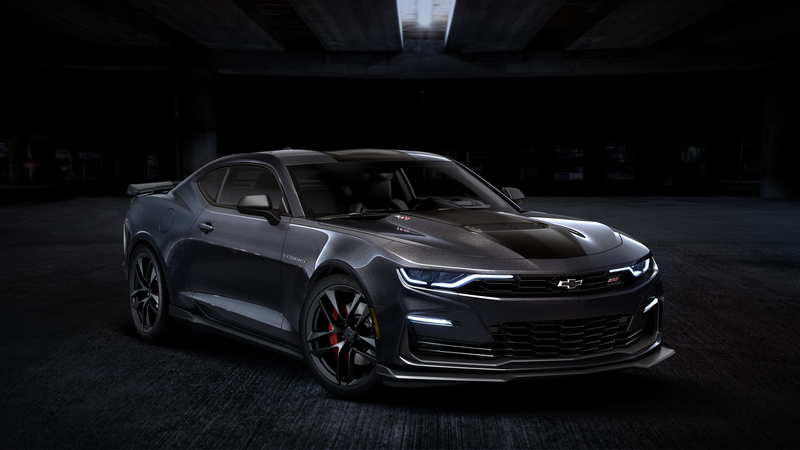
4. The Camaro: The Eternal Fighter
Although production has paused (a moment of silence, please), the Camaroâs impact is indelible. Born to answer the Mustang, the Camaro pushed the "Pony Car" wars into the "Muscle Car" stratosphere. The 6th generation Camaro, specifically the ZL1 1LE, wasn't just a drag racer; it was a track weapon with chassis dynamics that embarrassed famously balanced German coupes. The Camaro represents Chevyâs willingness to offer track-ready performance to the common man.
Engineering Philosophy: The Pushrod Persistence
Why does Chevy stick with Over-Head Valve (OHV) "pushrod" engines while Ford and the rest of the world moved to Over-Head Cams (OHC)?
- Compact Size: Without massive cylinder heads for cams, a 6.2L Chevy V8 is physically smaller than a 5.0L Ford V8. This allows for lower hood lines and better aerodynamics.
- Low Center of Gravity: Less weight up top means better handling.
- Low-End Torque: These engines are designed to pull hard from a stoplight without needing to rev to the moon (unless it's a Z06).
This "if it ain't broke, optimize it" mentality is the hallmark of Chevrolet engineering.
The Electric Horizon: The Ultium Platform
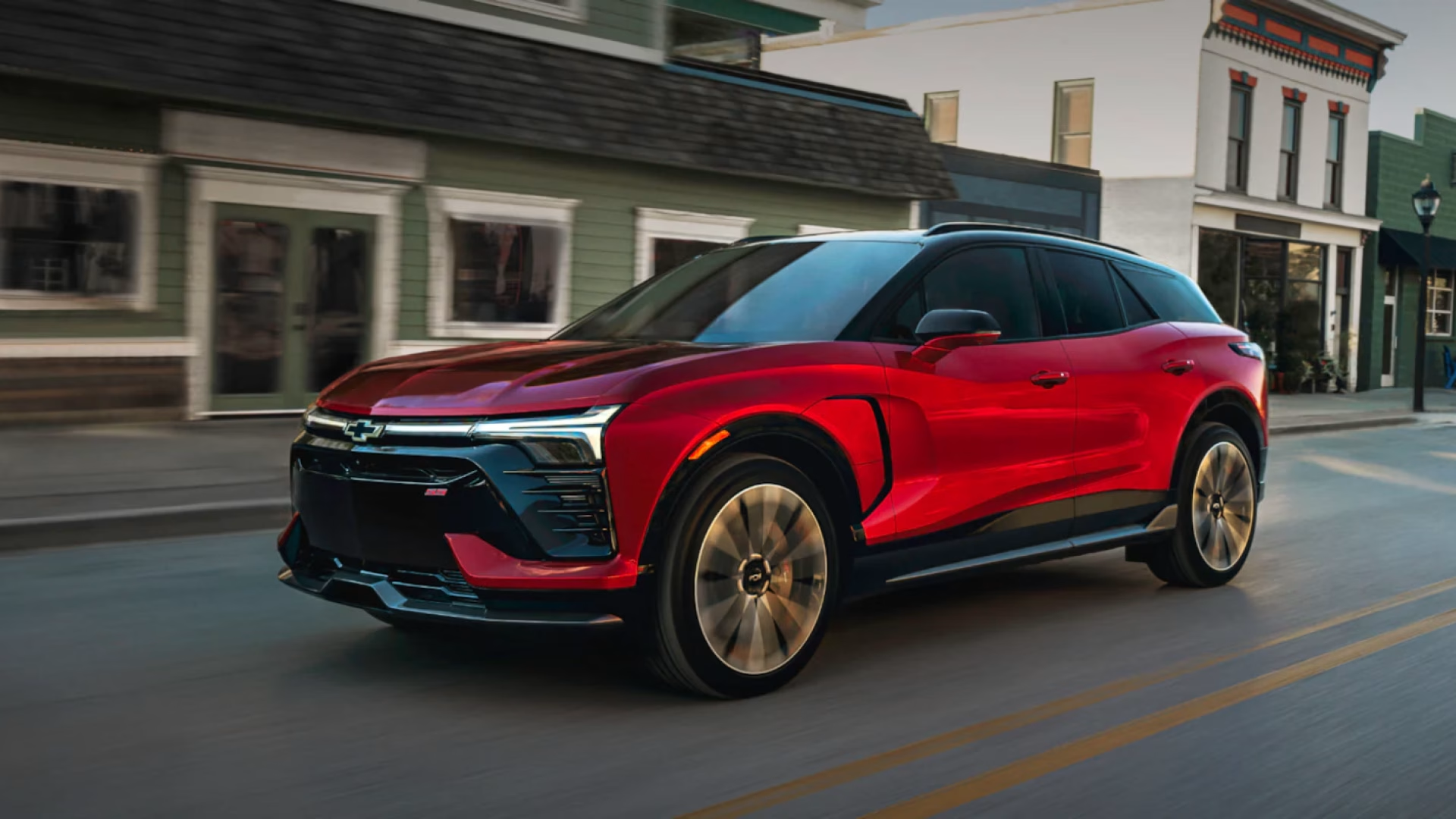
Chevrolet is currently executing one of the most aggressive pivots to electrification in the industry, but they are doing it the "Chevy way." They aren't just building eco-pods; they are building electric muscle.
The Ultium Platform is the new "Small Block." Itâs a modular battery architecture that powers everything from the affordable Equinox EV to the monster Silverado EV. The Silverado EV, for instance, offers a "Midgate" (a callback to the Avalanche), allowing it to carry items up to 10 feet long while sprinting to 60 mph in under 4.5 seconds. Chevy is proving that going electric doesn't mean losing your soul or your utility.
Chevy in Culture: More Than Metal
You canât quantify "cool," but Chevy has it in spades. Itâs the darling of the classic car world.
- The Tri-Fives: The 1955, '56, and '57 Bel Airs are the definitive icons of the 1950s Americana.
- Lowrider Culture: The 1964 Impala is the undisputed king of the lowrider scene in Los Angeles and beyond.
- NASCAR: Chevrolet is the winningest manufacturer in NASCAR Cup Series history. That "Win on Sunday, Sell on Monday" ethos is woven into the corporate carpet.
The Dark Days and Resilience
Like its Detroit brethren, Chevy faced the abyss during the 2008 financial crisis. But the restructuring of GM allowed Chevrolet to trim the fat. They killed off the badge-engineered mediocrity and refocused on global platforms. The result was a renaissance in quality and design. Today's interiors, once the butt of jokes, now feature massive screens and premium materials that rival luxury brands.
Why Chevrolet Matters to You
Choosing a Chevrolet is often a choice for community. Parts are available at any auto parts store in the country. Any mechanic can fix a Silverado. The aftermarket support is infiniteâwhether you want to lift your truck, lower your cruiser, or add 500 horsepower to your Corvette, the parts exist and they are affordable.
Chevrolet offers a "no-nonsense" approach to driving. The buttons are where you expect them to be. The throttle response is immediate. The exhaust note is a deep, reassuring burble that sounds like America.
The Hugegarage Verdict
Chevrolet is the brand for the driver who values specs over status and capability over complexity. It is the approachable giant of the industry. From the frugal Trax to the asphalt-shredding Corvette ZR1, Chevy delivers honest, visceral mechanical engagement. If you want a vehicle that feels like a trusted partner rather than just an appliance, look for the Bowtie.