
The Rear-Wheel-Drive Rebellion: Defying the Chrysler Paradigm
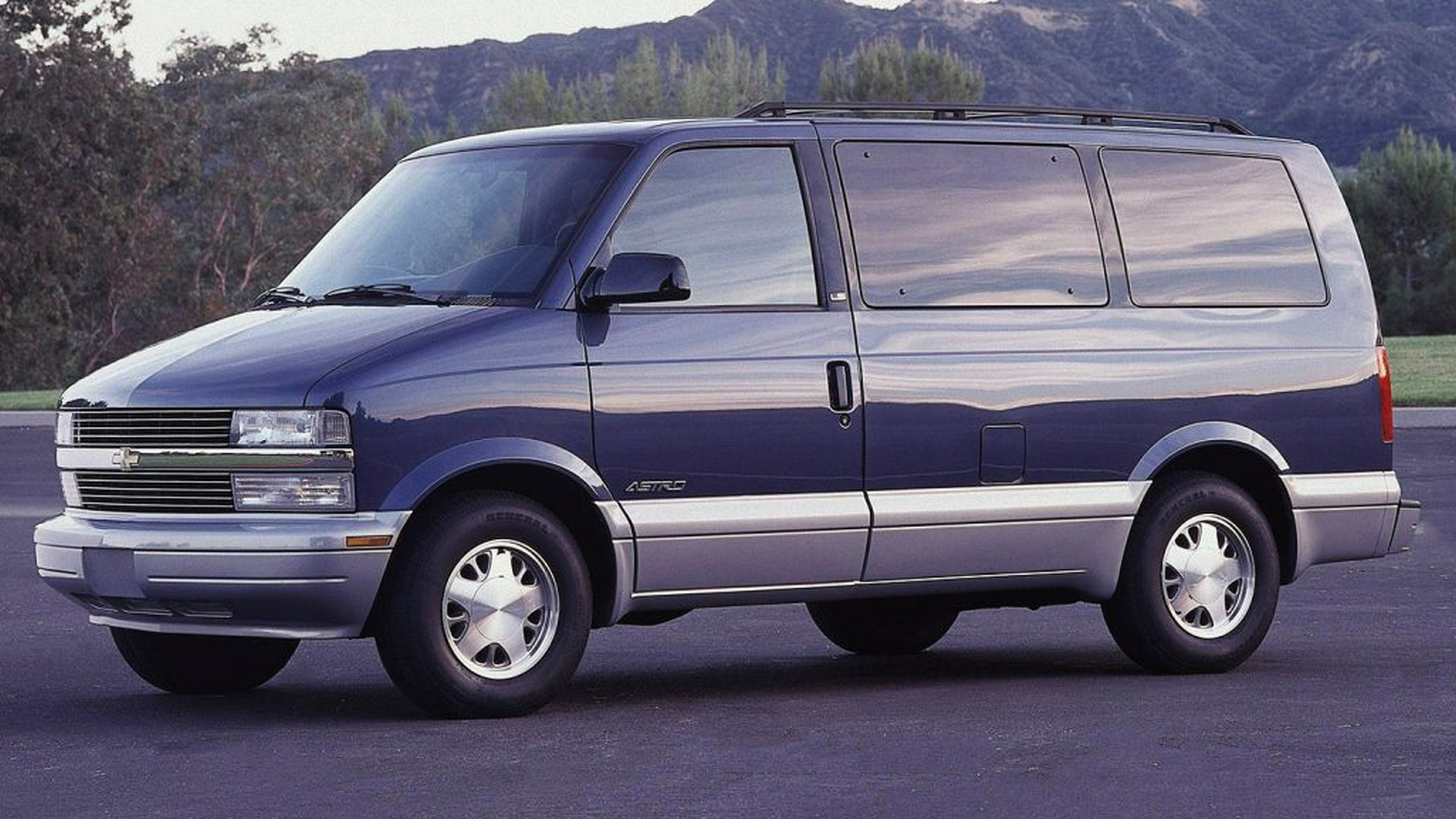
Chrysler completely shattered the American family vehicle market in 1984 with the introduction of the front-wheel-drive minivan. These transaxle-equipped vehicles drove like standard sedans, sipped fuel efficiently, and offered massive interior space. General Motors responded to this sudden industry shift with an entirely different, vastly more aggressive engineering philosophy. Rather than utilizing a fragile, lightweight car platform, Chevrolet engineers developed the rugged M-Body architecture. The Chevrolet Astro, launched for the 1985 model year, was fundamentally a mid-size truck hiding inside a highly aerodynamic, family-friendly shell.
By retaining a traditional RWD layout, the Astro immediately targeted a specific demographic: buyers who required serious payload capacity and the ability to tow heavy boats or travel trailers. Conventional front-wheel-drive transaxles would instantly overheat and self-destruct under these severe loads. The Astro bypassed this mechanical limitation entirely, routing power backward through a heavy-duty steel driveshaft into a massive solid rear axle, instantly securing its position as the premier utility vehicle in the mid-size segment.
M-Body Architecture: The Hybrid Unibody and Subframe
Packaging a rear-wheel-drive powertrain into a compact van profile presented massive structural challenges. A traditional body-on-frame ladder chassis would push the interior floor pan too high, severely restricting internal cargo capacity and making passenger entry uncomfortably difficult. Engineers solved this geometric puzzle by utilizing a brilliant hybrid structural approach.
The passenger cabin and rear cargo area formed a rigid, welded steel unibody shell, keeping the main floor pan remarkably low to the pavement. Up front, engineers bolted a massive, heavy-duty steel subframe directly to the unibody structure. This front subframe carried the entire weight of the engine, transmission, and independent front suspension components. By isolating this violent mechanical subframe from the main passenger cabin using thick, fluid-filled rubber mounts, Chevrolet drastically reduced NVH factors from penetrating the interior. This rugged, dual-structure design allowed the Astro to survive decades of brutal commercial fleet abuse on rough construction sites while maintaining a surprisingly quiet highway ride.
Suspension Geometry and Composite Leaf Springs
The Astro utilized a Short/Long Arm (SLA) independent front suspension paired with heavy-duty coil springs and a thick solid anti-roll bar. This geometry provided a surprisingly tight 39.5-foot turning radius, allowing the mid-size van to easily navigate congested urban loading zones, and completely isolated the hydraulic steering rack from harsh frontal impacts.
The rear suspension, however, relied on pure, uncompromising truck geometry. Engineers implemented a solid rear axle suspended by leaf springs to handle massive payloads. In a brilliant engineering move designed to eradicate mass, Chevrolet eventually replaced the traditional, heavy multi-leaf steel spring packs with highly advanced fiberglass composite single-leaf springs.
"The utilization of longitudinal composite leaf springs on the Astro chassis saved roughly 25 pounds of unsprung weight per side. This dramatically improved high-speed wheel control over broken pavement and completely eliminated the irritating metal-on-metal squeaking inherent in heavily loaded steel leaf packs." - GM Powertrain Engineering Archive
Powertrain Evolution: The 4.3L Vortec V6
Early 1985 models featured the 2.5-liter "Iron Duke" inline-four engine. Producing a meager 98 horsepower, this cast-iron engine struggled violently to move the heavy 3,500-pound van. Buyers overwhelmingly bypassed the four-cylinder, opting immediately for the legendary 4.3-liter V6, an engine that would become synonymous with the Astro's indestructible reputation.
The 4.3-liter V6 is essentially the legendary 350 cubic-inch small-block Chevrolet V8 with two cylinders sliced off the block. Because it retained the 90-degree V-angle of the V8, the engine inherently suffered from primary dynamic vibrations. Chevrolet engineers cured this rotational imbalance by installing a gear-driven, counter-rotating balance shaft deep inside the engine block, completely smoothing out the idle.
As the production years progressed, the 4.3-liter evolved from basic Throttle Body Injection (TBI) to highly sophisticated Central Port Injection (CPI). The CPI system utilized a highly complex "spider" injector assembly hidden directly inside the aluminum intake manifold. A single central fuel injector pulsed highly pressurized fuel into six individual nylon tubes equipped with mechanical poppet valves located at each intake port. This relentless airflow refinement turned the Vortec V6 into a high-torque workhorse capable of easily hauling massive loads.
1994 Vortec 4300 L35 V6 Specifications
- Engine Block Architecture
- 90-Degree Cast Iron V6 with Balance Shaft
- Displacement
- 4,300 cm3 (262 cubic inches)
- Fuel Delivery
- Central Port Injection (CPI) "Spider" Assembly
- Peak Output
- 200 HP @ 4,400 RPM
- Peak Torque
- 260 lb-ft @ 3,600 RPM
- Transmission Pairing
- 4L60-E 4-Speed Electronic Automatic
Conquering Winter: Mechanical and Active All-Wheel Drive
Chevrolet recognized that rear-wheel-drive vehicles struggled significantly in severe northern winters. In 1990, they introduced an advanced AWD system, instantly transforming the Astro into an unstoppable winter machine. Early AWD models utilized a BorgWarner 4472 mechanical transfer case. This full-time system relied on a highly advanced viscous coupling. Under normal dry highway conditions, the planetary gearset split engine torque 35/65 front-to-rear. If the rear tires hit ice and lost traction, the specialized silicone fluid inside the sealed coupling sheared and rapidly heated up. This thermal expansion locked the internal clutch plates together, instantly routing up to 100 percent of available torque to the front axle without any driver intervention.
By 1999, Chevrolet upgraded the driveline to the New Process Gear NP136 active transfer case. This modern, computer-controlled system utilized electronic wheel speed sensors to detect tire slip. When slip occurred, the ECU engaged a small electric motor to rapidly clamp a wet clutch pack, actively routing power forward in milliseconds. This modern AWD architecture made the Astro a highly sought-after vehicle in snowy, mountainous regions.
Packaging Constraints and the Hydroboost Braking Solution
Packaging the massive 4.3-liter V6 into the Astro's short, heavily sloped "doghouse" engine bay left virtually zero room for a traditional vacuum brake booster. Chevrolet engineers elegantly bypassed this severe physical packaging constraint by implementing a Hydroboost braking system.
Instead of relying on engine vacuum, the Hydroboost unit tapped directly into the high-pressure hydraulic fluid generated by the power steering pump to provide massive braking assist. This heavy-duty system, typically reserved for one-ton pickup trucks and large commercial step-vans, provided the Astro with an incredibly firm, confident brake pedal feel, perfectly suited for halting heavy payloads and large trailers without experiencing thermal brake fade.
Exterior Design: The Doghouse and Dutch Doors
The initial 1985 Astro featured a short wheelbase and a highly aerodynamic, swept-back nose designed specifically to slice through the wind and reduce highway cabin drone. In 1990, Chevrolet introduced the "EXT" (Extended) body style, grafting an extra 10 inches directly onto the rear cargo area behind the rear axle to drastically increase interior hauling volume. The original short body was eventually phased out entirely.
Rear visibility presented a constant, dangerous issue for cargo van drivers. The standard 50/50 split rear "barn doors" placed a thick metal pillar dead center in the rearview mirror. Chevrolet solved this geometric visibility issue brilliantly in 1992 by offering "Dutch Doors." This unique configuration utilized a single, large liftglass upper window that popped upward on gas struts, paired seamlessly with two half-height lower steel doors that swung outward. This completely cleared the driver's rear line of sight while preserving the critical ability to load heavy shipping pallets into the cargo bay using a warehouse forklift.
The 1995 Redesign: Safety Mandates and Aerodynamics
General Motors executed a massive, highly expensive overhaul of the M-Body platform for the 1995 model year. The front fascia received an aggressive, truck-like appearance that heavily mirrored the contemporary C/K full-size pickups. Engineers physically extended the front nose by several inches. This was not a stylistic choice; it was a mandatory structural redesign required to package larger heavy-duty cooling radiators and integrate dual frontal airbags to meet strict new federal crash safety mandates.
The dashboard was completely modernized, shedding its blocky 1980s aesthetic for curved, ergonomic shapes and modern tactile switchgear. Structural rigidity was significantly increased across the entire unibody shell to comply with modern roof-crush standards, and side-impact door beams were heavily reinforced.
Transmission Evolution and Maximum Towing Capacity
The Astro's absolute market dominance lay strictly in its massive towing capacity. While front-wheel-drive minivans struggled and frequently overheated while pulling 3,500 pounds, a properly equipped rear-wheel-drive Chevrolet Astro could effortlessly tow up to 5,500 pounds.
This capability relied heavily on the transmission architecture. Early models utilized the 700R4 four-speed automatic, which eventually evolved into the electronically controlled 4L60-E. This truck-based gearbox featured a steep 3.06:1 first gear ratio, providing explosive off-the-line pulling power when hauling a heavy boat up a steep, wet boat ramp. The combination of the rigid front subframe, the heavy-duty solid rear axle, the 4L60-E truck transmission, and the massive low-end torque of the 4.3L V6 allowed families to comfortably tow large camper trailers over steep mountain passes without destroying the powertrain.
The Overlanding Resurrection and Cultural Legacy
Despite its legendary reliability and massive towing supremacy, the Astro's raw, truck-like architecture eventually sealed its fate in the primary consumer market. The American family shifted violently toward highly refined, car-based unibody crossovers and traditional front-wheel-drive minivans, which offered superior ride comfort, lower step-in heights, and significantly better fuel economy. The Astro's aging 1980s platform began to suffer in modern offset frontal crash tests, and the heavy iron-block V6 struggled to meet tightening CO2 emission mandates.
General Motors officially ceased production of the Chevrolet Astro at the Baltimore Assembly plant in May 2005, shifting its family-hauling strategy entirely toward the brand-new Lambda-platform crossovers. However, the Astro has experienced a massive cultural resurrection in the modern era. The AWD Astro has become the absolute holy grail for the "Vanlife" and overlanding communities. Enthusiasts frequently install two-inch suspension lifts, massive all-terrain tires, and custom camper interiors, utilizing the indestructible truck chassis and advanced AWD system to explore remote off-road trails that would easily destroy a modern crossover.
The Chevrolet Astro leaves behind an indestructible, defiant legacy. It refused to compromise its massive payload capacity for a softer ride, standing firmly as the definitive American vehicle for buyers who demanded the sheer utility of a heavy-duty truck seamlessly fused into the convenient, weather-tight footprint of a mid-size van.