
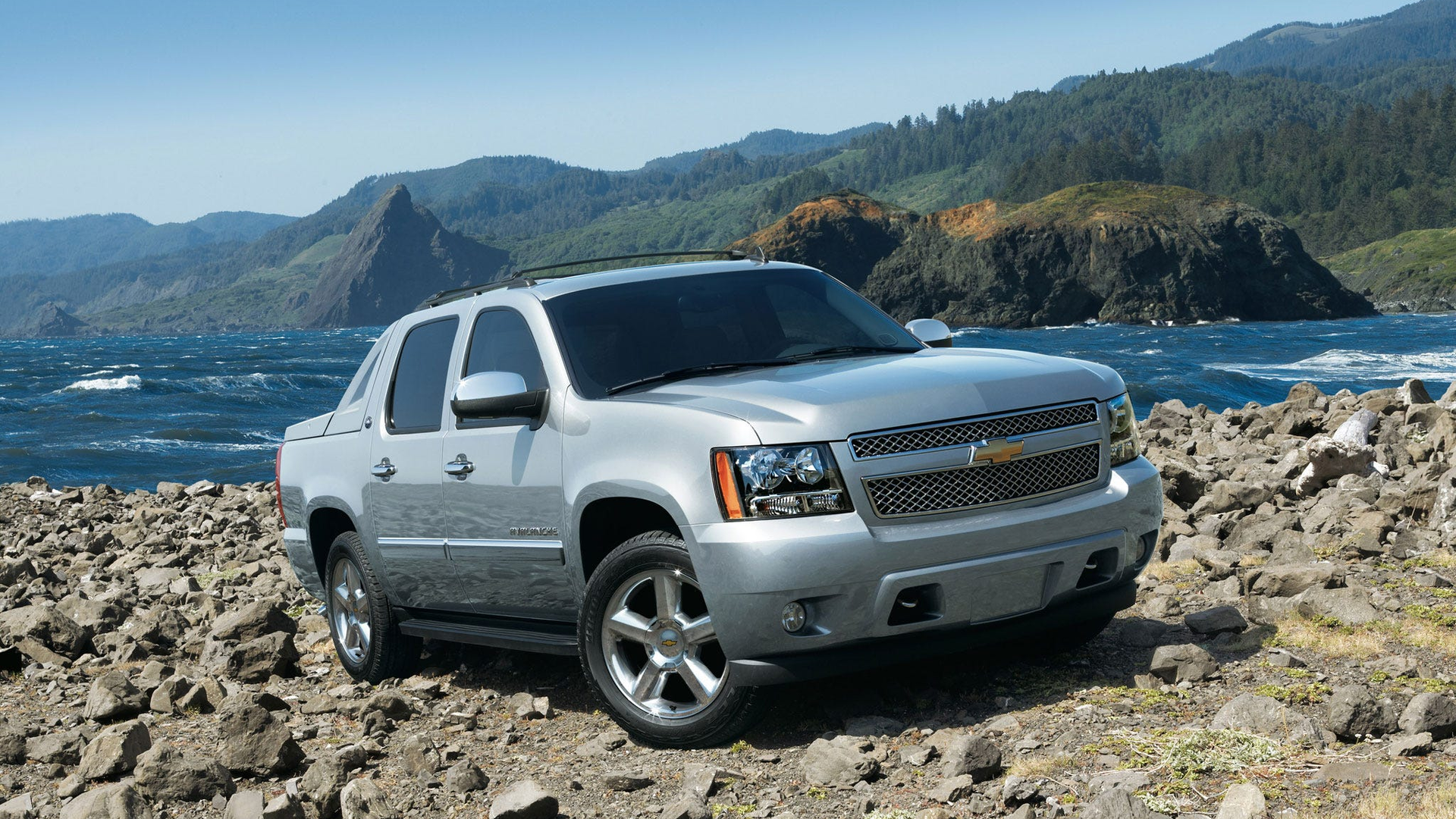
The Birth of the Sport Utility Truck
The American automotive landscape has always been strictly segmented. You had cars for families, trucks for work, and SUVs for those who wanted a bit of both. In 2001, Chevrolet introduced a vehicle that blew those categories apart. The Avalanche was not just a new model; it was an entirely new concept. General Motors called it a SUT-a Sport Utility Truck. It was designed for the buyer who refused to choose between the comfort of a five-passenger cabin and the utility of a full-size pickup bed. It was a vehicle built for the active lifestyle, tailored for the family that needed to haul plywood on Saturday and take the in-laws to dinner on Sunday. Based on the same platform as the Suburban and Cadillac Escalade EXT, the Avalanche was a mechanical marvel. It answered a specific question that few had thought to ask: What if a truck could have a soul? The resulting vehicle developed a cult following that persists to this day, cherished for its ruggedness, its versatility, and its unapologetic embrace of excess.First Generation: The GMT800 Foundation (2002-2006)
The first-generation Avalanche arrived on the robust GMT800 platform, a chassis renowned for its durability and ride quality. Visually, it was a polarizing presence. The most striking feature was the extensive plastic body cladding that wrapped around the lower half of the vehicle. Designed to protect the body from dings and scratches in the wild, it gave the truck a distinctive, almost tactical look. Critics called it ugly; owners called it practical. The grey plastic fender flares and bumpers were a statement of intent-this was a machine meant to be used, not garaged and polished. Under the hood, the Avalanche was offered in both 1500 (half-ton) and 2500 (three-quarter-ton) series. The engine options were the bread and butter of the GM truck lineup. The standard 5.3L Vortec V8 provided ample power for most needs, while the optional 8.1L Vortec Big Block or the 6.0L High Output V8 catered to those with serious towing requirements. The cabin was spacious, offering the same cavernous interior as the Suburban, complete with a third-row seat in the early years before the Midgate mechanism simplified the layout to a two-row configuration.The 2500 Series: The Heavy Hauler
For the true workhorse, the 2500 series Avalanche was a gem. It featured the heavy-duty suspension and the 8.1L V8, turning the luxury cruiser into a legitimate hauler. The heavy-duty suspension tuning meant the ride was stiffer, but the payload capacity jumped significantly. Finding a used 2500 Avalanche today is a challenge, as they were produced in lower numbers and often used hard by their original owners. They remain the only SUT that could comfortably tow a large boat while seating five adults in leather-clad comfort.The first-generation Avalanche's plastic cladding was originally unpainted, but Chevrolet offered a dealer-installed painted option later in the cycle to appease buyers seeking a more refined aesthetic.
The Midgate: Engineering Masterpiece
The soul of the Avalanche is the Midgate. This folding partition between the cabin and the bed is what separated the Avalanche from a standard crew cab truck. The operation was simple yet brilliant. By folding the rear seats flat and lowering the Midgate, the five-foot, three-inch bed extended into an eight-foot, two-inch cargo area. The rear window could be removed and stored in the Midgate door itself, creating a massive pass-through. This system allowed owners to transport items that would never fit in a standard short-bed truck. Four-by-eight sheets of drywall could lay flat with the tailgate closed. Camping gear, kayaks, or even a motorcycle could slide inside, protected from the elements if a tonneau cover was used. It was a transformer before the movie franchise made the term famous. The rubber seal system was designed to prevent water intrusion, creating a watertight box when the gate was up. This level of engineering detail showed that GM was serious about making this a functional tool, not just a styling exercise.Second Generation: The GMT900 Refinement (2007-2013)
In 2007, the Avalanche moved to the GMT900 platform. This generation marked a significant shift in design philosophy. Gone was the controversial plastic cladding. In its place was a sleek, painted metal body that integrated seamlessly with the rest of the Chevrolet truck lineup. It looked more like a Silverado from the front and a Suburban from the side, with the bed seamlessly integrated into the body lines. The interior quality took a quantum leap forward, with better materials, tighter fitment, and a more modern dashboard design. The suspension was tuned for a smoother ride, and the steering was more precise. The 2500 series was discontinued, streamlining the lineup to the 1500 series only. This decision reflected the market reality: most Avalanche buyers were using them for family duty and light hauling, not heavy commercial work. The 6.0L V8 was dropped, leaving the reliable 5.3L V8 as the standard engine. However, the 5.3L was updated with Active Fuel Management and later direct injection, improving fuel economy and smoothness.The Z71 Off-Road Package
The Z71 package was a popular option for the Avalanche, adding skid plates, off-road tuned shocks, and distinctive badges. On the second generation, the Z71 also included unique interior trim and a more aggressive front fascia. While the Avalanche was never intended to be a rock crawler due to its long wheelbase and heavy rear overhang, the Z71 package made it a capable companion for logging roads and campsite access. The high approach angles and 4WD system gave it a level of competence that many SUVs lacked.- Engine Specs (2007-2013 5.3L Vortec V8)
- Horsepower: 310 hp @ 5400 RPM
- Torque: 335 lb-ft @ 4000 RPM
- Transmission: 4-Speed / 6-Speed Automatic
- Towing Capacity: Up to 8,100 lbs
Driving Dynamics: The Suburban Connection
Driving an Avalanche is a unique experience. It feels every inch of its 221-inch length. The steering is light and requires constant micro-adjustments on the highway, a trait common to trucks of this era. The ride quality is smooth, absorbing bumps with a suppleness that solid-axle trucks struggle to match. This is the Suburban DNA shining through. It is a cruiser, designed to eat up highway miles with the family in silence. The V8 engine provides a throaty burble at idle and sufficient power for merging. The four-speed automatic transmissions in the early GMT900 years were criticized for being 'hunting' gears on hills, but the later six-speed transmission resolved many of those issues. The brakes are robust, necessary to stop the 6,000-pound machine. The turning radius is wide, requiring careful planning in tight parking lots, but the backup camera, introduced later in the run, helped mitigate the visibility challenges of the solid rear pillars.Interior Comfort and Technology
The interior of the Avalanche was designed to be a living room on wheels. The second generation offered heated and cooled seats, a premium Bose sound system, and navigation. The rear seats offered excellent legroom, rivaling many full-size sedans. The console was wide and deep, swallowing laptops and purses with ease. For the time, the technology was cutting edge. OnStar turn-by-turn navigation was a novelty in the mid-2000s, and the Avalanche offered it. The cargo management system in the bed was another highlight. The bed walls were lined with adjustable tie-downs and storage compartments. The three-piece hard tonneau cover was standard, locking into place to create a secure, weather-resistant trunk. No other truck on the market offered this level of integrated cargo security. It was a station wagon for the 21st century.The Market and the Legacy
The Avalanche sold well initially, but sales began to taper off as fuel prices rose and the recession hit. The market shift towards crossover SUVs like the Traverse and Equinox siphoned off buyers who didn't need a V8. The crew cab Silverado also improved, offering a larger interior that negated the Avalanche's primary advantage. Production ended in 2013 at the Silao Assembly Plant in Mexico. However, the legacy of the Avalanche is secure. It proved that a truck could be refined. It paved the way for the current generation of mid-size trucks that focus on lifestyle over labor. The used market for Avalanches is robust. Enthusiasts seek them out for the unique Midgate feature. They are a common sight at camping grounds and boat ramps. The first-generation models with the cladding have aged into a retro cool, while the second-generation models still look modern and fresh.Common Issues and Ownership
For prospective buyers, the Avalanche presents a few known issues. The GMT800 platform is notorious for 'cracking' dashboards due to heat expansion. The intermediate steering shafts often clunk, a benign but annoying issue. On the GMT900, the active fuel management lifters can fail if the oil is not changed religiously. The flex fuel versions (Z55 suspension) can suffer from air ride compressor failures. Despite these quirks, the platform is fundamentally sound. Parts are shared with millions of other GM trucks, meaning repairs are cheap and easy. The body integrity is excellent, particularly the second generation's resistance to rust, a welcome change from the rotting wheel wells of some 90s GM trucks.The Final Year: The Black Diamond
In its final year of production, Chevrolet offered the 'Black Diamond' edition. It added unique badging, leather, and a special logo. It was a somber send-off for a vehicle that had dared to be different. The Black Diamond models are collector's items today, representing the end of the SUT experiment for Chevrolet. While Ford continues to sell the Explorer-based Sport Trac in spirit, the Avalanche remains the definitive execution of the concept.Technical Specifications Summary
The Avalanche was a heavy vehicle, but its dimensions made it a master of cargo.- Dimensions (2013 Model)
- Wheelbase: 130.0 inches
- Overall Length: 221.3 inches
- Curb Weight: 5,400 - 5,800 lbs
- Fuel Tank Capacity: 31.0 gallons