
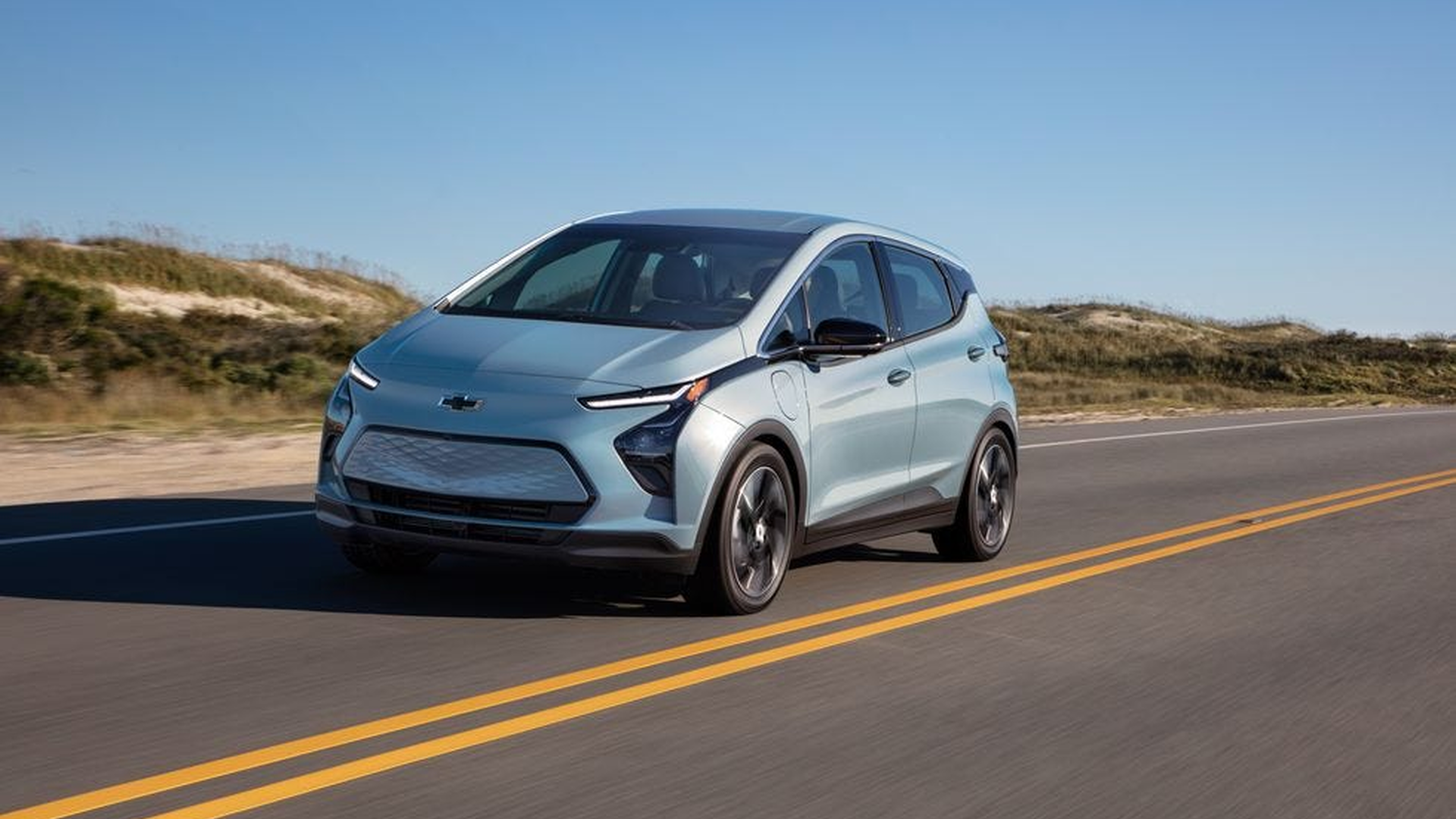
The Electric Revolution's Opening Salvo
In the landscape of modern automotive history, few vehicles have punched above their weight class quite like the Chevrolet Bolt EV. While Tesla often grabs the headlines for luxury and performance, it was General Motors that quietly executed the first successful mass-market electric car with serious range. Released in late 2016 as a 2017 model, the Bolt EV arrived on the scene years before the Tesla Model 3 began its mass production ramp-up. It was a bold proclamation from Detroit: the electric car was no longer a niche product for early adopters or a compliance car for California mandates. It was a viable, usable vehicle for the masses. The significance of the Bolt EV cannot be overstated. Before its arrival, the affordable BEV landscape was dominated by compliance cars like the Chevrolet Spark EV or the Ford Focus Electric, which offered ranges of 80 to 100 miles. This created a barrier for the average consumer; you could commute, but you couldn't road trip. The Bolt EV obliterated that limitation with an EPA-estimated range of 238 miles-later increased to 259 miles-packed into a compact hatchback body. It forced the entire industry to recalibrate its expectations for what an affordable EV should be capable of.Engineering: The LG Partnership
The development of the Bolt EV was a study in speed and strategic partnership. General Motors collaborated extensively with LG, a relationship that went far beyond simple parts sourcing. LG supplied the electric drive motor, the battery pack, the onboard charger, and even the infotainment system. This deep integration allowed GM to accelerate the development timeline, bringing the car to market in record time. The architecture of the Bolt EV is deceptively simple but highly effective. It utilizes a dedicated electric vehicle platform, meaning it wasn't adapted from an existing gasoline car. This allowed engineers to optimize the weight distribution and interior space. The flat, rectangular battery pack sits low in the floor, sandwiched between the frame rails. This placement lowers the center of gravity significantly, which pays dividends in handling dynamics. Because there is no transmission tunnel, the cabin is surprisingly open, offering more interior volume than the exterior dimensions suggest.The Battery and Thermal Management
The battery system is the heart of the Bolt EV. The original pack consisted of 288 lithium-ion cells arranged in a series-parallel configuration. A complex thermal management system circulates liquid coolant through the battery casing to maintain optimal temperatures. This is a critical distinction between the Bolt and some of its air-cooled competitors. The liquid cooling allows for faster charging speeds without overheating the cells and protects the battery longevity in extreme climates, from the scorching summers of Arizona to the freezing winters of Minnesota.The Bolt EV's liquid-active thermal management system was a key engineering decision that differentiated it from competitors like the Nissan LEAF, ensuring consistent performance and battery health regardless of ambient temperature.
Driving Dynamics: Peppy and Planted
Step behind the wheel of a Bolt EV, and the immediate sensation is one of responsiveness. Electric motors are known for their instant torque, but the Bolt feels particularly sprightly. The permanent magnet drive motor produces 200 horsepower and 266 lb-ft of torque. In a vehicle this size, that power translates to 0-60 MPH times in the mid-six-second range. It is not a sports car, but it is quick enough to surprise unsuspecting passengers at a stoplight. The driving experience is characterized by that low center of gravity. The car feels planted to the road. It corners flatly, with minimal body roll. However, the steering is somewhat numb, a common trait in electric assist systems of this era. The suspension is tuned for comfort, soaking up city bumps reasonably well, though the short wheelbase can make it feel a bit busy on broken highway pavement. One of the standout features for driving enthusiasts is the regenerative braking system. The Bolt EV offers a steering wheel paddle that allows the driver to increase the regenerative braking force on demand. With practice, one can drive the car in 'One-Pedal Driving' mode, slowing the vehicle to a complete stop using just the motor's resistance without touching the brake pedal. This not only recovers energy but makes stop-and-go traffic significantly less tiring.- Drivetrain Specifications (2017-2022)
- Motor: Permanent Magnet Drive Unit
- Horsepower: 200 hp
- Torque: 266 lb-ft
- Drive Type: FWD
The 2020 Refresh: Fixing the Flaws
The first-generation Bolt EV was a technological triumph, but it wasn't without its criticisms. The interior, while spacious, was filled with hard plastics that felt cheap for the price point. The seats were often criticized for being too flat and unsupportive. For the 2020 model year, Chevrolet addressed these complaints head-on with a significant refresh. The interior received a massive upgrade. High-quality materials replaced the hard plastics, and the seats were completely redesigned with better bolstering and a more premium feel. The infotainment system was updated, and the console was streamlined to offer more storage space. Externally, the front fascia was restyled to look more modern, losing some of the 'frowning' expression of the original design. The battery capacity was also bumped slightly, using different cell chemistry to eke out an extra 21 miles of range, bringing the total to 259 miles.The Recall Saga: A Trial by Fire
No history of the Bolt EV would be complete without addressing the battery recall that began in 2020. A manufacturing defect in the battery cells supplied by LG created a rare but serious fire risk when the pack was charged to full capacity or depleted to near zero. It was a dark chapter for the model. GM issued a massive recall, advising owners to limit their charging and park their cars outside. The resolution, however, was comprehensive. Dealers installed advanced diagnostic software and, in many cases, replaced the entire battery pack with updated modules. While the negative press hurt the car's reputation initially, the replacement batteries ironically gave many owners a 'new car' powertrain years into their ownership. It stands as a testament to the potential growing pains of early EV adoption and the massive logistical challenges of servicing high-voltage systems.Charging: Practicality vs. Speed
The Bolt EV was designed primarily as a city and commuter car, and its charging profile reflects that. For home charging, the car accepts AC Level 2 charging at 7.2 kW, adding about 25 miles of range per hour. This is ample for overnight charging. However, on the road, the Bolt EV shows its pre-Ultium age. While it supports DC fast charging, the peak charging speed is capped at roughly 55 kW. In an era where competitors are pushing 150 kW or even 250 kW, the Bolt is slow to charge on the highway. A typical fast charge session takes about an hour to get to 80%. Furthermore, the charging curve drops off quickly after 50%. For the road-tripper, this is a drawback. But for the daily commuter who charges at home, it is largely irrelevant. The car understands its mission: it is a suburban runabout, not a transcontinental cruiser.Interior Space and Utility
Despite its subcompact footprint, the Bolt EV offers interior space that rivals mid-size sedans. The 'tall hatch' design provides excellent headroom for both front and rear passengers. The rear legroom is surprisingly generous, thanks to the flat floor and the absence of a transmission tunnel hump. Cargo space is another highlight. With the rear seats up, there is 16.6 cubic feet of space behind the second row. Fold the seats down, and that expands to 57 cubic feet. It is a practical shape, too; the squared-off hatch opening makes loading bulky items like bicycles or furniture easy. It is this practicality that endeared the Bolt to families who needed utility but didn't want the bulk of an SUV.The Bolt EUV Sibling
In 2022, alongside the refreshed Bolt EV, Chevrolet introduced the Bolt EUV. Essentially a long-wheelbase version of the Bolt, the EUV offered more rear legroom and a slightly more streamlined exterior. It was the first Chevrolet to offer the advanced 'Super Cruise' hands-free driving system, marking a significant technological milestone. The EUV targeted the crossover market specifically, offering a more traditional 'SUV-lite' aesthetic compared to the hatchback profile of the standard Bolt.Market Position and Legacy
The Bolt EV occupied a unique space in the market. It had no direct competitors for a long time. The Nissan LEAF had less range and used CHAdeMO charging (an increasingly obsolete standard in North America). The Hyundai Kona Electric and Kia Niro EV offered similar range but at a slightly higher price point and with fewer units available in the US market. The Tesla Model 3 was the closest rival, but its price often crept higher, and it lacked the hatchback utility. The Bolt's greatest legacy is that it forced other manufacturers to take range seriously. It killed the '100-mile EV' segment overnight. By offering 200+ miles for under $30,000 (after the federal tax credit was factored in during its early years), it set the benchmark. It proved that the average American would buy an electric car if it could handle their daily life without compromise.The End of the Line
In April 2023, General Motors announced the discontinuation of both the Bolt EV and EUV. It was a controversial decision. The Bolt was Chevrolet's best-selling electric vehicle, and it was being phased out to make way for the new Ultium-based vehicles like the Equinox EV and Blazer EV. Critics argued that GM was killing a winner. The company argued that the platform was old tech and that the future lay in the Ultium architecture. The final Bolt rolled off the Orion Township assembly line in late 2023. It marked the end of a pioneering era. The car that made electric driving accessible to the middle class was gone, leaving behind a legacy of technological audacity. It was a car that asked for no excuses, delivered on its promises, and changed the automotive conversation forever.Buying Used: A Guide for Enthusiasts
For the used car shopper, the Bolt EV represents a fascinating proposition. Depreciation has been steep, making it one of the best value propositions on the used market. A 2017 or 2018 model can often be found for a fraction of its original price. The key is to check the battery status. Many used units will have had their battery packs replaced under the recall, effectively giving them a brand-new powertrain. If the battery hasn't been replaced, prospective buyers should ensure the recall service has been performed, which includes the installation of diagnostic software. The driving dynamics of the older models are identical to the newer ones, though the interior quality difference between a 2017 and a 2022 model is stark. The refresh is worth the premium if the budget allows. For those seeking maximum value, a pre-refresh model with a replaced battery is a mechanical steal.Technical Specifications Summary
The Bolt EV remained mechanically consistent throughout its life, with only minor efficiency gains along the way.- Dimensions & Capacity
- Wheelbase: 102.4 inches
- Overall Length: 163.2 inches
- Curb Weight: Approx. 3,569 lbs
- Battery Capacity: 60.0 kWh (2017-2019) / 65.0 kWh (2020-2023)
- Max Cargo Volume: 57.0 cu ft