
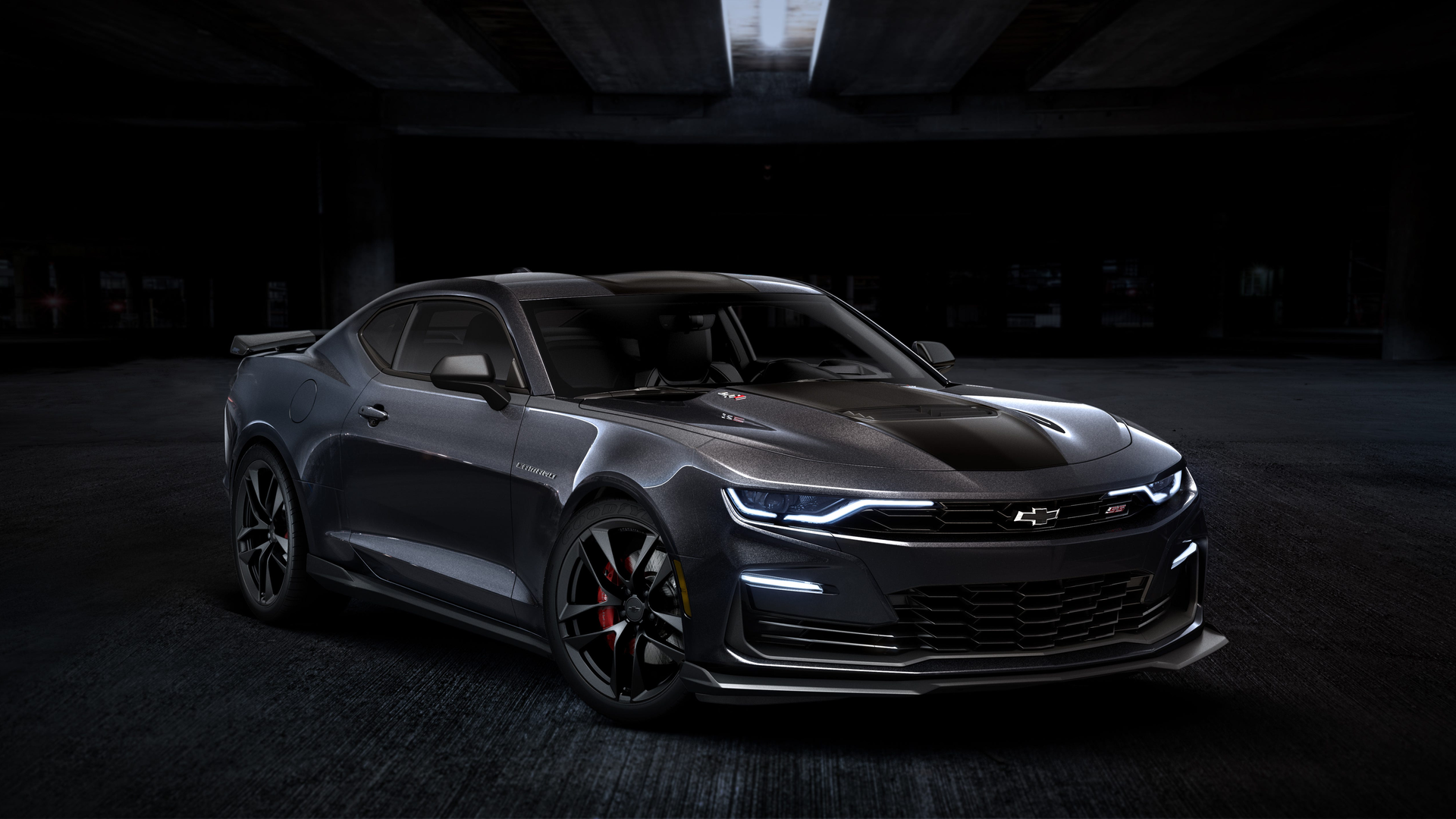
The Panther Awakens: A Direct Answer to Ford
In the mid-1960s, General Motors was caught flat-footed. The Ford Mustang had created an entirely new market segmentâthe "Pony Car"âand was selling in record-shattering numbers. Chevrolet desperately needed an answer. Under the secret code name "Panther," GM engineers and designers scrambled to build a lightweight, front-engine, rear-wheel-drive coupe with a long hood and a short rear deck. When the vehicle was finally ready for the public in the summer of 1966, Chevrolet General Manager Pete Estes convened the first and last multi-city teleconference in history to announce the car's real name: the Chevrolet Camaro.
When you explore the Camaro listings on Hugegarage, you are navigating the front lines of the longest-running rivalry in American automotive history. The Camaro wasn't just a car; it was a cultural phenomenon that defined the baby boomer generation, survived the Malaise Era of the 1970s, dominated the neon-soaked 1980s, and was ultimately reborn as a precision track instrument in the 21st century. It is the working-class hero of the drag strip and the road course.
What is a Camaro? During the 1966 press conference, automotive journalists eagerly asked Pete Estes what the word "Camaro" actually meant. Estes, with a smirk, delivered one of the greatest lines in marketing history: "It is a small, vicious animal that eats Mustangs."
The Architects of Aggression: Designers and Engineers
The Camaro's enduring appeal is the result of visionary teams who fought to keep the V8 spirit alive through shifting regulations and corporate budgets.
- Henry Haga & Irv Rybicki: The lead designers of the first-generation exterior. They gave the Camaro its wide stance, muscular haunches, and the iconic "coke-bottle" profile that set it apart from the flatter, boxier Mustang.
- Vince Piggins: The father of the Z/28. Piggins, an engineer focused on racing, circumvented GM's corporate racing ban. He created a special 302 cubic-inch V8 (by mating a 283 crankshaft to a 327 cylinder block) specifically to slip under the 5.0-liter displacement limit for the SCCA Trans-Am racing series. The Z/28 package turned the Camaro into a road-racing legend.
- Al Oppenheiser: The Chief Engineer of the 5th and 6th generation Camaros. Oppenheiser's primary focus was shifting the Camaro from a straight-line muscle car into a globally competitive sports car. Under his leadership, the 6th generation Camaro 1LE and ZL1 models routinely out-lapped European exotics costing three times as much.
The Six Generations of American Muscle
The Camaro has evolved dramatically, sharing platforms, surviving cancellation, and ultimately returning to glory.
Generation 1: The Classic Era (1967â1969)
Built on the brand new F-Body platform (shared with the Pontiac Firebird), the first generation offered dizzying customization. Buyers could combine the RS (Rally Sport) appearance package (featuring hidden headlights) with the SS (Super Sport) performance package (featuring a 350ci or 396ci V8).
The COPO Legend: Because GM restricted mid-size cars to engines no larger than 400 cubic inches, dealership network wizards like Don Yenko used the Central Office Production Order (COPO) system to sneak massive 427 cubic-inch (7.0L) engines into factory Camaros, creating the most feared drag racers of the era.
Generation 2: The European Influence (1970â1981)
Influenced by Ferrari and Jaguar, the 1970 Camaro featured a sleek, fastback roofline and no rear side windows. The 1970½ Z28, with its high-revving 360 HP LT-1 V8, is considered one of the greatest driver's cars of the classic muscle era. This generation survived the 1973 oil crisis and crushing emissions regulations by leaning heavily into styling, with wrap-around rear glass and striking graphics packages keeping sales robust through the late 70s.
Generation 3: The High-Tech Wedge (1982â1992)
The F-Body lost significant weight and gained modern aerodynamics. It introduced MacPherson strut front suspension, fuel injection, and a hatchback body style.
The IROC-Z (1985): Named after the International Race of Champions, the IROC-Z featured upgraded suspension, larger sway bars, and the Tuned Port Injection (TPI) 5.0L V8. It became the definitive status symbol of the 1980s.
Generation 4: The Aero Wedge (1993â2002)
The sleekest Camaro to date. It introduced rack-and-pinion steering and was powered by the phenomenal LT1 V8 (and later, the legendary all-aluminum LS1 V8). Despite offering incredible performance for the dollar, declining coupe sales and corporate restructuring forced GM to cancel the Camaro in 2002, leaving enthusiasts heartbroken.
Generation 5: The Retro Resurrection (2010â2015)
After an eight-year hiatus, the Camaro returned with a vengeance. Based on the Zeta platform, its design (heavily influenced by the 1969 model) was propelled into global superstardom thanks to its role as "Bumblebee" in the Transformers film franchise. It featured independent rear suspension (IRS) across all models and brought the SS moniker back to the forefront with a 426 HP LS3 V8.
Generation 6: The Track Weapon (2016â2024)
The most capable Camaro ever built. Migrating to the phenomenal Alpha platform (shared with the Cadillac ATS-V), it shed hundreds of pounds. The engineering team focused obsessively on chassis dynamics.
- The 1LE Track Package
- Available across turbo-4, V6, and V8 models, the 1LE package added extra cooling, electronic limited-slip differentials, and aggressive aerodynamics, turning the Camaro into a scalpel on a road course.
- The ZL1 1LE
- The pinnacle of Camaro performance. Featuring a 650 HP supercharged LT4 V8 and Multimatic DSSV (Dynamic Suspensions Spool Valve) dampers, this car set blistering lap times at the Nürburgring, embarrassing supercars on their home turf.
Who Drives a Camaro? The Target Audience
The Camaro appeals to a highly segmented, passionate demographic:
The Canvas Builder: Hot rodders who buy 1st and 2nd generation Camaros as blank canvases for "Restomod" builds, dropping in modern LS-series V8s and aftermarket chassis components.
The Track Enthusiast: Drivers who recognize that the 6th-generation Camaro SS 1LE is arguably the greatest performance bargain of the 21st century, offering Porsche 911 GT3 levels of chassis feedback for a fraction of the cost.
The Street Cruiser: Buyers who love the menacing, muscular aesthetic and the deep, rumbling exhaust note that only an American pushrod V8 can provide.
The Hugegarage Buyer's Guide: What to Watch Out For
Buying a classic or modern Camaro requires specific knowledge. Here is what to look for when inspecting a potential purchase.
1. The "Cowl Tag" Verification (Gen 1 & 2)
Because early Camaros are so valuable, "clones" (base models modified to look like SS or Z/28 models) are rampant. Always decode the trim tag (located on the firewall) and check for matching numbers on the engine block. If a seller claims it is an original Z/28 without documentation, assume it is a tribute car and price it accordingly.
2. T-Top Leaks and Chassis Flex (Gen 3)
The third-generation F-Body is notorious for chassis flex. The torque of the V8 engines can actually twist the unibody over time, leading to stress cracks near the roof pillars and leaking T-Tops. Look for aftermarket "subframe connectors" welded to the underside of the carâthis is a mandatory structural upgrade.
3. The Optispark Distributor (Gen 4: 1993-1997)
Early 4th-gen Camaros with the LT1 engine use an optical distributor (Optispark) located directly behind the water pump. If the water pump leaks, it destroys the distributor, causing the car to misfire or stall. Replacing it is expensive and labor-intensive.
4. The "Bunker" Visibility (Gen 5 & 6)
The modern Camaro's aggressive, chopped-roof design comes at a cost: outward visibility. The high beltline and thick C-pillars create massive blind spots. When test-driving a Gen 5 or 6, ensure you are comfortable using your mirrors and (on later models) the digital rearview camera system. It takes adjustment.
5. The 8-Speed Automatic Shudder (Gen 6: 2016-2018)
Early 6th-generation models equipped with the 8L90 8-speed automatic transmission frequently suffer from a "shudder" or vibration at cruising speeds, caused by moisture in the OEM transmission fluid affecting the torque converter lockup clutch. GM issued a technical service bulletin to flush and replace the fluid, which usually solves the issue. Check the service history.
Conclusion: The Undying Spirit of Detroit
The Chevrolet Camaro is a testament to the resilience of the American sports car. It was born as a reactive measure but grew into an automotive institution that defined performance for millions. Whether you are captivated by the simple, raw aggression of a 1969 big-block or the digitized, aerodynamic witchcraft of a 2024 ZL1, the Camaro demands respect. It is loud, it is visceral, and it refuses to back down. Explore the detailed technical specifications and trim levels below to find your perfect pony car.