
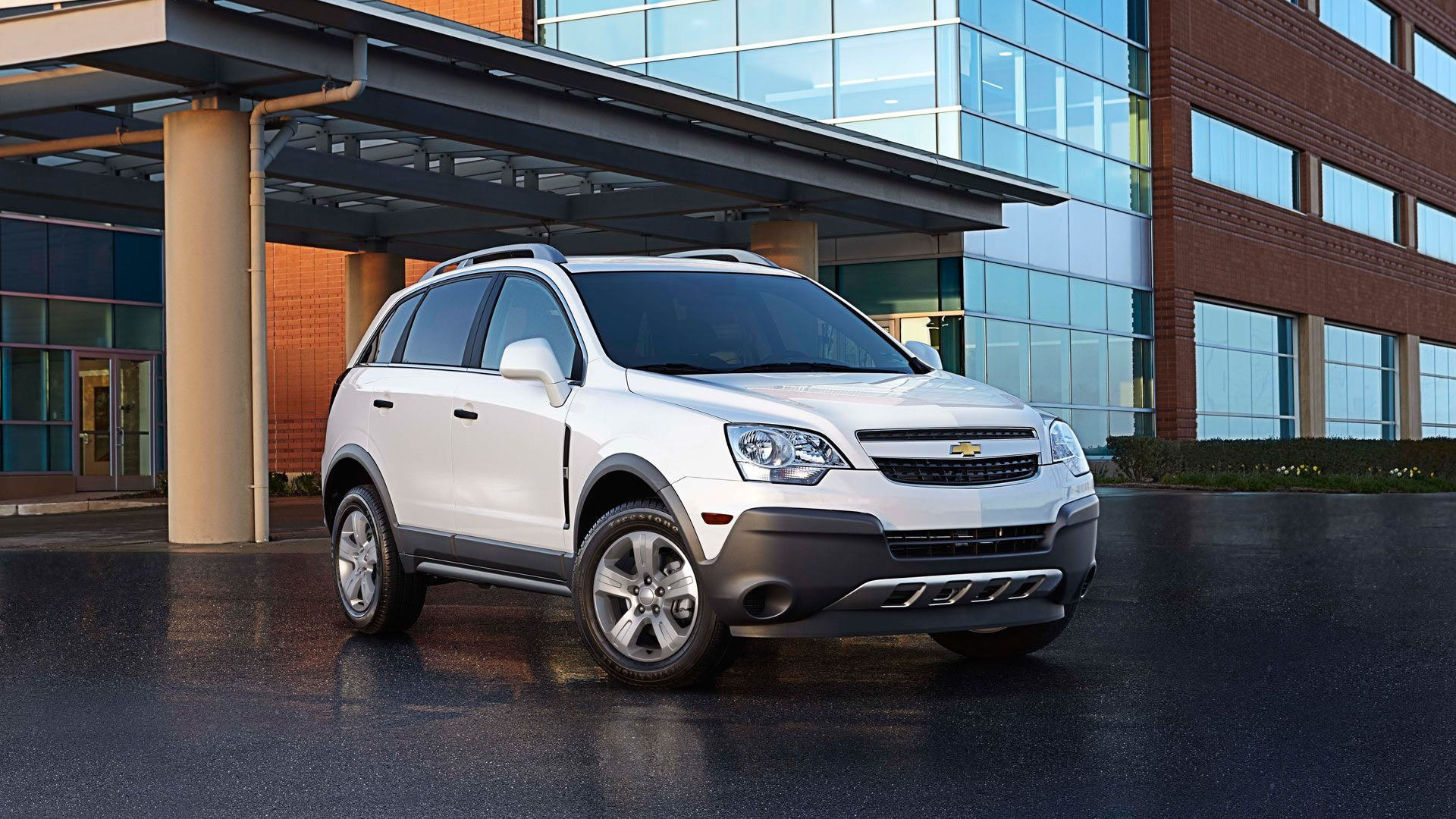
The Unexpected Return: A Second Life for Saturn
The story of the Chevrolet Captiva Sport is one of automotive efficiency. In the wake of the 2008 financial crisis and General Motors' subsequent restructuring, the Saturn brand was shuttered. This left a hole in the product lineup for a compact SUV that dealers could sell to rental agencies and commercial fleets. Rather than let the tooling for the well-regarded Saturn Vue gather dust, GM made a strategic decision. They rebadged the vehicle, refined the powertrains, and reintroduced it to the North American market as the Chevrolet Captiva Sport. It arrived quietly for the 2012 model year. Unlike the flashy launches of its competitors, the Captiva Sport was aimed squarely at the fleet market. It wasn't a car you typically saw advertised on television during Sunday football. Instead, it became a familiar sight at airport rental counters. For the savvy consumer, however, it represented a hidden gem-a well-engineered European crossover available at a working-class price point. It bridged the gap between the aging Chevrolet Equinox of the previous generation and the incoming wave of smaller crossovers, offering a unique blend of German chassis tuning and American utility.European Roots: The Theta Platform
To understand the driving dynamics of the Captiva Sport, one must look across the Atlantic. The vehicle was essentially an Opel Antara, designed and engineered in Germany. This lineage is crucial. While many American SUVs of the era were criticized for their truck-like ride and vague steering, the Captiva Sport benefitted from the Theta platform's sophisticated suspension geometry. It utilized a front MacPherson strut setup with a rear independent multi-link suspension, a configuration that prioritized road holding over sheer ruggedness. This German influence permeated the driving experience. The suspension was tuned stiffer than the typical American palate expected, resulting in a chassis that remained flat through corners. There was a sense of connectedness to the road, a communicative feedback through the steering wheel that was absent in the body-on-frame trucks that still dominated the landscape. It was a crossover in the truest sense-blending the high seating position of a utility vehicle with the handling characteristics of a sedan. For the rental customer used to wallowy boats, the Captiva Sport was a revelation.The Captiva Sport's Theta platform was co-developed with Opel in Germany, giving it a distinct advantage in handling and high-speed stability over its domestically designed competitors.
Design: Functional and Familiar
Visually, the Captiva Sport was evolutionary rather than revolutionary. It retained the two-tone paint schemes that were popular in the mid-2000s, often featuring a silver or black lower cladding that wrapped around the wheel arches and bumpers. This was a design choice intended to hide the scuffs and scrapes of urban driving, a practical consideration for a vehicle destined for city streets and parking garages. The front fascia adopted the Chevrolet twin-port grille, replacing the Saturn badge. The headlights were slightly reshaped to integrate better with the new face, giving it a more angular, aggressive look than its predecessor. The rear end was upright and squared off, maximizing the width of the cargo opening. This design prioritized utility. The tailgate was lightweight and easy to lift, and the low liftover height made loading heavy items a breeze. It was a design unburdened by the need to look futuristic; it simply needed to look like a Chevy and do its job effectively.Powertrain Options: Ecotec and V6 Muscle
The Captiva Sport offered two distinct powertrain choices, catering to different needs within the fleet market. The volume seller was the 2.4-liter Ecotec four-cylinder engine. This direct-injected powerplant was a workhorse, producing 182 horsepower. It offered a respectable balance of acceleration and fuel economy, making it the darling of rental fleets who needed to keep operating costs down. It was paired with a six-speed automatic transmission that was smooth, if occasionally hesitant to downshift on steep grades. For those requiring more pulling power-or simply more highway passing authority-the optional 3.0-liter V6 was the compelling choice. This engine, a smaller displacement version of GM's renowned High Feature V6 architecture, churned out 264 horsepower. It transformed the vehicle. The V6 model was surprisingly quick, capable of merging onto freeways with authority and maintaining speed uphill. It gave the Captiva Sport a legitimate performance edge, moving it out of the economy segment and into the realm of sporty utilities.- Engine Specifications (2012-2015)
- 2.4L Ecotec I4: 182 hp @ 6700 RPM / 172 lb-ft @ 4900 RPM
- 3.0L V6: 264 hp @ 6900 RPM / 222 lb-ft @ 5100 RPM
- Transmission: 6-Speed Automatic (6T45)
- Fuel Tank Capacity: 18.8 Gallons
Interior: Utilitarian Comfort
Slip inside the Captiva Sport, and the Saturn DNA is immediately apparent. The dashboard layout was more organic and flowing than the blocky designs found in other Chevrolet models of the time. The center stack was driver-focused, with easy-to-reach climate controls and a prominent radio interface. While the materials were hard plastic-a necessity for durability in fleet service-the textures were pleasing, and the fit and finish was generally high. The seats were cloth-upholstered in most models, offering a durable fabric that resisted staining. The cushioning was firm, designed to support occupants for long hours behind the wheel. Higher trim levels, often reserved for specific markets or commercial executive use, offered leather seating surfaces. The rear seats were spacious enough for three adults on short trips, or two adults in genuine comfort for longer journeys. The rear bench had a 60/40 split, allowing for the transport of long items while still carrying a rear passenger. One of the standout features was the lack of a traditional transmission hump in the rear floor, thanks to the transverse engine layout. This provided a flat floor, maximizing foot room. It was a small detail, but one that made a significant difference in real-world usability. The interior was not a tech showcase; there were no massive touchscreens or digital cockpits. Instead, it offered simple, tactile controls. Physical knobs for the HVAC system, physical buttons for the radio, and a straightforward gauge cluster. This simplicity has aged well, as many modern drivers prefer intuitive controls over navigating deep touchscreen menus.Driving Dynamics: The Daily Commute
On the road, the Captiva Sport behaves differently than its Chevrolet siblings. The steering is weightier, requiring a bit more effort in parking lots but offering reassuring stability at highway speeds. The suspension, while tuned for comfort, manages to keep the body composed during sudden maneuvers. It absorbs potholes and expansion joints with a composed thud, lacking the harshness often found in truck-based suspension systems. The braking system was robust, featuring four-wheel disc brakes with anti-lock control. In panic stop situations, the Captiva Sport tended to stop shorter than heavier trucks, a safety advantage that should not be overlooked. The available All-Wheel Drive system, marketed as a stability feature rather than a rock-crawling tool, operated transparently. It primarily drove the front wheels to save fuel but could instantly route torque to the rear wheels if slippage was detected. This made it an excellent choice for Northern climates where snow and ice are daily concerns.The Rental Fleet Legacy
The Captiva Sport's ubiquity in rental fleets created a unique market dynamic. For years, thousands of these vehicles entered the used car market simultaneously as fleets cycled out their inventory. This made the Captiva Sport one of the best values on the used car lot. A buyer could pick up a three-year-old SUV with moderate mileage for a fraction of the price of a new Equinox. This secondary life became the vehicle's true legacy. It provided reliable, modern transportation to families who might not otherwise have been able to afford an SUV.Safety and Structural Integrity
The Captiva Sport carried over the structural safety cage designed for the Saturn Vue. High-strength steel was used in critical areas to maintain cabin integrity during a collision. Standard safety equipment included front-impact airbags, side-impact airbags, and head curtain airbags that deployed to protect both rows of passengers. The vehicle also featured OnStar functionality, a standard for GM products of this era. This provided automatic crash response, linking the vehicle to emergency services if the airbags deployed. For fleet managers, this was a crucial feature, allowing them to monitor vehicle health and location. The NHTSA gave the vehicle favorable ratings in frontal and side crash tests, cementing its reputation as a safe choice for transporting people.Market Positioning: The Missing Link
In the Chevrolet lineup, the Captiva Sport filled a specific gap. The Equinox had grown in size and price, moving slightly upmarket. The Traverse was a massive, three-row hauler. The Trax and Equinox of today hadn't yet arrived. The Captiva Sport sat in the middle-a compact, two-row crossover that was smaller than the Equinox but larger than a typical sedan. This positioning explains its fleet-only status in the US. Chevrolet didn't want to cannibalize sales of the more profitable Equinox by selling a cheaper alternative on dealer lots. But by restricting it to fleet sales, they kept the production lines running and maintained a presence in the compact utility segment. In Mexico and other global markets, however, the Captiva Sport was sold directly to retail customers, where it competed aggressively with models like the Honda CR-V and Ford Escape.Technical Specifications Summary
The dimensions of the Captiva Sport reflect its design era-a time when crossovers were beginning to expand but still retained a manageable footprint.- Exterior Dimensions
- Wheelbase: 106.6 inches
- Overall Length: 180.1 inches
- Width: 72.2 inches
- Height: 66.5 inches
- Curb Weight: 3,800 - 4,100 lbs (approx)