
The Strategic Shift in Commercial Fleets
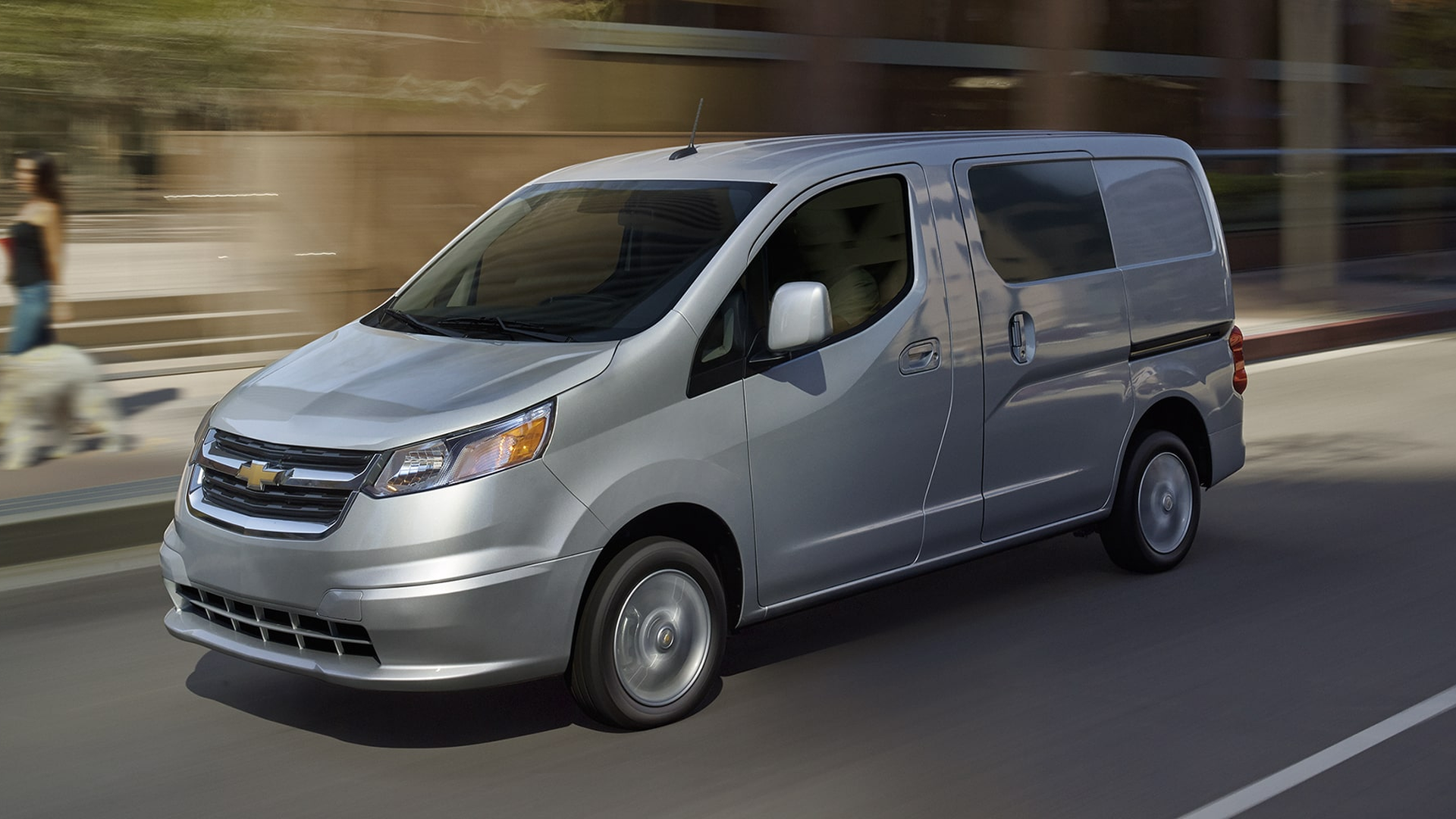
General Motors faced a critical gap in its commercial fleet portfolio entering the 2010s. The massive, V8-powered Chevrolet Express dominated the heavy-duty segment, but urban contractors and delivery services desperately needed a smaller, highly maneuverable footprint. Developing an entirely new commercial platform required billions of dollars and years of engineering time. General Motors executed a strategic OEM alliance with Nissan, rebadging the globally successful NV200 to create the Chevrolet City Express. This compact cargo van arrived for the 2015 model year, entirely abandoning the traditional rear-wheel-drive, body-on-frame architecture to provide businesses with maximum cargo density wrapped in an incredibly small exterior footprint.
Unibody Architecture and Urban Dimensions
The City Express utilizes a highly reinforced unibody structure. By welding the floor pan, firewall, and exterior panels into a single cohesive steel cell, engineers drastically reduced the vehicle's curb weight while maintaining the immense torsional rigidity required to survive heavily loaded deliveries over broken city pavement. This unibody design allowed the floor to sit incredibly low to the ground, significantly reducing the physical strain on delivery drivers constantly loading and unloading heavy boxes.
The entire vehicle measures just 186.3 inches in overall length, allowing it to easily parallel park in congested downtown loading zones that would instantly reject a full-size commercial van. Maneuverability was the absolute primary engineering directive. The City Express boasts a tight 36.7-foot turning circle, allowing operators to execute seamless U-turns on narrow, two-lane city streets.
The MR20DE Powertrain: Balancing Power and Efficiency
Motivation relies on a proven, Nissan-sourced 2.0-liter inline-four engine. This naturally aspirated powerplant prioritizes strict fuel economy and long-term mechanical reliability over outright highway acceleration. The engine block and cylinder head are cast entirely from lightweight aluminum to reduce mass over the front axle. It utilizes a DOHC valvetrain architecture with four valves per cylinder, continuously adjusting valve timing to optimize the air-fuel mixture across the entire rev range.
Engineers heavily treated the cylinder walls and piston skirts with low-friction coatings to minimize parasitic mechanical losses, ensuring the engine extracts the maximum kinetic energy from every drop of fuel during grueling stop-and-go urban routes.
"The decision to utilize a 2.0-liter four-cylinder engine in a commercial application terrified traditional fleet managers accustomed to massive V8 torque. The City Express proved that smart gearing and severe weight reduction could yield a highly capable urban delivery vehicle that operated at a fraction of the traditional fuel cost." - Automotive Industry Fleet Analysis
2.0L Inline-Four Engine Specifications
- Engine Architecture
- Aluminum Inline-Four
- Displacement
- 1,997 cm3
- Valvetrain
- DOHC, 16 Valves, Variable Valve Timing
- Peak Output
- 131 HP @ 5,200 RPM
- Peak Torque
- 139 lb-ft @ 4,900 RPM
- Fuel Delivery
- Sequential Multi-Port Electronic Fuel Injection
Xtronic CVT: Rethinking Power Delivery
Traditional step-gear automatic transmissions suffer from continuous RPM drops during gear changes, creating moments of inefficient power delivery. The City Express abandons traditional planetary gears, utilizing an advanced CVT. This transmission relies on two variable-diameter pulleys connected by a high-strength steel belt.
As the vehicle accelerates, the pulleys constantly adjust their width, infinitely varying the gear ratio to keep the engine operating at its absolute optimal RPM. During low-speed urban driving, the CVT provides incredibly smooth, seamless acceleration without the harsh, jerky gear shifts that can upset fragile cargo. On the highway, the transmission drops the engine RPM drastically, allowing the unladen van to achieve up to 26 miles per gallon.
Front-Wheel-Drive Dynamics and Suspension Geometry
Packaging a commercial van required a massive departure from traditional rear-wheel-drive layouts. The City Express utilizes a FWD architecture. By placing the engine, transmission, and differential entirely ahead of the passenger cabin, engineers completely eliminated the central driveshaft and bulky rear differential. This created a perfectly flat, incredibly low rear cargo floor.
The front suspension features an independent MacPherson strut design with a solid stabilizer bar, providing predictable steering response and isolating the cabin from harsh impacts. The rear suspension presented a unique engineering challenge. Engineers had to fit a suspension system that could handle massive payloads without intruding into the cargo area. They selected a solid rear axle suspended by heavy-duty multi-leaf springs. While highly unusual for a unibody FWD vehicle, these leaf springs provided the extreme load-bearing capacity required for commercial duty, preventing the rear end from sagging dangerously when loaded with heavy equipment.
Cargo Bay Geometry: The Science of Space
The exterior footprint is deceptively small; the interior cargo bay is a masterpiece of geometric optimization. The City Express offers 122.7 cubic feet of total cargo volume. Engineers sculpted the interior walls to be as vertical as possible, maximizing usable vertical space for shelving units. The floor measures 82.8 inches from the rear doors to the back of the front seats.
The distance between the rear wheelhouses is exactly 48 inches. This specific measurement is absolutely critical; it allows a standard American wooden shipping pallet to slide perfectly between the wheel wells via a forklift. The rear doors feature a highly practical 40/60 split design. The passenger-side door is shorter, preventing it from swinging out into active street traffic when opened. Both doors feature dual-stage hinges, allowing them to open a standard 90 degrees or detach and swing fully outward to 180 degrees for unobstructed dock loading. The passenger side of the vehicle features a smooth-sliding door, granting couriers immediate access to packages from the safety of the sidewalk.
Cargo and Payload Dimensions
- Maximum Payload Capacity
- 1,500 lbs
- Total Cargo Volume
- 122.7 cubic feet
- Cargo Floor Length
- 82.8 inches
- Maximum Cargo Height
- 53.0 inches
- Width Between Wheelhouses
- 48.0 inches
The Mobile Workspace: Cabin Ergonomics
Commercial drivers spend thousands of hours inside their vehicles. Chevrolet designed the cabin to function as a highly efficient mobile office. The driver faces a simple, highly legible analog instrument cluster. The center console features deep storage bins designed specifically to hold hanging file folders and laptop computers.
The passenger seat incorporates a brilliant dual-purpose design. The seatback folds completely flat, transforming into a durable, hard-plastic desk surface. This provides drivers with a stable area to sign invoices, review blueprints, or eat lunch on the job site. Multiple 12-volt accessory outlets ensure mobile devices and specialized diagnostic equipment remain fully charged during grueling 12-hour shifts.
Commercial Upfitting and Structural Integrations
A bare cargo van is merely a blank canvas. Tradesmen require highly specialized interior configurations to operate efficiently. The City Express was engineered from the factory to readily accept commercial upfitting. The interior cargo walls feature 20 integrated, reinforced weld-nut mounting points. This eliminates the need for upfitters to drill directly into the sheet metal, significantly reducing installation time and preventing future rust issues.
Companies like Adrian Steel and Ranger Design developed massive catalogs of specialized equipment specifically for this platform. Electricians installed complex, lockable wire-spool shelving, while plumbers utilized specialized pipe-racking systems that bolted directly into the OEM mounting points. The roof features six integrated exterior mounting points to securely anchor heavy-duty ladder racks, drastically expanding the vehicle's total carrying capacity.
Safety Systems and Kinetic Energy Management
Protecting the driver and cargo during violent urban collisions required an advanced passive and active safety net. The unibody structure incorporates heavily reinforced front crumple zones designed to crush in a controlled accordion pattern, absorbing massive amounts of kinetic energy before it breaches the passenger cell.
Active safety relies on a sophisticated ABS paired with EBD. The EBD system continuously monitors the vehicle's payload weight and dynamically adjusts the hydraulic braking pressure applied to the rear wheels. If the van is completely empty, it reduces rear brake pressure to prevent dangerous wheel lockup. If the van is carrying 1,500 pounds of concrete, it routes maximum hydraulic pressure to the rear drums to safely haul the massive weight to a rapid stop.
The Discontinuation and Market Shift
Despite its brilliant urban packaging, the Chevrolet City Express faced immense headwinds in the American commercial market. Ford had aggressively dominated the compact van segment with the Transit Connect, offering a much wider variety of wheelbases, roof heights, and powertrain options. Many traditional fleet buyers heavily preferred domestic engineering over the rebadged Nissan platform. Chevrolet officially terminated the City Express contract following the 2018 model year.
General Motors shifted its commercial focus back to the highly profitable, full-size Express van and began heavily investing in the future of electric logistics, eventually leading to the creation of the BrightDrop EV commercial brand. The Chevrolet City Express leaves behind a unique legacy. It serves as a fascinating snapshot of a specific era in American logistics, representing a rare moment where Detroit outsourced its commercial engineering to conquer the tight constraints of the modern urban grid. It proved that absolute efficiency, smart geometric packaging, and a highly optimized continuously variable transmission could successfully replace the brute-force V8 philosophy for inner-city delivery fleets.