
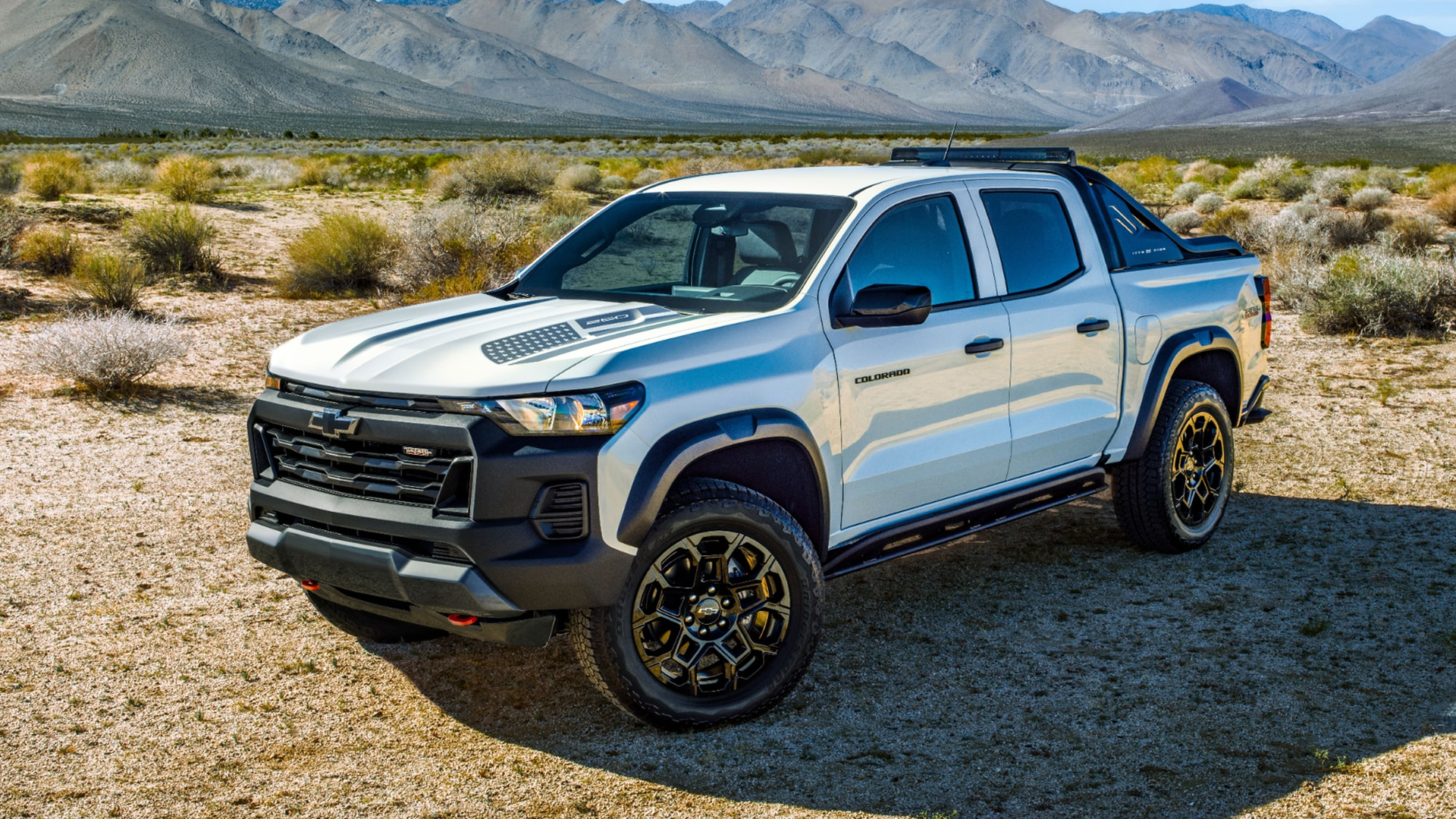
Revitalizing the Mid-Size Segment
For decades, the American pickup truck market followed a simple trajectory: trucks got bigger, engines got thirstier, and prices climbed higher. By the early 2000s, the compact truck segment, once populated by the legendary Chevrolet S-10 and Ford Ranger, was on life support. Buyers were forced into full-size Silverados and F-150s whether they needed that much metal or not. Chevrolet changed the narrative in 2004 with the introduction of the Colorado. It was a vehicle designed to fill the widening chasm between the disappearing compact trucks and the burgeoning full-size market. It wasn't just a replacement for the S-10; it was a statement that the mid-size truck still had a place in the American driveway. The Colorado nameplate has since evolved through three distinct generations, transforming from a utilitarian, somewhat rudimentary workhorse into a refined, technologically advanced machine that rivals its full-size siblings in luxury and capability. It is a truck that serves two masters with equal competence: the construction worker needing a nimble daily hauler and the outdoor enthusiast seeking a weekend escape vehicle. This duality is the key to its enduring success in a segment that has recently seen a resurgence of competition from Ford, Toyota, and Nissan.The First Generation: The GMT 355 Era (2004-2012)
When the first Chevrolet Colorado rolled off the assembly line, it represented a clean break from the past. It shared its GMT 355 platform with the GMC Canyon, replacing the aging S-10 and Sonoma. Designed in collaboration with GM's Brazilian division, the truck featured a ladder frame that was significantly stiffer than its predecessor's, promising better durability and ride quality. Visually, it was upright and honest, wearing the Chevrolet family grille with pride. It looked like a truck, pure and simple. Under the hood, the powertrain story was unconventional. The standard engines were members of GM's Atlas family, featuring an inline configuration. The base model came with a 2.8L I4, but the volume sellers were the 3.5L and later 3.7L inline-five-cylinder engines. The five-cylinder was an oddity in a market dominated by V6s. It offered a compromise between the fuel economy of a four-cylinder and the power of a six. While it produced decent horsepower-up to 242 hp in the later 3.7L iteration-it lacked the smooth, linear torque delivery that American truck buyers were accustomed to.The first-generation Colorado's optional 5.3L V8, available on top-tier trims, was a rarity in the mid-size class, offering true hot-rod performance in a compact package.The interior of the first generation was strictly functional. Hard plastics dominated the dashboard, designed to be hosed down rather than admired. However, the crew cab configuration offered legitimate rear-seat room, a feature that helped the Colorado gain traction among families who didn't want the garage-eating length of a Silverado Crew Cab. A significant refresh in 2009 tightened the exterior styling and introduced the V8 option, which transformed the truck into a genuine sleeper, capable of startling acceleration.
The Second Generation: The Global Return (2015-2022)
After a brief hiatus in the US market, the Colorado returned in 2015 as an all-new vehicle. This second generation, developed in tandem with GM Thailand, was a global player. It wore a bolder, more aggressive face, with a taller hood and bulging fenders that gave it a muscular stance. This wasn't just a resized S-10; it was a modern, international platform designed to compete with the Toyota Hilux and Ford Ranger on a global stage. This generation marked a turning point for the segment. It signaled that GM was serious about the mid-size market. The interior quality took a quantum leap forward, featuring soft-touch materials, intuitive controls, and the much-heralded MyLink infotainment system. The unibody feel of the competitors was shunned in favor of a fully boxed steel frame, ensuring the Colorado retained its truck-like credentials.The Diesel Revolution
The headline feature of the second generation was undoubtedly the Duramax 2.8L turbo-diesel engine. While diesel trucks were common in the heavy-duty segment, the Colorado was the first modern mid-size truck to offer a diesel option in the US. This engine was a game-changer. It produced a stump-pulling 369 lb-ft of torque, allowing the Colorado to tow up to 7,700 pounds-a figure that encroached on half-ton truck territory. Furthermore, it achieved fuel economy numbers that rivaled sedans, with some highway tests approaching 30 MPG. The gasoline options were robust as well. The standard 2.5L four-cylinder served as the fleet favorite, while the 3.6L V6 offered a smooth 308 horsepower. The transmission choices included a six-speed automatic for the gas engines and a six-speed automatic for the diesel, both tuned to maximize the specific power bands of their respective engines.- Second Generation Specs (Duramax 2.8L Turbo-Diesel)
- Horsepower: 181 hp @ 3400 RPM
- Torque: 369 lb-ft @ 2000 RPM
- Max Towing: 7,700 lbs
- Transmission: 6-Speed Automatic
The ZR2: An Off-Road Icon is Born
In 2017, Chevrolet unleashed the Colorado ZR2. While the Z71 trim had long served as the off-road lite option, the ZR2 was a purpose-built beast. It was a direct challenge to the Toyota Tacoma TRD Pro. The suspension was the star of the show. Chevrolet partnered with Multimatic to install position-sensitive spool-valve dampers at all four corners. These dampers, derived from racing technology, allowed for exceptional wheel travel-nearly 10 inches in the front and rear-while maintaining composure on the highway. The ZR2 also received a two-inch lift, 31-inch Goodyear Duratrac tires, and wider front and rear tracks. To protect the undercarriage, it featured skid plates and rocker panel protectors. It was a truck that could handle the Moab or the grocery store with equal aplomb. The addition of the Duramax diesel as an option on the ZR2 gave it a unique selling point: a long-range, high-torque off-roader that could crawl over obstacles with minimal throttle input. Later, the ZR2 Bison edition, developed with American Expedition Vehicles, added even more armor and beadlock-capable wheels, cementing the Colorado's status as a serious overlander.The Third Generation: Technology and Torque (2023-Present)
The current iteration of the Colorado, launched for the 2023 model year, represents the most significant evolution yet. GM consolidated the lineup to a single cab configuration (Crew Cab with a short or standard bed), streamlining production and focusing on the highest-demand segment of the market. The styling is chiseled and industrial, with a distinct 'Chevy Truck' face that integrates the bowtie into the grille texture. The biggest news resides under the hood. The naturally aspirated V6 and the diesel option were dropped in favor of the 2.7L Turbocharged High-Output engine family. This engine, variations of which are found in the Silverado, offers a flatter torque curve and better efficiency. The top-tier High-Output version produces a staggering 310 horsepower and 430 lb-ft of torque. This torque figure blows away the competition, giving the Colorado a distinctly heavy-duty feel in a mid-size package.Interior Modernization
Gone are the buttons of yesteryear. The interior is now dominated by an 11.3-inch diagonal infotainment touchscreen and an 8-inch diagonal driver information center. The physical climate controls have been largely replaced by screen interfaces, a move that modernizes the cockpit but has sparked debate among traditionalists. However, the interior materials are top-notch for the segment, with subtle nods to the truck's capability, like the 'sb' logo embossed on the seats of the Trail Boss trim, referencing the stabilizer bar disconnect.Trim Level Breakdown: Finding Your Fit
The Colorado lineup is stratified to cover every possible buyer profile. **WT (Work Truck):** The stalwart of the fleet world. Vinyl floors, steel wheels, and the standard 2.7L Turbo engine. It is built for job sites and durability. **LT:** The volume seller. It adds cloth seats, chrome trim, and upgraded technology, bridging the gap between work and lifestyle. **Trail Boss:** The entry-level off-roader. It comes with a factory lift, all-terrain tires, and skid plates, offering much of the ZR2's look and capability without the premium price tag. **Z71:** The traditional off-road choice. It prioritizes comfort and trail capability with hill descent control and an locking rear differential. **ZR2:** The ultimate expression of the Colorado. Multimatic DSSV dampers, front and rear locking differentials, and the High-Output engine standard. It is a factory-built trophy truck for the public roads.Driving Dynamics and Daily Usability
Driving a Colorado is an exercise in confidence. The steering is hydraulic on most trims, providing a weighted, connected feel that electric power steering often lacks. The suspension tuning strikes a delicate balance. It is stiff enough to handle a payload of sheet rock in the bed but compliant enough to keep your coffee from spilling on the commute. The 2.7L Turbo engine is the defining characteristic of the current generation. It pulls hard from low RPMs, making it ideal for towing. The transmission, an 8-speed automatic, is smooth but eager to downshift when the grade gets steep. The fuel economy, while not class-leading, is respectable for a gasoline truck, though the absence of a diesel option in 2024 is felt by high-mileage cruisers. The Colorado's size remains its ace in the hole. In an era where full-size trucks require a landing strip to park, the Colorado slips into standard garage spots and navigates tight urban streets with ease. It is a truck that acknowledges that not every truck owner lives on a ranch in Texas. It is a truck for the suburbs, for the city, and for the mountains.Safety and Technology Features
Safety has been a major focus for the third generation. The Colorado comes standard with Chevy Safety Assist, a bundle of features that includes Automatic Emergency Braking, Front Pedestrian Braking, Lane Keep Assist, and Following Distance Indicator. Higher trims offer adaptive cruise control and a high-definition surround vision camera system that is invaluable for lining up a trailer hitch on the first try. The towing technology is particularly noteworthy. The 'Transparent Trailer' mode uses cameras to make the trailer behind you appear invisible on the infotainment screen, allowing the driver to see vehicles approaching from behind. This, combined with the integrated trailer brake controller, makes the Colorado one of the most capable towing platforms in the mid-size class.Technical Specifications Summary
- 2024 Chevrolet Colorado Dimensions
- Wheelbase: 128.3 inches
- Overall Length: 212.7 inches
- Width: 78.3 inches
- Height: 78.4 inches (ZR2)