
The Dream of an American Sports Car
In the aftermath of World War II, returning American GIs brought home a newfound love for nimble, lightweight European sports cars like MGs, Jaguars, and Alfa Romeos. Detroit, obsessed with massive chrome-laden family sedans, had nothing to offer. Harley Earl, the legendary head of styling at General Motors, recognized this gap. He initiated "Project Opel," a secret endeavor to create a two-seater sports car built from off-the-shelf Chevrolet parts but wrapped in a revolutionary, lightweight fiberglass body. When the Chevrolet Corvette debuted as a concept at the 1953 GM Motorama in New York, the public response was electric. The American sports car was born.
When you browse the Corvette listings on Hugegarage, you are exploring an 8-generation lineage of relentless engineering pursuit. The Corvette is unique because it democratized performance. It offered Ferrari-rivaling track times for a fraction of the cost, making it the attainable dream car for millions of Americans.
The Savior of the Corvette: The first Corvettes (1953-1954) were beautiful but slow, powered by an anemic "Blue Flame" inline-six. Sales were abysmal, and GM nearly canceled the program. It was saved by Zora Arkus-Duntov, a brilliant Russian-born engineer. He penned a famous memo to GM management stating that to win the youth market, they needed a V8. Duntov transformed the Corvette from a stylish cruiser into a fire-breathing race car, rightfully earning him the title "Father of the Corvette."
The Eight Generations: A Lineage of Power
The history of the Corvette is categorized into eight distinct generations, each representing a leap in automotive technology.
Generation 1: The Solid Axle (C1, 1953â1962)
The first generation established the fiberglass tradition. Early models featured iconic single headlights and tail fins. By 1955, Duntov introduced the Small Block V8, and the car awakened. The 1957 model introduced revolutionary "Ramjet" mechanical fuel injection, making it one of the first mass-produced engines to achieve one HP per cubic inch.
Generation 2: The Sting Ray (C2, 1963â1967)
Arguably the most beautiful American car ever produced. Designed by Larry Shinoda under the direction of Bill Mitchell, the C2 introduced the "Sting Ray" moniker, hidden headlights, and a stunning boat-tail rear end.
The Engineering Leap: Duntov finally achieved his goal of adding an IRS, transforming the handling. The 1963 model year is globally famous for its one-year-only "Split Window" coupe design.
- The L88 V8 (1967)
- A legendary 427 cubic inch (6997 cm3) big-block engine. Officially rated at 430 HP to discourage street use, it actually produced over 500 HP. It is the holy grail of C2 collecting.
Generation 3: The Shark (C3, 1968â1982)
Inspired by the Mako Shark II concept, the C3 featured exaggerated, swooping fenders and a narrow waist. It was the longest-running generation. Early models featured chrome bumpers and massive big-block power. However, the 1973 oil crisis and new EPA emissions regulations choked the engines. By the late 1970s, the C3 relied entirely on its stunning looks rather than its straight-line speed.
Generation 4: The High-Tech Wedge (C4, 1984â1996)
Following a skipped 1983 model year, the C4 debuted as a complete technological reset. It featured a uniframe chassis, a digital LCD dashboard, and a clamshell hood. The suspension utilized transverse fiberglass leaf springs to lower the center of gravity. It was a handling marvel that dominated SCCA racing so thoroughly that it was banned and given its own spec series.
- The ZR-1 (1990-1995)
- Nicknamed "King of the Hill," this model featured the LT5 engine. Designed by Lotus and built by Mercury Marine, it was a 32-valve DOHC all-aluminum V8 that produced 405 HP, cementing the Corvette as a global supercar killer.
Generation 5: The Transaxle Revolution (C5, 1997â2004)
Chief Engineer Dave Hill rebuilt the Corvette from the ground up. He moved the transmission to the rear of the car (a transaxle layout), giving the C5 a perfect 50/50 weight distribution. It also introduced the legendary all-aluminum LS1 V8 engine, which combined incredible power with shocking fuel efficiency and durability. The C5 Z06 (introduced in 2001) remains one of the greatest track-day bargains in existence.
Generation 6: Refinement and Raw Power (C6, 2005â2013)
The C6 dropped the pop-up headlights (for the first time since 1962) to improve aerodynamics and reduce weight. It was an evolution of the C5's architecture but brought staggering power figures to the table.
- C6 Z06: Featured the hand-built 7.0L LS7 V8, revving to 7,000 RPM and producing 505 HP. It utilized an aluminum frame and carbon fiber fenders.
- C6 ZR1: The "Blue Devil." It featured a supercharged 6.2L LS9 making 638 HP, carbon-ceramic brakes, and a clear polycarbonate window in the hood to showcase the supercharger.
Generation 7: The Front-Engine Pinnacle (C7, 2014â2019)
Under Chief Engineer Tadge Juechter, the C7 maximized the potential of the front-engine layout. The aluminum frame became standard across all models. The interior, long a weak point for the Corvette, was vastly improved with premium materials and advanced telemetry (the Performance Data Recorder). The C7 ZR1, with its massive rear wing and 755 HP LT5 engine, represents the ultimate, violent swansong of the front-engine era.
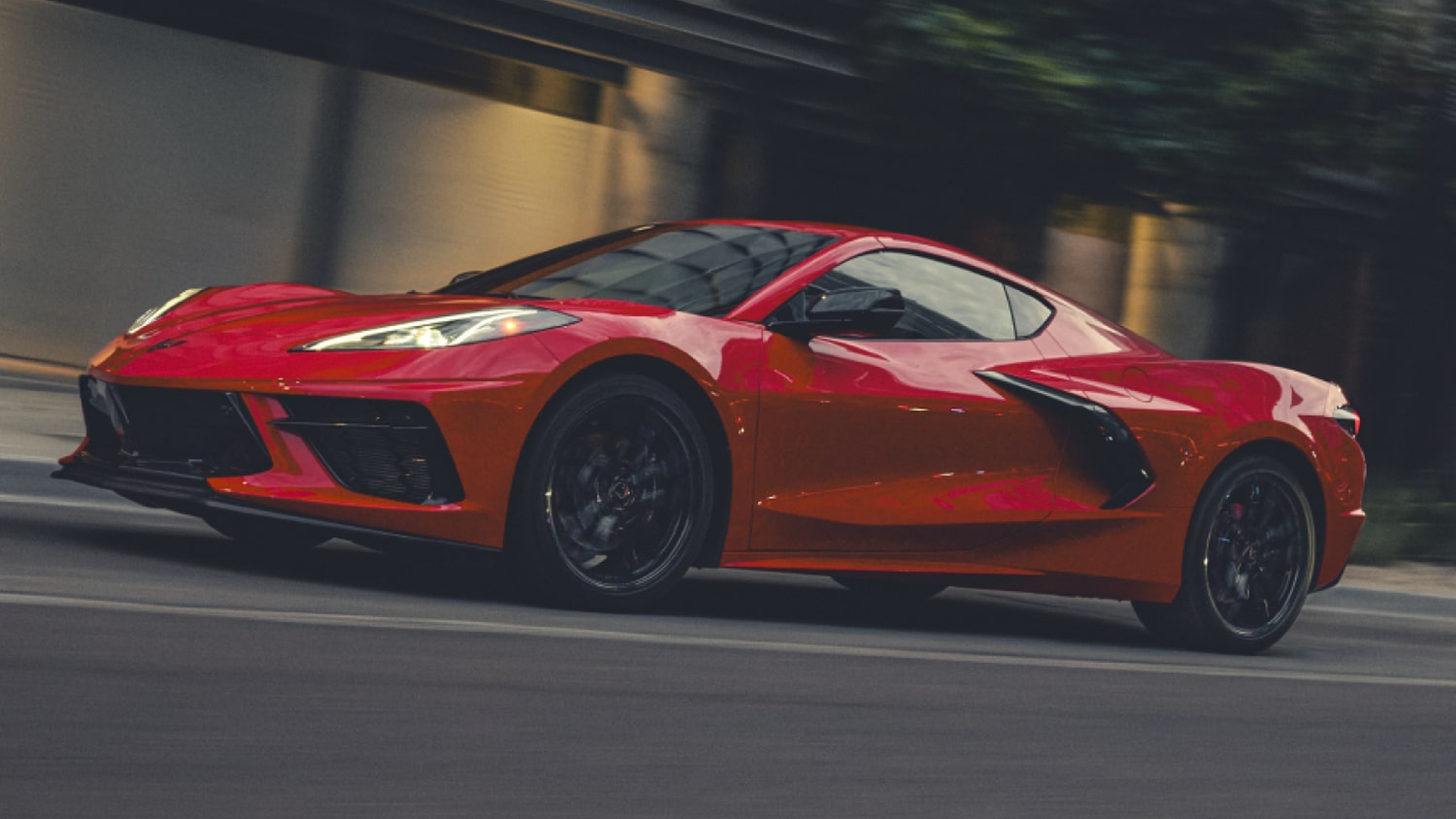
Generation 8: The Mid-Engine Masterpiece (C8, 2020âPresent)
Sixty years after Zora Arkus-Duntov first proposed it, the Corvette finally moved the engine behind the driver. The C8 is a true mid-engine supercar. It eliminated the manual transmission entirely, utilizing a lightning-fast Tremec 8-speed dual-clutch transmission.
The Innovations: The C8 Z06 features the LT6, a 5.5L flat-plane crank V8 that sounds like a Ferrari and produces 670 HP naturally aspirated. The 2024 E-Ray introduced AWD and hybrid electrification to the Corvette for the first time.
The Architects of Speed: Designers & Engineers
The Corvette is the product of brilliant, obsessed individuals who constantly fought corporate bean-counters to preserve the car's soul.
- Harley Earl & Bill Mitchell: The styling titans. Earl gave the car its elegant genesis; Mitchell gave it the aggressive, shark-like attitude that defined the 60s and 70s.
- Zora Arkus-Duntov: The patron saint of Corvette performance. He obsessed over aerodynamics, braking, and getting the power to the ground.
- Dave McLellan, Dave Hill, and Tadge Juechter: The modern trinity of Chief Engineers. They transitioned the car from an analog brute into a digitized, laser-focused precision instrument capable of beating Porsche and Ferrari at Le Mans.
Who Drives a Corvette? The Target Audience
Historically, the Corvette has appealed to a broad demographic due to its incredible cost-to-performance ratio.
The Cruiser: Buyers who want a striking, comfortable grand tourer with ample luggage space for weekend getaways (the base models excel here).
The Track Warrior: Enthusiasts who buy the Z06 or Grand Sport models specifically to dominate weekend autocross and track days. They value lap times, lateral G-forces, and mechanical grip.
The Collector: Purists who seek out numbers-matching C1s, C2s, and chrome-bumper C3s. They view the Corvette as a piece of rolling Americana and fine art.
The Hugegarage Buyer's Guide: What to Watch Out For
Buying a classic or used Corvette requires diligence. The fiberglass body will not rust, but the steel underneath certainly will.
1. The "Birdcage" Rust (C2 and C3 Models)
The fiberglass body panels of mid-year and shark generation Corvettes are bonded to a steel substructure known as the "birdcage," which surrounds the passenger compartment. Water often leaks past the windshield wipers and rots the birdcage from the inside out. Hugegarage Warning: Inspect the windshield pillars and kick panels meticulously. Repairing a rusted birdcage requires completely dismantling the car and costs tens of thousands of dollars.
2. The Optispark Distributor (C4 Models, 1992-1996)
The LT1 engine in late C4s uses an optical distributor mounted directly behind the water pump. If the water pump weeps coolant, it destroys the distributor, leaving you stranded. Upgraded vented units are a mandatory aftermarket fix.
3. LS7 Valve Guide Wear (C6 Z06)
The legendary 7.0L LS7 engine has a known flaw where the titanium valve guides can wear prematurely. If left unchecked, the valve can drop into the cylinder, instantly destroying the engine. Most buyers factor in the cost of machining the cylinder heads into the purchase price.
4. Paint Matching and SMC Panels
From the C3 onwards, GM transitioned from traditional fiberglass to Sheet Molded Compound (SMC). Because SMC absorbs impacts differently than steel, repairing damage requires specialized techniques. Always look down the side of a Corvette in fluorescent light to check for wavy panels or mismatched paint, which indicate a poorly repaired collision.
Conclusion: The Undisputed King
The Chevrolet Corvette is more than just a car; it is the heartbeat of American automotive culture. It is a blue-collar hero that punches far above its weight class, continually forcing elite European manufacturers to look over their shoulders. Whether you want the nostalgic charm of a 1957 fuel-injected classic or the neck-snapping G-forces of a mid-engine C8, the Corvette offers a driving experience unlike anything else on the road. It is loud, proud, and unapologetically American. Explore the detailed technical specifications and trim levels below to find your perfect Corvette.