
The Hybrid That Defined a Genre
The Chevrolet El Camino occupies a singular space in American automotive history. It wasn't quite a car, and it wasn't quite a truck. It was a 'coupe utility,' a body style that originated in Australia in the 1930s but found its soul in Detroit. While Ford beat Chevrolet to the punch with the Ranchero in 1957, Chevy answered back with a bigger, bolder statement in 1959. The El Camino was born not out of a specific need for fuel economy or aerodynamics, but out of a desire to have it all-the style of a two-door hardtop and the utility of a pickup bed. It is a vehicle that has transcended its utility roots to become a canvas for hot rodders and a symbol of a more flamboyant era in automotive design. Over nearly three decades of production, spanning five generations, the El Camino evolved dramatically. It transformed from a flamboyant cruiser with tailfins into a serious muscle machine capable of terrifying speed, and finally into a refined personal truck that bridged the gap between work and play. Today, the El Camino is one of the most recognizable names in the Chevrolet pantheon, representing a versatility that modern automakers struggle to replicate.First Generation: The Jet Age Arrival (1959-1960)
When the El Camino launched in 1959, it was a direct response to the Ford Ranchero. Chevrolet, never one to be outdone in the styling department, based the El Camino on the Impala platform. The result was one of the most dramatic vehicles ever to wear a bowtie badge. It featured the same 'batwing' rear fenders and 'cat's eye' taillights as the Impala, with a incorporated pickup bed replacing the trunk. The bed floor was corrugated steel, designed for durability, but the overall aesthetic was pure chrome and glitter. The timing, however, was unfortunate. The 1959 model year was the peak of American excess, but the market was shifting toward compacts. Sales were decent, but they didn't match the Ranchero. In 1960, the styling was toned down slightly, but sales plummeted. Chevrolet dropped the model after just two years. It seemed like a failed experiment. The first-generation El Camino remains a rare sight today, a snapshot of the late 1950s design philosophy where form often trumped function.The Return of the King: Second Generation (1964-1967)
After a three-year hiatus, the El Camino returned in 1964. This time, it was based on the intermediate Chevelle platform. This was a pivotal moment. The Chevelle was a massive success, offering the perfect size for a vehicle that needed to haul groceries as well as it hauled lumber. The 1964 model abandoned the excesses of the '50s for a clean, squared-off design that emphasized utility. This generation established the El Camino as a serious tool. The bed was larger and more accessible, and the suspension was tuned to handle payload. But the Chevelle connection gave it another advantage: performance. The Chevelle was quickly becoming a darling of the drag strip, and the El Camino followed suit. By 1966 and 1967, you could order an El Camino with the legendary 327 cubic-inch V8, and later the 396 big-block. It was no longer just a 'gentleman's pickup'; it was a sleeper that could smoke the tires for a city block while carrying a refrigerator in the back.The 1964-1967 El Camino shared the same wheelbase and front sheet metal as the Chevelle wagon, providing a structural rigidity that made it a capable hauler for contractors and farmers.
The Muscle Era: Third Generation (1968-1972)
If the second generation legitimized the El Camino, the third generation turned it into an icon. Based on the redesigned Chevelle, the 1968-1972 models are widely considered the high-water mark for the nameplate. The styling was aggressive and sleek, featuring a long hood and a short deck. The 'Coke bottle' lines looked as good on the truck as they did on the coupe. But the real story was under the hood. This was the height of the horsepower wars, and Chevrolet played to win. The SS 396 El Camino became a terror on the streets. With the L78 396 engine, it was a legitimate 13-second quarter-mile truck right off the showroom floor. But the pinnacle came in 1970. With the lifting of the GM ban on engines larger than 400 cubic inches in intermediate cars, Chevrolet dropped the 454 V8 into the El Camino. The LS6 454 version is the Holy Grail of El Caminos. Rated at 450 horsepower (though widely believed to be underrated), it was one of the most powerful vehicles of the era. It combined the straight-line speed of a muscle car with the ability to, quite literally, haul ass.Structural Changes
This generation also saw a shift in construction. The 1968-1972 models utilized a perimeter frame with a reinforced 'X' member, which improved torsional rigidity. This was crucial for a vehicle with no roof over the bed, prone to flexing over bumps. The suspension utilized coil springs all around, offering a smoother ride than the leaf-spring setups found on traditional trucks. It rode like a Chevelle, because it mostly was one.- 1970 El Camino SS 454 LS6 Specs
- Engine: 454 cu in (7.4L) V8
- Horsepower: 450 hp @ 5600 RPM
- Torque: 500 lb-ft @ 3600 RPM
- Transmission: 4-Speed Manual (M22 'Rock Crusher')
The Colonnade Era: Fourth Generation (1973-1977)
The 1973 model year brought the 'Colonnade' styling to the Chevelle line, and the El Camino followed suit. This generation is often overlooked by purists because it coincided with the decline of the muscle car era. Emissions regulations and the looming fuel crisis strangled horsepower. The styling was bulkier, with federally mandated 5 MPH bumpers growing larger every year. However, the fourth generation was arguably a better truck. The wheelbase was stretched to 117 inches, providing a smoother ride and a larger bed. The 'Laguna' type front ends were stylish in a 1970s way, offering a look of substance. While the massive horsepower figures of 1970 were gone, the 350 and 400 small-block engines offered sufficient torque for towing. This generation became a common sight at boat ramps and campgrounds, embraced by the American family for its dual-purpose nature. It was the era of the 'Personal Luxury Truck,' often seen with a canopy over the bed and murals painted on the tailgate.The G-Body Renaissance: Fifth Generation (1978-1987)
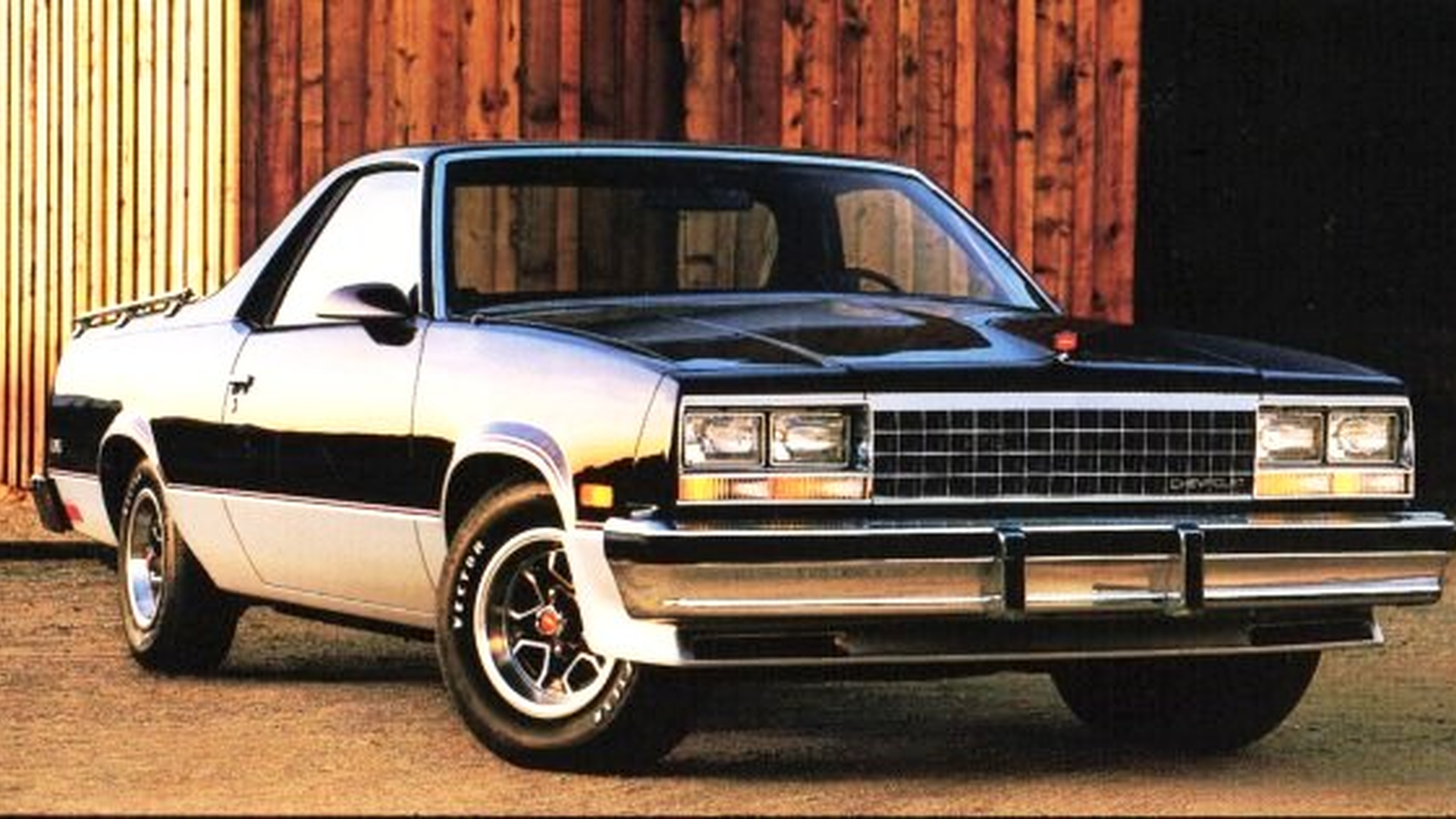
The final iteration of the El Camino arrived in 1978, based on the new downsized A-body platform (later re-designated the G-body). This generation is the most recognizable to modern fans, often simply called the 'G-Body.' It was lighter, sharper, and more fuel-efficient than its predecessor. The styling was crisp and angular, with a distinct 'formal' roofline that looked modern and upscale. This generation is famous for the 'Black Knight' and later 'SS' models (technically badged as 'Sport Sedan' accessories). While the 267 V6 and 305 V8 were the volume sellers, Chevrolet did offer a 350 V8 option, though it was a shadow of the 454's former glory. However, the lightweight chassis made them a blast to drive. The chassis tuning was spot-on; the car handled surprisingly flat for a truck, thanks to the rear sway bar often included in the 'F41' suspension package.The End of the Line
By the mid-1980s, the market had shifted. Small pickup trucks like the Chevrolet S-10 offered better fuel economy and were easier to maneuver. The aging El Camino platform was becoming obsolete. 1987 marked the final year of production at the Ramos Arizpe plant in Mexico. It was a quiet end for a vehicle that had once carried the flag for American performance. The tooling was worn, and the demand for a car-based truck was waning.Driving Dynamics: The Best of Both Worlds?
Driving a classic El Camino is a unique experience. It drives nothing like a modern SUV or pickup. It sits low to the ground. The steering is relatively heavy but communicative. The rear-wheel-drive chassis offers a balance that enthusiasts crave. The downside, of course, is the 'tail-happy' nature. With a light load in the bed, the rear end can skip over bumps, and traction can be an issue in the wet. But that is part of the charm. It demands driver involvement. The braking systems, particularly on the older models, can be a weak point. Drum brakes were standard for years, and even the disc/drum setups of the later years struggle to stop a heavy load. However, the aftermarket support is immense. Big brake kits, LS engine swaps, and upgraded suspension components are readily available, allowing owners to build an El Camino that can run with modern traffic while retaining its vintage soul.Utility and Practicality
The bed of the El Camino was never meant to compete with a Silverado. It was too short and too shallow for serious construction work. You couldn't haul a pallet of concrete blocks without risking the rear bumper dragging on the ground. But for the average homeowner, it was perfect. It could handle mulch, furniture, appliances, and camping gear. The low lift-over height made loading easy. And unlike a truck, you didn't need a step stool to reach into the bed. It was the 'lifestyle truck' decades before the term was invented.Cultural Impact and Legacy
The El Camino has cemented its place in pop culture. It has appeared in countless films, from Quentin Tarantino's 'Death Proof' to video games like Grand Theft Auto. It represents a specific strain of American ingenuity-the desire to modify and customize. The El Camino is one of the most customized vehicles in existence. You will see them lowered with massive rims at car shows, lifted with off-road tires for the 'Redneck Revival' look, or restored to concours showroom condition. The GMC Sprint and Caballero were badge-engineered twins, offering slightly different styling cues, but the El Camino remains the iconic version. The vehicle's ability to transcend its utilitarian purpose to become a symbol of style and speed is its greatest achievement. It proved that utility didn't have to be boring.Technical Specifications Summary
The dimensions of the El Camino changed significantly over its life, but the G-Body represents the final form.- Dimensions (1985 Model)
- Wheelbase: 117.0 inches
- Overall Length: 201.6 inches
- Curb Weight: Approx. 3,400 lbs
- Bed Length: 66.8 inches