
The Theta Platform Genesis: Intercepting the Market
General Motors recognized a massive vulnerability in the early 2000s utility segment. Japanese imports completely dominated the compact class, while massive American body-on-frame trucks consumed the full-size market. The engineering team deployed the original Chevrolet Equinox for the 2005 model year to aggressively intercept the space right in the middle. They utilized the highly robust Theta architecture, purposely stretching the wheelbase to a massive 112.2 inches. This immense physical footprint completely dwarfed established foreign competitors, providing American buyers with unprecedented second-row legroom and expansive rear cargo capacity.
To isolate the passenger cabin from violent road impacts, engineers bolted a heavy-duty hydroformed steel subframe directly beneath the engine bay. High-pressure hydraulic fluid expanded raw steel tubing outward into precision dies, creating a continuous, seamless structural cradle. This specialized front subframe physically supported the massive transverse powertrain while actively absorbing the harsh, kinetic shockwaves generated by deep asphalt potholes before they could ever vibrate up through the heavy steel steering column.
The original interior packaging featured a highly innovative "Multi-Flex" sliding rear seat. Mounted on embedded steel tracks, the entire rear bench could slide completely forward or backward by an astonishing eight inches, allowing owners to instantly prioritize massive rear legroom or expand the rear trunk volume based purely on their immediate hauling needs.
First-Generation Powertrain: The 3.4L LNJ V6
Pop the heavy steel hood of an early Equinox. You immediately locate the transverse-mounted 3.4-liter LNJ V6 engine. Sourced directly from GM engine assembly facilities in China, this traditional pushrod powerplant prioritized massive low-end grunt over high-revving horsepower. The engine block utilized a highly durable 60-degree cast-iron architecture mated directly to high-flow cast-aluminum cylinder heads.
The engineering team completely bypassed complex overhead camshafts. They relied entirely on a simple, highly reliable single in-block camshaft. This central cam actuates the intake and exhaust valves via heavy steel pushrods and rocker arms. The engine rapidly expelled hot CO2 through thick cast-iron exhaust manifolds, delivering a smooth, highly predictable torque curve absolutely perfect for hauling heavy loads through dense urban stop-and-go traffic. Chevrolet paired this torque-heavy V6 exclusively with the Aisin AF33 five-speed automatic transmission, a heavy-duty planetary gearbox known for executing buttery smooth upshifts under wide-open throttle application.
- First-Generation Powertrain (LNJ)
- 3.4-liter naturally aspirated pushrod V6
- Maximum Output
- 185 HP @ 5,200 RPM
- Peak Torque
- 210 lb-ft @ 3,800 RPM
- Transmission
- Aisin AF33 5-speed automatic planetary gearbox
- Drivetrain Options
- Standard front-wheel drive, highly capable active all-wheel drive available
The Performance Anomaly: Equinox Sport and the 3.6L LY7
Chevrolet recognized the heavy Theta chassis required significantly more thrust to satisfy aggressive driving habits. They launched the highly specialized Equinox Sport in 2008. Engineers violently extracted the standard 3.4-liter engine, dropping the formidable 3.6-liter LY7 V6 directly onto the reinforced front subframe. This dual-overhead-cam architecture drastically altered the vehicle's fundamental physical personality.
The high-revving LY7 featured independent variable valve timing on both the intake and exhaust camshafts. The internal ECU actively altered camshaft phasing on the fly, violently feeding pressurized fuel into the 3,564 cm3 combustion chambers to generate a massive 264 horsepower. The heavy crossover squatted down on specialized high-rate coil springs. This aggressive suspension calibration significantly dropped the static center of gravity, successfully combating dangerous body roll during tight freeway interchanges and high-speed cornering maneuvers. Engineers also swapped the numb electric steering rack for a traditional hydraulic power steering setup, instantly feeding raw, unfiltered tactile feedback from the front tires directly to the driver's palms.
Second Generation (2010-2017): The Direct Injection Paradigm
The 2010 redesign completely eliminated the bulky, truck-like exterior panels of the original generation. Chevrolet pivoted hard toward aerodynamic efficiency, wrapping the heavily revised Theta Premium architecture in a sleek, wind-cheating exterior shell. Mechanical engineers instituted a massive paradigm shift beneath the hood. They abandoned traditional port fuel injection entirely, outfitting the brand new 2.4-liter Ecotec LAF inline-four with highly advanced Spark Ignition Direct Injection (SIDI).
Direct injection technology completely bypasses the intake manifold. Highly specialized mechanical fuel pumps compress liquid gasoline to over 2,000 psi, violently atomizing the fuel directly inside the scorching hot combustion chamber. This precise high-pressure atomization rapidly cools the internal cylinder temperatures, permitting a much higher static compression ratio without triggering catastrophic engine knock. This specific thermal efficiency massively boosted highway fuel economy while maintaining excellent throttle response.
V6 Supremacy: The 3.6L LFX Upgrade
For buyers demanding heavy highway passing power, the massive 3.6-liter LFX V6 eventually replaced earlier 3.0-liter V6 options, delivering a staggering 301 horsepower. This heavy-duty powerplant completely overpowered the standard front-wheel-drive configuration. Press the heavy accelerator pedal to the floorboard. The front tires immediately break traction, forcing the active AWD system to instantly clamp its internal clutch packs and successfully translate that raw kinetic energy into rapid forward momentum.
- Second-Generation Ecotec Powertrain
- 2.4-liter naturally aspirated inline-four with direct injection
- Maximum Output (2.4L)
- 182 HP @ 6,700 RPM
- Peak Torque (2.4L)
- 172 lb-ft @ 4,900 RPM
- High-Performance Option
- 3.6-liter LFX V6 generating 301 HP and 272 lb-ft of torque
- Transmission Configuration
- GM 6T45 6-speed automatic transmission
Third Generation (2018-2024): The D2XX Architecture Diet
By 2018, the heavy Theta platform had completely outlived its structural usefulness. Chevrolet initiated a radical physical diet, transitioning the Equinox to the highly advanced globally developed D2XX unibody architecture. The engineering team executed an absolute masterclass in modern metallurgy. They utilized ultra-high-strength boron steel extensively throughout the primary safety cage, roof headers, and B-pillars. They massively increased the application of aerospace-grade structural adhesives, physically gluing the overlapping steel joints together before executing the final robotic spot welds.
This obsessive focus on advanced material science stripped exactly 400 pounds of static dead weight completely out of the chassis. The massive weight reduction totally transformed the dynamic handling profile. You feel this violent physical shift the exact millisecond you aggressively turn the heavy steering wheel. The lightweight nose sharply darts toward the apex of the corner, completely devoid of the heavy plow-like understeer that plagued previous generations. The front suspension relies on specialized MacPherson struts with heavily tuned hydraulic ride bushings, while the independent four-link rear suspension keeps the rear tires firmly planted over severely broken pavement.
The Turbocharged Era: The 1.5L LYX Engine
The extreme weight loss allowed Chevrolet to completely eliminate heavy six-cylinder engines from the entire Equinox lineup. The standard propulsion system shifted entirely to the highly efficient 1.5-liter LYX turbocharged inline-four. To completely neutralize frustrating turbo lag, engineers integrated the exhaust manifold directly into the aluminum cylinder head casting. The hot exhaust gasses travel barely two inches before violently colliding with the small-diameter turbocharger turbine.
The compressor wheel instantly spins to maximum rotational velocity, forcing dense, pressurized ambient oxygen straight into the 1,490 cm3 displacement cylinders. This specific engine heavily relies on Active Thermal Management. A highly sophisticated electronic rotary valve replaces the traditional mechanical thermostat, precisely directing hot engine coolant to rapidly heat the engine block during cold winter starts. This drastically reduces internal parasitic friction and immediately improves overall fuel economy.
Maximum Thrust: The 2.0L LTG Twin-Scroll Turbo
Enthusiasts demanding aggressive acceleration opted exclusively for the formidable 2.0-liter LTG turbocharged engine. This highly sophisticated powerplant utilizes a complex twin-scroll turbocharger housing. The exhaust pulses exiting the four cylinders are physically separated inside the manifold until the exact moment they strike the turbine blades. This precise atmospheric separation completely prevents chaotic exhaust wave collision, massively accelerating turbo spool times.
The LTG generates a violent 252 horsepower and 260 lb-ft of torque. Chevrolet mated this heavy-breathing engine exclusively to the highly advanced GM 9T50 nine-speed automatic transmission. This heavy-duty planetary gearbox executes incredibly crisp upshifts. It completely maintains maximum boost pressure during wide-open throttle acceleration runs, keeping the engine screaming exactly inside its peak power band.
- Third-Generation Base Powertrain (LYX)
- 1.5-liter turbocharged inline-four with aluminum block and head
- Maximum Output
- 170 HP @ 5,600 RPM
- Peak Torque
- 203 lb-ft @ 2,000 RPM
- Twin-Scroll Upgrade (LTG)
- 2.0-liter turbocharged inline-four generating 252 HP
- Transmission Configuration
- 6-speed automatic (1.5L) or 9-speed automatic (2.0L)
The Diesel Anomaly: The 1.6L LH7 "Whisper Diesel"
Chevrolet briefly shocked the American crossover market by dropping the 1.6-liter LH7 diesel engine into the 2018 Equinox. Sourced heavily from highly advanced Opel engineering programs in Europe, this high-compression diesel featured a Variable Geometry Turbocharger (VGT). Internal electronic actuators physically alter the angle of the exhaust vanes inside the turbine housing. At low vehicle speeds, the vanes severely restrict the exhaust flow, instantly increasing gas velocity to rapidly spool the turbo. At fast highway speeds, the vanes open completely wide, massively reducing engine backpressure.
The system delivered a staggering 39 MPG on the open highway. The engine produced 240 lb-ft of heavy torque at a remarkably low 2,000 RPM, allowing the Equinox to effortlessly conquer steep mountain passes without constantly downshifting. It remains an absolute weapon for long-distance grand touring, though shifting global emissions regulations and changing consumer preferences forced its early retirement from the North American market.
Chassis Control and Disconnectable All-Wheel Drive
Conquering severe winter weather requires highly adaptable traction systems. The modern Equinox features an electronically disconnectable AWD system. During hot, dry summer driving, a physical mechanical clutch located deep inside the rear differential housing completely disengages the heavy steel driveshaft. The driveshaft physically stops rotating, completely eliminating parasitic mechanical drag and instantly boosting overall fuel economy.
When the external optical sensors and internal wheel speed sensors detect black ice or heavy atmospheric H2O pooling on the asphalt, the ECU triggers the electronic actuator. The heavy clutch packs slam together in mere milliseconds. The system instantly transfers raw kinetic engine torque directly to the rear wheels before the driver ever perceives a dangerous loss of physical traction.
Aerodynamic Precision and Active Aero Shutters
Cutting cleanly through dense atmospheric air requires highly precise exterior modeling. Chevrolet engineers spent hundreds of grueling hours inside advanced wind tunnels to drop the overall drag coefficient. Functional air curtains cleanly route high-velocity wind around the front wheels, neutralizing the turbulent, chaotic air pockets that naturally form inside large wheel wells.
The front lower grille incorporates an advanced active aero shutter system. At high highway speeds, electronic actuators instantly slam the heavy plastic louvers completely shut. This physically blocks high-velocity air from entering the engine bay, actively routing the wind cleanly around the vehicle to massively drop aerodynamic drag. The shutters reopen automatically the exact millisecond the internal coolant temperature sensor detects the small-displacement engine requires fresh ambient air to prevent catastrophic thermal failure.
Acoustic Engineering and Interior Spatial Dynamics
Isolating the passenger cabin from violent external wind noise dictates the premium feel of any vehicle. Chevrolet deployed an incredibly aggressive Active Noise Cancellation (ANC) strategy throughout the modern Equinox. Microphones hidden deeply within the headliner constantly monitor low-frequency engine droning and harsh tire roar. The internal computer instantly generates the exact opposite sound wave, broadcasting this invisible acoustic frequency directly through the stereo speakers. The conflicting sound waves physically collide in mid-air, instantly neutralizing the irritating noise before it ever reaches the driver's eardrums.
The interior architecture maximizes flexible cargo volume. The rear bench utilizes highly robust articulated steel hinges. Pull the release lever located in the cargo area, and the heavy seats instantly drop and fold completely flat, seamlessly aligning with the trunk floor. This mechanical action opens up a massive 63.9 cubic feet of usable internal volume, easily swallowing large mountain bikes, heavy flat-screen televisions, and bulky camping equipment.
Fourth Generation (2025+): Return to Rugged Geometry
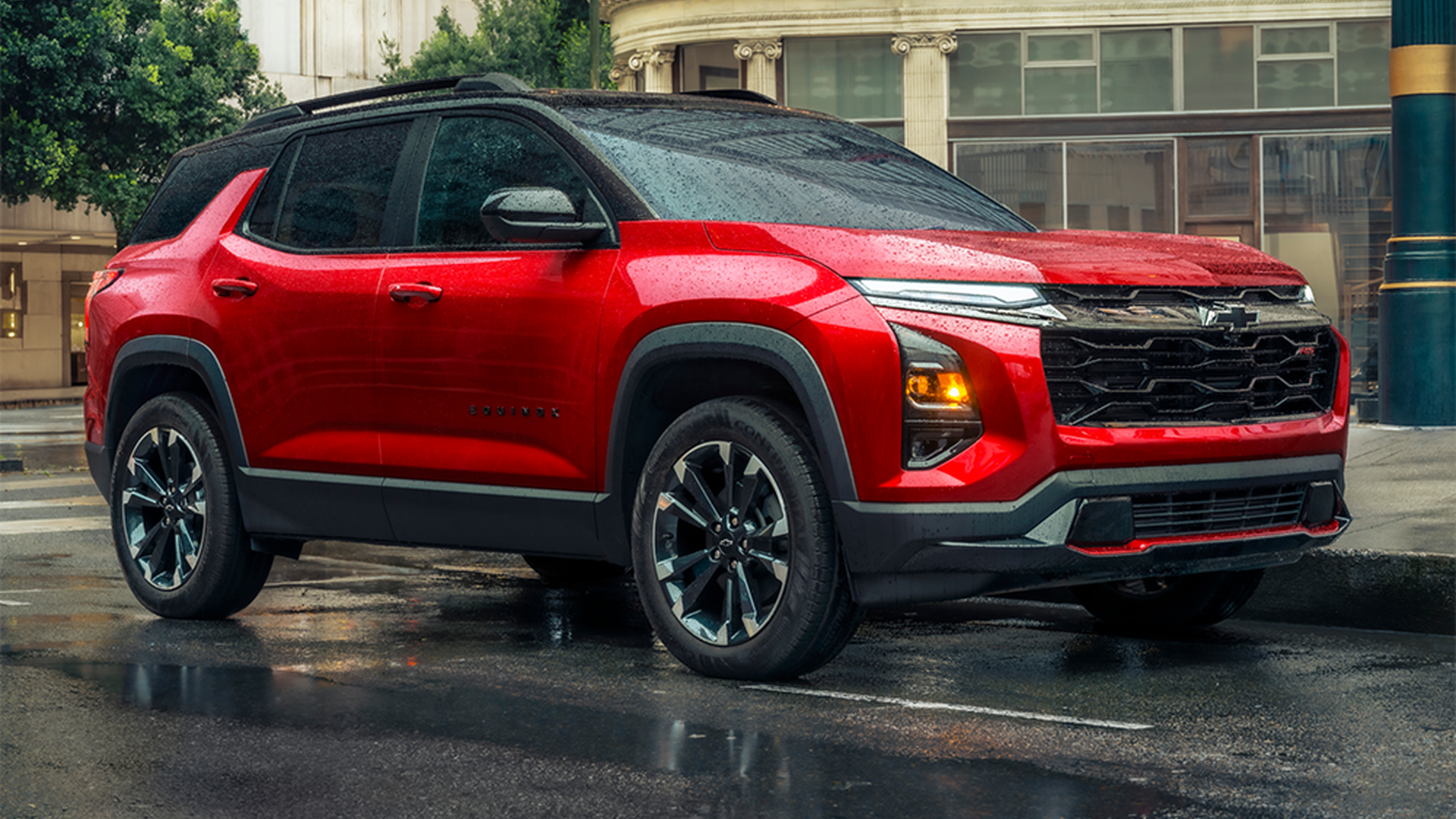
The fourth-generation Equinox completely redefines the visual footprint of the long-running nameplate. Chevrolet recognized modern buyers crave the aggressive, squared-off visual geometry typically reserved for heavy body-on-frame trucks. The new exterior shell features a massive, upright front grille, sharply creased fender flares, and an aggressive, flat hood line. It projects immense physical authority on the asphalt, discarding the soft, sweeping lines of the previous decade.
The Off-Road Focused Activ Trim
The engineering team specifically created the brand-new Activ trim to handle light off-road excursions and severely rutted trails. They radically recalibrated the suspension dampers to easily absorb the violent shockwaves generated by washboard dirt roads. The factory installs specialized General Grabber all-terrain tires featuring highly aggressive outer tread blocks. These deep mechanical voids are designed specifically to claw through loose gravel and thick, deep mud, maintaining forward momentum when the pavement completely disappears.
Inside the heavily redesigned cabin, a massive 11.3-inch high-definition diagonal touchscreen totally dominates the central dashboard architecture. The crisp digital interface seamlessly processes vital vehicle telemetry, high-resolution backup camera feeds, and highly active safety alerts directly into the driver's primary line of sight. High-definition forward-facing optical cameras and complex radar arrays continuously scan the asphalt ahead. The Chevy Safety Assist system proactively deploys Automatic Emergency Braking, completely overriding the driver's physical inputs to halt the two-ton vehicle before it violently strikes a stationary obstacle.
The Chevrolet Equinox stands completely unchallenged as one of the most critical foundational pillars in the modern American automotive landscape. By aggressively adapting ultra-high-strength metallurgy, heavily leveraging highly efficient turbocharged powerplants, and constantly refining highly intelligent interior packaging, the Equinox successfully evolved from a heavy early-2000s mid-size hauler into an incredibly precise, technologically dominant crossover.