
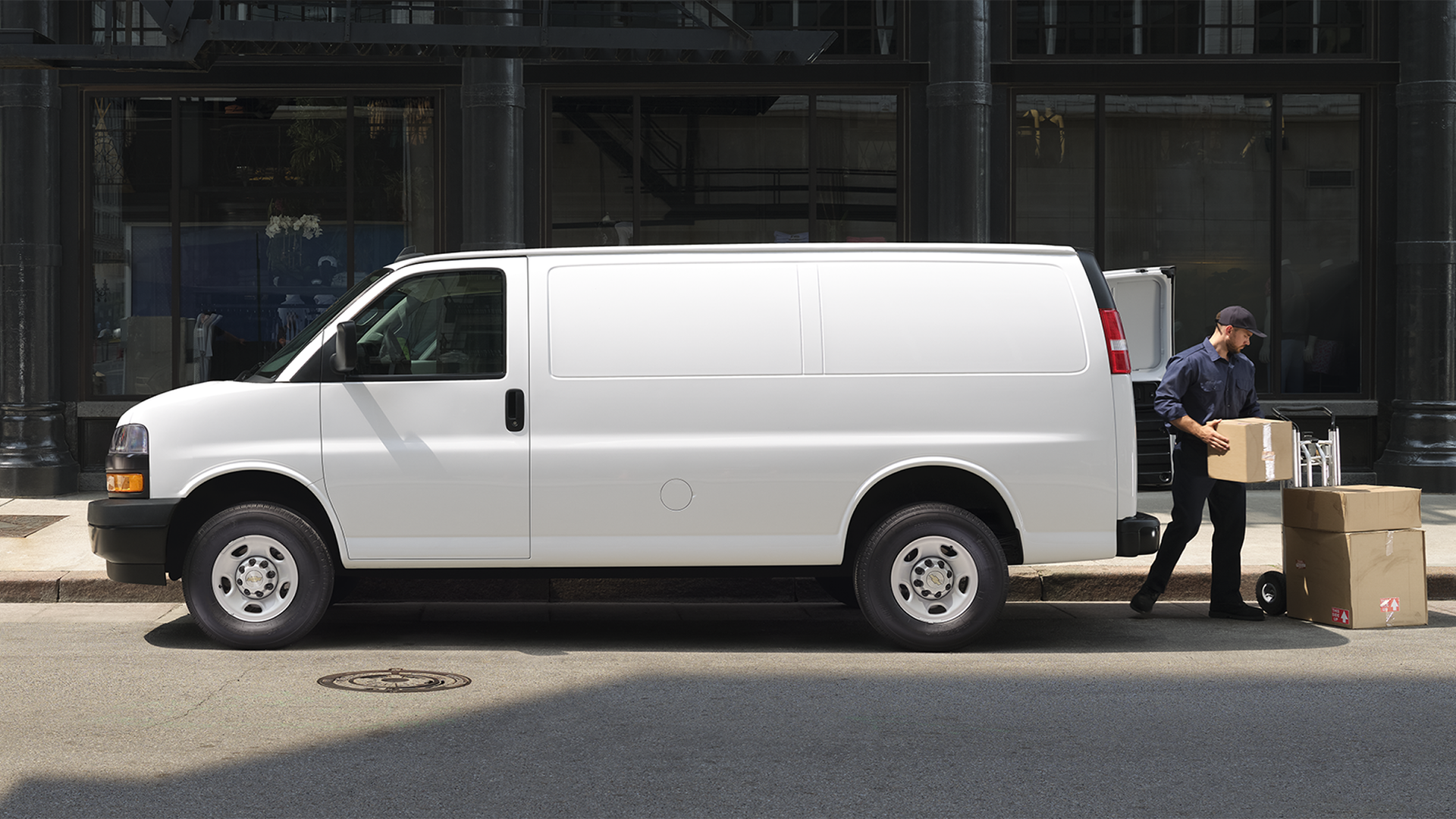
The Monolithic Box: Unpacking the Chevrolet Express Cargo
Forget aerodynamic styling exercises and delicate crossover platforms. The Chevrolet Express Cargo exists to move massive amounts of dead weight across unforgiving environments. Born from the necessity to provide tradespeople, delivery fleets, and industrial upfitters with an unbreakable foundation, this full-size workhorse relies entirely on heavy-duty truck engineering. Chevrolet designed the Express to act as a rolling warehouse. It prioritizes raw payload capacity, V8 torque, and absolute mechanical longevity over fleeting design trends. It forms the silent, rumbling backbone of American logistics, powering the plumbing, electrical, and construction trades from coast to coast.
The GMT600 Genesis and the End of the Flat-Nose
Prior to the 1996 model year, the American commercial van market relied on aging, boxy designs that resembled driving bricks. The venerable G-Series vans had run their course. Chevrolet radically altered the paradigm with the introduction of the all-new GMT600 platform. Engineers pulled the engine block forward, extending the front fascia significantly. This fundamental shift achieved three critical mechanical goals. It created a substantial crumple zone, drastically improving front-impact survivability. It freed up precious footwell space in the cabin, allowing drivers wearing heavy steel-toed boots to operate the pedals comfortably without their knees hitting the steering column. Finally, the swept-back windshield rake radically reduced aerodynamic drag. The revised profile cuts through the wind to eliminate the fatiguing wind buffeting that plagued older flat-nose vans during high-speed interstate transits.
Moving the engine forward on the GMT600 platform fundamentally transformed the thermal management of the engine bay and vastly improved the ergonomic reality for fleet drivers spending twelve hours a day behind the wheel.
Architectural Foundation: The Ladder Frame Reality
The core of the Express Cargo's capability lies underneath its massive sheet metal shell. Unlike modern European-style commercial vans that utilize unibody construction, the Express relies on a traditional body-on-frame architecture. A fully boxed steel ladder frame spans the entire length of the vehicle. This heavy-duty skeleton absorbs immense torsional loads, preventing structural flex when the cargo hold is loaded to its maximum limits. You can load thousands of pounds of copper wire, steel piping, or custom wooden cabinetry into the rear without compromising the door alignments or suspension geometry.
The suspension system mirrors that of heavy-duty pickup trucks. The front end utilizes an independent Short/Long Arm (SLA) geometry paired with massive coil springs and a heavy stabilizer bar. This setup isolates the cabin from brutal urban potholes while maintaining precise steering control under heavy braking. At the rear, the Express depends on a massive solid live axle suspended by heavy-duty semi-elliptic multi-leaf springs. This unsprung mass is difficult to manage dynamically, but it represents the only reliable way to support constant, crushing payloads without premature component failure.
Powertrain Evolution: A Legacy of Displacement
A commercial van requires engines engineered for low-end grunt and high thermal thresholds. Over decades of production, the Express Cargo has hosted some of the most reliable powerplants ever developed by an OEM.
The Gen I Vortec Era (1996-2002)
Initial production models featured the final iterations of the legendary Gen I small-block V8s. Fleet buyers frequently opted for the 5.0L or the ubiquitous 5.7L (RPO L31) Vortec V8. For extreme hauling, Chevrolet offered the towering 7.4L Vortec 454 big-block V8. These cast-iron engines prioritized massive torque immediately off idle, allowing fully loaded vans to pull away from loading docks without straining the drivetrain. Early electronic fuel injection systems mapped the air-fuel ratios to prioritize durability over high-RPM horsepower.
The LS-Based Domination (2003-2017)
As emission regulations forced innovation, Chevrolet transitioned the Express to the Gen III and Gen IV LS-architecture V8s. These engines utilized deep-skirt iron blocks and high-flow aluminum cylinder heads. The 4.8L and 5.3L V8s offered excellent balance, but the 6.0L V8 (LQ4 and later L96) became the definitive fleet engine. The 6.0L delivered relentless power, easily surpassing 300,000 miles with basic maintenance. To address heavy towing demands, engineers integrated the 6.6L Duramax turbo-diesel V8 into the chassis. This required significant modifications to the floorpan to accommodate the massive Allison-derived transmissions and complex exhaust systems.
Modern Motivation (2018-Present)
Today, the powertrain lineup continues to evolve while maintaining its heavy-duty ethos. The base engine transitioned to a highly capable 4.3L V6 (LV1) featuring direct injection and variable valve timing. The crown jewel for heavy upfitters, however, is the massive 6.6L L8T gasoline V8. Designed explicitly for heavy trucks, this cast-iron block utilizes a forged steel crankshaft and heavily reinforced main bearing caps to survive brutal duty cycles.
- Current 6.6L V8 (L8T) Specifications
- Displacement: 6,564 cm3
- Configuration: Naturally Aspirated OHV V8
- Block Material: Cast Iron
- Horsepower: 401 hp @ 5,200 rpm
- Torque: 464 lb-ft @ 4,000 rpm
- Transmission: Heavy-Duty 6-Speed Automatic
Transmissions and Torque Delivery
Harnessing the immense torque generated by these powerplants requires gearboxes capable of managing extreme thermal stress. Early generations relied heavily on the legendary 4L80E four-speed automatic transmission. This gearbox, directly derived from the heavy-duty truck line, utilized robust planetary gearsets and a massive torque converter to handle the rigors of stop-and-go commercial delivery routes. As engine speeds and efficiency requirements increased, Chevrolet upgraded the driveline to the 6L90E six-speed automatic.
The 6L90E provides a significantly steeper first gear, allowing a fully loaded Express Cargo to accelerate away from a dead stop with far less engine strain. The ECU governing the transmission actively monitors throttle position and vehicle load. When ascending steep grades, it holds lower gears longer to maintain engine momentum. During descents, it automatically executes grade braking, downshifting to utilize engine compression to slow the vehicle. This critical feature prevents brake fade and drastically extends the life of the friction materials on the heavy-duty brake rotors.
Between 2003 and 2014, Chevrolet offered the lighter-duty 1500 series Express Cargo with an incredibly capable AWD system. Utilizing a viscous center differential, this system mechanically transferred torque to the front wheels the instant the rear wheels lost traction. These AWD cargo variants remain highly prized by contractors operating in harsh winter climates.
The 2003 GMT610 Overhaul
Recognizing the need to modernize the underlying electrical and safety architecture, Chevrolet executed a massive overhaul for the 2003 model year, redesignating the platform as the GMT610. Engineers widened the track width and pushed the front wheels further toward the corners. They thoroughly redesigned the front fascia, giving the Express a much more aggressive, truck-like appearance that mirrored the contemporary Silverado lineup. Behind the sheet metal, the electrical architecture received a complete multiplex wiring overhaul.
This new data-bus system allowed for the integration of modern safety nets previously unavailable in commercial vans. Chevrolet made an ABS standard across all weight classes. They implemented StabiliTrak, their proprietary electronic stability control system, which utilizes yaw sensors to detect and mitigate dangerous skids. Heavy-duty models received upgraded hydroboost power steering systems, utilizing hydraulic pressure from the power steering pump to assist the master cylinder, providing effortless low-speed maneuvering and incredibly strong braking performance regardless of the payload in the rear.
Cavernous Volume and the Upfitter Reality
The sheer interior volume of the Express Cargo defines its utility. Chevrolet offers the vehicle in two distinct wheelbases: the standard 135-inch WB and the extended 155-inch WB. The extended version stretches the rear sheet metal significantly, offering a cavernous rear cargo area capable of swallowing long lengths of PVC pipe, stacks of plywood, or specialized industrial equipment.
Inside, the Express provides a blank canvas. The walls lack trim, exposing the inner steel structure. This is intentional. It allows upfitters to drill, rivet, and bolt directly into the vehicle's ribs. Plumbers install massive steel shelving units. Electricians mount specialized wire-spool racks. Delivery companies install protective metal bulkheads directly behind the front seats to protect the driver from shifting cargo during an emergency stop. The rear swing-out barn doors open wide, completely clearing the load floor, allowing forklifts to drop heavy pallets directly into the chassis.
- Standard Cargo Capacities
- Standard Wheelbase Cargo Volume: 239.7 cubic feet
- Extended Wheelbase Cargo Volume: 284.4 cubic feet
- Maximum Payload Capacity (3500 series): Up to 4,280 lbs
Thermal Management and Emissions Engineering
Moving a heavy steel box requires burning significant amounts of fuel, producing massive thermal loads and exhaust gases. Chevrolet engineers continuously refined the exhaust architecture to meet increasingly stringent federal regulations. The integration of advanced, high-flow catalytic converters and sophisticated oxygen sensors allows the engine computer to precisely monitor the exhaust stream. By optimizing the air-fuel ratio down to the millisecond, the modern Express meticulously manages its CO2 and NOx output.
Evaporative emissions systems capture unburned fuel vapors from the massive 31-gallon fuel tank. Instead of venting into the atmosphere, these vapors route back into the intake manifold to be consumed during normal driving operations. Under the hood, heavy-duty cooling systems feature massive radiators and specialized transmission fluid coolers. Pulling an 8,000-pound trailer up a mountain grade generates immense heat in the torque converter; the external transmission cooler utilizes ram air from the front grille to shed this heat, preventing catastrophic transmission failure.
Modern Fleet Telematics and Integration
While the mechanical foundation remains deeply traditional, the modern Chevrolet Express Cargo fully integrates into the digital era of logistics. Chevrolet equips contemporary models with advanced telematics hardware built directly into the vehicle's communication bus. Commercial operators utilize these systems to track vehicle location, monitor idle times, and analyze driver behavior in real time. The engine control module transmits diagnostic trouble codes over cellular networks directly to fleet managers, allowing them to schedule preventative maintenance before a catastrophic failure occurs on the job site. This digital overlay transforms the analog workhorse into a highly trackable, efficient node in a modern supply chain. The combination of old-school iron and modern data acquisition creates an incredibly potent tool for commercial profitability.
The Enduring Legacy of the American Workhorse
In an era obsessed with battery-electric modularity and European-style unibody vans, the Chevrolet Express Cargo remains fiercely traditional. It refuses to compromise its heavy-duty roots. Fleet mechanics across the nation understand exactly how to service its independent front suspension. Parts availability for its GM V8 engines stretches to every small-town auto parts store in the country.
The Express Cargo trades the illusion of modern aesthetics for the hard reality of bulletproof mechanical permanence. It is a tool designed to generate revenue through relentless reliability.
The appeal lies in sheer predictability. By refusing to execute frequent, ground-up redesigns, Chevrolet created an automotive monolith. The Express Cargo van provides a constant, unchanging variable in the chaotic equation of fleet management. It remains a rolling fortress of capability, proving that the ultimate solution to industrial transport is simply a massive ladder frame, a thunderous V8 engine, and millions of miles of proven engineering.