
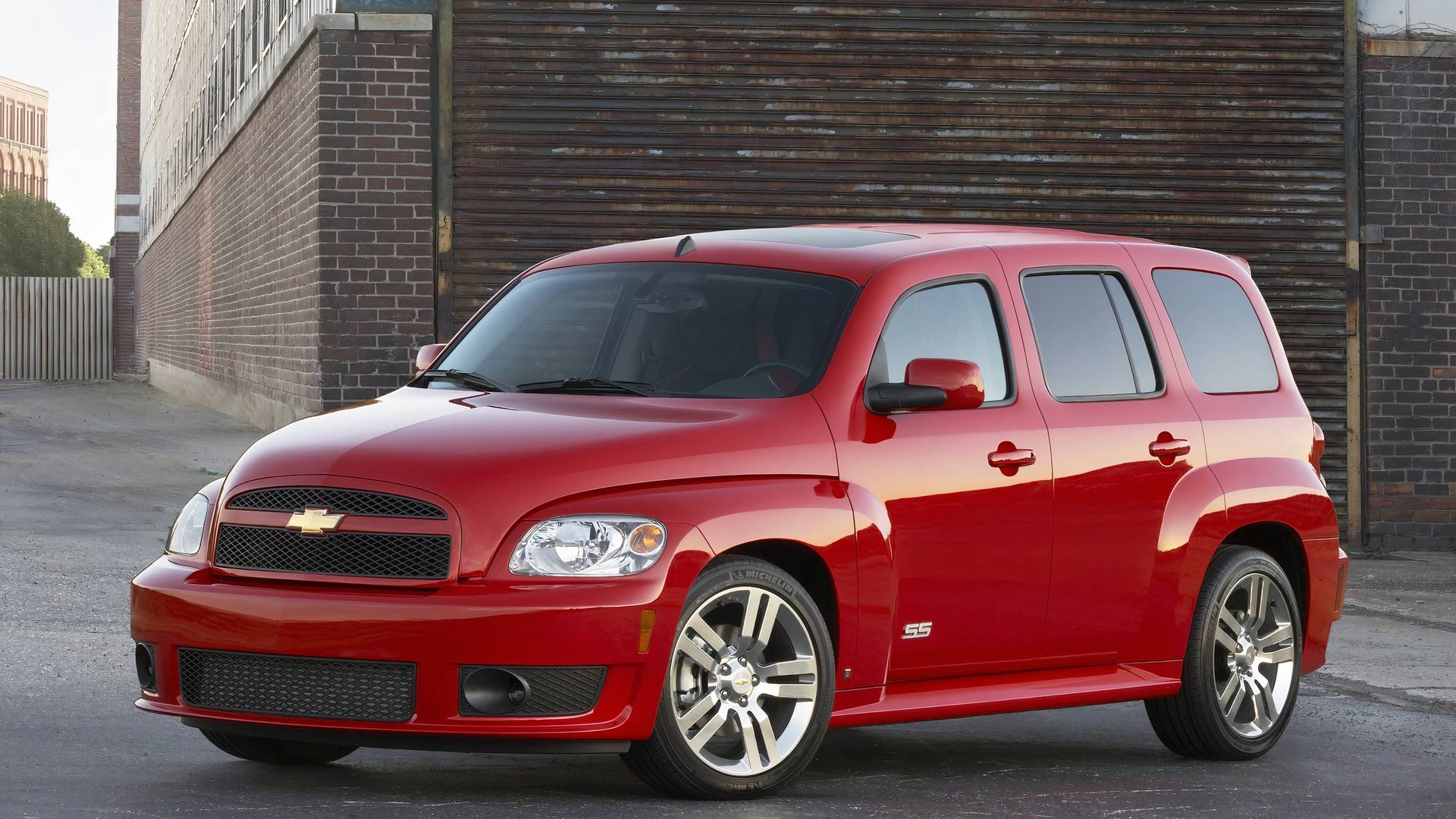
Nostalgia on Wheels: The HHR Concept
The American automotive landscape of the early 2000s was dominated by a looking-glass trend. Designers were raiding the archives, dusting off blueprints from the Golden Age to inspire a new generation of vehicles. While Chrysler struck gold first with the PT Cruiser, General Motors needed a contender. They looked to their own history, specifically the rugged charm of the 1949 Chevrolet Suburban. The result was the HHR, an acronym standing for Heritage High Roof. It was a vehicle that wore its heart on its fender, unapologetically retro in an era of wind-tunnel-sculpted anonymity. Bryan Nesbitt, the designer credited with the PT Cruiser, ironically found himself penning the HHR for GM after switching teams. The genetic resemblance was undeniable, but the HHR distinguished itself through scale and utility. It wasn't just a styling exercise; it was a highly functional cargo carrier disguised as a classic cruiser. It rode on the Delta platform, shared with the Chevrolet Cobalt, ensuring it had modern underpinnings beneath its vintage sheet metal. This duality-a 21st-century chassis with a 20th-century soul-defined the HHR's five-year run in the market.Design: Echoes of the 1949 Suburban
The HHR's visual language is its defining feature. The front fascia features a prominent, upright grille bisected by a horizontal chrome bar, flanked by large, round headlights that mimic the glowing eyes of post-war trucks. The fenders are flared and pronounced, wrapping around the wheels to create a muscular stance that the PT Cruiser lacked. But the real magic happened above the beltline. The 'High Roof' was not merely a stylistic choice; it was a volume-maximizing engineering decision. The roofline soared upward before dropping abruptly at the rear, creating a massive, boxy greenhouse. This maximized headroom and cargo space, making the HHR surprisingly practical for hauling furniture or IKEA runs. The rear doors on the four-door model were small but opened wide, while the panel van variant-lacking rear side windows-offered a sleek, commercial look that appealed to business owners and customizers alike. The suicide doors on the panel van variant provided an unobstructed opening, although they required the front door to be opened first, a quirky feature reminiscent of 1930s coupes.The HHR's interior volume of 121.1 cubic feet and maximum cargo space of 63.1 cubic feet put it in direct competition with small SUVs, offering nearly double the cargo capacity of some competitors in its class.
Platform and Performance: The Delta Architecture
Beneath the retro skin, the HHR was pure Chevrolet Cobalt. It utilized a unibody construction with MacPherson struts in the front and a semi-independent torsion beam suspension in the rear. This setup prioritized interior space and cost-effectiveness over sporting pretensions. The driving dynamics were predictable and safe, if not particularly exciting. The steering was light, tuned for parking lot maneuvers rather than autocross. However, the suspension tuning was firm enough to prevent the wallowing sensation common in taller vehicles. Power for the standard models came from the Ecotec family of engines. The base engine was the 2.2L L4, a reliable workhorse producing 149 horsepower. Later years saw the introduction of the 2.2L updated to 155 horsepower, and a 2.4L variant offering 172 horsepower for the LT trim. These engines were mated to either a five-speed manual or a four-speed automatic transmission. While the automatic was smooth, the four ratios felt dated compared to the five and six-speed units appearing in competitors, leading to a buzzy engine note at highway speeds.- Standard Engine Specs (2007)
- Engine: 2.2L Ecotec DOHC I4
- Horsepower: 149 hp @ 5600 RPM
- Torque: 152 lb-ft @ 4200 RPM
- Transmission: 5-Speed Manual / 4-Speed Automatic
The HHR SS: A Turbocharged Surprise
In 2008, Chevrolet dropped a bombshell. The SS badge, reserved for Chevrolet's most potent performance vehicles, found its way onto the HHR. This wasn't a sticker-and-tape package. The GM Performance Division, led by the legendary John Heinricy, engineered a transformation. Under the hood sat a 2.0L turbocharged Ecotec engine-the same powerplant found in the Pontiac Solstice GXP and Saturn Sky Red Line. This engine was a beast, churning out 260 horsepower and 260 lb-ft of torque. The performance figures were shocking for a tall wagon. The HHR SS could sprint from 0 to 60 MPH in just over six seconds. It came standard with a five-speed manual transmission, with an automatic option available later. Crucially, the SS received a significant suspension overhaul. It featured FWD-specific tuning, stiffer springs, and unique stabilizer bars. An optional 'G85' package added Brembo brakes and a limited-slip differential, turning the retro wagon into a legitimate track weapon. It was a sleeper in the truest sense, capable of embarrassing sports cars at stoplights while looking like a delivery van.The 'Woodie' Aesthetic
Beyond the SS, Chevrolet leaned heavily into customization. The HHR was available in a 'Woodie' trim, featuring a faux woodgrain appliqué along the side panels. This was a direct homage to the wood-bodied station wagons of the 1940s and 1950s. It was a polarizing look, loved by retirees and hated by purists, but it sold well. It captured the essence of the HHR: a vehicle that didn't take itself too seriously. The interior could be color-coordinated with the exterior, offering bold options like 'Switchblade Silver' or 'Mean Yellow'.Interior: Utility Over Luxury
Inside, the HHR was a mix of retro styling and GM's cost-cutting measures. The dashboard was upright and symmetrical, featuring a prominent center stack. The materials were hard plastics, which were durable but felt cheap to the touch. The design team attempted to bridge the gap with chrome accents and a floor-mounted shifter, but the corporate parts bin was evident in the switchgear and steering wheel. However, where the HHR excelled was ergonomics and storage. The seats were positioned high, offering a commanding view of the road. The center console was deep, and the glove box was massive. The rear seats could fold flat, and the front passenger seat could fold flat as well, creating a long continuous surface for carrying long items like ladders or lumber. This 'command center' approach made the HHR a favorite among traveling sales representatives and pet owners who needed a flat space for dog crates.The Panel Van: Commercial Utility
Recognizing a market for a compact commercial hauler, Chevrolet introduced the HHR Panel Van. By deleting the rear side windows and removing the rear seats, they created a secure, weather-proof cargo area. It was a hit with florists, caterers, and small businesses that needed branding space. The smooth sides of the Panel Van were a blank canvas for vinyl wraps, turning every HHR Panel into a mobile billboard. The lack of rear windows also gave the vehicle a lower, sleeker profile from the outside, appealing to customizers who sought a 'delivery truck' stance.Safety and the Recall Era
The HHR's safety record is inextricably linked to the ignition switch recall that rocked General Motors in 2014. Because the HHR shared the ignition switch design with the Cobalt and Saturn Ion, it was a central figure in the recall crisis. The faulty switches could move from the 'Run' position to 'Accessory' if jostled, cutting power to the engine and safety systems. While this chapter tarnished the car's legacy, it is important to note that the vehicles fixed under recall are mechanically safe. Structurally, the HHR was reasonably robust. It received a five-star rating for driver and passenger frontal crash tests from the NHTSA. The high roof and upright seating provided good crash zones, though the small rear doors on the four-door model were sometimes criticized for making it difficult to install child seats. On the SS models with the G85 package, the Brembo brakes provided stopping power that far exceeded the standard braking setup, a safety benefit often overlooked.Driving Impressions: A Tall Order
Driving a standard HHR is a relaxed affair. The high seating position and expansive glass area provide excellent visibility, a rarity in modern vehicles. The 2.2L engine is adequate for city driving but can feel winded on steep highway grades. The suspension soaks up bumps well, though the rear end can feel a bit skittish over broken pavement due to the torsion beam axle. The driving experience changes dramatically in the SS. The torque steer is present, as is typical in powerful front-wheel-drive cars, but the limited-slip differential helps manage it. The exhaust note is a deep burble, uncharacteristic of an inline-four. The SS demands more attention from the driver; the suspension is stiff, transmitting road imperfections into the cabin, but the trade-off is a cornering ability that defies physics. You sit high, yet you corner flat. It is a unique experience, one that has aged into a cult classic status.Market Position and Discontinuation
The HHR was discontinued in 2011. The market had moved on. The retro fad was fading, and the compact SUV segment was being dominated by more conventional designs like the Honda CR-V and the Ford Escape. Chevrolet had also introduced the Orlando and was preparing the Trax, which offered similar utility in a more modern package. The HHR was a victim of changing tastes. However, the HHR has found a second life on the used market. Its low maintenance costs (shared with millions of Cobalt and Cruze components) and high utility make it a practical choice for young families or anyone needing a cheap hauler. The SS models, in particular, have seen a resurgence in value. Enthusiasts recognize the engineering prowess of the GM Performance Division, and the HHR SS is now viewed as a 'sleeper' classic-a 14-second quarter-mile car disguised as a family grocery getter.Technical Specifications Summary
For the enthusiast, the HHR offers a range of figures that illustrate its evolution from economy car to performance oddity.- Dimensions
- Wheelbase: 103.5 inches
- Overall Length: 174.8 inches
- Height: 63.1 inches (FWD) / 63.9 inches (AWD on later concepts)
- Curb Weight: 3,100 - 3,300 lbs
- HHR SS Performance Specs
- Engine: 2.0L Turbocharged Ecotec
- Horsepower: 260 hp @ 5300 RPM
- Torque: 260 lb-ft @ 2000 RPM
- 0-60 MPH: ~6.2 seconds