
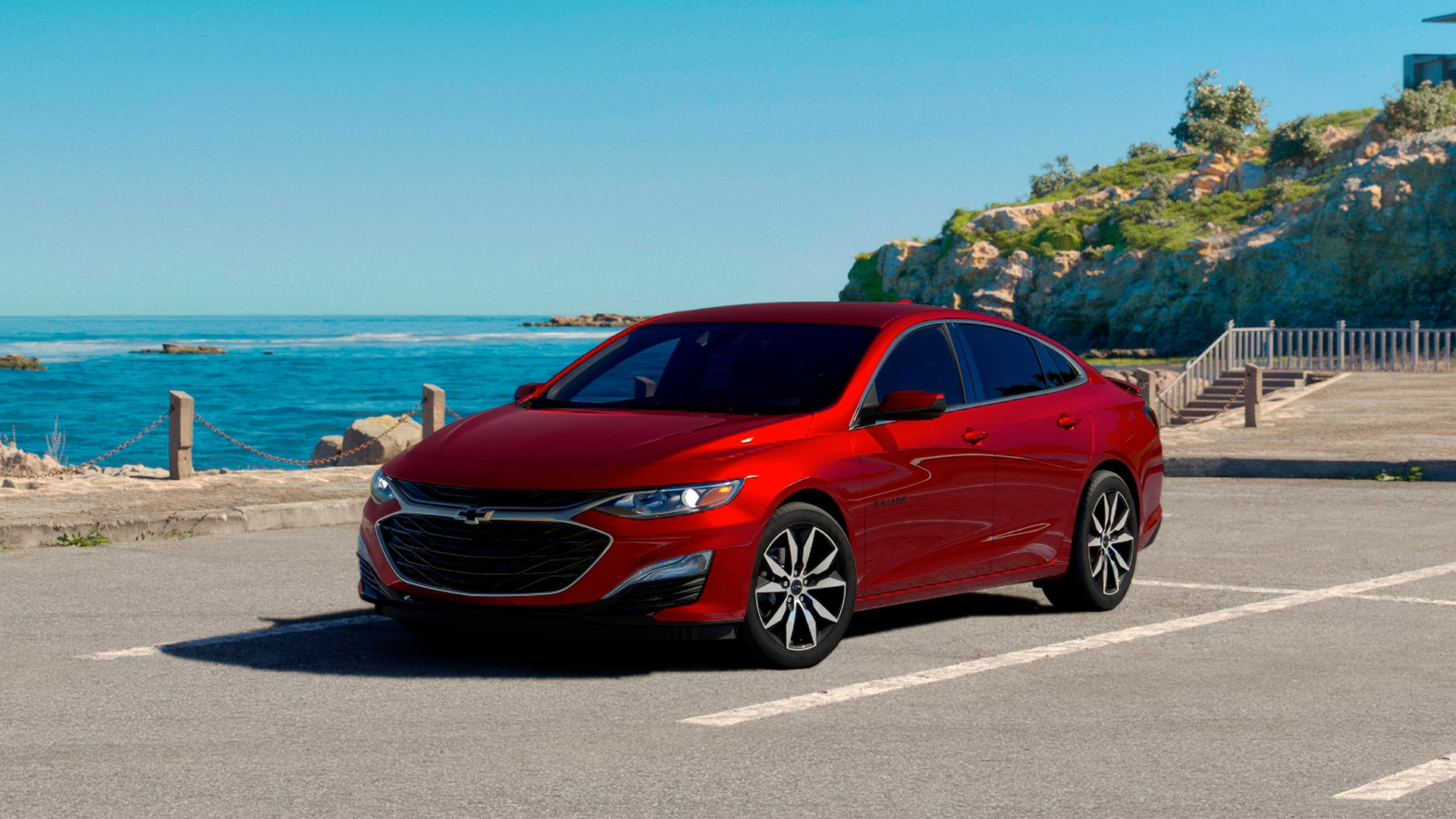
The Premium Chevelle Pedigree
General Motors birthed the Malibu in 1964 not as a standalone vehicle, but as the absolute flagship trim level of the newly minted Chevrolet Chevelle mid-size platform. Recognizing a massive gap between the compact Chevy II and the sprawling full-size Impala, Chevrolet engineers rapidly developed the A-Body architecture. The Malibu trim offered buyers premium interior appointments, patterned cloth upholstery, and lavish exterior brightwork, instantly capturing the rapidly expanding American middle class.
Beneath the polished exterior, the early Malibu relied on a rugged, full-perimeter steel frame. This body-on-frame construction heavily isolated the passenger cabin from aggressive drivetrain vibrations while maintaining the structural rigidity required to handle increasing torque loads. The front suspension utilized unequal-length upper and lower control arms paired with hydraulic shock absorbers, while the rear suspension abandoned antiquated leaf springs for a highly effective four-link trailing arm design with heavy-duty coil springs. This specific geometry sharply reduced axle wrap under heavy acceleration, planting the rear tires firmly into the pavement.
The Golden Era: Big Blocks and Coke-Bottle Styling
Chevrolet executed a massive visual and mechanical redesign for the 1968 model year, aligning the Malibu perfectly with the zenith of the muscle car era. Designers shortened the wheelbase for the two-door coupes to a tighter 112 inches and implemented the iconic Coke-bottle styling. Dramatically swept-back front fenders, a pronounced kick-up in the rear quarter panels, and a sweeping semi-fastback roofline visually communicated raw speed.
While standard Malibu models utilized efficient inline-six engines or sensible small-block V8s, buyers seeking absolute highway supremacy checked the Super Sport (SS) option box. By 1970, General Motors lifted corporate displacement bans, allowing Chevrolet to drop the monstrous 454 cubic-inch V8 into the engine bay. The Malibu SS 454 became a terrifying street weapon, delivering brutal straight-line acceleration that humiliated dedicated European sports cars.
"The 1970 Malibu SS 454 LS5 wasn't just a mid-size commuter; it was a kinetic event. The violent torque delivery physically twisted the A-Body chassis, painting massive black stripes across the asphalt the moment the secondary barrels on the Rochester carburetor cracked open." - Automotive Engineering Historical Archive
1970 Malibu SS 454 (LS5) Specifications
- Engine Architecture
- Mark IV Cast Iron Big-Block V8
- Displacement
- 7,439 cm3 (454 cubic inches)
- Compression Ratio
- 10.25:1
- Peak Output
- 360 HP @ 5,400 RPM
- Peak Torque
- 500 lb-ft @ 3,200 RPM
The Downsizing Mandate and the G-Body Transition
The 1973 Arab Oil Embargo and suffocating federal emissions standards completely fractured the American automotive landscape. Engine compression ratios plummeted to accommodate unleaded fuel, and the integration of restrictive catalytic converters choked V8 horsepower, drastically reducing CO2 emissions but simultaneously killing acceleration.
General Motors executed "Project 77," a monumental downsizing program. For the 1978 model year, the Malibu officially separated from the Chevelle nameplate, becoming a standalone model line riding on the newly minted, significantly smaller metric chassis (which would soon be designated the G-Body platform). Engineers carved hundreds of pounds of curb weight and slashed inches from the overall length and width. Through brilliant geometric packaging optimization, they actually increased rear legroom and expanded the trunk capacity despite the smaller exterior footprint.
Propulsion shifted heavily toward efficiency. Chevrolet equipped the downsized Malibu with a 3.3-liter V6, prioritizing low-end drivability and enhanced fuel economy over raw acceleration. The police fleet market heavily utilized the 9C1 pursuit package Malibu, leveraging the lighter chassis and a tuned 350 cubic-inch V8 to create a highly maneuverable urban interceptor. Chevrolet abruptly ended Malibu production in 1983, completely abandoning the traditional rear-wheel-drive mid-size sedan market for over a decade.
The Front-Wheel-Drive Resurrection: N-Body Engineering
Following a 14-year hiatus, Chevrolet resurrected the Malibu nameplate in 1997. The automotive market had violently shifted, demanding the space efficiency and adverse-weather traction of FWD architectures. The reborn Malibu rode on an extended version of the N-Body platform. By placing the engine and transaxle transversely across the engine bay, engineers eliminated the bulky transmission tunnel and heavy rear driveshaft, creating a perfectly flat floor pan and a massive, cavernous passenger cabin.
The suspension kinematics were completely modernized. The front end utilized an independent MacPherson strut design paired with a hollow stabilizer bar, providing predictable steering response and isolating the cabin from harsh impacts. The rear suspension featured a fully independent multi-link setup. Power delivery relied on the highly dependable 3.1-liter L82 V6 engine. Utilizing a traditional 60-degree cast-iron block topped with high-flow aluminum cylinder heads, this pushrod engine delivered immediate low-end torque, perfectly suited for heavy stop-and-go suburban commuting.
Global Engineering: The Epsilon Architecture
General Motors recognized that surviving the fierce mid-size sedan wars required a world-class chassis. For the 2004 model year, the Malibu migrated to the Epsilon platform, an architecture heavily co-developed with Opel and Saab engineers in Europe. This global platform massively increased structural torsional rigidity. A stiffer safety cage allows suspension engineers to utilize softer spring rates without sacrificing high-speed cornering stability, directly translating into a vastly superior, isolated highway ride.
Chevrolet pushed boundaries by introducing the Malibu Maxx, an extended-wheelbase five-door hatchback variant. The Maxx featured rear seats mounted on sliding tracks, offering massive rear legroom that rivaled full-size luxury sedans, combined with a highly versatile rear cargo hold. To manage the increased weight, Chevrolet deployed the 3.5-liter "High Value" LX9 V6.
Epsilon II and the eAssist Hybrid Integration
To combat rising fuel costs during the eighth-generation run (2013-2015), Chevrolet engineers deployed the eAssist mild-hybrid system on the Malibu Eco model. This technology replaced the traditional mechanical alternator with a heavy-duty, liquid-cooled electric motor-generator hooked directly to the crankshaft via a specialized serpentine belt. During deceleration, the motor-generator captured kinetic braking energy, converting it into electricity and storing it in a small lithium-ion battery pack mounted securely in the trunk. When the driver accelerated from a stoplight, the electric motor provided an immediate burst of torque directly to the crankshaft, heavily reducing the mechanical load on the internal combustion engine and drastically increasing city MPG.
The E2XX Lightweighting Masterclass and Turbocharged Efficiency
The ninth-generation Malibu, launched for the 2016 model year, represents an absolute masterclass in automotive mass reduction. Built upon the newly developed E2XX architecture, engineers utilized advanced computer-aided design to shave roughly 300 pounds from the vehicle's curb weight compared to the outgoing generation. They heavily integrated high-strength and ultra-high-strength steel alloys throughout the safety cage, strategically thinning non-load-bearing structural members while drastically increasing the rigidity of the frontal crash zones.
This massive weight reduction allowed Chevrolet to completely abandon heavy V6 engines. The modern Malibu relies entirely on highly advanced, small-displacement turbocharged four-cylinder engines. The premier powerplant is the 2.0-liter LTG turbocharged inline-four. By utilizing a twin-scroll turbocharger, engineers effectively eliminated turbo lag. Exhaust gases are routed through two separate channels in the exhaust manifold, precisely timing the exhaust pulses to keep the turbine wheel spinning rapidly at all engine speeds.
2016 Malibu 2.0T (LTG) Specifications
- Engine Block Material
- Sand-Cast Aluminum
- Displacement
- 1,998 cm3
- Valvetrain
- DOHC, 16 Valves, Variable Valve Timing
- Induction System
- Twin-Scroll Turbocharger, Direct Fuel Injection
- Peak Output
- 250 HP @ 5,300 RPM
- Peak Torque
- 260 lb-ft @ 2,000 RPM
Aerodynamics and Kinetic Energy Management
Designers spent hundreds of hours in the wind tunnel sculpting the modern exterior sheet metal. Active aero shutters mounted directly behind the lower front grille automatically snap closed at highway speeds. This physical action forces turbulent air to flow seamlessly over the curved hood rather than slamming into the flat radiator core, drastically reducing high-speed aerodynamic drag and completely eliminating annoying cabin wind noise.
Managing the power delivery of the turbocharged engines required sophisticated gearboxes. Base models equipped with the 1.5-liter turbo utilized a highly optimized CVT. The CVT uses variable-diameter pulleys to keep the engine operating strictly in its most efficient powerband, providing seamless acceleration and maximizing fuel efficiency during heavy stop-and-go city traffic. The high-output 2.0-liter models received the advanced GM 9T50 9-speed automatic transmission. This gearbox features extremely tight gear spacing, ensuring the turbocharged engine never drops out of its peak boost range during hard acceleration.
The Final Chapter of the American Mid-Size Sedan
The automotive landscape shifted violently in the 2020s. American consumers overwhelmingly abandoned the traditional four-door sedan profile, demanding the elevated seating position and perceived ruggedness of unibody crossover SUVs. General Motors officially announced the cessation of Chevrolet Malibu production for the 2024 calendar year, retooling the historic Fairfax Assembly plant to manufacture electric vehicles. The Malibu leaves behind an undeniable legacy. It survived six decades of turbulent market shifts, evolving from a raw, V8-powered muscle car trim into a highly sophisticated, aerodynamically optimized commuter, proudly serving as the definitive backbone of the American mid-size segment.