
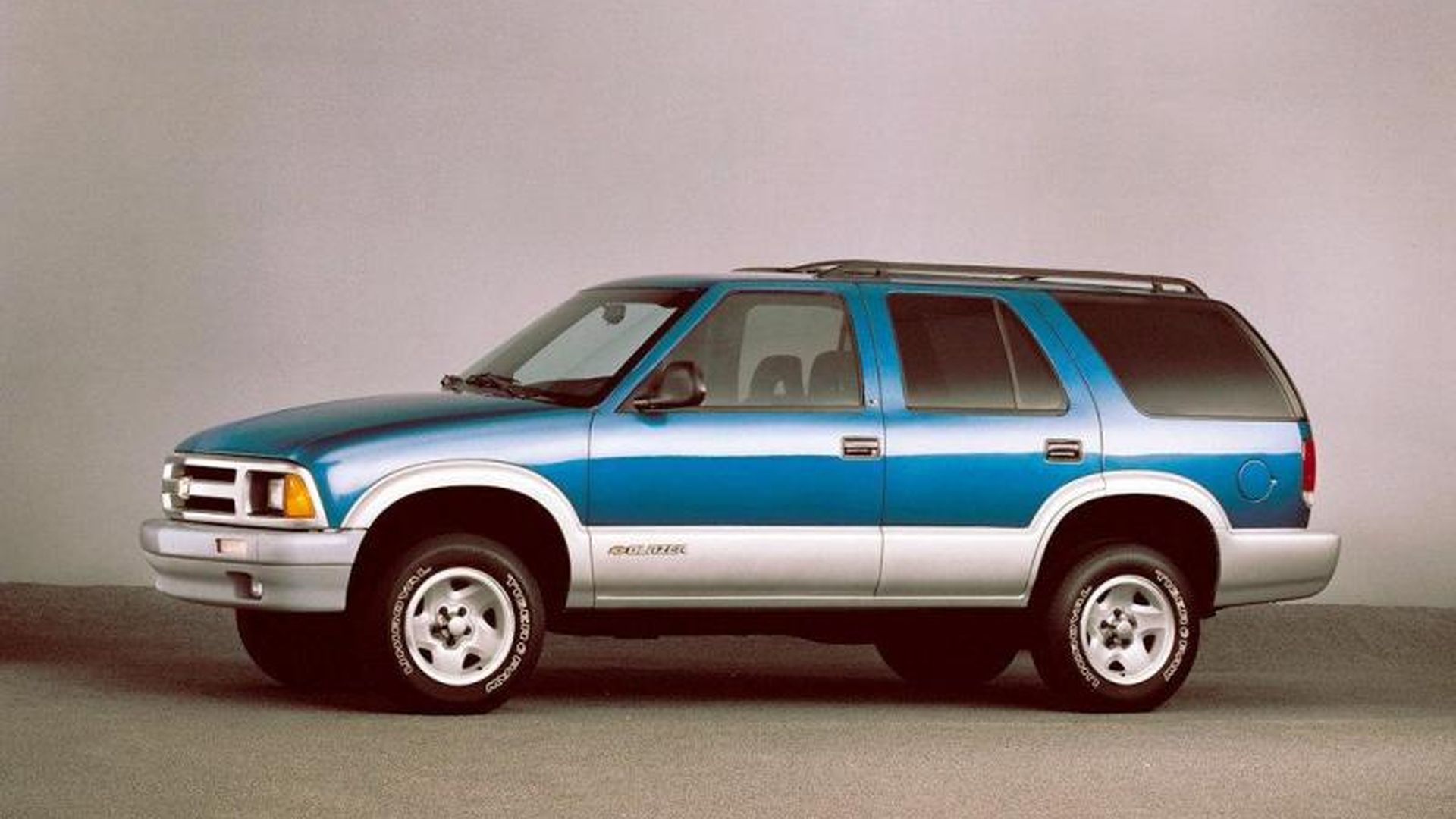
The Answer to the Oil Crisis
\n\nThe late 1970s were a dark time for the American automotive industry. The gas crisis had strangled the market for the massive, gas-guzzling full-size trucks that had long ruled the roads. Consumers were flocking to dealerships in droves to buy small, efficient pickups from Toyota, Datsun, and Mazda. The Chevrolet LUV (Light Utility Vehicle), a rebadged Isuzu, was a stopgap, but it wasn't a Chevrolet. In 1982, General Motors fired back with the S-10. It was a truck built by Americans, for Americans, but scaled down for the new economic reality.\n\nThe S-10 wasn't just a vehicle; it was a survival strategy. It filled the gap in Chevrolet showrooms between the fading LUV and the massive C/K series. It offered the utility of a pickup bed with the fuel economy of a sedan. It was a formula that resonated instantly. The S-10 became a fixture on construction sites, farms, and suburban driveways across the nation. It was honest transportation. It didn't pretend to be a luxury liner. It was a tool, and a reliable one at that.\n\nFirst Generation: The Square Body Era (1982-1993)
\n\nThe first-generation S-10 is often affectionately grouped with the "square bodies" of the 1980s, though it was distinct from its full-size brethren. The styling was crisp and angular, characterized by a flat grille and rectangular headlights on higher trims. Under the skin, the truck utilized a straightforward chassis with independent front suspension on two-wheel-drive models and a solid front axle on four-wheel-drive variants. This mechanical simplicity was a large part of its appeal. If something broke, you could fix it with a basic set of hand tools.\n\nThe engine options at launch reflected the era's focus on efficiency. The standard engine was the 1.9L OHV four-cylinder, which struggled to move the truck with any authority. The preferred option was the 2.8L LR1 V6, which offered 110 horsepower-a modest figure by modern standards, but enough to give the truck some towing capability. The real workhorse, however, arrived in 1985: the 2.2L diesel engine. While rare and slow, it offered fuel economy numbers that are impressive even today.\n\nThe Iron Duke and the TBI Era
\n\nIn 1984, Chevrolet introduced the \"Iron Duke\"-a 2.5L Tech IV inline-four engine. This engine became synonymous with the S-10. It wasn't fast, but it was durable. It featured throttle-body injection (TBI) which improved cold starts and reliability over carbureted competitors. The engine noise was distinct, a rhythmic clatter that sounded like industrial machinery. For many buyers, this was the engine of choice because it was cheap to buy and cheap to run.\n\n\nThe 1983 S-10 was the first domestically built compact pickup to offer a V6 engine option, giving it a significant towing advantage over the four-cylinder dominated competition from Japan.\n\n\n
The Sport Side and the SS
\n\nWhile the S-10 was primarily a work truck, it didn't take long for the performance and style markets to take notice. In the late 80s, Chevrolet introduced the "Sport Side" bed, featuring a fiberglass bulge over the wheels that gave the truck a hot rod look. This aesthetic upgrade paved the way for the S-10 SS, introduced in 1994. The SS was the street truck. It featured a 4.3L Vortec V6 engine, lowered suspension, and unique 16-inch wheels. It was a precursor to the high-performance truck segment that would explode in the coming years.\n\nThe S-10 also birthed a legend: The GMC Syclone and Typhoon. While technically branded under GMC, they were mechanically S-10 Sonoma siblings underneath. The Syclone, a turbocharged, all-wheel-drive pickup, was the fastest production truck in the world in 1991, beating Ferraris in drag races. This performance halo gave the humble S-10 platform a credibility it never would have earned on its own. It proved that a small truck could be a legitimate performance machine.\n\nSecond Generation: Refinement and the Vortec Era (1994-2005)
\n\nThe 1994 model year brought a complete redesign. The S-10 lost its sharp angles for rounded, more aerodynamic sheet metal. The interior was modernized with dual airbags and a curved dashboard that felt more car-like than the previous truck's upright slab. This generation focused heavily on the 4.3L Vortec V6 engine. This engine, essentially a small-block Chevy V8 with two cylinders chopped off, became the standard for power in the S-10. It produced 190 horsepower and a robust 250 lb-ft of torque.\n\nThis engine transformed the driving experience. The S-10 could finally merge onto highways with confidence. It could tow a decent load. It became a legitimate alternative to a full-size truck for light-duty work. The NV3500 5-speed manual transmission was a joy to shift, offering precise gating, while the 4L60E automatic was a stalwart of durability.\n\n- \n
- 4.3L Vortec V6 Specs (1996-2005) \n
- Horsepower: 190 hp @ 4400 RPM \n
- Torque: 250 lb-ft @ 2800 RPM \n
- Configuration: 90-degree V6, Cast Iron Block \n
- Fuel System: Sequential Fuel Injection (SFI) \n
The ZR2: The Off-Road Beast
\n\nFor those who wanted to leave the pavement, the ZR2 package was the ultimate option. It wasn't just a sticker; it was a completely different chassis setup. The ZR2 featured a wider track, torsion bar front suspension, and Bilstein shocks. It sat two inches higher than a standard 4x4 S-10. It was Chevy's answer to the Ford Ranger FX4. The ZR2 became a cult favorite among off-roaders because it was narrow enough to fit on tight trails where a full-size truck would be wedged between trees. The "Highrider" stance gave it a menacing look that still turns heads today.\n\nThe Xtreme and the Mini-Truck Culture
\n\nThe late 1990s and early 2000s saw the rise of the "mini-truck" culture. Young buyers were lowering their trucks, adding custom paint, and installing air bags to lay frame. Chevrolet capitalized on this trend with the S-10 Xtreme. It came from the factory lowered, with ZQ8 sport suspension, 16-inch aluminum wheels, and a monochromatic paint scheme. It was a looker. It handled exceptionally well for a truck, staying flat in corners. The Xtreme represented the final evolution of the S-10 as a lifestyle vehicle before the segment shifted entirely to crossovers.\n\nInterior Space and Utility
\n\nThe S-10 was designed as a two-seater primarily, though extended cab models offered "jump seats" in the back. These rear seats were suitable for small children or groceries, but certainly not for adults on long trips. The interior materials were hard plastics designed to be wiped clean, a testament to the truck's utilitarian roots. However, the ergonomics were sound. The controls fell easily to hand, and visibility was excellent. The upright greenhouse provided a commanding view of the road, a feature many modern truck owners miss.\n\nCargo capacity was respectable for a compact truck. The standard bed was 6 feet long, with a shorter 5-foot bed available on extended cab models. The bed walls were high enough to hide standard 4x8 sheets of plywood laid flat over the wheel wells, a critical metric for any contractor. The tailgate was sturdy, utilizing steel cables that were easy to replace if they rusted.\n\nThe Electric Experiment: The S-10 EV
\n\nLong before the Bolt or the Silverado EV, there was the S-10 Electric. Sold primarily to fleets in the late 1990s, it was an early attempt at electrification. It used lead-acid batteries and had a range of roughly 60 miles. It was heavy and slow, but it proved that electric propulsion was possible in a truck format. Few survive today, making them fascinating curiosities for collectors. It serves as a reminder that the current EV revolution is built on decades of trial and error.\n\nMarket Position and The End of the Line
\n\nBy the mid-2000s, the compact truck segment was dying. Buyers were upsizing to mid-size and full-size trucks. The S-10, once the agile alternative, began to feel small and crude compared to the new Chevrolet Colorado that replaced it in 2004. The interior felt cheap, the ride was jittery, and the safety features were lacking. Production ceased in 2005, ending a 23-year run for the nameplate in the US.\n\nHowever, the S-10's legacy is immense. It kept Chevrolet relevant in the truck market during a time when fuel prices threatened to make pickups obsolete. It provided an entry point for millions of young buyers into the Chevrolet family. It became a staple of American industry-a truck that asked for little but delivered plenty.\n\nCommon Issues and Ownership Today
\n\nFor the used buyer, the S-10 represents a mixed bag. The mechanicals are robust, particularly the engines and transmissions. Parts are available at every auto parts store in America. The frames, however, are prone to rust, particularly in the Midwest where road salt is used. The fuel tank sending units are notorious for failing, and the plastic dashes are famous for cracking in the sun.\n\nDespite these flaws, the S-10 remains a popular platform for modification. The engine bay is large enough to accept a small-block V8 with relative ease, turning the humble truck into a rocket. The aftermarket support for suspension, tires, and body kits is vast. It is a vehicle that rewards the DIY mechanic. It is forgiving, simple, and logical.\n\nTechnical Specifications Summary
\n\nThe dimensions of the S-10 kept it maneuverable in tight spaces, a key advantage over modern full-size trucks.\n\n- \n
- Dimensions (2003 Extended Cab) \n
- Wheelbase: 122.9 inches \n
- Overall Length: 205.3 inches \n
- Width: 67.9 inches \n
- Curb Weight: Approx. 3,400 - 3,800 lbs \n