
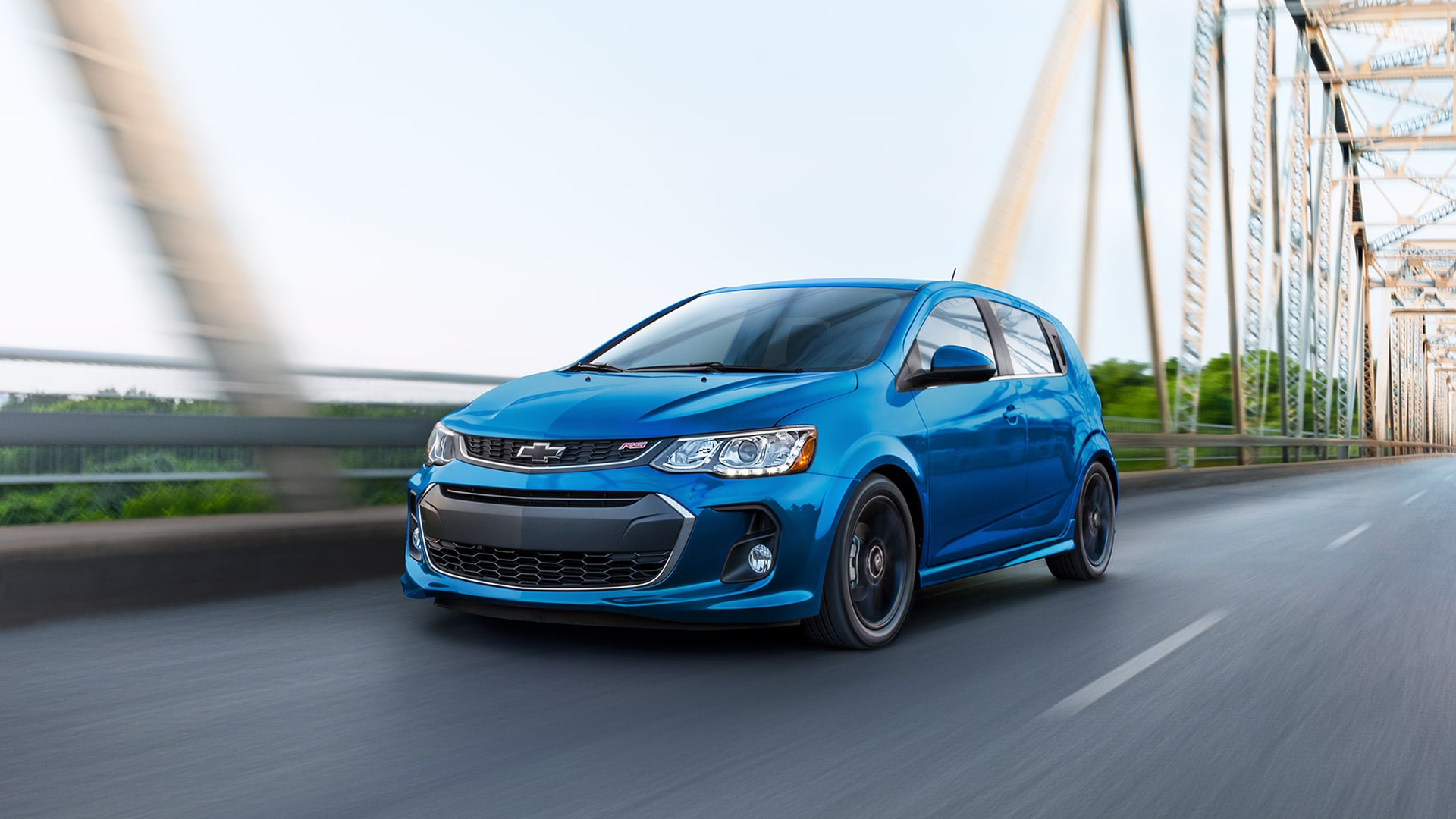
Eradicating the Economy Car Stigma
Chevrolet fundamentally rewired its approach to the entry-level segment with the introduction of the Sonic for the 2012 model year. Replacing the dynamically uninspired Aveo, the Sonic arrived as a localized champion. General Motors made the unprecedented decision to build this subcompact at the Orion Assembly plant in Michigan, marking it as the only subcompact car assembled in the United States at the time. This wasn't merely a localization play; the engineering team prioritized driving engagement, dialing in a chassis that felt distinctly European in its composure while satisfying the American highway cruising requirements.
The Gamma II Global Architecture
The foundation of the Sonic is the GM Gamma II platform. Developed primarily by GM Korea, the architecture provided a highly rigid structure utilizing 60 percent high-strength steel throughout the body shell and engine cradle. This rigidity allowed suspension engineers to tune the dampers and springs with absolute precision, rather than compensating for chassis flex. The result was a vault-like ride quality over broken pavement, a rare trait in a vehicle with such a short wheelbase.
"The Sonic's structural stiffness allowed us to push the suspension tuning far beyond traditional economy car parameters, giving it the agility of a hot hatch with the highway stability of a mid-size sedan." - GM Chassis Engineering Report
Powertrain Offerings: A Tale of Two Ecotecs
Buyers navigated between two distinct four-cylinder engine options. The base powerplant was a naturally aspirated 1.8-liter Ecotec (LUW/LWE). This engine utilized a two-stage variable intake manifold and variable valve timing on both the intake and exhaust camshafts to optimize low-end torque and high-rpm breathing.
The 1.8L Naturally Aspirated Specs
- Engine Block
- Cast iron with an aluminum cylinder head
- Displacement
- 1,796 cm3
- Peak Horsepower
- 138 HP @ 6,300 RPM
- Peak Torque
- 125 lb-ft @ 3,800 RPM
- Valvetrain
- DOHC with VVT
The true enthusiast choice lay with the optional 1.4-liter turbocharged Ecotec (LUJ/LUV). While it matched the 1.8L in peak horsepower, it completely transformed the driving character of the Sonic by delivering a massive wave of low-end torque. The turbocharger was integrated directly into the exhaust manifold to reduce weight and spool time, providing near-instantaneous throttle response. This engine design prioritized thermal efficiency, keeping CO2 emissions remarkably low while offering superior highway passing capability.
The 1.4L Turbocharged Specs
- Induction
- Exhaust-driven turbocharger with air-to-air intercooler
- Displacement
- 1,364 cm3
- Peak Horsepower
- 138 HP @ 4,900 RPM
- Peak Torque
- 148 lb-ft @ 1,850 - 4,900 RPM
- Block Material
- Hollow-frame cast iron
Transmission Kinematics and Gearing
Chevrolet offered three distinct transmissions depending on the engine and model year. The 1.8-liter engine paired with either a five-speed manual or a Hydra-Matic 6T30 six-speed automatic. The five-speed felt relatively traditional, prioritizing fuel economy with a tall top gear.
Drivers selecting the 1.4-liter turbo were rewarded with a much crisper six-speed manual gearbox (the M32 transmission). This unit featured a rigid aluminum casing and short-throw linkage. The six-speed automatic (6T40) available with the turbo engine featured Performance Algorithm Shifting, holding gears longer during aggressive cornering and proactively downshifting under heavy braking.
Suspension Geometry: Controlling the Roll
Economy cars historically suffer from excessive body roll and vague steering. The Sonic aggressively combated this utilizing a MacPherson strut front suspension featuring coil springs, a direct-acting stabilizer bar, and hydraulic ride bushings. These hydraulic bushings absorbed harsh impacts from potholes before the energy reached the cabin.
At the rear, a semi-independent, V-shaped tubular torsion beam axle handled the vertical loads. It incorporated a torsion-profile design with gas-charged shock absorbers. This setup saved critical trunk space while maintaining tight wheel control during high-speed cornering.
The Sonic RS: Legitimate Hot Hatch Aspirations
For the 2013 model year, Chevrolet escalated the platform's potential with the Sonic RS. Exclusively available as a five-door hatchback initially (and later as a sedan), the RS was not merely an appearance package. Engineers crawled under the chassis and completely recalibrated the suspension. They installed stiffer front struts, firmer rear shocks, and lowered the ride height by a full 10 millimeters. This dropped the center of gravity, sharply reducing weight transfer during slalom-style maneuvers.
The RS utilized the 1.4-liter turbo engine, but the six-speed manual transmission received entirely unique gearing. The final drive ratio and individual gear sets were shortened. This kept the turbo continuously on boil, allowing the driver to rip through the gears with aggressive urgency. A retuned exhaust system provided a deeper, more resonant burble at idle. Visually, the RS dominated the lineup with a more aggressive front fascia, standard fog lamps, unique five-spoke 17-inch alloy wheels, and a pronounced rear spoiler.
Radical Exterior Design Language
Chevrolet designers took massive risks with the Sonic's exterior shell. The most striking element was the exposed, motorcycle-inspired headlight design. Instead of hiding the headlamp assemblies behind a smooth, aerodynamic polycarbonate lens cover, the quad round projector lamps jutted out nakedly from the front fascia. This created an aggressive, mechanical glare.
The five-door hatchback implemented hidden rear door handles integrated directly into the C-pillar. This design trick gave the practical five-door the visual silhouette of a sporty three-door coupe. The bold wheel flares and wide track stance communicated stability. Every line sweeping back from the aggressive dual-port grille served to channel air efficiently over the roofline, minimizing wind resistance and improving fuel economy.
Trim Levels and Equipment Packages
The Chevrolet Sonic lineup was strictly organized to capture a wide spectrum of buyers, from budget-conscious commuters to driving enthusiasts. The base LS trim provided the bare essentials, rolling on 15-inch steel wheels and prioritizing low acquisition cost. Moving up to the LT unlocked crucial modern amenities, including power windows, upgraded six-speaker audio systems, and the option to specify the turbocharged powertrain. The LTZ (later rebranded as the Premier) transformed the subcompact into a premium commuter. It featured perforated leatherette seating surfaces, heated front seats, massive 17-inch painted aluminum wheels, and a standard rearview camera long before federal mandates required them. The halo RS model stood apart, blending the luxury features of the LTZ with its bespoke mechanical hardware and aggressive styling cues. Buyers could further customize their vehicles through dealer-installed graphics packages, painted wheel inserts, and various spoiler options, allowing for a degree of personalization rarely seen in the economy class.
Interior Architecture: The Motorcycle Influence
The cabin of the Sonic ignored traditional, boring symmetrical layouts. The driver faced an asymmetrical instrument cluster heavily influenced by sport motorcycles. A large, analog tachometer sat prominently on the left, flanked by an icy blue, digital asymmetrical LCD readout on the right that displayed speed, fuel level, and trip data. This raw, mechanical aesthetic appealed directly to younger demographics.
Despite its subcompact classification, interior volume was astonishingly vast. The tall roofline provided ample headroom for passengers over six feet tall. The dual-cockpit design flowed seamlessly into the doors, featuring high-quality, low-gloss dashboard materials that resisted fading and cracking under extreme UV exposure. Storage solutions were brilliantly executed, including dual gloveboxes with integrated USB ports in the upper compartment, allowing drivers to hide and charge devices out of sight.
Infotainment Evolution: The MyLink Era
As production progressed, the Sonic served as a pioneer for Chevrolet's connected cabin technology. Early models featured basic radio units, but the introduction of the Chevrolet MyLink system revolutionized the dash. A seven-inch diagonal color touchscreen dominated the center stack. This system abandoned onboard navigation in favor of utilizing the processing power of the user's smartphone. Through early iterations of Bluetooth audio streaming and eventual integration of Apple CarPlay and Android Auto, the Sonic remained technologically relevant late into its lifecycle.
Braking Systems and Electronic StabiliTrak
Bringing the Sonic to a controlled halt relied on a mixed braking setup. The standard models utilized vented disc brakes on the front axle and traditional drum brakes in the rear. While drums seemed antiquated, they provided excellent parking brake holding power and lasted exceptionally long under normal commuter duties. However, the performance-oriented RS trim upgraded the rear axle to solid disc brakes, significantly reducing brake fade during repeated hard stops on twisty canyon roads.
Every Sonic was equipped with General Motors' StabiliTrak electronic stability control system. This software continuously monitored steering wheel angle, lateral acceleration, and individual wheel speeds. If the system detected the vehicle deviating from the driver's intended path-such as understeering on a slick corner-it would instantly reduce engine power and apply targeted braking to specific wheels, pulling the chassis back into line. This active safety net worked in tandem with a four-channel Anti-lock Braking System (ABS) and Electronic Brake Force Distribution, ensuring the vehicle remained steerable under panic braking scenarios.
The Aftermarket and Tuning Community
The presence of a factory turbocharged engine with a forged steel crankshaft and robust iron block instantly caught the attention of the automotive aftermarket. The 1.4L LUJ/LUV engine proved highly receptive to software calibration changes. Enthusiasts quickly discovered that by simply reflashing the Engine Control Unit (ECU), they could safely increase turbo boost pressure, unlocking significant horsepower and torque gains without compromising internal components.
Cold air intakes, high-flow downpipes, and upgraded intercoolers became common modifications. Because the Sonic shared its powertrain architecture with the heavier Chevrolet Cruze, the lighter Sonic platform became a formidable sleeper on the streets. Track day enthusiasts capitalized on the rigid Gamma II chassis, installing aftermarket coilover suspensions and thicker anti-roll bars to completely eradicate understeer, transforming the humble commuter into a razor-sharp track weapon.
Aerodynamic Refinements
Fuel efficiency in the subcompact segment is heavily dictated by aerodynamic drag. Chevrolet engineers spent hundreds of hours in the wind tunnel refining the Sonic's shape. The pronounced front chin spoiler aggressively redirected turbulent air away from the chaotic undercarriage. Small, meticulously shaped winglets in front of the rear tires functioned as air curtains, reducing drag generated by the rotating wheels. Even the side mirrors were sculpted to minimize wind noise entering the cabin, resulting in a surprisingly hushed highway ride. These minor aero tweaks collectively allowed the Sonic to achieve an impressive 40 miles per gallon on the highway in the Eco trim configuration.
Rigid Safety Engineering
General Motors refused to compromise on collision protection for their smallest vehicle. The Sonic debuted with a class-leading 10 standard airbags, including dual-stage frontal airbags, side-impact seat-mounted airbags for both front and rear outboard passengers, and full-length side curtain airbags.
The structural integrity was anchored by a high-strength steel safety cage that aggressively routed crash energy away from the passenger compartment. In the event of a severe frontal collision, the engine cradle was designed to fracture and force the engine block downward, preventing it from penetrating the cabin firewall. This meticulous engineering earned the Sonic top tier safety ratings from the Insurance Institute for Highway Safety (IIHS) during its tenure.
The Demise: The Rise of the Crossover
Despite its critical acclaim and cult following among driving enthusiasts who appreciated the raw, tunable nature of the 1.4L turbo engine, the Sonic fell victim to rapidly changing American consumer habits. Buyers aggressively migrated away from subcompact cars, favoring the raised seating position and perceived utility of subcompact crossovers like the Chevrolet Trax.
Production at the Lake Orion facility quietly ceased in October 2020. The assembly lines were immediately retooled to manufacture electric vehicles, specifically the Chevrolet Bolt EV and Bolt EUV. While the Sonic nameplate is now relegated to history, it remains a heavily sought-after vehicle on the pre-owned market. It stands as a definitive proof point that an economical, entry-level American car can possess genuine mechanical soul and dynamic handling.