
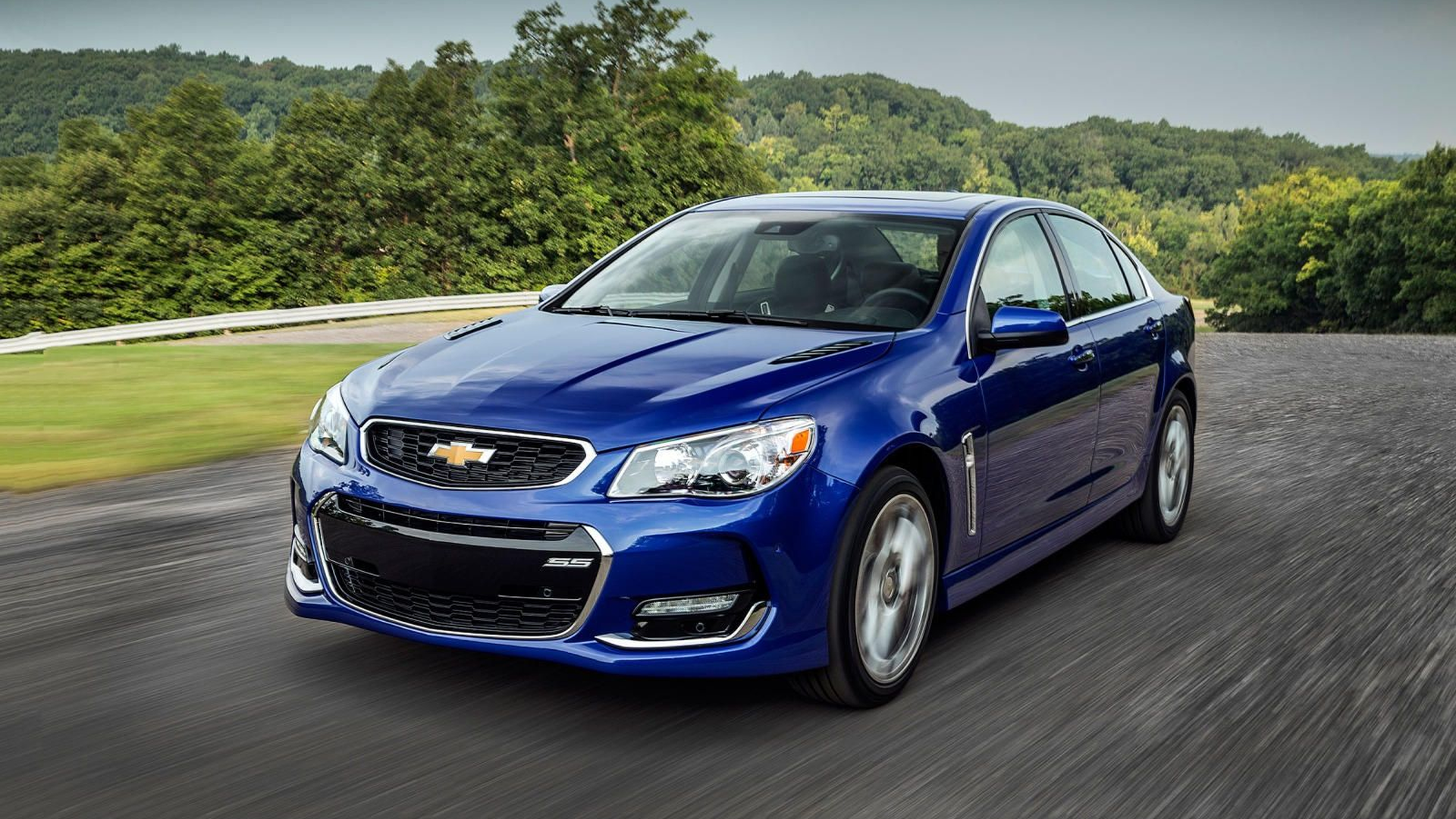
The Stealth Performance Phenomenon
General Motors executed a masterful misdirection campaign with the 2014 Chevrolet SS. Enthusiasts immediately recognized the true identity of this heavily disguised machine. The vehicle is the spiritual successor to the legendary Pontiac G8 GXP and a direct left-hand-drive import of the ferocious Australian Holden VF Commodore. Instead of flashing aggressive aerodynamics, carbon fiber canards, and massive splitters, Chevrolet engineers dressed a hardcore track weapon in a subtle, sophisticated business suit. The resulting four-door platform delivers violent acceleration and razor-sharp apex carving while completely flying under the radar of highway patrol units.
Forged in the Australian Outback: The Zeta Platform
Beneath the understated exterior lies the globally respected GM Zeta platform. Holden developed this highly rigid, rear-wheel-drive architecture specifically to handle the grueling conditions of the Australian Outback and the punishing curbs of the Mount Panorama Circuit. Engineers utilized ultra-high-strength steel extensively throughout the chassis, creating a remarkably stiff foundation. This extreme torsional rigidity prevents chassis flex during high-G lateral cornering, allowing the suspension components to maintain perfect alignment geometry under immense physical stress.
The Zeta architecture proved so mechanically robust that General Motors adapted it for the fifth-generation Camaro, the Caprice Police Patrol Vehicle, and eventually, the ultimate four-door expression of the platform, the Chevrolet SS.
Powertrain: The Naturally Aspirated LS3 V8
Pop the heavy aluminum hood. You immediately lock eyes with the legendary 6.2-liter LS3 V8 engine. Chevrolet blatantly ignored the modern industry trend of small-displacement forced-induction engines, choosing instead to equip the SS with massive, naturally aspirated power. This configuration guarantees instant, uncompromising throttle response. Press the heavy accelerator pedal to the floorboard. The engine immediately dumps massive volumes of high-octane fuel and oxygen into the 6,162 cm3 displacement block.
Internal Engineering and Heavy-Duty Metallurgy
The LS3 utilizes a deep-skirt aluminum block cast from A356-T6 alloy, heavily reinforced with spun-cast iron cylinder liners. High-flow rectangular-port aluminum cylinder heads sit atop the block, facilitating massive airflow at high engine speeds. Engineers fitted hollow-stem intake valves to drastically reduce valvetrain mass. This specific lightweight configuration allows the pushrod engine to rev freely toward its 6,600 RPM redline without suffering from fatal valve float. The aluminum piston rings and skirts feature specialized low-friction polymer coatings, minimizing parasitic power loss and lowering the overall internal thermal load. Keeping this massive powerplant cool requires a precise mixture of glycol and H2O circulating through a heavy-duty aluminum radiator.
- Engine Architecture
- 6.2-liter (376 cubic inch) LS3 naturally aspirated pushrod V8
- Bore and Stroke
- 103.25 mm x 92.00 mm
- Compression Ratio
- 10.7:1
- Maximum Output
- 415 HP @ 5,900 RPM
- Peak Torque
- 415 lb-ft @ 4,600 RPM
- Firing Order
- 1-8-7-2-6-5-4-3
Exhaust Acoustics and Bimodal Tuning
Beginning in the 2015 production year, Chevrolet equipped the SS with a highly advanced dual-mode bimodal exhaust system. At low engine loads and idle speeds, electronic butterfly valves route the exhaust gasses through highly restrictive muffler baffles. This keeps the cabin quiet and completely neutralizes irritating droning frequencies on the highway. Cross the 3,000 RPM threshold or aggressively select "Track" mode. The ECU triggers electronic actuators that instantly slam the exhaust valves open. The system completely bypasses the mufflers, violently expelling hot CO2 and unburned hydrocarbons. The car produces a raw, guttural roar that perfectly echoes classic 1960s drag strip culture.
Transmission Options: Engaging the Drivetrain
Power transfer completely dictates the personality of any performance vehicle. Chevrolet originally offered the SS exclusively with the 6L80 six-speed automatic transmission. This heavy-duty gearbox utilizes advanced clutch-to-clutch operation, executing fast, firm shifts under wide-open throttle while remaining buttery smooth during low-speed urban traffic. Magnesium paddle shifters mounted directly behind the steering wheel grant the driver full manual override capabilities, forcing the transmission to hold gears up to the rev limiter without premature upshifting.
The Tremec TR6060 Manual Experience
Chevrolet shocked the entire automotive community in 2015 by adding a genuine three-pedal option. They sourced the bomb-proof Tremec TR6060 six-speed manual transmission. This exact gearbox handles power delivery for the supercharged Camaro ZL1 and the Dodge Viper. It features massive forged gears, heavy-duty carbon synchronizers, and a stout 26-spline input shaft designed to easily withstand the violent torque spikes of the LS3. The shifter throws feel incredibly mechanical, gated, and precise. Dumping the heavy clutch pedal delivers an immediate, visceral shockwave directly through the carbon-fiber composite driveshaft and into the rear tires.
- Manual Gear Ratios (TR6060)
- 1st: 3.01, 2nd: 2.07, 3rd: 1.43, 4th: 1.00, 5th: 0.84, 6th: 0.57
- Manual Final Drive
- 3.70:1 Limited-Slip Differential
- Automatic Final Drive
- 3.27:1 Limited-Slip Differential
Chassis Dynamics: Magnetic Ride Control
Raw V8 power means absolutely nothing if the chassis cannot accurately deploy it to the pavement. The Chevrolet SS relies entirely on the legendary Magnetic Ride Control (MRC) suspension system. This aerospace-grade technology completely discards traditional hydraulic valving. Instead, the shock absorbers contain a highly complex magneto-rheological fluid.
Magnetic Ride Control fluids contain microscopic iron particles permanently suspended in a synthetic hydrocarbon base. When the internal damper coil receives an electrical charge, the iron particles instantly align, increasing fluid viscosity and stiffening the shock absorber in mere milliseconds.
Real-Time Suspension Adjustment
Sophisticated chassis sensors continuously monitor wheel travel, steering angle, and vehicle speed up to 1,000 times per single second. As you violently throw the heavy sedan into a tight hairpin corner, the outer shock absorbers instantly harden to eliminate excessive body roll. Simultaneously, the inner shocks soften slightly to maintain a perfect, uninterrupted tire contact patch with the asphalt. This constant, invisible micro-calibration allows the heavy 3,975-pound sedan to violently change direction with the shocking agility of a lightweight two-door sports coupe.
Stopping Power: Brembo Integration
Hauling a two-ton V8 sedan down from triple-digit track speeds requires monumental thermal capacity. Chevrolet partnered directly with Italian braking giant Brembo to develop a specialized stopping package for the Zeta platform. Early 2014 models featured four-piston front calipers, but the engineering team quickly upgraded the entire system for subsequent model years.
Thermal Management and Friction Materials
Later model years proudly display massive silver Brembo calipers clamping down on all four corners of the vehicle. The front brakes utilize massive 14-inch two-piece ventilated rotors. The aggressive OEM brake pads utilize a proprietary ceramic-metallic compound heavily infused with Al2O3 (aluminum oxide). This specific chemical addition drastically raises the temperature threshold, completely preventing dangerous brake fade during prolonged track sessions. Stomp the brake pedal in an emergency. The bite engages instantly, transferring massive negative G-forces directly to the driver's chest while the advanced ABS rapidly pulses the calipers to prevent wheel lockup.
- Front Brakes
- Brembo 4-piston fixed aluminum calipers, 355mm (14.0-inch) ventilated rotors
- Rear Brakes
- Brembo 4-piston fixed aluminum calipers, 360mm (14.2-inch) ventilated rotors
- Suspension Front
- MacPherson strut with multi-link, direct-acting solid stabilizer bar
- Suspension Rear
- Independent multi-link with coil-over shock absorbers and decoupled stabilizer bar
- Steering Mechanics
- Electric power-assisted rack-and-pinion, highly variable ratio based on vehicle velocity
Exterior Styling: Purposeful Stealth and Aerodynamics
The visual profile of the Chevrolet SS purposely avoids shouting about its extreme performance capabilities. The sleek front fascia features a wide lower grille opening designed strictly to feed cold ambient air directly to the massive primary radiator and the auxiliary engine oil coolers. Small vertical functional air curtains push turbulent air completely away from the front wheel wells. This targeted aerodynamic management drastically reduces parasitic drag and vastly increases high-speed stability on the interstate.
Forged Wheels and Staggered Rubber
The SS rides aggressively on gorgeous 19-inch forged aluminum wheels. The forging process intensely compresses the aluminum grain structure, yielding a wheel that is simultaneously incredibly strong and remarkably light. These wheels drastically reduce unsprung mass, allowing the magnetic suspension to react significantly faster to severe road imperfections. Chevrolet correctly staggered the wheel and tire sizes. The front axle runs a 245-section tire to maintain razor-sharp turn-in response. The rear axle utilizes a significantly wider 275-section tire, providing the massive mechanical grip required to translate 415 lb-ft of torque into rapid forward momentum rather than useless tire smoke.
Interior Configuration: The Driver's Command Center
Opening the heavy steel doors reveals a cavernous cabin heavily biased toward the enthusiastic driver. General Motors utilized premium, soft-touch materials extensively throughout the interior. Thick perforated leather wraps the flat-bottomed sport steering wheel, providing excellent tactile grip during aggressive maneuvering. Soft-touch Alcantara micro-suede spans the dashboard, completely eliminating harsh sunlight glare from the heavily raked windshield.
Ergonomics and Telemetry
The highly bolstered front sport seats aggressively hug your ribcage, locking you firmly in place during extreme lateral cornering. A full-color HUD projects critical telemetry directly onto the windshield glass. The driver instantly views engine speed, precise vehicle velocity, navigation prompts, and lateral G-forces without ever pulling their eyes away from the apex of the corner. The center stack houses a responsive touchscreen infotainment system, seamlessly integrating high-fidelity Bose audio with deep vehicle diagnostic menus.
Track Validation and Performance Metrics
Chevrolet did not just build a comfortable highway cruiser. They rigorously validated the SS on the most demanding race tracks on the planet, including grueling endurance testing at the legendary Nürburgring Nordschleife in Germany. The heavy integration of factory performance cooling ensures the engine oil, transmission fluid, and differential gear oil remain strictly within safe operating temperature parameters, even after continuous hot laps under extreme summer track conditions.
- 0-60 MPH Acceleration
- 4.5 seconds (Manual transmission configuration)
- Quarter Mile Elapsed Time
- 13.0 seconds @ 111 MPH
- Maximum Speed
- 160 MPH (Electronically limited via factory software)
- Lateral Grip
- 0.96 g recorded on a 300-foot skidpad
- Curb Weight
- 3,975 lbs
The Perfect Weight Distribution
Engineers obsessed over achieving absolute chassis balance. They pushed the heavy iron-sleeved LS3 engine as far back against the structural firewall as physically possible. They proactively relocated the massive lead-acid battery completely out of the engine bay, securing it deep inside the trunk. This meticulous mechanical packaging results in a near-perfect 50/50 front-to-rear weight distribution. You feel this profound balance the exact moment you attack a tight autocross slalom. The heavy car rotates naturally around its center axis, completely devoid of the plow-like understeer that typically plagues large American V8 sedans.
The Historical Weight of the SS Badge
Affixing the standalone "SS" (Super Sport) badge to a vehicle carries massive historical weight within deep American car culture. Chevrolet historically reserved this revered moniker exclusively for high-performance variants of existing base models like the Chevelle, Camaro, and Impala. Utilizing "SS" as the actual, standalone model name signaled General Motors' absolute, unwavering confidence in the Zeta platform. They recognized the car required absolutely no separate V6 base model to financially justify its existence. It existed purely as an uncompromising flagship performance machine.
The End of the Australian Manufacturing Era
The Chevrolet SS proudly represents the final, glorious chapter of a bygone automotive era. In late 2017, General Motors permanently shut down the Holden manufacturing facilities in Elizabeth, South Australia. The end of Australian rear-wheel-drive vehicle manufacturing immediately and permanently halted production of the SS. Chevrolet imported just over 12,000 total units into the United States during the brief, highly celebrated four-year production run.
The sudden cessation of Holden production instantly transformed the Chevrolet SS from an overlooked dealership secret into a rapidly appreciating modern classic. Clean, low-mileage examples equipped with the Tremec manual transmission immediately commanded heavy premiums on the secondary enthusiast market.
Preserving the Naturally Aspirated V8 Sedan
Modern luxury performance vehicles heavily rely on incredibly complex small-displacement turbocharged engines and extremely heavy hybrid lithium-ion battery packs. The Chevrolet SS stands completely opposed to this modern design philosophy. It delivers massive, linear, highly predictable power delivery without the frustrating spool lag completely associated with exhaust-driven turbochargers. The heavy mechanical steering rack provides constant, unfiltered, high-fidelity feedback regarding the exact texture and grip levels of the pavement below.
The Ultimate Sleeper Legacy
Park the Chevrolet SS next to a mundane corporate fleet vehicle, and most pedestrians will barely glance in its direction. Fire the massive LS3 engine, engage the heavy Tremec clutch, and deploy 415 horsepower straight through the limited-slip differential. The disguise instantly and violently drops. The Chevrolet SS remains unequivocally one of the greatest, most capable stealth performance vehicles ever constructed. It perfectly blends the raw, unapologetic aggression of the American V8 with the highly refined chassis dynamics typically required to compete with high-end European super-sedans. The sheer rarity, deep mechanical purity, and undeniable driving engagement ensure the SS will absolutely dominate car show conversations, track days, and automotive historical archives for decades to come.