
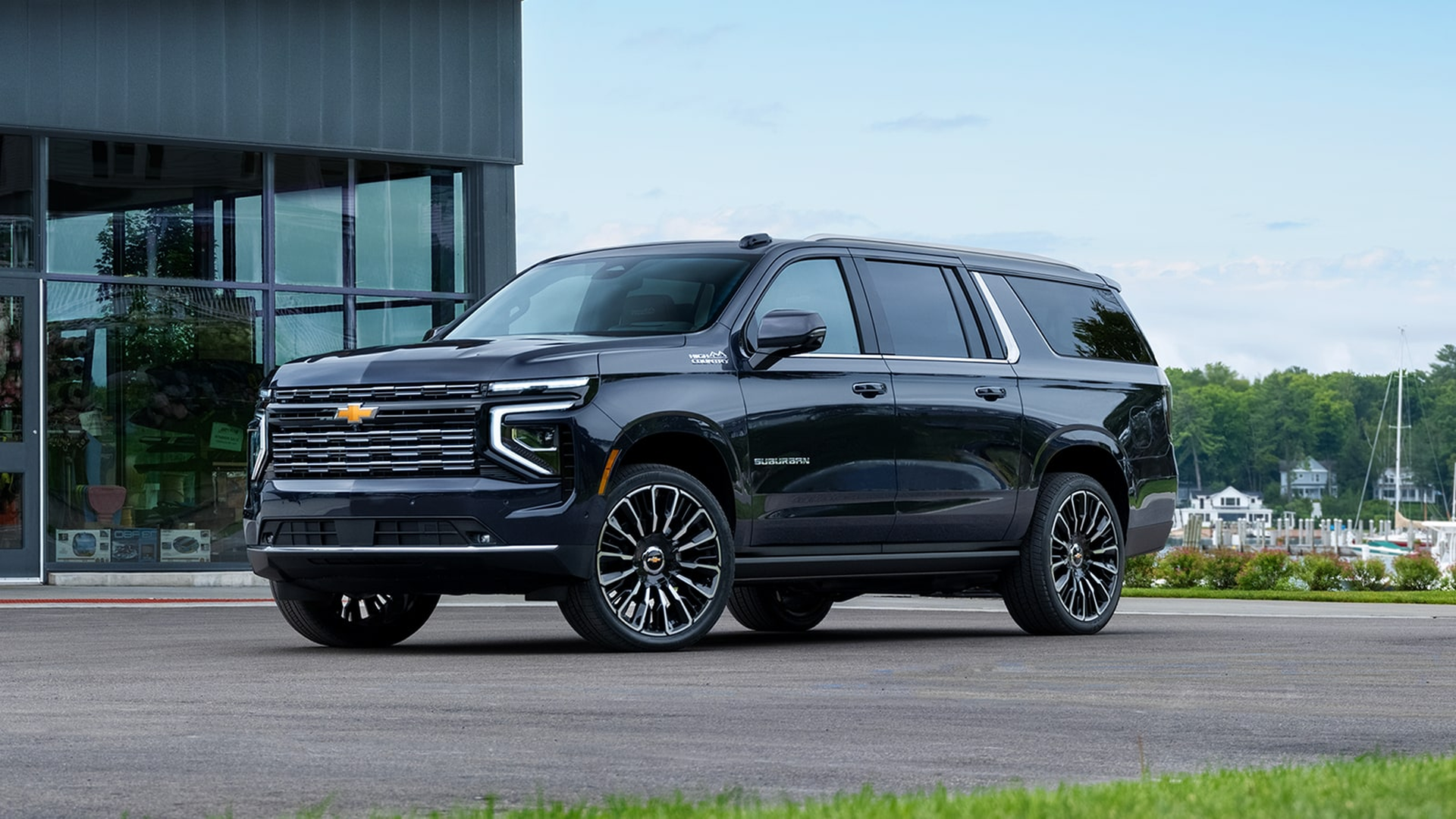
The Iron Backbone of American Transportation
The story of the American road isn't complete without the Chevrolet Suburban. Since its debut in 1935, this vehicle has occupied a unique space in the automotive landscape, serving as the bridge between the work truck and the family hauler. It is the vehicle that taught America what a 'Suburban Utility Vehicle' could be. While other nameplates have come and gone, fading into the pages of history books, the Suburban has endured for nearly nine decades. It has survived wars, fuel crises, and shifting consumer tastes, emerging each time as a refined, yet undeniably massive, testament to utility. The Suburban formula is simple, yet effective: take a pickup truck chassis, cover the bed to create an enclosed cargo area, and add three rows of seats. It sounds rudimentary, but the execution has evolved into high art. Today, the Suburban represents the pinnacle of the full-size SUV segment, offering passenger space that rivals a limousine and towing capacity that rivals a heavy-duty truck. It is the choice of the Secret Service, the sheriff's department, and the suburban family that simply refuses to leave anything-or anyone-behind.The Origins: The Suburban Carryall (1935-1966)
The lineage begins in the depths of the Great Depression. In 1935, Chevrolet introduced the 'Suburban Carryall,' a vehicle designed to bridge the gap between a passenger car and a truck. Built on a commercial chassis, it featured an all-steel body at a time when many utility vehicles still used canvas sides or wood framing. This construction provided durability and security that woodies couldn't match. It was designed to carry eight people or a significant amount of cargo, appealing to businesses, hotels, and large families. For the first three decades, the Suburban maintained a utilitarian aesthetic. It was essentially a panel truck with windows and seats. The post-war years saw updates to the 'Advance Design' and 'Task Force' series, introducing improvements like the wraparound windshield in 1955. These early models are prized by collectors today for their Art Deco styling and honest mechanicals. They were the workhorses that built modern America, shuttling workers to job sites and tourists to national parks.The Golden Era: The 7th and 8th Generations (1973-1991)
The 1973 model year marked a turning point. With the introduction of the 'Rounded Line' generation, the Suburban adopted a look that would define it for nearly two decades. This iteration, often affectionately called the 'Square Body,' featured a wider stance and a more comfortable interior. Crucially, this generation introduced the 'Suburban 6' with three doors on the driver side, a configuration that remained unique to the model for years. It was a stroke of genius, making access to the rear seats significantly easier. This era solidified the Suburban's reputation for toughness. The underpinnings were pure Chevy truck: solid axles, leaf springs, and small-block V8 power. The 350 cubic-inch engine became the standard bearer, offering a blend of torque and reliability that kept these trucks on the road long after their competitors had been scrapped. By the 1980s, the Suburban had become a status symbol in its own right, frequently customized with lift kits and oversized tires for the emerging off-road culture.The 1973 Suburban was one of the first SUVs to offer four-door convenience on a massive scale, anticipating the family-focused shift of the SUV market by over a decade.
The Modernization: GMT400 and GMT800 (1992-2006)
The 1990s brought the Suburban into the modern era. The GMT400 platform introduced in 1992 brought independent front suspension, a massive improvement in ride quality and handling. The exterior lines became more aerodynamic, shedding the purely industrial look of the past. Under the hood, the throttle-body injected engines gave way to the Vortec series, significantly boosting horsepower. The Vortec 5700 (5.7L) became the engine of choice, offering smooth power delivery. In 2000, the GMT800 platform arrived, and with it, a dramatic increase in refinement. The Suburban became quieter, more comfortable, and safer. OnStar connectivity was introduced, and luxury features like heated seats and Bose audio systems became available. This was the era where the Suburban truly transitioned from a truck that carried people to a luxury vehicle that could tow a boat. The 8.1L 'Big Block' V8 was offered for those needing maximum towing capacity, a rare and sought-after powerplant today.The Independent Rear Suspension Revolution (2021-Present)
For the 2021 model year, Chevrolet launched the 12th generation Suburban on the T1 platform. This was arguably the most significant engineering leap in the vehicle's history. The solid rear axle, a fixture since 1935, was replaced by an independent rear suspension (IRS). Purists might have scoffed, but the results were undeniable. The IRS lowered the floor in the cargo area, increasing interior volume. It also improved the ride quality, eliminating the 'skateboard' effect of the old solid axle over bumps. This generation is defined by its presence. It is enormous-over 18 feet long. Yet, it is easier to drive than ever thanks to technologies like Magnetic Ride Control and a rear camera mirror. The interior moved upmarket significantly, especially in the High Country trim, which features leather that wouldn't look out of place in a private jet.Engine Options: Gas and Diesel
The modern powertrain lineup offers something for everyone. The standard engine remains a 5.3L V8, but the 6.2L V8 is available for those wanting 420 horsepower. The game-changer, however, is the 3.0L Duramax turbo-diesel inline-six. This engine offers a stunning driving range-often exceeding 700 miles on a single tank-and prodigious torque, making it the ideal choice for long-distance towers.- Current 6.2L V8 Specs (L87)
- Horsepower: 420 hp @ 5600 RPM
- Torque: 460 lb-ft @ 4100 RPM
- Configuration: OHV V8 with Direct Injection
- Transmission: 10-Speed Automatic
Interior Volume: The Cargo King
The primary reason to buy a Suburban over its sibling, the Tahoe, is the cargo space. The extra 15 inches of wheelbase translates to a cavernous cargo area behind the third row. In the Tahoe, you are stacking suitcases; in the Suburban, you are laying them flat. With 144.7 cubic feet of maximum cargo space, it out-hauls almost everything on the road short of a panel van. The third row is not an occasional bench; it is a legitimate seating area for adults. The power-folding seats, now standard on many trims, allow you to transform the vehicle from an eight-passenger hauler to a massive cargo ship with the touch of a button. The High Country trim adds a 'Premium' second row with a center console that can be removed, offering walk-through access to the third row-a feature that echoes the 1970s styling in a thoroughly modern way.Driving Dynamics: Taming the Beast
Driving a Suburban is an exercise in spatial awareness. It is wide, long, and heavy. However, Chevrolet has done an admirable job of masking the mass. The electric power steering is well-weighted, and the 10-speed transmission is smooth and responsive. The sheer momentum of the vehicle is palpable, inspiring confidence on the highway where it tracks straight and true. It is a cross-country cruiser par excellence. The suspension system, particularly the Magnetic Ride Control, reads the road every millisecond, adjusting the dampers to smooth out imperfections. It effectively neutralizes the truck-like jitters that plagued older generations. The braking system has been upgraded to handle the substantial weight, providing confident stopping power even when fully loaded.Trim Levels and The High Country Experience
The hierarchy of the Suburban lineup mirrors the American social ladder. The base LS serves the fleet market-police departments and construction firms. The LT and RST trims target the average family, offering a balance of features and price. The Premier adds the tech and safety features like the Surround Vision camera system. But the High Country is the flagship. The High Country trim is where the Suburban transcends its truck roots. With unique leather, real wood trim, and the standard 6.2L engine, it competes with luxury SUVs from Land Rover and Cadillac. It features an advanced suspension setup and the best audio systems available. It is a vehicle for those who want to project success while retaining the ability to hook up a trailer and disappear into the mountains.The Z71: The Off-Road Titan
It seems counterintuitive to take an 18-foot long SUV off-road, but the Z71 package makes it possible. It includes a two-speed transfer case, all-terrain tires, skid plates, and a specially tuned suspension. The air suspension can raise the vehicle for increased ground clearance. While it won't fit down narrow Jeep trails, it is more than capable of handling the overland tracks of the American West, proving that size doesn't always limit adventure.Safety and Driver Assistance
Safety in a vehicle this size is two-fold: protecting the occupants and avoiding collisions. The sheer mass of the Suburban provides a degree of passive safety that smaller cars cannot match. Active safety features are comprehensive. Automatic Emergency Braking, Front Pedestrian Braking, and Lane Keep Assist are standard. The 'Rear Seat Reminder' is a crucial feature for parents, ensuring no child or pet is left in the cavernous back seats. The 'Teen Driver' system is another standout feature. It allows parents to set limits on speed and audio volume for secondary drivers. It also generates a report card, encouraging safe driving habits. Given that the Suburban is often the first car for a teenager in a large family, this system is a vital selling point.The Cultural Impact
The Suburban has appeared in over 1,750 films and television shows, making it the most featured vehicle in Hollywood history. It is the ubiquitous black SUV that pulls up to a crime scene or chases a protagonist down a highway. It is the preferred transport of the President of the United States, customized into 'The Beast' for official duties, though the standard models are often used in motorcades. This cultural ubiquity has cemented the Suburban as an icon of authority and utility. It is the vehicle America relies on. From the battlefields of the Middle East, where militarized versions roam, to the suburbs of Texas, where it hauls Little League teams, the Suburban is woven into the fabric of society.Comparing the Suburban to Competitors
The segment is crowded, but the Suburban remains the benchmark. The Ford Expedition Max offers a smaller displacement V6 with high torque output, but it lacks the V8 soundtrack and towing stability of the Chevy. The Toyota Sequoia has made strides, but its interior packaging is less efficient. The Jeep Wagoneer offers a more premium interior feel, but it struggles to match the Suburban's reliability reputation. The Suburban wins because it understands its mission. It doesn't try to be a sports car. It doesn't try to be a rock crawler. It focuses on hauling people and things over long distances in comfort and style. That single-minded focus is why it remains the king of the hill.Technical Specifications Summary
For those who live by the numbers, the T1 chassis provides a rigid foundation. The wheelbase stretches to 134.1 inches, a massive footprint that contributes to the stable ride.- Dimensions (2024 Model)
- Wheelbase: 134.1 inches
- Overall Length: 225.7 inches
- Width: 81.1 inches
- Height: 75.7 inches
- Maximum Cargo Volume: 144.7 cu ft