
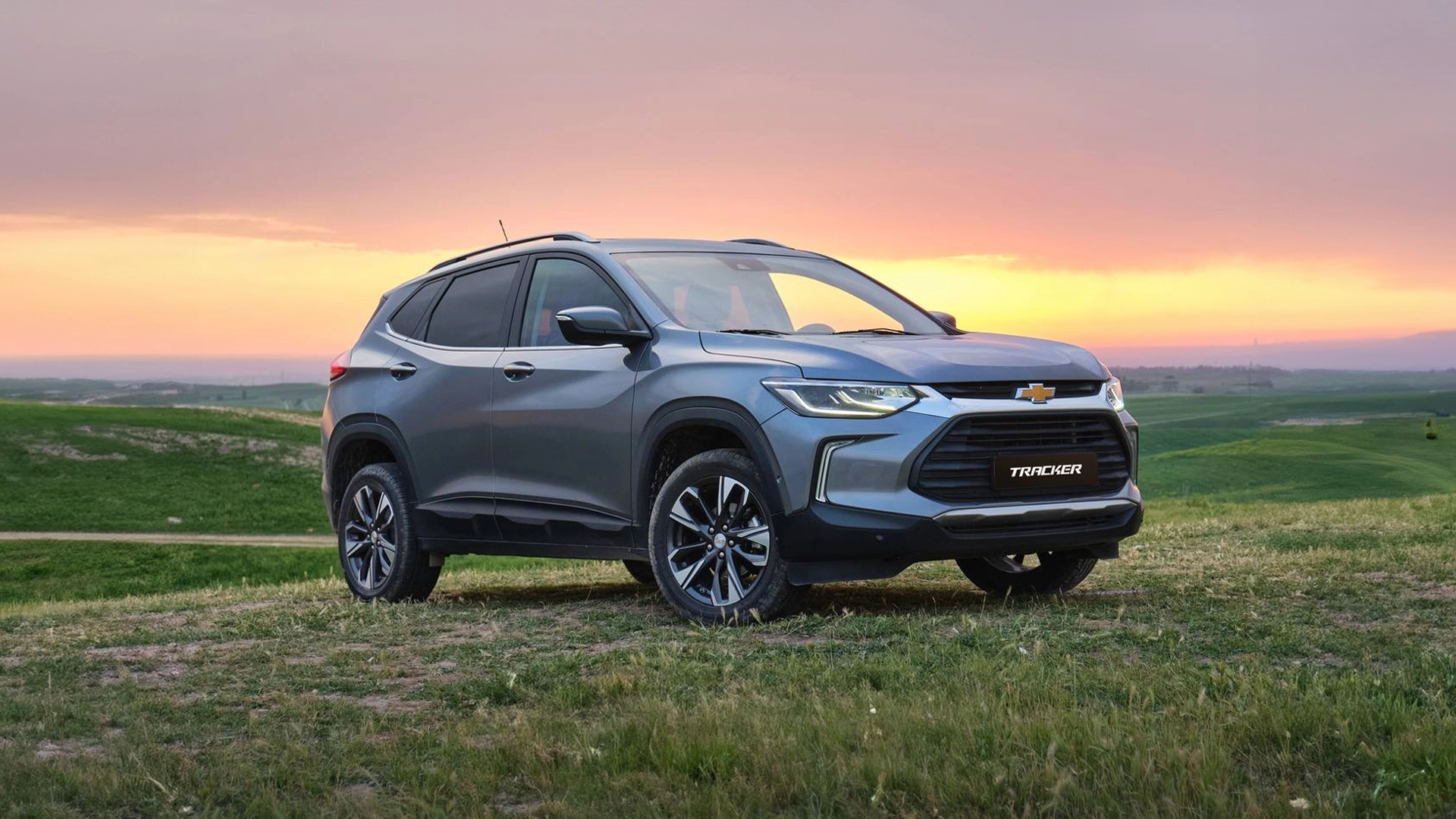
The Little SUV That Could
The automotive landscape of the late 1980s was undergoing a quiet revolution. Consumers were beginning to drift away from the heavy, fuel-thirsty trucks of the previous decade, looking for something that offered utility without the penalty of poor mileage. Enter the Geo Tracker. While the branding would eventually shift to Chevrolet, the vehicle itself became an icon of the 1990s-a pint-sized, body-on-frame 4x4 that was as comfortable on the beach as it was in a grocery store parking lot. It was a vehicle that defined fun for a generation, offering an open-air experience and genuine off-road capability at a price point almost anyone could afford. The Tracker nameplate has since evolved. While North America moved on to the Equinox and Trax, the Chevrolet Tracker found a second life in emerging markets. Today, it is a thoroughly modern subcompact crossover, but its DNA is traced back to that scrappy little utility vehicle that proved you didn't need a V8 to have an adventure. This duality makes the Tracker one of the most interesting studies in Chevrolet's global strategy.The Geo Era: A Partnership Born in Japan (1989-1997)
The story begins not with a traditional American design, but with a partnership. General Motors needed a competitor to the wildly successful Suzuki Samurai and the Jeep Wrangler. They found the answer through their alliance with Suzuki. The vehicle was essentially a rebadged Suzuki Sidekick (Vitara in other markets), sold through the Geo dealer channel-a subdivision of Chevrolet created to sell imported cars. Launched in 1989, the Geo Tracker hit the market with a distinct personality. It was boxy, utilitarian, and unapologetically simple. The early models were raw by modern standards. The interior was plastic-heavy and sparse, the suspension was stiff, and the engine was a modest 1.6-liter four-cylinder. But what it lacked in refinement, it made up for in character. It was a legitimate SUV in miniature. One of the defining features of the first generation was the convertible option. The soft top could be folded back or completely removed, turning the Tracker into a pseudo-dune buggy. There was also a hardtop two-door model and, eventually, a four-door wagon that appealed to small families. The detachable roof panels on some models gave it a versatility that modern crossovers simply cannot replicate. It tapped into the soul of the 4x4 culture-open air, wind in your hair, and mud on the tires.The first-generation Tracker utilized a fully boxed steel ladder frame, a feature that distinguished it from modern unibody crossovers and provided the rigidity needed for serious off-road articulation.
Engineering and Off-Road Capability
Unlike the modern crossovers that rely on electronic stability control to traverse dirt roads, the classic Tracker relied on mechanical simplicity. It featured front and rear solid axles on leaf springs in the rear and coil springs up front (later models moved to a more sophisticated independent front suspension). The part-time four-wheel-drive system was operated by a manual lever on the floor, allowing the driver to lock the center differential and engage 4-Low for steep descents. This mechanical purity is why the Tracker became a darling of the off-road community. It was lightweight, meaning it didn't sink into mud or sand as easily as a heavy truck. The narrow body allowed it to squeeze through trails that would stop a full-size SUV. It was not uncommon to see heavily modified Trackers with lifted suspensions and aggressive tires tackling rock crawling courses, proving that size isn't everything.The Chevrolet Badge: Mainstream Acceptance (1998-2004)
In 1998, General Motors phased out the Geo brand. The Tracker, along with the Metro and Prizm, was absorbed into the Chevrolet lineup. The nameplate officially became the Chevrolet Tracker for the 1998 model year in the United States (though it had been sold as the Chevy Tracker in Canada for years). This coincided with a major redesign of the underlying Suzuki platform. The second generation of the Tracker grew up. It became slightly larger, slightly more refined, and significantly safer. The boxy lines were softened slightly for aerodynamics, and the interior received an upgrade in materials and design. Crucially, the engine options improved. The base engine remained the 1.6L, but a 2.0-liter four-cylinder became an option, offering a much-needed bump in horsepower for highway merging. A V6 engine, a 2.5L unit, was even offered for a short time, giving the little truck surprising passing power. This era cemented the Tracker's reputation as a reliable, economical choice. It offered the utility of an SUV without the fuel penalty. It sat in a unique spot in the market-smaller than a Ford Explorer but larger than a sedan. It bridged the gap for consumers who weren't ready to commit to a massive vehicle but needed more space than a compact car could provide.The American Hiatus and Global Evolution
Production of the North American Tracker ceased in 2004. The market was shifting. The demand for rugged, truck-based small SUVs was waning in favor of car-based crossovers like the Chevrolet Equinox. The Tracker nameplate disappeared from US roads, but it was far from dead. In markets like Latin America and Asia, the Tracker (often still based on the Suzuki Grand Vitara architecture) continued to be a best-seller. The vehicle adapted to its environment. In Brazil and Mexico, it became synonymous with durability and status. It was a common sight in both the favelas and the affluent suburbs, a testament to its broad appeal. While the US forgot about the Tracker, the rest of the world kept the flame alive.The Modern Rebirth: A New Identity (2020-Present)
In 2020, Chevrolet made a bold move. They resurrected the Tracker nameplate for an entirely new vehicle. But this was not a return to the body-on-frame off-roader of the 90s. The new Chevrolet Tracker is a subcompact crossover built on the GEM (Global Emerging Markets) platform. It is unibody construction, front-wheel-drive based, and designed for the urban jungle rather than the Rubicon Trail. The design language is thoroughly modern. It adopts Chevrolet's dual-port grille and aggressive, angular headlights. The stance is wide and planted. It features a high beltline and prominent wheel arches that give it a muscular appearance. While it lacks the removable roof and solid axles of its ancestor, it compensates with technology. The modern Tracker offers Turbo charged engines, a 6-speed automatic transmission, and a suite of active safety features like LKA and FCA. This version of the Tracker is currently sold in China, Brazil, Mexico, and other emerging markets. It slots in below the Equinox and fills the void left by the discontinuation of the previous generation crossovers. It is a clear signal that Chevrolet views the Tracker not as a retro relic, but as a forward-looking brand for a global audience.Driving Dynamics: Comparing Eras
Experiencing a classic Tracker versus the modern iteration is a study in contrast. The classic Tracker feels mechanical. You feel every bump in the road, the steering is heavy and communicative, and the engine noise is a constant companion. It requires driver engagement. Driving a 1990s Tracker on the highway can be a white-knuckle experience on a windy day; the short wheelbase and light rear end make it susceptible to crosswinds. The modern Tracker, by comparison, is isolated and refined. The suspension soaks up bumps with the compliance expected of a modern passenger car. The cabin is quiet, thanks to extensive sound deadening. The turbocharged engine provides torque low in the rev range, making city driving snappy and responsive. It is a vehicle designed for comfort and ease of use. It has lost the ability to climb boulders, but it has gained the ability to cruise comfortably at 80 MPH while carrying a family of five in climate-controlled comfort.Technical Specifications and Engine Data
The evolution of the powertrain tells the story of the industry. The original 1.6L 8-valve engine produced a modest 80 horsepower. It was not fast, but it was incredibly durable. The introduction of the 16-valve head bumped power to 95 horsepower, which was a significant improvement for a 2,500-pound vehicle. The modern 1.2L Turbo engine, found in the current global Tracker, produces upwards of 130 horsepower, outmuscling the old 2.0L naturally aspirated engines while achieving far better fuel economy.- 1998 Chevrolet Tracker Specs (2.0L Model)
- Engine: 2.0L DOHC 16-Valve I4
- Horsepower: 127 hp @ 6000 RPM
- Torque: 122 lb-ft @ 4000 RPM
- Transmission: 5-Speed Manual or 4-Speed Automatic
- Drivetrain: RWD or Part-Time 4WD
- 2023 Chevrolet Tracker Specs (Global Model - 1.2T)
- Engine: 1.2L Turbocharged I4
- Horsepower: 133 hp
- Torque: 155 lb-ft
- Transmission: 6-Speed Automatic
- Drivetrain: FWD