
The GMT360 Era: Dominating the Mid-Size Market
General Motors launched the Chevrolet Trailblazer for the 2002 model year, completely severing ties with the aging S-10 based Blazer architecture. They engineered the entirely new GMT360 platform from a blank sheet of paper. This highly rigid ladder-frame architecture utilized advanced hydroformed steel side rails. Engineers injected high-pressure hydraulic fluid directly into raw steel tubing, expanding the metal outward into precision dies. This specific manufacturing process created continuous frame rails devoid of overlapping welded seams, drastically increasing total torsional rigidity while simultaneously stripping massive static weight from the heavy chassis.
Heavy body-on-frame SUVs historically suffered from terrible on-road driving dynamics and dangerous body roll. Chevrolet engineers attacked this physical limitation by deploying an independent short/long arm (SLA) front suspension. The rear architecture utilized a highly complex five-link solid axle design. A thick forged steel panhard rod laterally secured the heavy rear axle housing directly to the frame, completely preventing dangerous side-to-side axle deflection during high-speed cornering maneuvers. Specialized Bilstein gas-charged shock absorbers instantly reacted to severe pavement imperfections, keeping the heavy P-metric tires planted firmly against the asphalt.
The Atlas LL8 Engine: Resurrecting the Inline-Six
The true mechanical marvel of the first-generation vehicle sat squarely beneath its hood. Chevrolet boldly rejected traditional pushrod V6 engines and resurrected the classic inline-six configuration. The 4.2-liter LL8 "Atlas" engine represents an absolute masterpiece of modern internal combustion engineering. It utilizes a massive cast-aluminum block with heavy-duty cast-iron cylinder liners. Dual overhead camshafts command four valves per cylinder. Variable exhaust valve timing allowed the ECU to manipulate camshaft phasing on the fly, delivering a shockingly flat torque curve typically reserved for large-displacement V8 engines.
The inline-six architecture inherently possesses perfect primary and secondary mechanical balance. Unlike a conventional V6, the Atlas 4.2L requires no heavy counter-rotating balance shafts to neutralize violent internal vibrations, resulting in a buttery smooth power delivery straight to the 6,300 RPM redline.
The 4.2-liter engine block relies on a highly sophisticated lost-foam casting process. This specific metallurgical technique allows engineers to create complex internal water jackets that rapidly pull massive thermal loads completely away from the combustion chambers. To maintain a low hood line and improve the vehicle's aerodynamic profile, engineers forced the front axle half-shaft directly through a specialized tunnel cast right into the heavy aluminum oil pan. This genius packaging decision drops the entire center of gravity by several critical inches. The intake manifold utilizes composite plastics rather than heavy cast aluminum. This smooth internal composite structure prevents chaotic air turbulence, delivering a highly uniform oxygen charge directly to the intake valves.
- First-Generation Powertrain (GMT360)
- 4.2-liter (256 cubic inch) LL8 Atlas naturally aspirated inline-six
- Maximum Output
- 273 HP @ 6,000 RPM (Later revised to 291 HP in 2006 models)
- Peak Torque
- 277 lb-ft @ 3,600 RPM
- Transmission
- Hydra-Matic 4L60-E 4-speed automatic
- Drivetrain
- Rear-wheel drive standard, Autotrac selectable four-wheel drive available
The Trailblazer EXT and V8 Integration
Recognizing the immense American demand for massive towing capacity and third-row passenger volume, Chevrolet stretched the GMT360 architecture to create the Trailblazer EXT. Engineers grafted an additional 16 inches of wheelbase directly into the hydroformed frame, expanding total passenger capacity to seven adults. The lengthened roofline and expanded internal volume demanded a dedicated rear HVAC system to maintain proper cabin climate control.
Hauling this massive additional structural weight required significant mechanical thrust. Chevrolet introduced the 5.3-liter LM4 V8 as an available option. This highly durable aluminum-block V8 featured advanced Displacement on Demand technology. During light highway cruising, highly specialized hydraulic valve lifters instantly deactivated four internal cylinders, dramatically reducing fuel consumption and raw CO2 emissions without sacrificing heavy passing power.
The SS Variant: A 395-Horsepower Street Brawler
In 2006, the GM Performance Division injected pure violence into the mid-size SUV segment. The Trailblazer SS (Super Sport) transformed a pragmatic family hauler into a hardcore street brawler. Engineers violently extracted the standard powertrains and dropped in the legendary 6.0-liter LS2 V8 sourced directly from the C6 Corvette. This massive 5,967 cm3 displacement monster completely overwhelmed the standard chassis.
To safely harness 395 horsepower, engineers lowered the static ride height by a full inch, installed heavy-duty high-rate coil springs, and bolted on massive 20-inch polished aluminum wheels. High-performance brake pads heavily infused with aluminum oxide (Al2O3) clamped down on heavy ventilated rotors, ensuring the massive 4,600-pound vehicle could violently decelerate from triple-digit speeds without experiencing fatal brake fade.
- Trailblazer SS Engine
- 6.0-liter LS2 naturally aspirated pushrod V8
- SS Maximum Output
- 395 HP @ 6,000 RPM
- SS Peak Torque
- 400 lb-ft @ 4,000 RPM
- 0-60 MPH Acceleration
- 5.4 seconds
Fortifying the SS Drivetrain
Transmitting that raw power directly to the asphalt required a completely fortified drivetrain. Chevrolet bypassed the standard transmissions and installed the heavy-duty 4L70-E four-speed automatic. This specific gearbox features hardened internal sun gears, heavily upgraded friction clutch packs, and a massive five-pinion planetary gearset designed to easily absorb violent torque spikes. Buyers selected between a tail-happy rear-wheel-drive configuration or a highly advanced full-time all-wheel-drive setup. The AWD variant utilized a specialized Torsen T-3 center differential. This purely mechanical differential utilizes complex helical gears to instantly bias torque to the axle with the most physical traction, allowing the heavy SUV to completely bury passengers deeply in their seats from a dead stop without wasting kinetic energy on useless tire smoke.
The Global Era: Hardcore Off-Road Supremacy (2012-2020)
While the North American market quickly transitioned toward car-based unibody crossovers like the Traverse, Chevrolet continued the Trailblazer lineage strictly in international markets. Utilizing the rugged GMT31XX mid-size truck platform shared with the global Holden Colorado, this iteration completely abandoned urban refinement for hardcore off-road supremacy.
Engineers fitted this global platform exclusively with the legendary 2.8-liter Duramax XGDE turbo-diesel four-cylinder engine. This massive iron-block diesel generates an earth-moving 369 lb-ft of torque at an incredibly low 2,000 RPM. A heavy-duty variable-geometry turbocharger alters the internal exhaust housing volume on the fly, spooling the turbine instantly at low vehicle speeds while opening completely up at high highway speeds to prevent severe exhaust backpressure. This specific vehicle featured massive static ground clearance and a highly robust two-speed mechanical transfer case, granting the driver serious low-range torque multiplication to slowly crawl over massive boulders and push through thick, deep mud bogs.
The Modern Evolution: Subcompact Crossover Rebirth
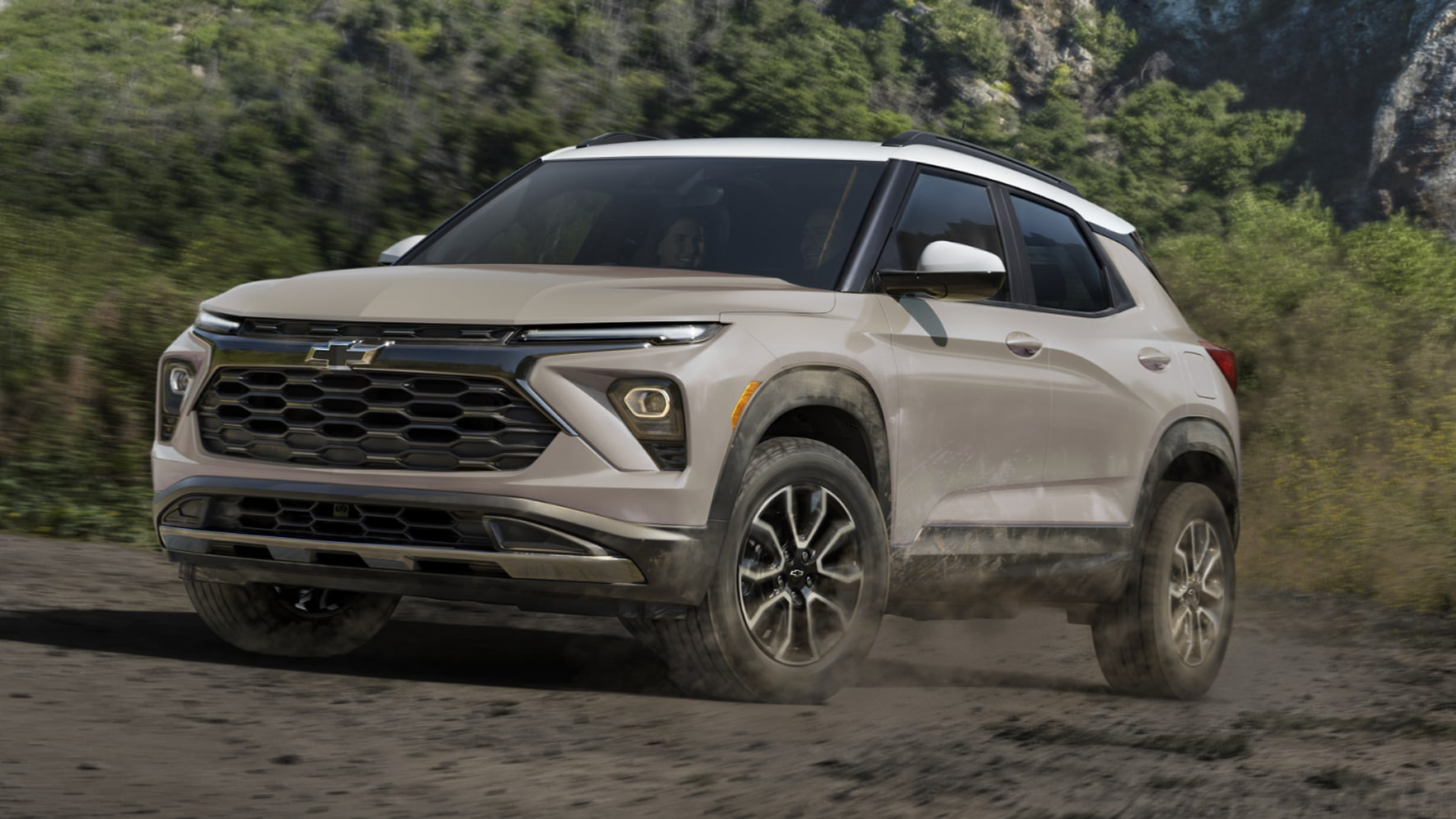
Chevrolet completely shocked the automotive industry by resurrecting the Trailblazer nameplate in North America for the 2021 model year. They drastically redefined the vehicle's fundamental architecture. The modern Trailblazer completely discards the heavy ladder frame, transitioning to the highly versatile VSS-F unibody platform. It completely shifts market segments, transforming into a highly agile, aggressively styled subcompact crossover designed specifically to conquer dense urban environments and extremely tight parallel parking spaces.
Modern Powertrains: The Turbocharged Triples
The modern engineering philosophy mandates maximum thermal efficiency through small-displacement forced induction. Chevrolet equipped the new crossover with two distinct turbocharged inline-three engines: the 1.2-liter LIH and the 1.3-liter L3T. Removing an entire cylinder drastically reduces internal parasitic mechanical friction. To successfully combat the severe vibration inherent to three-cylinder engines, engineers installed a massive counter-rotating balance shaft deep inside the aluminum engine block. This heavy steel shaft physically neutralizes the violent rocking couple.
The small-diameter turbocharger turbine sits directly adjacent to the exhaust ports, instantly spooling the compressor wheel. This ultra-short exhaust plumbing completely eliminates turbo lag, violently forcing dense, pressurized oxygen directly into the combustion chambers the millisecond the driver demands acceleration.
The premium 1.3-liter L3T engine heavily utilizes Active Thermal Management (ATM). Traditional internal combustion engines rely entirely on a simple, dumb mechanical thermostat. The ATM system completely replaces the mechanical thermostat with a highly advanced electronic rotary valve. The ECU actively monitors engine load, ambient air temperature, and internal coolant temperature. It dynamically rotates the valve, pinpointing the flow of hot coolant directly to the cylinder head or the engine block. During a cold winter start, the system completely traps the coolant inside the block, forcing the engine oil to reach optimal operating viscosity in mere seconds. This drastically reduces internal parasitic friction, prevents severe cold-start engine wear, and massively boosts overall fuel efficiency.
- Modern Powertrain (1.3L L3T)
- 1.3-liter turbocharged inline-three with an all-aluminum block and head
- Maximum Output
- 155 HP @ 5,600 RPM
- Peak Torque
- 174 lb-ft @ 1,600 RPM
- Transmission Options
- Continuously Variable Transmission (FWD) or 9-Speed Automatic (AWD)
Drivetrain and Suspension Dynamics
Chevrolet engineers implemented two completely distinct transmission strategies. Front-wheel-drive models utilize a highly efficient continuously variable transmission to maximize fuel economy. Selecting the highly capable AWD system triggers a massive mechanical upgrade. AWD models receive a robust GM 9T4X nine-speed automatic step-gear transmission. This heavy-duty planetary gearbox executes incredibly crisp upshifts. The AWD system itself features a highly advanced mechanical disconnect. During dry highway cruising, an internal physical clutch completely disengages the heavy rear driveshaft, physically stopping the rotational mass from creating parasitic aerodynamic drag.
The modern subcompact Trailblazer utilizes vastly different suspension geometry depending directly on the chosen drivetrain. FWD models rely on a highly compact, standard torsion beam rear axle. Engineers recognized the AWD models required significantly greater lateral stability to handle active torque vectoring. They completely re-engineered the rear architecture for AWD variants, installing a highly complex Watts linkage directly to the torsion beam. A Watts link utilizes a central pivoting mechanism connected to the heavy chassis by two lateral trailing arms. As the suspension violently compresses over harsh pavement, the Watts link forces the rear axle to travel in a strictly vertical plane. This completely eliminates the dangerous side-to-side axle deflection inherent to standard torsion beams, providing the driver with razor-sharp steering feedback during aggressive highway maneuvering.
Contemporary Exterior Design and Aerodynamics
The modern Trailblazer exterior borrows heavily from the aggressive styling language of the mid-size Blazer. The sharply raked windshield and heavily sculpted side profiles actively manipulate high-velocity airflow. Functional air curtains route turbulent wind completely around the front tires, massively reducing the overall aerodynamic drag coefficient.
The RS trim specifically targets the asphalt-focused enthusiast. It visually lowers the crossover, utilizing heavily blacked-out exterior trim, massive 18-inch high-gloss black machined aluminum wheels, and dual exhaust outlets featuring polished rectangular tips. The front lower fascia incorporates an active aero shutter system. At highway speeds, electronic actuators instantly slam the plastic louvers completely shut. This physically blocks high-velocity air from entering the engine bay, actively routing the wind cleanly around the vehicle to drastically drop the aerodynamic drag and massively improve fuel economy. The shutters reopen automatically when the internal coolant temperature sensor detects the small-displacement engine requires fresh ambient air to prevent catastrophic thermal failure.
Interior Architecture and Spatial Engineering
Maximizing internal volume within a strict subcompact footprint requires genius-level spatial manipulation. The modern Trailblazer features incredibly clever folding mechanisms. The front passenger seat folds completely flat, aligning perfectly with the folded rear bench. This massive continuous cargo channel instantly swallows objects exceeding eight feet in length.
Specialized Active Noise Cancellation technology physically measures low-frequency tire drone and internal engine resonance. The system immediately broadcasts the exact opposite acoustic frequency directly through the interior speakers, violently colliding the sound waves in mid-air to create a shockingly silent passenger cabin. Standard Chevy Safety Assist integrates heavy radar and optical sensors to map the surrounding asphalt, proactively deploying Automatic Emergency Braking to prevent fatal kinetic impacts. The Trailblazer completely redefined itself, proving that modern engineering can perfectly blend aggressive styling, sophisticated forced-induction technology, and massive internal utility into an incredibly tight physical package.