
The Rational Middle Ground
The American automotive landscape is littered with compromises. You can have a vehicle that fits the family but struggles to fit in the garage, or a vehicle that parks easily but leaves the kids arguing over legroom. The Chevrolet Traverse has spent over a decade staking its claim as the solution to this dilemma. It occupies the mid-size SUV segment, but its dimensions push the boundaries of the classification, offering interior volume that rivals vehicles a class above. It is the 'Suburban Jr.' for the modern era-manageable on the outside, cavernous on the inside. First appearing on the scene in 2009 as a replacement for both the truck-based TrailBlazer EXT and the Uplander minivan, the Traverse was General Motors' bold bet on the unibody crossover segment. At the time, consumers were rapidly abandoning traditional body-on-frame SUVs in favor of car-like crossovers that offered better fuel economy and a smoother ride. The Traverse was designed from the ground up to answer that call, providing max passenger capacity without the crude dynamics of a truck.First Generation: The Lambda Era (2009-2017)
The inaugural Traverse was a titan among mid-sizers. Riding on the GM Lambda platform-a chassis it shared with the Buick Enclave, GMC Acadia, and Saturn Outlook-the Traverse stretched nearly 205 inches in length. This physical size was its primary weapon. While competitors like the Toyota Highlander and Ford Explorer were fighting over fractions of an inch in third-row legroom, the Traverse offered a third row that could genuinely accommodate adults for medium-haul trips. Design-wise, the first generation featured a broad, imposing face with a massive gold bowtie centered in a horizontally slatted grille. It wasn't trying to win beauty contests; it was designed to look substantial. The interior, particularly in early models, was functional but criticized for using hard plastics. However, Chevrolet doubled down on utility. The 'Smart Slide' second-row seat allowed easy access to the third row with the pull of a lever, a feature that became a selling point for parents juggling child seats and groceries. Under the hood, power came from the direct-injected 3.6L V6 engine. In its early years, it produced around 281 horsepower, mated to a six-speed automatic transmission. It provided adequate acceleration, but the real story was the fuel efficiency relative to its size. It managed to avoid the gas-guzzler stigma that plagued older truck-based SUVs, delivering respectable highway mileage.The Traverse's 'Smart Slide' seating system was engineered specifically to maintain the functionality of a minivan in an SUV silhouette, allowing third-row access even with a forward-facing child seat installed in the second row.
Second Generation: Refinement and Weight Loss (2018-Present)
After a long nine-year run, the Traverse was completely redesigned for the 2018 model year. The shift to the C1XX platform (specifically the long-wheelbase variant) marked a significant evolution. Chevrolet shaved nearly 400 pounds off the curb weight, a massive engineering feat that improved acceleration, handling, and fuel economy simultaneously. The styling moved away from the rounded minivan aesthetic of the first generation toward a more chiseled, truck-like appearance, drawing visual lineage from the Tahoe and Silverado. This generation also saw a significant change in powertrain strategy. While the 3.6L V6 remained the standard engine, offering 310 horsepower, a new 2.0L turbocharged four-cylinder engine was introduced for lower trims to maximize efficiency. The transmission was upgraded to a nine-speed automatic, which helped keep the engine in its power band during passing maneuvers and cruising. The interior quality took a quantum leap forward. Soft-touch materials, tighter panel gaps, and a more modern infotainment interface replaced the utilitarian drabness of the outgoing model. Apple CarPlay and Android Auto became standard, acknowledging the modern driver's dependence on smartphones. Perhaps most importantly, the third row retained its segment-leading spaciousness, solidifying the Traverse's position as the 'road trip king' for families on a budget.Performance and Driving Dynamics
Driving a vehicle the size of the Traverse requires an adjustment of expectations. It is not a sports car, nor does it pretend to be. The suspension is tuned for comfort, absorbing potholes and expansion joints with a compliant, absorbent ride. The steering is light, which makes parking the 17-foot-long vehicle in tight suburban lots easier than one might expect. The 3.6L V6, the engine most buyers will encounter, is a veteran of the GM parts bin. It produces a robust 310 horsepower and 266 lb-ft of torque. This power delivery is linear and predictable. When you stomp the pedal on an on-ramp, the transmission might hesitate for a moment to downshift, but once it engages, the Traverse gathers speed with authority. It can tow up to 5,000 pounds when properly equipped, a figure that covers the vast majority of family boat and camper trailers.- Current 3.6L V6 Engine Specs
- Horsepower: 310 hp @ 6,800 RPM
- Torque: 266 lb-ft @ 2,800 RPM
- Transmission: 9-Speed Automatic
- Drive Configuration: FWD or AWD
Interior Space and Cargo Capacity
This is where the Traverse truly flexes its muscles. The vehicle's long wheelbase pays dividends in interior volume. With all seats in place, there is 23 cubic feet of cargo space behind the third row-enough for a week's worth of groceries or a full set of luggage. Fold the third row flat, and that number jumps to 58.1 cubic feet. Drop the second row as well, and you are looking at a cavernous 98.2 cubic feet of hauling capacity. The seating configuration offers flexibility. Most models seat eight passengers with a split-bench second row. However, opting for the second-row captain's chairs reduces capacity to seven but enhances comfort and ease of access. The third row, the Traverse's crown jewel, offers 33.5 inches of legroom. For context, that is more legroom than the front seat of some compact sedans. Adults can sit back there without their knees touching the seatback in front of them, a rarity in this segment.The High Country Experience
Sitting at the top of the trim ladder is the High Country. This is where the Traverse attempts to shed its 'family hauler' image and flirt with luxury. It features unique leather seating surfaces with perforated inserts, heated and ventilated front seats, a heated steering wheel, and a surround-view camera system. The aesthetic is upscale, with dark woodgrain accents and specific badging. It is the trim for those who want the utility of a Chevy but the amenities of a Cadillac.Safety and Technology Integration
As a family-focused vehicle, safety is paramount. The Traverse comes standard with a suite of active safety features on newer models, including Automatic Emergency Braking, Front Pedestrian Braking, and Lane Keep Assist. The structure of the vehicle is designed with crumple zones that help dissipate crash energy, and high-strength steel is used extensively in the safety cage. One of the more understated but brilliant features is the 'Teen Driver' system. This allows parents to set speed limits and audio volume caps for secondary keys. It also generates a 'report card' that tells parents if safety systems like stability control were disabled during the drive. It offers peace of mind for parents handing over the keys to a new driver.Market Position and Competition
The mid-size SUV segment is arguably the most competitive in the industry. The Traverse faces stiff competition from the Ford Explorer, Toyota Highlander, Honda Pilot, and Kia Telluride. Where the Traverse differentiates itself is in that specific blend of size and maneuverability. The Explorer offers a sportier driving position and powerful engine options, but its third row is tighter. The Highlander offers legendary reliability and a hybrid option, but its V6 feels strained under full load compared to the Traverse's 3.6L. The Traverse is the choice for those who prioritize passenger space above all else. It is the vehicle you buy when the minivan is out of the question, but you need the utility of one. It serves a specific demographic: the active family that hauls kids, dogs, and gear on weekends, often through varying weather conditions.The 2024 Refresh and Future Directions
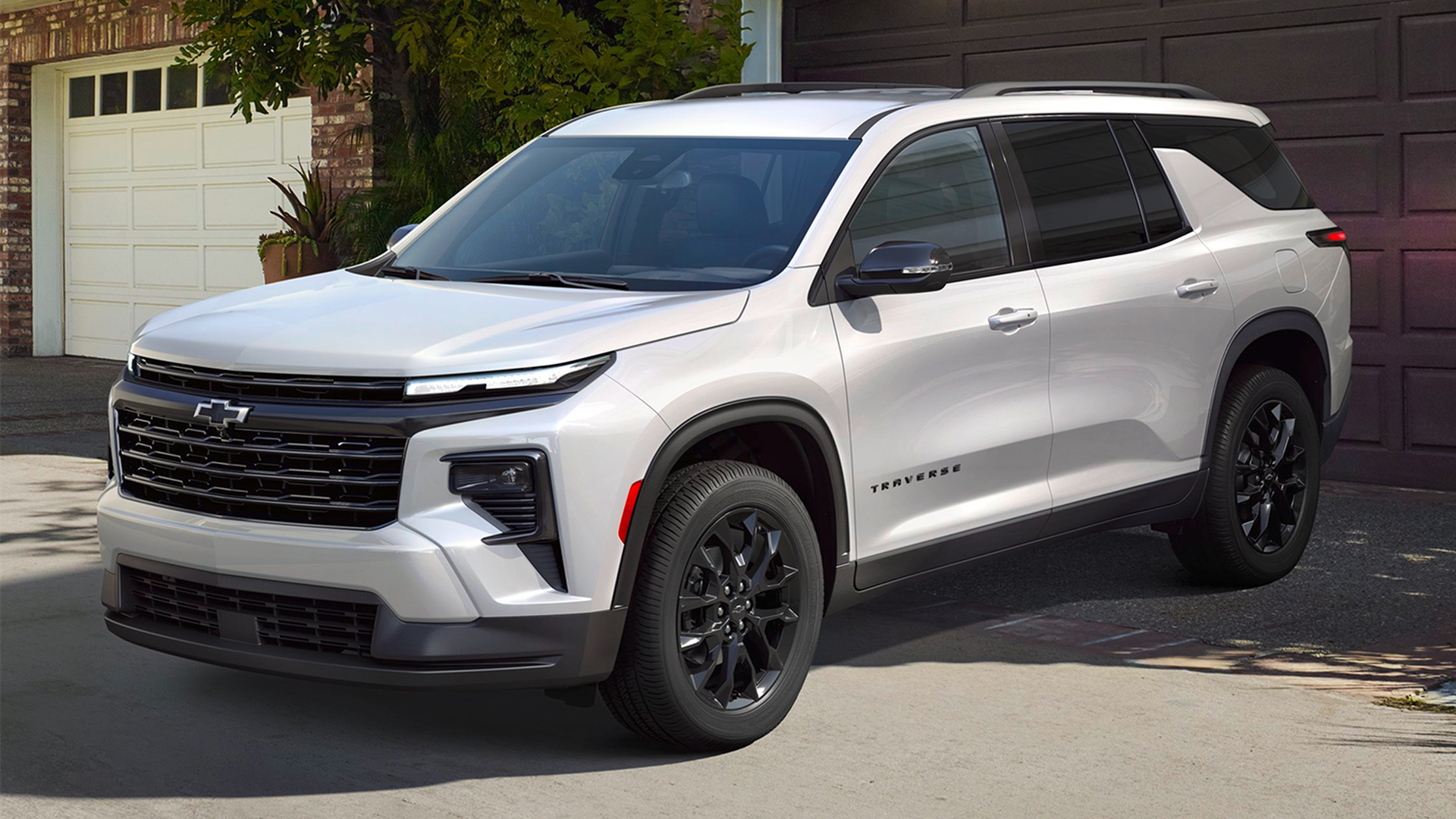
The 2024 model year brought a significant mid-cycle refresh. The front fascia was completely redesigned to look tougher, with a bolder grille and new headlight designs that mimic the Silverado. Inside, the dashboard was overhauled to accommodate an 11-inch diagonal touchscreen and an 8-inch diagonal driver information center. This update modernized the interface, bringing it in line with current expectations for digital integration. Mechanically, the 2.0L turbocharged engine option was discontinued for 2024, simplifying the lineup to the 3.6L V6 across the board. This move suggests that Chevrolet acknowledges the Traverse's identity as a heavy hauler that benefits from the V6's broad torque curve, rather than chasing marginal efficiency gains with a smaller engine.Ownership and Reliability
Long-term ownership of the Traverse generally proves positive, provided regular maintenance is adhered to. The 3.6L engine has been refined over many years and is known for its durability. However, early models of the first generation (2009-2012) suffered from timing chain issues that were addressed in later production years. Second-generation models have shown improved reliability ratings, with fewer transmission complaints thanks to the robust nine-speed gearbox. Maintenance costs are standard for the segment. The vehicle requires regular oil changes, tire rotations, and brake inspections. The sheer weight of the vehicle means brake pads and rotors might wear faster than on a lighter sedan, but this is a trade-off for the utility provided. Parts availability is excellent, given the shared platform with other GM vehicles, ensuring that repairs are rarely delayed by supply issues.Technical Specifications Summary
For those who prefer the hard data, the Traverse offers a solid platform for family duty. The unibody construction provides a stiff chassis that resists twisting, improving safety and handling.- Key Dimensions (2024 Model)
- Wheelbase: 120.9 inches
- Overall Length: 205.9 inches
- Width: 78.4 inches
- Height: 70.7 inches
- Curb Weight: Approx. 4,350 - 4,600 lbs