
Redefining the Urban Footprint
General Motors recognized a permanent shift in American driving habits during the early 2010s. Buyers aggressively rejected traditional compact sedans, demanding the elevated seating position and flexible cargo capacity of an SUV without the massive footprint or dismal fuel economy of a full-size truck. Chevrolet answered this immense consumer demand by launching the Trax. They engineered a highly maneuverable subcompact crossover designed specifically to conquer tight urban environments, parallel park in minimal spaces, and sip fuel on open highway stretches.
The original vehicle maximized internal volume within a strict exterior envelope. Engineers pushed the wheels out to the extreme corners of the chassis, completely minimizing front and rear overhangs. This specific architectural decision granted the vehicle surprising interior space while maintaining a highly nimble, razor-sharp turning radius required for navigating congested metropolitan infrastructure.
The original Trax packaging strategy perfectly mirrored modern architectural principles. When you cannot build outward due to physical constraints, you must build upward. The tall roofline and upright seating posture created a massive sense of interior space completely disproportionate to the actual physical dimensions of the vehicle.
First-Generation Architecture: The Gamma II Platform
Beneath the tall, upright exterior, the first-generation Trax utilized the globally developed GM Gamma II platform. This highly versatile front-wheel-drive architecture heavily utilized high-strength steel throughout the primary crash structure. Engineers strategically placed boron steel in the B-pillars and roof headers to create a highly rigid safety cage. This extreme structural rigidity actively prevents fatal cabin intrusion during severe offset frontal collisions and violent rollover events.
The front suspension geometry relies on a highly proven independent MacPherson strut design. Thick front stabilizer bars directly connect the lower control arms, neutralizing severe body roll during aggressive cornering. The rear suspension features a highly compact, cost-effective torsion beam setup. This specific trailing arm configuration utilizes a solid steel crossmember that naturally acts as a massive anti-roll bar. The compact nature of the torsion beam allowed engineers to mount the rear seats incredibly low, maximizing critical passenger headroom and preserving vital cargo capacity in the trunk.
First-Generation Powertrain: The 1.4L Ecotec Turbo
Propelling a heavy, high-riding crossover with a small-displacement engine requires significant forced induction. Chevrolet equipped the early Trax models exclusively with the 1.4-liter LUJ/LUV Ecotec turbocharged inline-four engine. This specific powerplant utilizes a heavily reinforced cast-iron engine block mated directly to a lightweight cast-aluminum cylinder head. Dual overhead camshafts dictate precise valve timing, utilizing advanced variable valve timing (VVT) phasers on both the intake and exhaust sides.
The integrated exhaust manifold directly houses the small-diameter turbocharger turbine. Locating the turbocharger incredibly close to the exhaust ports extracts maximum thermal energy from the exiting CO2 and unburned hydrocarbons. This ultra-short exhaust plumbing completely eliminates annoying turbo lag. Press the heavy accelerator pedal from a dead stop. The small compressor wheel instantly reaches maximum rotational velocity, forcing dense, pressurized ambient air directly into the 1,364 cm3 displacement combustion chambers.
- First-Generation Engine Specs (1.4L Ecotec)
- 1.4-liter turbocharged inline-4 with cast-iron block and aluminum head
- Maximum Output
- 138 HP @ 4,900 RPM
- Peak Torque
- 148 lb-ft @ 1,850 RPM
- Transmission Configuration
- Hydra-Matic 6T40 6-speed automatic transmission
- Drivetrain Options
- Standard FWD with highly capable, slip-sensing AWD available
Acoustic Engineering and NVH Mitigation
Small-displacement four-cylinder engines naturally generate high-frequency buzz and irritating vibrations under heavy load. Chevrolet deployed an extensive NVH mitigation strategy to keep the Trax cabin highly refined. Specialized acoustic glass forms the heavy front windshield, physically blocking wind noise from entering the passenger compartment. Thick, liquid-applied sound deadener coats the entire bare steel floor pan before assembly. Hydraulic engine mounts successfully isolate the raw, violent kinetic energy of the vibrating engine block, preventing harsh mechanical frequencies from transmitting directly into the driver's seat frame.
The Radical Second Generation: Rewriting the Rulebook
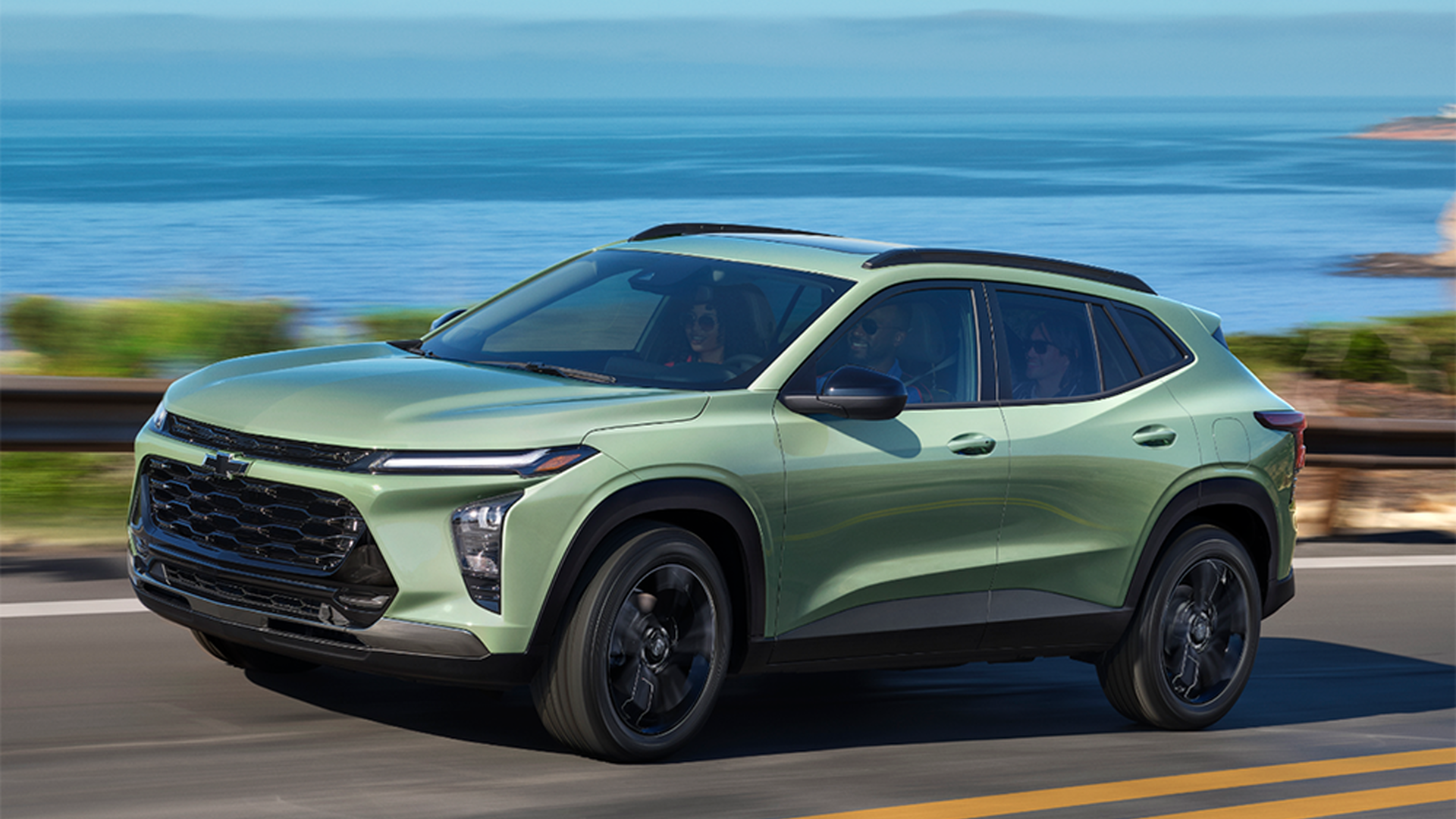
Following a brief production hiatus, Chevrolet unleashed the highly anticipated second-generation Trax for the 2024 model year. They completely abandoned the tall, narrow proportions of the original model. The new vehicle represents a massive architectural departure, embracing a striking, low-slung, highly aggressive design language heavily inspired by the midsize Chevrolet Blazer. The new Trax stretched completely out, growing exactly 11 inches longer and over 2 inches wider than its predecessor.
Engineers dropped the overall roofline by nearly 4 inches. This dramatic reduction in static height drastically lowered the vehicle's center of gravity. You feel this profound physical shift the exact moment you attack a tight highway on-ramp. The heavy crossover grips the asphalt firmly, completely eliminating the nervous, top-heavy sensation that plagued earlier subcompact designs. The front fascia commands absolute authority, featuring incredibly sharp LED daytime running lights deeply set into aggressive aerodynamic housings.
Chevrolet engineers made a highly controversial but mathematically sound decision for the second generation: they completely eliminated the heavy, parasitic all-wheel-drive system. Removing the heavy rear differential and complex driveshaft stripped massive weight from the chassis, drastically improving fuel economy and allowing a completely flat interior floor.
The Three-Cylinder Revolution: The 1.2L LIH Turbo
Opening the heavy steel hood of the second-generation Trax reveals a mechanical setup that completely shocks traditional American automotive purists. Chevrolet discarded the four-cylinder architecture entirely, replacing it with the highly advanced 1.2-liter LIH turbocharged inline-three engine. Dropping an entire cylinder drastically reduces internal mechanical friction and massively improves overall engine thermal efficiency.
Three-cylinder engines inherently suffer from a primary rocking couple that causes violent, unbalanced vibrations. To combat this strict law of physics, General Motors engineers integrated a highly specialized counter-rotating balance shaft directly into the aluminum engine block. This heavy steel shaft spins at the exact same speed as the forged crankshaft but in the completely opposite direction. The opposing kinetic forces perfectly cancel out the violent engine vibrations, resulting in a shockingly smooth idle that easily rivals premium European four-cylinder powerplants.
The tiny 1,199 cm3 displacement engine utilizes a highly advanced electronic wastegate to precisely control turbocharger boost pressure. The ECU actively monitors throttle position, ambient air density, and precise engine load, instantly adjusting the boost curve to deliver massive low-end torque exactly when the driver demands it.
- Second-Generation Engine Specs (1.2L LIH)
- 1.2-liter turbocharged inline-3 with an all-aluminum block and head
- Maximum Output
- 137 HP @ 5,000 RPM
- Peak Torque
- 162 lb-ft @ 2,500 RPM
- Thermal Management
- Active thermal management routing hot engine coolant to rapidly heat the cabin
- Fuel Economy
- Highly efficient 30 combined MPG rating
Rejecting the CVT Trend
Nearly every competing OEM producing subcompact crossovers pairs their small-displacement engines with a continuously variable transmission. Chevrolet flatly rejected this industry trend. They mated the 1.2-liter triple directly to a highly proven, conventional six-speed automatic step-gear transmission. This traditional planetary gearbox utilizes a heavy-duty fluid torque converter. Press the gas pedal, and the transmission executes crisp, highly defined gear changes. This completely eliminates the annoying, high-RPM droning sound universally associated with rubber-band-style continuously variable transmissions.
Interior Overhaul: Technology and Spatial Dynamics
The radical exterior redesign paid massive dividends inside the passenger cabin. The 11-inch stretch in overall vehicle length generated exactly 3 extra inches of critical rear-seat legroom. Adult passengers easily comfortably occupy the rear bench during long interstate road trips without burying their knees into the front seatbacks. Cargo capacity expanded massively, swallowing large suitcases and heavy groceries with absolute ease.
The dashboard architecture heavily focuses on the driver. The aggressive center stack seamlessly integrates a massive 11-inch high-definition diagonal touchscreen infotainment system on higher trim levels. Crisp digital displays replace traditional analog gauges, projecting vital telemetry, precise vehicle speed, and active safety alerts directly into the driver's line of sight. Chevrolet utilized premium textures, including available Evotex synthetic seating surfaces with highly contrasting stitching, instantly elevating the tactile feel of the entire cabin far beyond its entry-level price point.
Active Noise Cancellation Integration
Maintaining a quiet cabin with a vibrating three-cylinder engine requires highly active technological intervention. Chevrolet integrated a highly sophisticated Active Noise Cancellation (ANC) system directly into the vehicle's premium audio infrastructure. Microphones hidden deeply within the headliner constantly measure low-frequency engine droning and harsh tire roar. The internal computer instantly generates the exact opposite sound wave, broadcasting this invisible audio frequency directly through the stereo speakers. The conflicting sound waves physically collide in the air, instantly neutralizing the irritating noise before it ever reaches the driver's eardrums.
Aerodynamic Efficiency and Highway Stability
Cutting through dense atmospheric air requires highly precise exterior modeling. The sharply raked windshield and aggressively sloping roofline drastically lower the overall aerodynamic drag coefficient. Functional air curtains cleanly route high-velocity wind around the front wheels, completely neutralizing the turbulent, chaotic air pockets that naturally form inside large wheel wells. This intense focus on fluid dynamics actively prevents the lightweight crossover from wandering across highway lanes during heavy crosswinds, providing the driver with a deeply secure, planted driving experience.
The Ultimate Entry-Level Blueprint
The Chevrolet Trax fundamentally reshaped the absolute bottom floor of the American automotive market. General Motors proved conclusively that affordable, practical transportation does not demand a boring visual aesthetic or severely compromised structural engineering. By utilizing advanced metallurgy, sophisticated forced-induction powerplants, and highly intelligent interior packaging, the Trax completely dominates the subcompact crossover segment. It stands as a masterclass in modern vehicle engineering, delivering aggressive styling, massive utility, and highly engaging driving dynamics to the modern American public.