
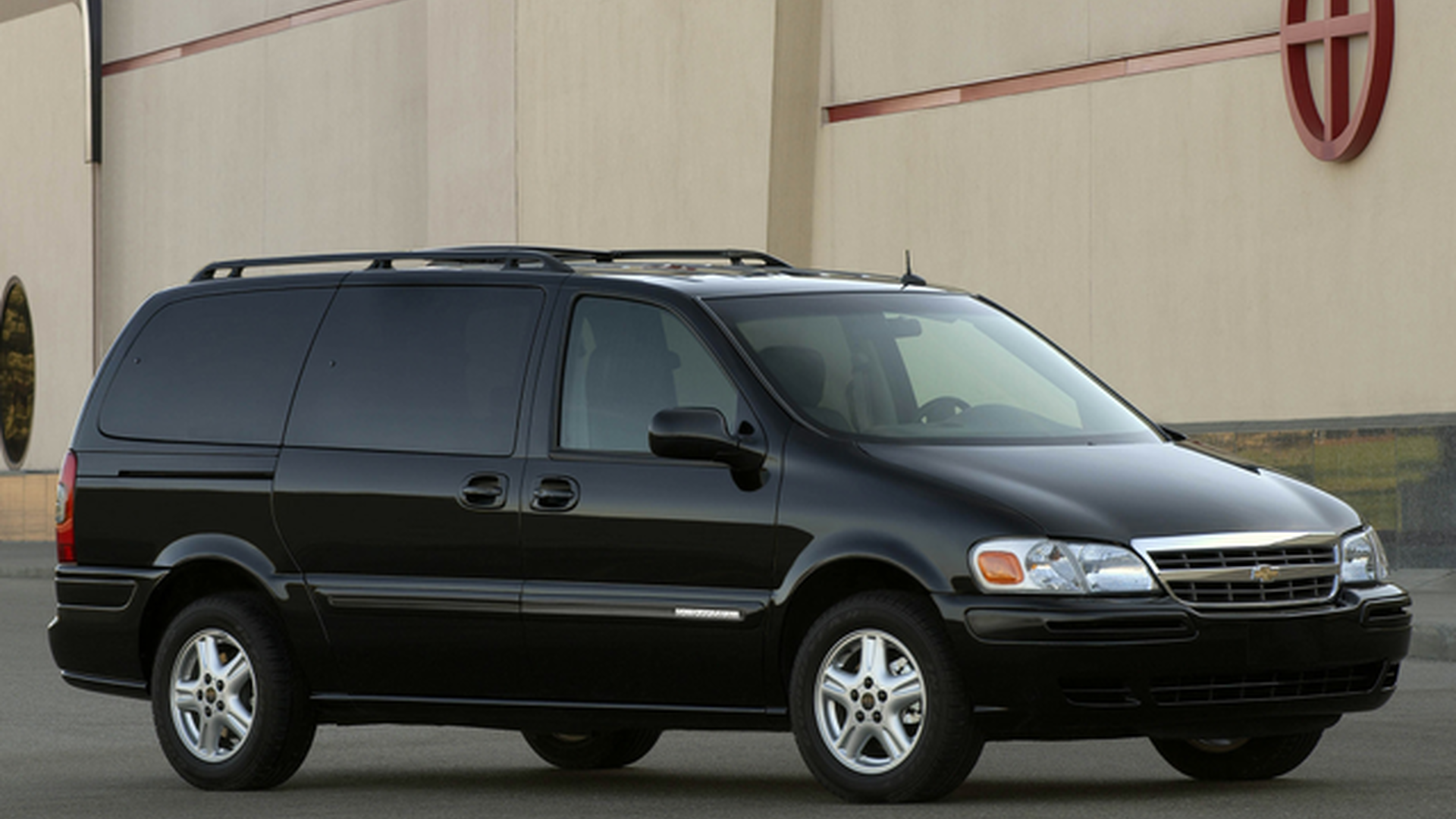
Eradicating the Dustbuster: A Global Platform Shift
General Motors faced a severe public relations dilemma in the mid-1990s. The radical, wedge-shaped 'dustbuster' styling of the Chevrolet Lumina APV actively alienated conservative American families. Chrysler completely dominated the segment with its conventional, boxy family haulers. To recapture critical market share, Chevrolet executed a complete architectural pivot for the 1997 model year. The resulting Chevrolet Venture abandoned the avant-garde composite plastic spaceframe of its predecessor. Engineers returned to a highly rigid, traditional stamped steel unibody structure. This new global platform, internally designated as the U-body, prioritized massive internal volume, dual sliding door accessibility, and quiet highway cruising to conquer the American suburban commute.
Dimensional Engineering: The Transatlantic Compromise
The U-body architecture was not strictly an American endeavor. General Motors engineered the platform to be sold across the Atlantic as the Opel Sintra and Vauxhall Sintra. European city grids feature narrow, winding streets that absolutely reject massive American vehicles. To accommodate these international constraints, Chevrolet engineers restricted the overall width of the Venture to 72 inches. This deliberate dimensional limitation provided the van with exceptional urban maneuverability, allowing it to easily navigate tight downtown parking structures and narrow suburban driveways.
Buyers selected between two distinct wheelbase options to fit their specific hauling requirements. The short-wheelbase (SWB) model measured 112 inches between the axles, prioritizing agility. The extended-wheelbase (EWB) model stretched to 120 inches, drastically increasing rear cargo volume behind the third row. This extended variant became the absolute backbone of the American carpool, offering cavernous space for lumber, sports equipment, and bulk groceries.
The 3.4L LA1 V6: Pushrod Power and Thermal Management
Propulsion relied exclusively on the 3.4-liter LA1 V6, commercially branded as the 3400 V6. This engine utilized a traditional 60-degree cast-iron block topped with high-flow aluminum cylinder heads. It prioritized massive low-end torque over high-revving horsepower. Chevrolet utilized Sequential Port Fuel Injection and hydraulic roller lifters to maximize mechanical efficiency and reduce valvetrain friction. When a driver stomped the accelerator to merge onto a busy interstate, the LA1 delivered immediate, confident pulling power.
"The 3.4L LA1 V6 was a masterclass in pushrod torque delivery. It lacked the complex overhead camshafts of its Japanese rivals, but it generated 210 lb-ft of torque at an incredibly low 4,000 RPM. It pulled the heavy 4,000-pound U-body chassis with absolute, undeniable authority." - Automotive Powertrain Historical Archive
This engine did possess a heavily documented engineering flaw regarding its thermal management system. The factory installed plastic lower intake manifold gaskets. When exposed to the factory-fill DEX-COOL extended-life antifreeze, these plastic carriers frequently degraded and cracked. This failure allowed engine coolant to leak directly into the engine oil valley, creating a milky sludge that destroyed internal bearings. Chevrolet eventually superseded this defective component with a heavy-duty, metal-framed gasket, completely permanently resolving the vulnerability for high-mileage owners.
2002 3.4L LA1 V6 Specifications
- Engine Block Architecture
- 60-Degree Cast Iron V6
- Valvetrain
- OHV, 2 Valves Per Cylinder, Roller Lifters
- Displacement
- 3,350 cm3 (204 cubic inches)
- Peak Output
- 185 HP @ 5,200 RPM
- Peak Torque
- 210 lb-ft @ 4,000 RPM
Driveline Kinematics and the 4T65-E Transaxle
Power transferred to the pavement through the heavily fortified 4T65-E four-speed automatic transaxle. This electronically controlled gearbox featured a heavy-duty torque converter equipped with a viscous clutch. The ECU continuously monitored engine load and vehicle speed, seamlessly locking the torque converter clutch during steady highway cruising to eliminate hydraulic slippage. This direct mechanical connection drastically reduced transmission fluid temperatures and significantly improved overall MPG. The 4T65-E utilized advanced electronic line pressure control to ensure perfectly smooth upshifts under light throttle and firm, aggressive gear changes during heavy acceleration.
Versatrak AWD: Mechanical On-Demand Traction
For families living in the severe winter climates of the American Snowbelt, a FWD minivan often proved inadequate. In 2002, Chevrolet radically expanded the Venture's capabilities by introducing the Versatrak AWD system. Unlike modern, heavily computerized AWD systems, Versatrak was a fully passive, mechanical on-demand system that required absolutely zero driver intervention.
The system operated primarily in FWD to maximize fuel economy. The rear differential assembly housed two highly specialized gerotor pumps. If the front tires encountered black ice and began spinning faster than the rear tires, this physical speed differential forced the gerotor pumps to spin rapidly. The spinning pumps generated intense hydraulic fluid pressure inside the sealed differential casing. This pressure physically squeezed wet clutch packs together, instantly transferring engine torque to one or both of the rear wheels. The moment front traction was restored, the pumps slowed down, the pressure dropped, and the vehicle seamlessly returned to FWD operation.
Suspension Geometry and Load-Leveling Pneumatics
A minivan must adapt instantly to wildly varying dynamic loads. The Venture could weigh 4,000 pounds completely empty, or well over 5,500 pounds fully loaded with seven passengers and heavy luggage. To manage this massive weight variance, Chevrolet implemented a highly adaptable suspension geometry. The front axle relied on an independent MacPherson strut design paired with a massive hollow stabilizer bar to resist aggressive body roll.
The rear suspension utilized a space-saving twist-beam solid axle suspended by heavy-duty coil springs. To prevent the rear bumper from dragging on the pavement under heavy loads, Chevrolet offered a sophisticated automatic rear load-leveling system. Electronic ride-height sensors continuously monitored the distance between the rear control arms and the unibody frame. If the sensors detected severe sagging, an onboard electric air compressor automatically pumped pressurized air directly into the rear shock absorbers. This forced the rear of the van back up to a perfectly level driving stance, ensuring safe handling dynamics and preventing the headlights from blinding oncoming traffic.
Modular Interior Utility and Power Sliding Doors
The interior of the Chevrolet Venture was a masterpiece of modular family utility. Engineers rejected heavy, permanent rear bench seats. Instead, buyers could configure the van with individual, lightweight modular bucket seats in the second and third rows. Each seat weighed exactly 38 pounds and featured an integrated carrying handle. Owners could physically unlatch and remove the seats entirely to transform the passenger cabin into a cavernous, flat-floor cargo hold capable of swallowing 4x8 sheets of plywood with the tailgate completely closed.
Accessing this massive interior was revolutionized by the implementation of dual power sliding doors. A simple press of a button on the overhead console or the key fob commanded electric motors hidden inside the rear quarter panels to effortlessly glide the heavy steel doors open. To protect children, engineers integrated advanced optical and tactile obstacle detection sensors. If the closing door encountered physical resistance, the electric motors instantly reversed direction to prevent injury.
The Warner Bros. Edition: Engineering the Mobile Theater
Long before iPads and seatback streaming monitors existed, road trips were a test of parental endurance. Chevrolet completely changed the paradigm of American travel in 2000 by introducing the legendary Warner Bros. Edition Venture. This highly exclusive trim level successfully pioneered factory-integrated mobile digital entertainment.
Chevrolet partnered directly with Warner Bros. to install an overhead flip-down LCD screen connected to a heavy-duty DVD (and earlier VHS) player integrated directly into the center console. Children wore specialized wireless headphones that received audio signals via infrared transmitters mounted in the ceiling. This brilliant engineering allowed the rear passengers to watch a high-definition movie in total silence while the parents listened to the radio in the front seats. The vehicle featured subtle Bugs Bunny exterior badging, specialized leather seating, and even shipped with a complimentary pair of Looney Tunes pajamas. It was a massive cultural phenomenon that forced every competing automaker to rush an entertainment system into production.
Passive Safety and Structural Reinforcement
Protecting the family unit was the ultimate engineering mandate. The U-body structure incorporated heavily reinforced front crumple zones designed to crush in a controlled, predictable accordion pattern. This strategic deformation absorbed massive amounts of kinetic energy before it could breach the high-strength steel passenger cell. Dual frontal airbags were standard equipment, and Chevrolet quickly integrated side-impact thorax airbags into the front seat bolsters to protect occupants during lateral collisions. The ABS computer pulsed hydraulic pressure to massive front vented disc brakes to ensure the driver maintained steering control during panic stops on wet pavement.
The Final Assembly and Corporate Transition
General Motors manufactured the Chevrolet Venture at the sprawling Doraville Assembly plant in Georgia. For eight relentless production years, the Venture dominated suburban driveways, school drop-off zones, and cross-country interstates. It served as the absolute backbone of the American family fleet.
By 2005, consumer tastes were shifting violently away from the traditional minivan silhouette toward the rugged aesthetic of crossover sport utility vehicles. Chevrolet retired the Venture nameplate, replacing it with the Chevrolet Uplander. The Uplander utilized a heavily modified version of this exact same U-body platform, hiding its minivan roots behind an elongated, truck-like hood. The Chevrolet Venture remains a critical artifact in automotive history. It represents the exact era when Detroit perfected the traditional family hauler, utilizing bulletproof pushrod V6 power, brilliant modular packaging, and groundbreaking digital entertainment to conquer the American road.