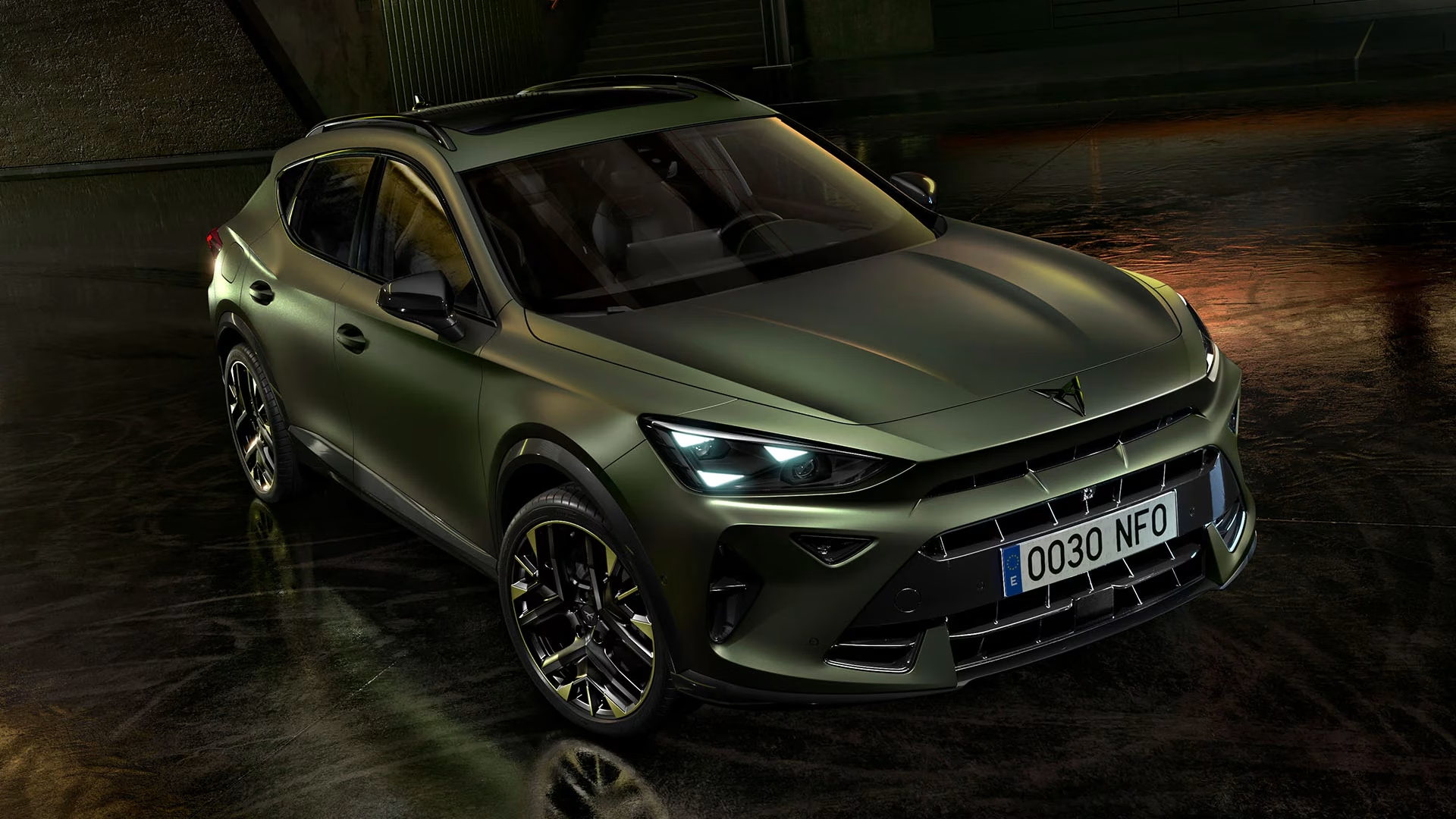
Formentor
The first standalone model and the soul of the Cupra brand. The Formentor is a stunningly designed crossover coupe that blends SUV practicality with the heart of a hot hatch. It is a bold statement of performance, style, and individuality.
Cupra is the aggressive, copper-tinted spinoff of SEAT. Originally just a badge for fast hatchbacks, it became a standalone brand in 2018. It combines reliable German engineering (Volkswagen parts) with a sharp, emotional Spanish design language that relies on copper accents and matte paint rather than chrome.
Explore the current production vehicles.
The first standalone model and the soul of the Cupra brand. The Formentor is a stunningly designed crossover coupe that blends SUV practicality with the heart of a hot hatch. It is a bold statement of performance, style, and individuality.
The brand's first all-electric model and the hot hatch for the electric age. Based on the VW ID.3 platform, the Born is a rear-wheel-drive EV with a sharper design, a more premium interior, and a driver-focused chassis tune. The future of performance.
A dream car brought to life. The Tavascan is a dramatic, all-electric SUV coupe that represents the pinnacle of Cupra's futuristic design language. It's a rolling concept car that proves electric vehicles can be truly emotional and exciting.
The legendary hot hatch, reborn under the Cupra tribe. The Cupra Leon and Sportstourer (wagon) take the SEAT Leon's excellent base and inject it with high-performance engines, including potent plug-in hybrid options, and a sophisticated, aggressive design.
The car that launched the standalone brand. The Cupra Ateca is a high-performance compact SUV that takes the practical Ateca and infuses it with a powerful 300-hp engine and a sporty chassis, creating a true 'hot SUV' for the enthusiast.
The future of the urban electric car. The UrbanRebel concept is set to become the Raval, a small, aggressive, and fun-to-drive electric city car. It's designed to bring Cupra's rebellious spirit and performance focus to the mass-market EV segment.
Author
HugeGarage Editor
Published
Updated
For over 20 years, "Cupra" (a portmanteau of Cup Racing) was just a trim level. It was the badge you put on a SEAT Ibiza or Leon when you wanted to go fast. It was the Spanish equivalent of a VW GTI.
In 2018, the Volkswagen Group made a bold move: they cut the cord. Cupra became its own standalone brand. The goal was to attract younger buyers who found Volkswagen too boring and Audi too expensive. They adopted a distinct tribal logo and a signature color palette of dark matte blues and heavy copper accents.
At first, Cupra just sold rebadged SEATs (like the Cupra Ateca). But the Cupra Formentor changed everything. It was the first car designed exclusively for the brand. It isn't a SEAT; it's a Cupra.
Named after a rugged cape in Mallorca, the Formentor is a crossover that sits lower than an SUV but higher than a hatchback. It looks aggressive, drives sharply, and in its top "VZ5" trim, it even uses the legendary 5-cylinder engine from Audi RS models. It proved Cupra wasn't just a marketing exercise.
The Cupra Born is the brand's first EV. While it is technically a twin to the Volkswagen ID.3, the two cars feel completely different.
Where the VW is friendly and soft, the Born is angry and stiff. It has a "boost" button on the steering wheel and aggressive styling. It shows that electric cars don't have to look like appliances.
Cupra refers to its owners not as customers, but as "The Tribe." They collaborate with padel tennis tournaments, music festivals, and Barcelona street artists. It is a deliberate attempt to build a lifestyle brand that feels less corporate than its German parents.
Cupra offers a unique value proposition in the used market.
Cupra is for the driver who wants the reliability of a Volkswagen but refuses to blend into the parking lot.
As of 2026, Cupra has strategically decided to postpone its official United States debut until post-2030. While the Volkswagen Group initially aimed for a 2030 launch, recent global market dynamics and shifting trade policies have led to an indefinite pause on the expansion.
When Cupra eventually enters the US, the brand plans to focus on a "City Garage" distribution model in key states across the East Coast, West Coast, and the Sunbelt, targeting metropolitan areas where their performance-oriented design language resonates most with modern drivers.
Although the launch is delayed, Cupraâs roadmap for North America includes a mix of Battery Electric Vehicles (BEV) and Plug-in Hybrids. The anticipated lineup features:
Currently, you cannot legally import a Cupra Formentor for permanent road use in the United States. Since the model was first produced in 2020, it does not meet the 25-year import rule. Furthermore, as Cupra is not yet officially sold in the US, the vehicle has not been federalized to meet FMVSS or EPA standards.
The first Formentor models will not be eligible for legal private import until 2045, unless brought in under a temporary "Show or Display" exemption for specific technical or historical evaluation.
The 2026 Cupra e-Hybrid system, found in models like the Leon and Terramar, utilizes a 1.5L or 1.4L TSI engine paired with an electric motor. The latest 2026 versions offer a significant electric-only range of up to 75 miles (120 km), allowing for zero-emissions daily commuting.
This system uses a 19.7 kWh battery and supports 50kW DC fast charging, a rare feature for plug-in hybrids. For US drivers, this technology represents a bridge toward full electrification, offering the high-torque "e-Boost" performance without the range anxiety of a pure EV.
The Cupra Raval is the brandâs all-new urban electric "hot hatch" launching in early 2026. Built on the MEB+ platform, the Raval features a 226-horsepower motor and a range of up to 280 miles (450 km).
Named after a vibrant district in Barcelona, the Raval is designed with 3D-printed interior components and sustainable materials. While currently targeted at the European and Australian markets, its compact performance ethos is often compared to a modern, electric interpretation of the GTI for the digital age.
Originally launched as the high-performance division of SEAT, Cupra became an independent brand under the Volkswagen Group in 2018. In 2026, Cupra has officially surpassed SEAT in global sales volume and brand value.
While they still share manufacturing facilities in Martorell, Spain, Cupra operates with its own distinct management and design philosophy. This independence allows them to position themselves as a "challenger brand" that sits between the mainstream VW brand and the luxury Audi brand.
The 2026 Cupra Terramar features a driver-centric cockpit dominated by a 12.9-inch touchscreen with a retro-illuminated slider for climate and volume control. The interior highlights include "Super Bucket" seats made from upcycled SEAQUAL® YARN and a high-fidelity 12-speaker audio system developed by Sennheiserâ¢.
The Terramar is the last new Cupra model to offer an internal combustion engine option alongside its hybrid variants, serving as a tribute to the legendary Terramar circuit in Spain where the brand was born.
Yes, as part of the Volkswagen Groupâs commitment, any future Cupra EVs launched in the US after 2030 are expected to come equipped with the North American Charging Standard (NACS) port. This will give future American Cupra owners native access to the Tesla Supercharger network, ensuring a robust charging infrastructure from day one of the brand's launch.
A signature feature of the 2026 lineup, CUP Bucket Seats are racing-inspired seats designed for maximum lateral support during spirited driving. They feature integrated headrests, carbon fiber shells, and the signature copper-colored stitching.
For 2026, Cupra has introduced 3D-knitted textures to these seats, which reduces weight and improves breathability. These seats are a major factor in the brand's "sport-first" identity, distinguishing their SUVs and hatches from more comfort-oriented competitors.