
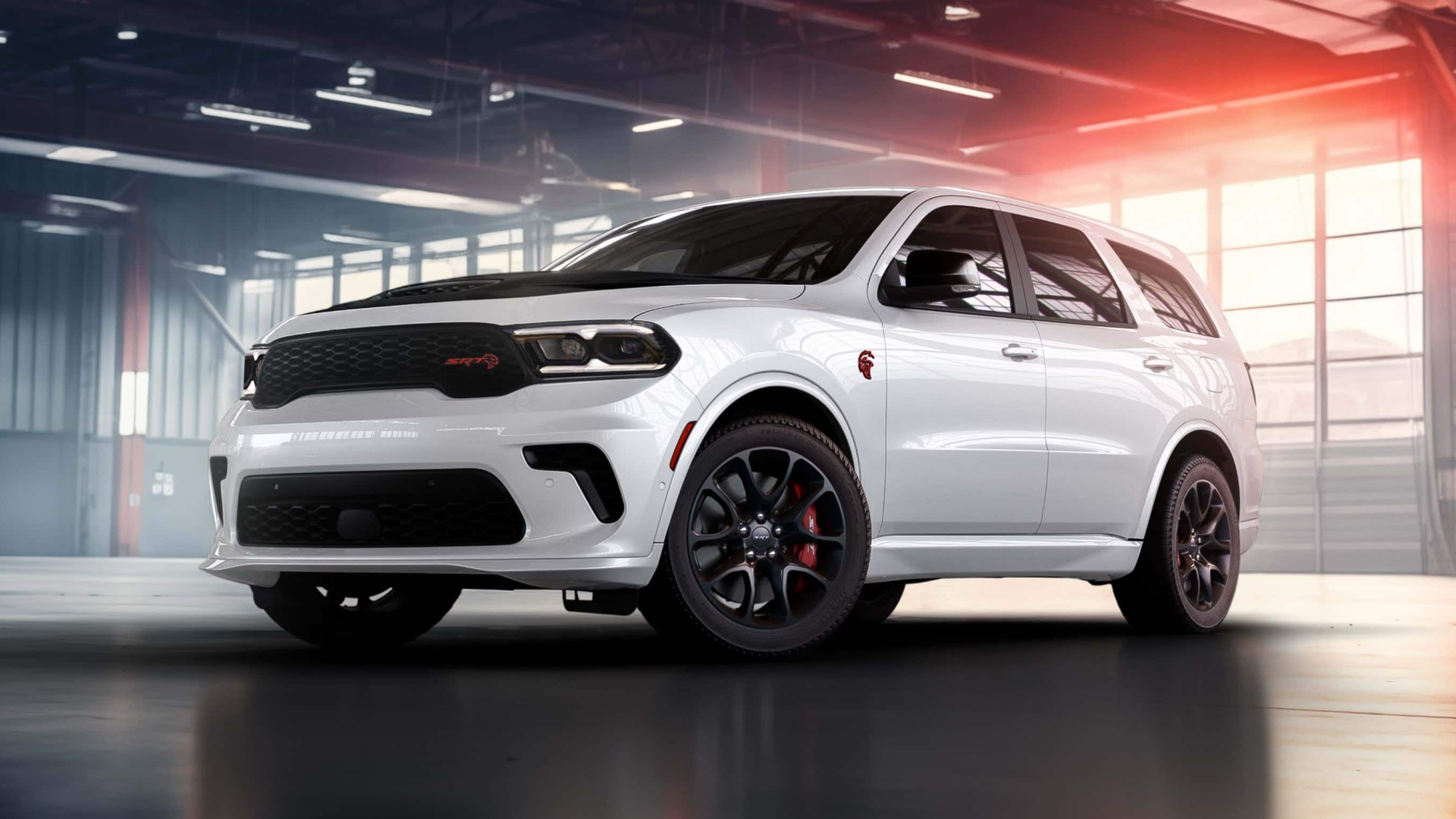
Forging a New Utility Paradigm: The DN Generation
The original Dodge Durango arrived for the 1998 model year, intentionally disrupting the established domestic sport utility hierarchy. Chrysler engineers recognized a glaring void between compact crossovers and massive, unwieldy full-size suburban haulers. They executed a brilliant packaging strategy by utilizing the rigid ladder frame of the Dodge Dakota mid-size pickup truck. This body-on-frame architecture provided the immense structural integrity required for heavy hauling while maintaining a footprint agile enough for urban navigation.
To accommodate seven passengers, designers extended the cabin and incorporated a stepped safari roofline, providing critical stadium seating visibility and elevated headroom for third-row occupants. Under the hood, Dodge ignored the anemic four-cylinder engines favored by competitors, relying exclusively on their robust Magnum V8 and V6 powerplants. The pinnacle of this era was the Durango R/T, featuring the 5.9-liter (360 cubic-inch) Magnum V8. This cast-iron block produced 250 horsepower and a stump-pulling 345 lb-ft of torque, instantly establishing the Durango as the undisputed towing champion of its class.
The 1998 Dodge Durango physically manifested the concept of a muscle SUV. By dropping a massive 5.9-liter V8 into a mid-size chassis, it delivered explosive low-end torque and a 7,300-pound towing capacity that terrified rival automakers relying on weak, car-based crossover platforms.
Architectural Expansion: The HB Generation
As consumer appetites for interior volume exploded, Dodge completely re-engineered the Durango for the 2004 model year. The HB generation cast a significantly larger shadow, physically expanding in every dimension. Engineers retained the rugged body-on-frame construction but fundamentally altered the suspension geometry. They discarded the harsh, truck-like rear leaf springs in favor of a sophisticated coil-spring setup featuring a Watt's linkage. This heavy-duty mechanical linkage precisely controlled the lateral movement of the solid rear axle, drastically reducing rear-end hop over washboard dirt roads and vastly improving highway tracking while pulling a heavy load.
This generation witnessed the glorious return of the legendary HEMI engine. The 5.7-liter V8 utilized a modern pushrod design featuring dual spark plugs per cylinder, maximizing combustion efficiency. Pushing 335 horsepower and 370 lb-ft of torque, the HEMI transformed the heavy SUV into an absolute stoplight brawler. To manage fuel consumption, Chrysler integrated the Multi-Displacement System. Hydraulic lifters selectively deactivated the intake and exhaust valves on four cylinders during light-load highway cruising, operating the massive V8 as a hyper-efficient four-cylinder engine to minimize tailpipe CO2 emissions.
2004 Durango 5.7L HEMI Specifications
- Engine Block
- 5.7L (5654 cm3) Cast-Iron Block, Aluminum Cross-Flow Cylinder Heads
- Valvetrain
- Pushrod, 2 Valves per Cylinder, Multi-Displacement System
- Peak Horsepower
- 335 hp @ 5,200 RPM
- Peak Torque
- 370 lb-ft @ 4,200 RPM
- Maximum Towing Capacity
- 8,950 lbs (with heavy-duty tow package)
The WD Unibody Revolution: Sophistication Meets Brute Force
The 2011 model year triggered a complete architectural revolution for the Durango. Dodge completely abandoned the heavy, archaic body-on-frame truck chassis. The new WD generation transitioned to a highly rigid, car-like unibody platform shared directly with the Jeep Grand Cherokee. This structural metamorphosis utilized advanced high-strength steel and laser brazing techniques, increasing torsional stiffness by over 146 percent compared to the outgoing model. The result was a shockingly quiet cabin and European-inspired handling dynamics that completely masked the vehicle's massive curb weight.
The suspension geometry shifted to a fully independent setup at all four corners. A short/long arm (SLA) double-wishbone front suspension provided precise camber control during aggressive cornering, while the multi-link rear suspension isolated the passenger compartment from severe pavement impacts. Engineers eventually mated the entire engine lineup to a specialized ZF 8HP 8-speed automatic transmission. The onboard ECU executes shifts in milliseconds, keeping the naturally aspirated engines squarely within their optimal powerbands while contributing to lower highway engine speeds and improved fuel economy.
The Pentastar V6 and Driveline Topologies
While the supercharged HEMI variants steal the automotive headlines, the true volume driver of the WD generation is the highly refined 3.6-liter Pentastar V6. This entirely aluminum, dual overhead cam (DOHC) engine features Variable Valve Timing (VVT) on both the intake and exhaust sides. It delivers a highly respectable 295 horsepower while significantly reducing the vehicle's overall curb weight over the front axle. This specific weight reduction translates directly to sharper turn-in response and lighter steering effort during low-speed urban maneuvers.
Driveline topologies vary wildly based on the selected engine. V6 models utilize a single-speed, full-time AWD system designed to seamlessly shuffle torque between the front and rear axles based on detected wheel slip, ensuring absolute confidence in rain or light snow. Conversely, the 5.7-liter V8 variants employ a heavy-duty two-speed transfer case. This robust mechanical unit features a true neutral position for flat-towing behind a recreational vehicle, and a dedicated 4WD Low range. Engaging the low range mathematically multiplies the engine torque, providing the Durango with the severe crawling capability required to yank heavy boat trailers out of steep, algae-covered launch ramps.
Caging the Beast: Durango SRT 392
While the standard 5.7-liter HEMI satisfied traditional buyers, the Street and Racing Technology (SRT) team demanded absolute pavement domination. They dropped the massive 6.4-liter (392 cubic-inch) Apache V8 into the engine bay. Generating 475 horsepower and 470 lb-ft of naturally aspirated torque, the Durango SRT 392 attacks the asphalt with a deeply visceral, concussive mechanical roar.
Putting this power to the ground requires specialized driveline hardware. The SRT utilizes a performance-tuned AWD system heavily biased toward the rear axle. During a dedicated drag-strip launch, the active transfer case dynamically shuffles torque to the tires with the highest physical grip. To rein in the heavy SUV from triple-digit speeds, Dodge fitted massive 15.0-inch two-piece slotted rotors clamped by six-piston Brembo calipers on the front axle. Stiffer spring rates, upgraded anti-roll bars, and adaptive three-mode Bilstein dampers ensure the 5,300-pound machine corners remarkably flat.
The Ultimate Family Weapon: SRT Hellcat
Dodge executed the unthinkable in 2021, creating the most powerful SUV in automotive history by engineering the SRT Hellcat variant. They bolted a 2.38-liter twin-screw supercharger directly atop a heavily reinforced 6.2-liter HEMI V8. Forging the internal rotating assembly allowed the engine block to withstand the extreme cylinder pressures generated by 11.6 psi of forced induction.
Compressing atmospheric air at this volume generates terrifying thermal friction. The supercharger housing integrates dual water-to-air charge coolers, aggressively dropping the intake air temperature immediately before it forces its way into the combustion chambers. This mechanical leviathan produces a staggering 710 horsepower and 645 lb-ft of torque. You pin the accelerator to the floorboard, and the heavy three-row SUV violently launches from zero to 60 mph in 3.5 seconds, ripping through the quarter-mile in 11.5 seconds. The Durango Hellcat obliterates the physical laws of aerodynamics and mass, actively humiliating dedicated European sports cars straight off the dealership floor.
The cooling requirements for the Hellcat engine are so immense that engineers had to completely redesign the Durango's front fascia, removing the fog lights to create massive air intakes that force cold oxygen directly into the specialized airbox and dedicated oil coolers.
SRT Hellcat Engineering Metrics
- Engine Architecture
- 6.2L (6166 cm3) Supercharged V8, Cast-Iron Block
- Forced Induction
- 2.38-Liter Twin-Screw Supercharger, 11.6 psi Boost
- Peak Horsepower
- 710 hp @ 6,100 RPM
- Peak Torque
- 645 lb-ft @ 4,300 RPM
- Quarter Mile Performance
- 11.5 seconds @ 118 mph
Towing Physics and Heavy-Duty Utility
Utility remains the core directive of the Durango. It refuses to compromise its rugged capability for straight-line speed. When properly equipped with the factory Tow N Go package or specified in the SRT trims, the Durango boasts a maximum towing capacity of 8,700 pounds. Pulling heavy loads drastically alters vehicle physics, requiring aggressive mechanical countermeasures.
The software automatically engages a specialized Tow Mode when the driver connects a trailer harness. This specific calibration holds transmission gears longer to prevent hunting on steep inclines and activates advanced trailer sway mitigation algorithms. If the computer detects dangerous trailer oscillation, it selectively applies the physical brakes to individual wheels and reduces engine torque to pull the vehicle back into a straight, stable line. A massive 220-amp alternator and heavy-duty engine cooling system ensure the V8 does not suffer thermal degradation while dragging a heavy boat up a mountain pass in the dead of summer.
Interior Architecture: The Digital Command Center
The cabin of the Durango balances premium materials with heavy-duty family functionality. The dashboard angles aggressively toward the driver, housing the massive Uconnect 5 digital ecosystem. Operating with the processing speed of a premium tablet, this high-definition touchscreen renders crisp graphics and instantaneous menu responses.
Acoustic laminated glass on the windshield and front side windows physically blocks wind noise and tire roar, creating a silent isolation chamber until the driver opens the active exhaust valves. The three-row seating configuration offers immense flexibility. The second-row Fold and Tumble captain's chairs provide effortless access to the rear, while folding all seats completely flat reveals an expansive 85.1 cubic feet of maximum cargo volume. The Dodge Durango proves that upgrading to a practical, seven-passenger family hauler absolutely does not require abandoning the visceral thrill of American V8 muscle.