
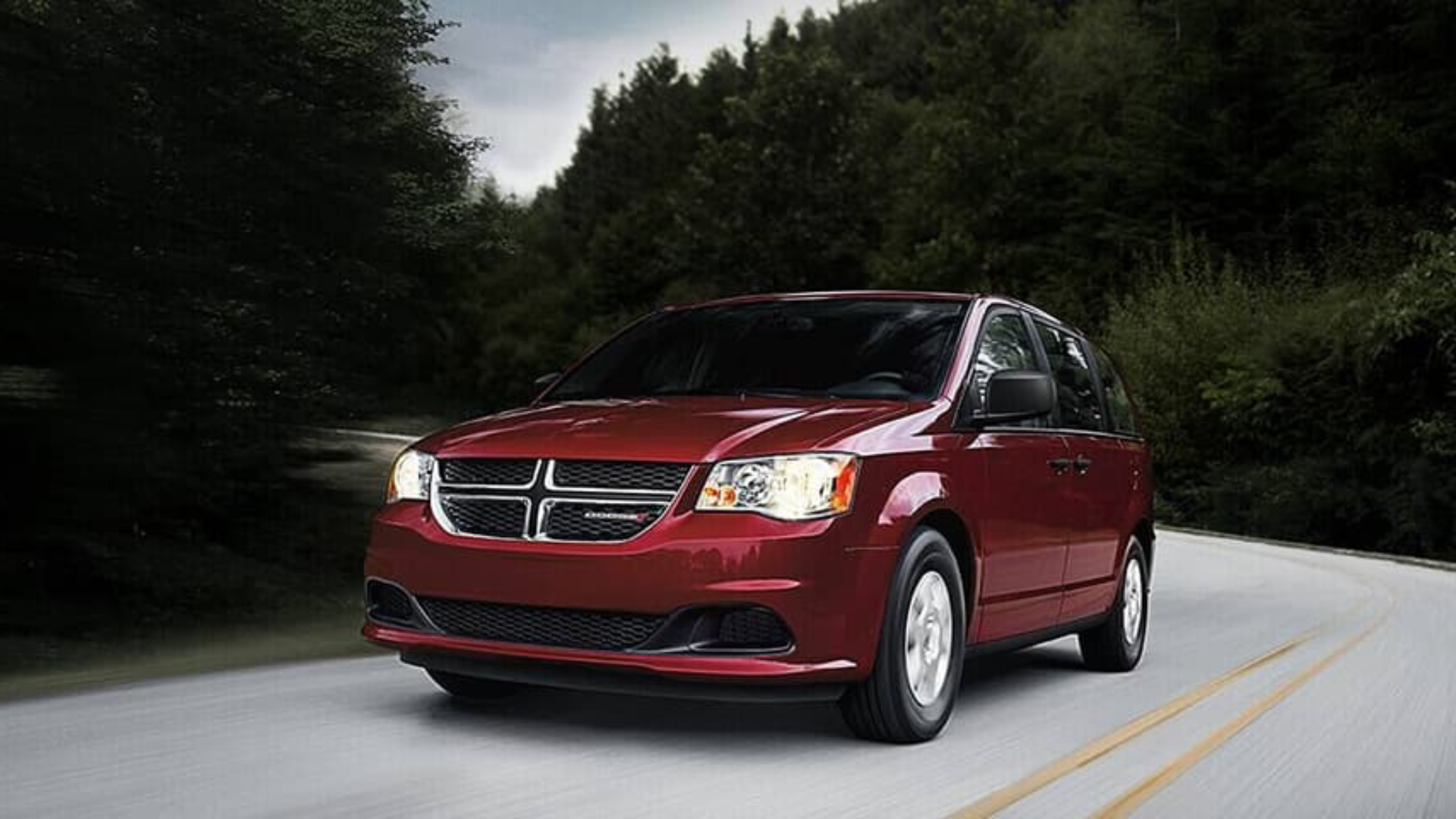
Eradicating the Station Wagon: The S-Platform Genesis
Prior to the 1980s, hauling a family of seven required a massive, fuel-thirsty, body-on-frame station wagon built on heavy truck or full-size sedan architectures. Chrysler engineers recognized the severe packaging inefficiencies of these rear-wheel-drive dinosaurs. By leveraging the front-wheel-drive architecture derived from the ubiquitous K-car platform, they created the S-platform. This engineering pivot completely eliminated the intrusive transmission tunnel and bulky rear differential, allowing designers to drop the interior floorpan dramatically.
The standard Caravan launched in 1984, but the true revolution arrived in 1987 with the introduction of the Grand Caravan. Engineers stretched the wheelbase from 112.0 inches to 119.1 inches. This physical elongation provided crucial cargo volume behind the third row, solving the primary complaint of early minivan adopters. The vehicle operated like a passenger car, fit inside a standard suburban garage, and offered a low step-in height that instantly rendered traditional station wagons obsolete.
The introduction of the Dodge Grand Caravan completely blindsided rival automakers. Ford and General Motors scrambled for nearly a decade trying to match Chrysler's packaging efficiency, releasing compromised, truck-based vans that ultimately failed to capture the suburban American buyer.
Structural Integrity and the Cab-Forward Revolution
The 1996 redesign, known internally as the NS generation, completely modernized the minivan aesthetic. Designers adopted a radical "cab-forward" layout. They pushed the base of the windshield aggressively forward over the front axle and pulled the wheels out to the far corners of the chassis. This maximized interior volumetric capacity while creating a sleek, aerodynamic profile that slashed wind noise at highway speeds.
The most significant engineering challenge of the NS platform was the implementation of a driver-side sliding door. Slicing a massive hole in the left side of a unibody structure severely compromises torsional rigidity. If executed poorly, the chassis twists violently over uneven pavement, causing the heavy sliding doors to rattle or jam in their tracks. To solve this, metallurgists heavily reinforced the floorpan cross-members and integrated high-strength steel into the roof rails and B-pillars. This fortified skeletal structure preserved the vehicle's handling dynamics while ensuring it passed increasingly strict federal side-impact crash testing protocols.
The Mechanical Ballet of Stow 'n Go Seating
The ultimate benchmark of minivan utility is seating flexibility. For decades, converting a minivan from passenger duty to cargo hauling required physically unlatching and dragging 80-pound bench seats out of the cabin and storing them in a garage. Dodge eliminated this physical labor entirely in 2005 with the introduction of the Stow 'n Go seating system.
Implementing this system required a colossal 150 million dollar engineering investment. Designers could not simply fold the seats flat; they had to completely redesign the vehicle's underbelly to create massive storage tubs beneath the floorpan. This forced engineers to entirely reroute the hot exhaust piping, relocate the parking brake cables, and move the spare tire from the rear cargo area to a cradle located directly beneath the front center console.
The seats themselves represent a masterclass in kinetic articulation. The second-row captain's chairs feature complex, multi-hinged frames. You pull a designated fabric strap, and the heavy seatback folds perfectly flush with the bottom cushion. The entire assembly then pivots forward on high-tension gas struts and plunges seamlessly into the stamped steel floor tub, locking securely beneath a folding structural panel. This mechanical ballet transforms the Grand Caravan from a seven-passenger commuter into a cavernous cargo van capable of swallowing 4x8 sheets of plywood in less than thirty seconds.
Propulsion: The Pentastar V6 and 62TE Transaxle
Early minivans suffered from anemic four-cylinder engines that wheezed under the strain of a fully loaded cabin. The Grand Caravan eventually secured its reputation through robust V6 power, culminating in the integration of the 3.6-liter Pentastar V6 during the 2011 RT platform overhaul. This clean-sheet engine design replaced the aging, iron-block 3.8-liter and 4.0-liter variants.
The Pentastar features a high-pressure die-cast aluminum block and a 60-degree cylinder bank angle. By integrating the exhaust manifolds directly into the cylinder heads, engineers shed significant dead weight from the front axle and allowed the catalytic converters to heat up rapidly, vastly reducing cold-start emissions. Producing 283 horsepower, this engine delivers a highly linear surge of acceleration, effortlessly pulling the heavy minivan up steep mountain grades.
Power routes exclusively to the front wheels through the 62TE six-speed automatic transaxle. Rather than designing a physically massive new six-speed gearset, Chrysler engineers modified a highly proven four-speed architecture. They installed an underdrive compounder gearset on the transfer shaft, essentially splitting the primary forward gears to create two additional, closely spaced ratios. This provided a steep first gear for rapid off-the-line thrust while maintaining deep overdrive gears to keep the engine operating silently at low RPM during interstate cruising.
3.6L Pentastar V6 Technical Specifications
- Engine Architecture
- 3.6L (3604 cm3) 60-Degree V6, Aluminum Block and Heads
- Valvetrain
- Double Overhead Cam, 4 Valves per Cylinder, Variable Valve Timing
- Peak Horsepower
- 283 hp @ 6,400 RPM
- Peak Torque
- 260 lb-ft @ 4,400 RPM
- Transmission
- 62TE 6-Speed Automatic Transaxle
Suspension Geometry and Load Management
Managing the kinetic energy of a 4,500-pound vehicle loaded with seven passengers and cargo requires specific suspension geometry. Up front, the Grand Caravan utilizes a traditional independent MacPherson strut setup. This provides precise steering feedback and excellent isolation from harsh pavement impacts.
The rear suspension architecture reveals the vehicle's true utilitarian purpose. Rather than utilizing a complex multi-link independent rear suspension that would physically intrude into the rear cargo area, engineers selected a heavy-duty twist-beam rear axle utilizing coil springs and a track bar. The twist-beam design is incredibly robust, easily managing massive payload fluctuations without inducing severe rear-end sag. Crucially, its low physical profile allows the rear Stow 'n Go cargo tub to drop deep into the chassis between the rear wheels, maximizing the vertical loading height for tall cargo.
Stopping power is handled by massive four-wheel disc brakes. Heavily ventilated front rotors rapidly dissipate the intense thermal friction generated during downhill mountain descents, preventing brake fluid boil and pedal fade. An advanced ABS module networks seamlessly with the ESC system, independently braking specific wheels to prevent the heavy van from entering an uncontrollable skid on slick winter asphalt.
Thermodynamics and Dual Climate Control
Cooling a cavernous interior volume presents a severe thermodynamic challenge. A single dashboard-mounted air conditioning unit cannot force enough chilled air to the third row on a sweltering summer day. Dodge solved this by equipping the Grand Caravan with a highly capable three-zone automatic climate control system.
This architecture utilizes long, insulated refrigerant lines routed directly beneath the vehicle chassis to feed a secondary evaporator unit hidden behind the rear quarter panels. A dedicated rear blower motor forces high-velocity chilled or heated air through integrated headliner vents directly onto the second and third-row occupants. This independent mechanical loop ensures complete thermal comfort throughout the entire cabin, regardless of the extreme ambient temperatures outside the vehicle.
The Final Era of the Working-Class Hero
The Dodge Grand Caravan survived an incredibly long production cycle, operating on the RT platform from 2008 until its final assembly line run in 2020. While automotive purists frequently criticized its aging architecture toward the end of its life, American families consistently rewarded the vehicle with massive sales figures. It completely dominated the entry-level minivan segment by offering an undeniable value proposition.
It provided unmatched seating flexibility, robust V6 horsepower, and pragmatic utility at a price point that severely undercut its Japanese competitors. The Grand Caravan fought off the initial rise of the sport utility vehicle and the subsequent crossover boom by remaining relentlessly focused on its core mission. It was an unpretentious, highly engineered tool designed specifically to move people and cargo with absolute efficiency. Though the nameplate was ultimately retired to make way for the Chrysler Pacifica platform, the Dodge Grand Caravan forever remains the undisputed architect of the modern American family hauler.