
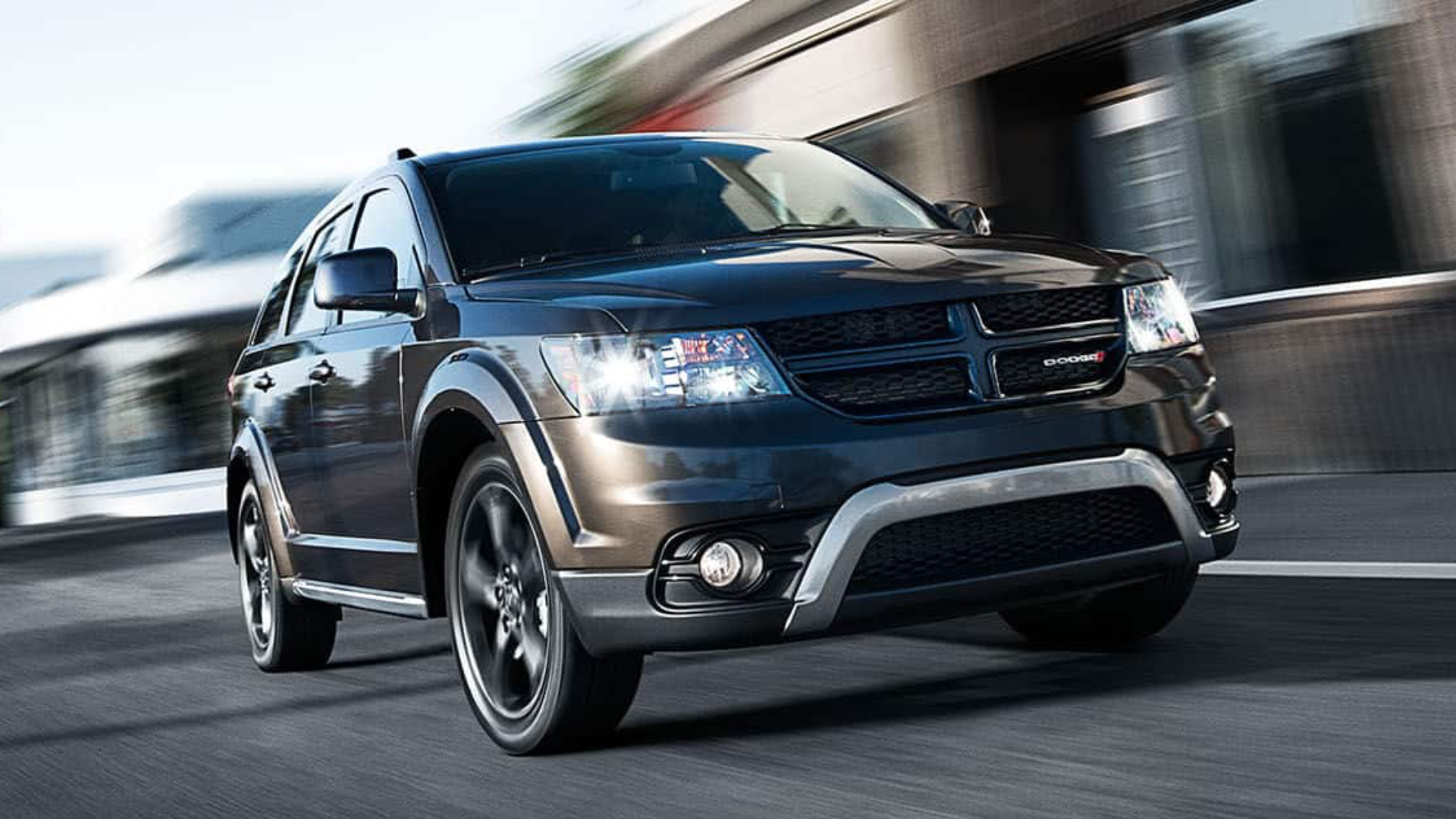
Forging a New Utility Blueprint: The JC Platform
The Dodge Journey emerged in 2009 during a massive transitional period for the American family vehicle. Consumers were actively fleeing the stigma of the traditional minivan, yet they still demanded the cavernous interior volume and seating flexibility those platforms provided. Engineers responded by utilizing the Chrysler JC architecture, a highly modified derivative of the global GS platform. This unibody skeleton allowed designers to stretch the wheelbase to a generous 113.8 inches, maximizing cabin space while maintaining a manageable, garage-friendly exterior footprint.
Unlike the heavy, truck-based Dodge Durango, the Journey utilized a transverse engine layout. This front-wheel-drive bias drastically reduced driveline weight and parasitic power loss, vastly improving fuel efficiency for suburban commuters. Up front, the chassis employed an independent MacPherson strut suspension, while the rear utilized a sophisticated multi-link setup designed to keep the rear tires firmly planted even when the cargo hold was fully loaded with heavy building materials or camping gear.
The Dodge Journey executed a brilliant packaging illusion. It successfully masqueraded as a rugged sport utility vehicle while quietly delivering the exact passenger volume, low step-in height, and hidden storage solutions that previously required purchasing a Chrysler Town & Country minivan.
The 2011 Architectural Overhaul: Refining the Formula
Early iterations of the crossover suffered from cheap interior plastics and uninspired driving dynamics. Following the corporate restructuring, executives ordered an aggressive, emergency mid-cycle refresh for the 2011 model year. This overhaul fundamentally transformed the vehicle from a budget compromise into a highly competitive segment contender.
Engineers completely recalibrated the suspension geometry. They installed stiffer spring rates, swapped in premium shock absorbers, and upgraded the heavy-duty anti-roll bars. They physically lowered the ride height to reduce the center of gravity, drastically sharpening steering response and eliminating the vague, floating sensation of the original setup.
Inside the cabin, designers executed a ruthless purge of hard plastics. They introduced a single-piece soft-touch dashboard, premium acoustic materials to isolate wind noise, and the highly advanced Uconnect touchscreen infotainment system. This 8.4-inch digital command center centralized climate control, navigation, and audio functions, operating on a high-speed CAN bus network that rivaled systems found in premium European luxury sedans.
Powertrain Evolution: From the World Engine to the Pentastar V6
Propulsion options defined the driving character of this three-row hauler. The entry-level powerplant was the 2.4-liter World Engine, a product of the Global Engine Manufacturing Alliance (GEMA). This naturally aspirated inline-four utilized an aluminum block, dual overhead camshafts, and Variable Valve Timing (VVT). While its 173 horsepower provided adequate urban mobility, it struggled under the physical weight of a fully loaded seven-passenger cabin, primarily due to its pairing with an antiquated four-speed automatic transmission.
The true mechanical awakening occurred with the integration of the 3.6-liter Pentastar V6. This clean-sheet engine design replaced the aging, iron-block 3.5-liter V6. The Pentastar is an engineering marvel of efficiency and packaging. Featuring a high-pressure die-cast aluminum block, 60-degree cylinder bank angle, and integrated exhaust manifolds, it shed significant weight over the front axle. Producing a robust 283 horsepower and 260 lb-ft of torque, it fundamentally changed the crossover's personality.
3.6L Pentastar V6 Core Specifications
- Engine Architecture
- 3.6L (3604 cm3) 60-Degree V6, Aluminum Block and Heads
- Valvetrain
- Dual Overhead Cam (DOHC), 4 Valves per Cylinder, Dual Independent VVT
- Peak Horsepower
- 283 hp @ 6,350 RPM
- Peak Torque
- 260 lb-ft @ 4,400 RPM
- Transmission
- 62TE 6-Speed Automatic
You pin the accelerator pedal to the floorboard, and the 62TE six-speed automatic transmission swiftly drops two gears. The Pentastar engine eagerly climbs the tachometer, delivering a smooth, linear surge of power that easily merges the heavy vehicle onto fast-moving interstates. The 62TE transaxle is a fascinating piece of engineering. Rather than utilizing a traditional, physically massive six-speed gearset, Chrysler modified a highly proven four-speed architecture. They installed an underdrive compounder gearset on the transfer shaft. This mechanical trick splits the primary forward gears, creating two additional, closely spaced ratios. This provided the Journey with a steep, aggressive first gear for rapid off-the-line acceleration, while maintaining two deep overdrive gears for silent, low-RPM highway cruising.
Driveline Topologies and the Active AWD System
To conquer severe winter weather, Dodge engineered an intelligent All-Wheel Drive (AWD) system. Unlike heavy, permanent four-wheel-drive setups that punish fuel economy, the Journey utilizes an on-demand architecture. An Electronically Controlled Coupling (ECC) mounts directly to the rear differential.
During dry, steady-state highway cruising, the system physically decouples the rear driveshaft, sending 100 percent of the engine torque exclusively to the front wheels to minimize parasitic drag and maximize MPG. The onboard computer constantly monitors wheel speed sensors, steering angle, and throttle position. If the front tires encounter slick ice and begin to spin, the ECC engages in milliseconds, clamping a wet multi-plate clutch to instantly vector torque to the rear axle. The system also preemptively engages the rear wheels during heavy acceleration from a dead stop, actively preventing the front tires from breaking traction and eliminating torque steer.
Mastering Interior Packaging: The Swiss Army Knife of Crossovers
The true brilliance of the Dodge Journey lies within its cabin architecture. Designers obsessively hunted for dead space, transforming every hollow cavity of the unibody shell into highly functional storage. The front passenger seat features the ingenious Flip 'n Stow system. You pull a fabric loop, and the entire seat cushion hinges forward, revealing a massive, hidden vault capable of swallowing a purse, laptop, or valuable electronics perfectly out of sight.
Moving to the second row, engineers integrated dual in-floor storage bins directly behind the front seats. These deep cavities feature removable, washable plastic liners. Owners can fill them with ice and soda cans for a tailgate party, then easily pull the liners out to dump the melted water. To accommodate growing families, the Journey offered class-exclusive integrated second-row child booster seats. With a simple pull of a strap, the central portion of the seat cushion elevates, instantly providing the correct physical height for a child to safely use the standard three-point seatbelt, eliminating the need to constantly shuffle heavy plastic aftermarket booster seats between vehicles.
Interior Dimensions and Volumetric Capacity
- Seating Configurations
- Standard 5-Passenger, Optional 7-Passenger (50/50 Folding Third Row)
- Maximum Cargo Volume
- 67.6 ft3 (Second and Third Rows Folded Flat)
- Second Row Legroom
- 36.1 inches (Featuring stadium seating elevation)
- Towing Capacity
- 2,500 lbs (Equipped with 3.6L V6 and Tow Package)
The Crossroad and GT: Injecting Aggressive Aesthetics
To prevent the crossover from looking like a bland suburban appliance, Dodge introduced aggressive trim levels. The Crossroad trim arrived in 2014, injecting a heavy dose of rugged, off-road-inspired styling. It featured distinct platinum chrome accents, massive 19-inch Hyper Black aluminum wheels, and heavily sculpted lower front and rear fascias that mimicked heavy-duty skid plates. Inside, the Crossroad upgraded the upholstery to premium leather with sport mesh inserts, elevated by liquid graphite trim pieces.
For buyers seeking pavement-focused aggression, the GT trim (previously branded as the R/T) served as the performance pinnacle. Dodge bolted on a stiffer, sport-tuned suspension setup, vastly improving body control during aggressive lateral transitions. Paired exclusively with the 283-horsepower Pentastar V6 and distinct monochromatic exterior styling, the GT successfully channeled the aggressive DNA of the Dodge Charger into a highly practical family hauler.
Kinetic Management and Structural Safety
Shedding kinetic energy safely while carrying seven passengers requires robust mechanical hardware. The braking architecture utilizes massive four-wheel disc brakes. The front setup features heavily ventilated iron rotors to rapidly dissipate thermal friction during repeated heavy braking, preventing fluid boil and pedal fade. The system integrates a highly advanced ABS module networked directly with the Electronic Stability Control (ESC) and Electronic Roll Mitigation (ERM).
If the ERM software detects a sudden, violent steering input that mathematically indicates a potential rollover event, it instantly calculates the precise amount of braking force to apply to the outside front wheel. This targeted friction dynamically disrupts the vehicle's lateral momentum, forcing the heavy crossover back down onto its contact patches before the wheels can lift from the pavement. Seven standard airbags, including a driver knee blocker, deploy precisely based on the severity and angle of impact.
The End of the Line: A Legacy of Value
The Dodge Journey survived an incredibly long production lifecycle, operating from 2009 through 2020 on the same foundational chassis. While automotive purists frequently criticized its aging architecture during its final years, consumers continually voted with their wallets. The vehicle consistently dominated the entry-level mid-size crossover segment by offering a devastating value proposition. It provided massive V6 horsepower, three-row seating, and the highly acclaimed Uconnect infotainment system at a price point that severely undercut its Japanese and domestic rivals.
Federal emissions regulations and the brand's pivot toward high-performance electrification ultimately forced the Journey out of production. It leaves behind a massive, highly successful legacy. It bridged the difficult gap between the dying minivan era and the modern crossover boom, proving that an American automaker could deliver exceptional volumetric utility, clever interior engineering, and aggressive styling in a highly affordable, family-focused package.