
Genesis of a Brute: The SR I Generation
Chrysler executives Bob Lutz and Tom Gale envisioned a modern interpretation of the visceral, terrifying Shelby Cobra. They desired a machine completely stripped of luxury, focused entirely on overwhelming mechanical grip and explosive straight-line acceleration. The resulting 1992 Dodge Viper RT/10 shocked the global automotive establishment. It lacked exterior door handles, side windows, and a roof. It completely omitted modern safety nets like an ABS or traction control. You simply climbed over the wide sills, strapped in, and managed the violence entirely with your right foot.
The beating heart of this monster was an 8.0-liter pushrod V10. Chrysler tapped its then-subsidiary, Lamborghini, to recast the heavy cast-iron truck block in lightweight aluminum. This massive displacement powerplant produced 400 horsepower and an earth-rotating 465 lb-ft of torque. The engine routed power through a heavy-duty BorgWarner T-56 six-speed manual transmission directly to a Dana 44 rear differential. The signature side-exit exhaust pipes roared with a distinct, uneven firing order, famously burning the calves of unwary occupants exiting the low-slung tubular steel chassis.
The original Dodge Viper RT/10 was an exercise in automotive hostility. It offered no forgiveness for driver error, instantly punishing sloppy throttle inputs by sending the rear wheels into a violent, smoky slide that separated skilled pilots from enthusiastic amateurs.
1992 Viper RT/10 Engine Specifications
- Engine Architecture
- 8.0L (7990 cm3) Odd-Firing 90-Degree V10, Aluminum Block and Heads
- Valvetrain
- Pushrod, 2 Valves per Cylinder
- Peak Horsepower
- 400 hp @ 4,600 RPM
- Peak Torque
- 465 lb-ft @ 3,600 RPM
- Transmission
- BorgWarner T-56 6-Speed Manual
The GTS Coupe and Aerodynamic Maturity: SR II
Dodge refined the formula in 1996 with the introduction of the Viper GTS coupe. Colloquially known as the SR II generation, the GTS was far more than a roadster with a fiberglass roof bolted on. Designers integrated the iconic "double-bubble" roofline, specifically contoured to accommodate drivers wearing racing helmets. Over 90 percent of the GTS was entirely new. Engineers shaved significant weight from the V10 engine block and revised the cylinder heads, bumping output to an aggressive 450 horsepower.
The chassis received substantial upgrades to manage the increased velocity. Cast aluminum control arms replaced the heavy steel units of the RT/10, significantly reducing unsprung mass and sharpening the turn-in response. Dodge finally integrated dual airbags and roll-up glass windows, transforming the raw track weapon into a slightly more compliant grand tourer. The GTS solidified the Viper's status in American automotive culture, painted in the legendary combination of GTS Blue with massive white racing stripes.
Displacement Escalation: The ZB Generations
As the new millennium dawned, the supercar landscape demanded more. The 2003 ZB I generation, branded under the Street and Racing Technology (SRT) banner as the SRT-10, introduced a sharply angular, aerodynamic aesthetic. Engineers bored and stroked the V10 block out to 8.3 liters (505 cubic inches), extracting 500 horsepower. The heavy fiberglass body panels were discarded in favor of Reaction Injection Molded (RIM) plastics and lightweight carbon fiber composites.
The true mechanical leap occurred with the 2008 ZB II generation. Displacing a massive 8.4 liters, the engine integrated a highly innovative cam-in-cam Variable Valve Timing (VVT) system developed in conjunction with McLaren Performance Technologies. This allowed the pushrod engine to alter exhaust valve timing independently of the intake valves, maximizing high-RPM breathing while maintaining a smooth idle. Output skyrocketed to 600 horsepower. To handle this terrifying grunt, Dodge installed the incredibly robust Tremec TR-6060 manual transmission, featuring a twin-disc clutch to manage the heavy pedal feel while dramatically reducing shift effort.
2008 Viper SRT-10 Powertrain Metrics
- Displacement
- 8.4L (8382 cm3)
- Induction
- Naturally Aspirated, Dual 74mm Electronic Throttle Bodies
- Peak Horsepower
- 600 hp @ 6,100 RPM
- Peak Torque
- 560 lb-ft @ 5,000 RPM
- Acceleration (0-60 mph)
- 3.5 seconds
The VX Generation: Carbon Fiber and Hand-Built Precision
Following a brief production hiatus, the ultimate iteration of the Viper emerged in 2013 (the VX I generation). Built by hand at the Conner Avenue Assembly Plant in Detroit, this machine married exotic materials with brutal American force. The chassis utilized a high-strength steel tubular spaceframe fortified with a massive cast-magnesium front bulkhead and an aluminum X-brace spanning the engine bay. This increased torsional rigidity by 50 percent over the outgoing model.
The exterior skin was a masterclass in composite manufacturing. The massive clamshell hood, roof, and rear decklid were baked entirely from aerospace-grade carbon fiber. Aluminum doors helped keep the curb weight impressively low, hovering around 3,350 pounds. The 8.4-liter V10 received a lighter intake manifold, forged pistons, and sodium-filled exhaust valves, pushing output to 640 horsepower (later 645 hp). Federal safety mandates finally forced the integration of ESC, but Dodge engineers programmed the multi-stage system to remain highly permissive, allowing drivers to slide the rear axle aggressively before the computer intervened.
Aerodynamic Warfare: The ACR Legacy
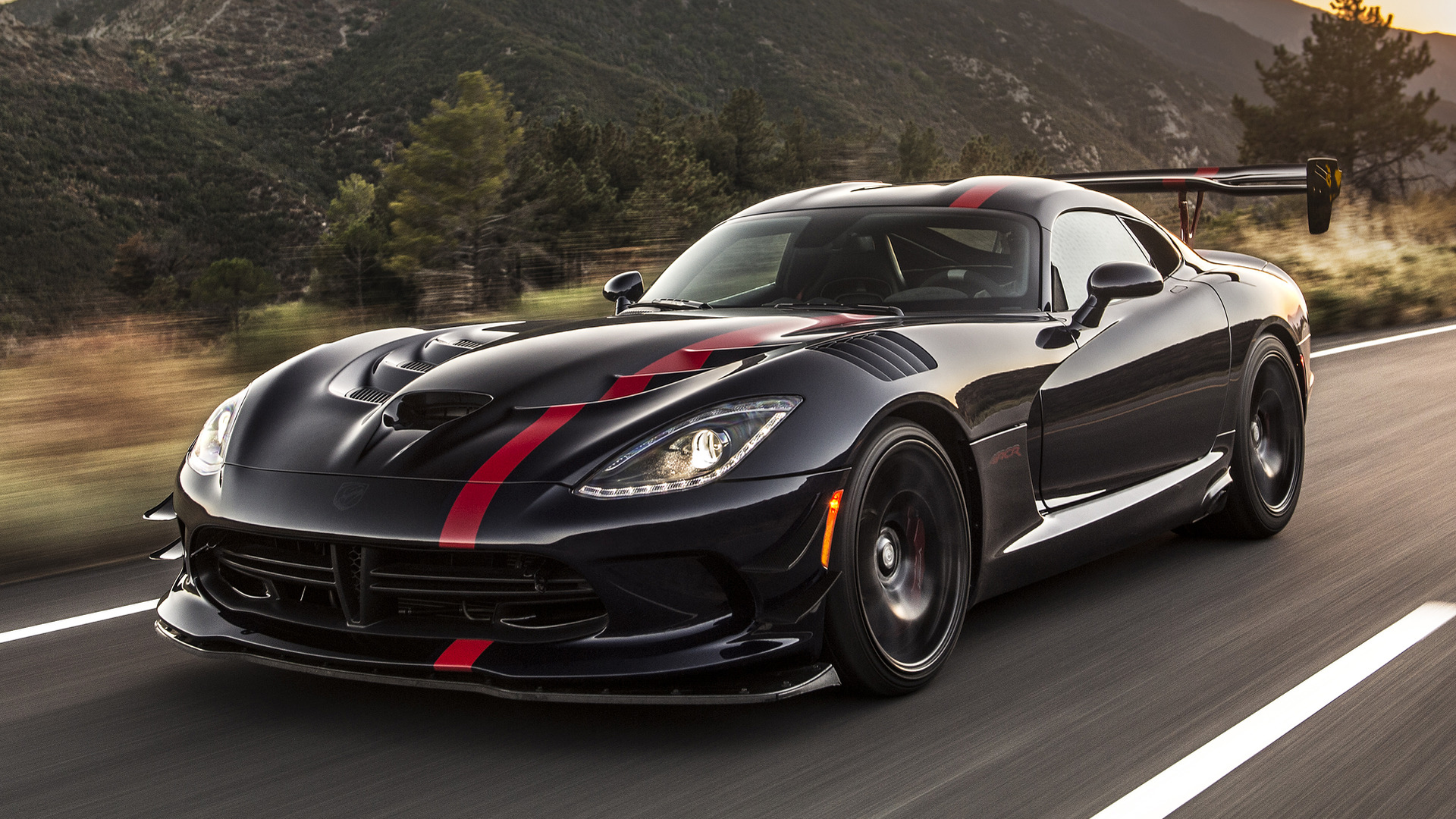
The standard Viper dominated the street, but the ACR variant terrorized global race tracks. Designed specifically to decimate lap records, the final 2016 Viper ACR completely ignored top-speed metrics in favor of absolute cornering grip. The core of this vehicle was its Extreme Aero Package. Dodge bolted a massive, 1,876-millimeter-wide dual-element adjustable rear wing directly to the chassis.
Up front, a carbon fiber splitter featured removable extension strakes, while dual dive planes anchored the front fascia to the asphalt. A rear carbon fiber diffuser effectively accelerated the airflow exiting beneath the vehicle, sucking the car down onto the track. At 150 mph, this package generated a staggering 1,200 pounds of aerodynamic downforce-the highest of any production car tested by independent media at the time. To put that power to the ground, the ACR utilized bespoke Kumho Ecsta V720 tires with massive 355-section rear treads and a treadwear rating barely legal for street use.
Stopping power relied on Brembo Carbon Ceramic Matrix brakes. Massive 15.4-inch front rotors clamped by six-piston calipers dissipated kinetic energy with absolute violence, completely immune to thermal fade during punishing 30-minute track sessions. The suspension featured custom ten-way double-adjustable Bilstein coil-overs, allowing engineers to fine-tune rebound and compression damping precisely to the specific topography of a given race track.
ACR Extreme Aerodynamics & Chassis Data
- Maximum Downforce
- Nearly 2,000 lbs @ 177 mph (Top Speed)
- Suspension
- Bilstein Double-Adjustable Coil-Overs, 3-inch Height Adjustment
- Front Braking Hardware
- 15.4-inch Carbon Ceramic Matrix Rotors, 6-Piston Calipers
- Rear Tire Specification
- 355/30ZR19 Kumho Ecsta V720 (Bespoke Compound)
The End of the Analogue Supercar Era
The Dodge Viper represents a specific, uncompromising philosophy of automotive engineering that simply cannot exist in the modern regulatory environment. It relied entirely on massive displacement to generate power, stubbornly refusing the industry trend toward smaller, turbocharged engines that manipulate tailpipe CO2 ratings. Every generation forced the driver to manually row through six heavy gears, actively rejecting the sterile perfection of automated dual-clutch transmissions.
Ultimately, shifting federal safety regulations-specifically the FMVSS 226 standard requiring side-curtain airbags-forced the Viper out of production in 2017. The low roofline and tubular roof structure physically could not accommodate the necessary safety hardware without completely ruining passenger headroom. The assembly line halted, but the legacy was cemented in stone. The Dodge Viper remains the absolute pinnacle of American mechanical brute force, a terrifyingly capable machine that traded electronic safety nets for sheer, unadulterated mechanical grip and explosive V10 thrust.