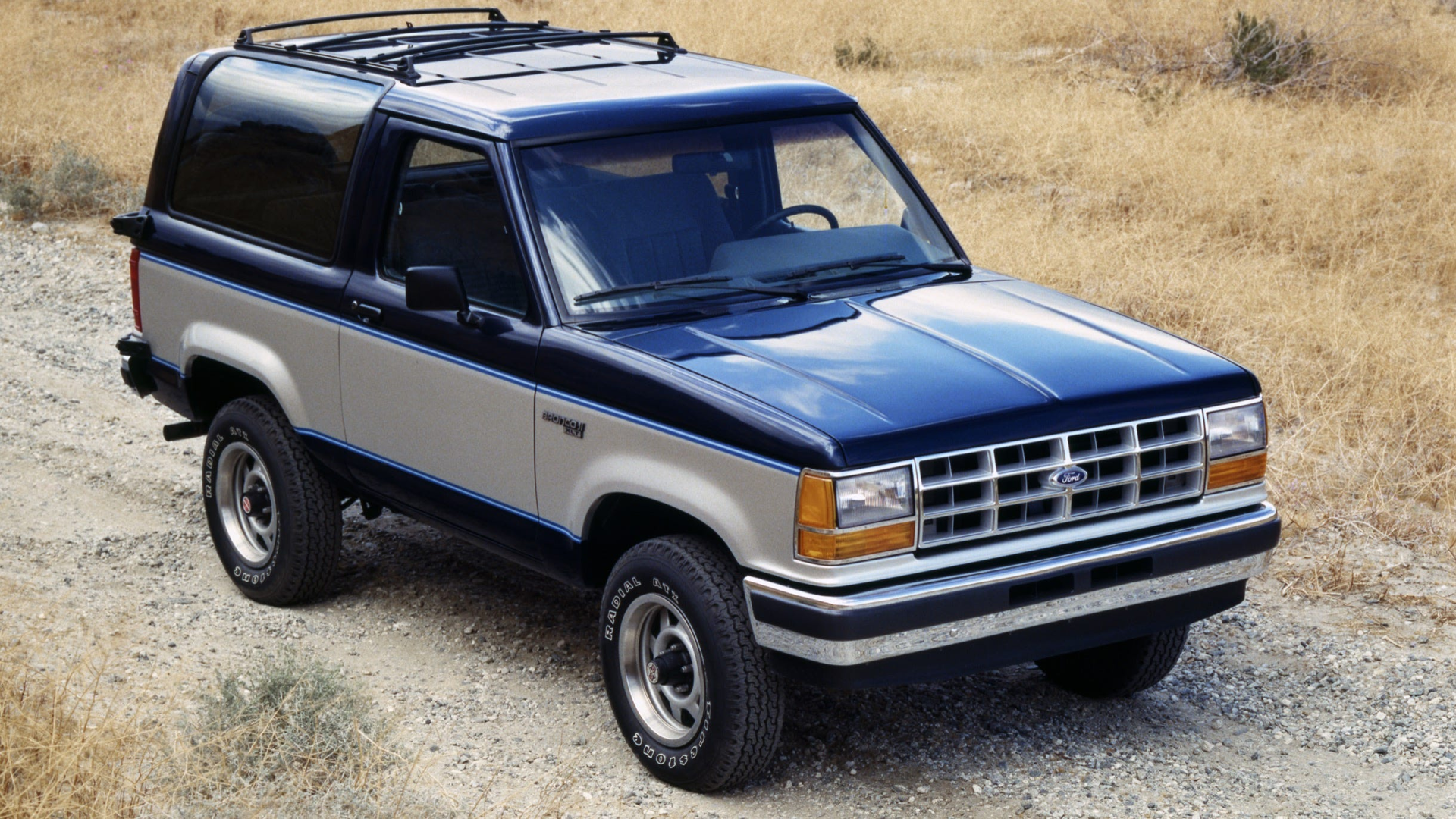
Ford Bronco II: The Compact Adventurer That Time Forgot

The Ford Bronco II was the right idea with a turbulent legacy. Launched in 1984 as a compact alternative to the full-size Bronco, it was based on the Ranger chassis. While plagued by safety controversies, it was a capable off-roader that predated the SUV boom. Today, it is a cult classic for those who want a trail rig that fits anywhere.

Production: 1984-1990
25 Min Read
Ford Bronco II Exterior Photo

Author

HugeGarage Editor

Published

Updated

25 Min Read

The Baby Bronco

In the early 80s, the full-size Bronco (based on the F-150) was huge. The Chevy S-10 Blazer was stealing sales. Ford responded by taking their new Ranger pickup, shortening the wheelbase, and enclosing the bed. The result was the Bronco II. It was cute, maneuverable, and looked tough. It sold well initially, but it became famous for all the wrong reasons.

When you browse the Bronco II listings on Hugegarage, you are looking at a vehicle that is essentially a closed cab Ranger. It shares almost every mechanical part with the first-gen Ranger, meaning parts are cheap and plentiful. For off-roaders, the short wheelbase is a dream on tight trails where a Jeep Wrangler might struggle.

The Rollover Controversy: The Bronco II had a high center of gravity and a very narrow track width. In panic maneuvers or sharp turns at speed, it was prone to tipping over. Consumer Reports famously branded it Not Acceptable. Ford faced hundreds of lawsuits. While safe if driven responsibly, it requires respect in corners.

The Powertrain: The Cologne V6

The primary engine was the 2.9L Cologne V6 (140 HP). It was adequate but prone to cracking cylinder heads if overheated. The Mitsubishi-sourced 5-speed manual transmission is the one to have; the A4LD automatic is notoriously weak.

Why Was It Cancelled?

The bad press from the rollover issues was insurmountable. In 1991, Ford released the Explorer. The Explorer was larger, wider, and safer, instantly making the Bronco II obsolete. However, the Bronco II remains an affordable entry point into vintage 4x4 ownership.

Conclusion: The Trail Toy

The Bronco II is not a daily driver for the highway. It is a trail toy. Lift it, put bigger tires on it (which ironically helps stability by widening the track), and take it to the woods. It is a piece of 80s history that deserves to be muddy. Explore the specs below.

Frequently Asked Questions

What is the difference between a Ford Bronco and a Ford Bronco II?

The primary difference is size and architecture. The standard Ford Bronco was a "full-size" SUV built on the heavy-duty F-150 truck chassis. The Ford Bronco II (produced 1984–1990) was a "compact" SUV built on the smaller Ford Ranger pickup platform. The Bronco II is significantly narrower, shorter, and lighter than its big brother, making it much more agile on tight off-road trails but less capable of heavy-duty towing.

Is the Ford Bronco II dangerous to drive due to rollover risks?

The Bronco II became the center of a major safety controversy in the late 1980s. Because of its short 94-inch wheelbase and high center of gravity, it was statistically more prone to "tip" during sudden, high-speed evasive maneuvers compared to wider vehicles. While the controversy led to high-profile lawsuits, many enthusiasts argue that with modern tires, upgraded stiff shocks, and sensible driving habits, the Bronco II is no more dangerous than other vintage high-clearance 4x4s of that era.

What are the most common engine problems with the Ford Bronco II?

If you are looking at a 1986–1990 model equipped with the 2.9L Cologne V6, you must watch for cracked cylinder heads. A design flaw in the early casting caused the heads to crack if the engine ever experienced even a minor overheating event.

Hugegarage Technical Tip: Check the oil filler cap for a milky white residue. If the 2.9L heads crack, coolant leaks internally, contaminating the oil and eventually destroying the cam bearings. If you buy one, many owners proactively upgrade to aftermarket "World Products" or later-style casting heads which featured thicker internal walls to prevent this issue.

Which engine is in the Ford Bronco II, and is it reliable?

The Bronco II utilized two main engines during its run. The early 1984–1985 models used a carbureted 2.8L V6, which was reliable but finicky to tune. The 1986–1990 models received the 2.9L Fuel-Injected V6, producing a respectable 140 HP. Aside from the cylinder head cracking issue mentioned above, the 2.9L is a remarkably robust "pushrod" engine that can easily reach 200,000 miles with basic cooling system maintenance.

Why did Ford stop making the Bronco II?

Ford officially discontinued the Bronco II in 1990 to make room for a revolutionary new vehicle: the Ford Explorer. While the Bronco II was a two-door-only compact, consumer demand was shifting rapidly toward four-door family SUVs. Ford essentially stretched the Bronco II chassis, added two more doors, and rebranded it as the Explorer, which went on to become the best-selling SUV in American history.

Is the Ford Bronco II good for off-roading?

Yes, many off-roaders consider the Bronco II a "hidden gem." Because it is so narrow and has a very short wheelbase, it can navigate tight wooded trails and rock gardens that full-size trucks simply cannot fit through. It features the Twin Traction Beam (TTB) front suspension, which offers a unique compromise between a solid axle and independent suspension, providing excellent wheel travel for a stock vehicle when the sway bars are disconnected.

How do I know if my Bronco II has a Dana 28 or a Dana 35 front axle?

This is a common question for owners looking to upgrade their tire size. Most Bronco IIs came from the factory with the lighter Dana 28 front axle. However, in late 1989 and throughout 1990, Ford began transitioning to the much stronger Dana 35. You can identify a Dana 35 by looking at the front differential housing; the Dana 35 is noticeably larger and has a fill plug located on the front of the pumpkin, whereas the Dana 28 has it on the back side.

What is the maximum towing capacity of a Ford Bronco II?

The Ford Bronco II has a maximum towing capacity of approximately 2,000 to 2,500 pounds when properly equipped with a Class II hitch. Because of its very short wheelbase and lightweight frame, it is not suited for towing large campers or heavy boats. Towing heavy loads can cause the vehicle to "tail-wag," which is especially dangerous given the vehicle's high center of gravity. It is best reserved for small utility trailers or jet skis.

Are parts still easy to find for a Ford Bronco II restoration?

Maintaining a Bronco II is surprisingly affordable because it shares roughly 80% of its mechanical components with the first-generation Ford Ranger. Feel the relief of classic ownership: you can still walk into almost any local auto parts store and find brake rotors, starters, alternators, and engine sensors on the shelf for a very low price. However, body panels and interior trim (like the specific Eddie Bauer seat fabric) are becoming much harder to find and usually require scouring salvage yards.

What kind of gas mileage (MPG) does a Ford Bronco II get?

While it is a compact SUV, the Bronco II features the aerodynamics of a brick and a permanent 4WD system (in most models), which saps fuel. You can realistically expect an EPA-estimated 16 MPG in the city and 20 MPG on the highway. Owners who install larger off-road tires and lift kits should expect those numbers to drop into the low teens, especially during mountain driving or city stop-and-go traffic.