
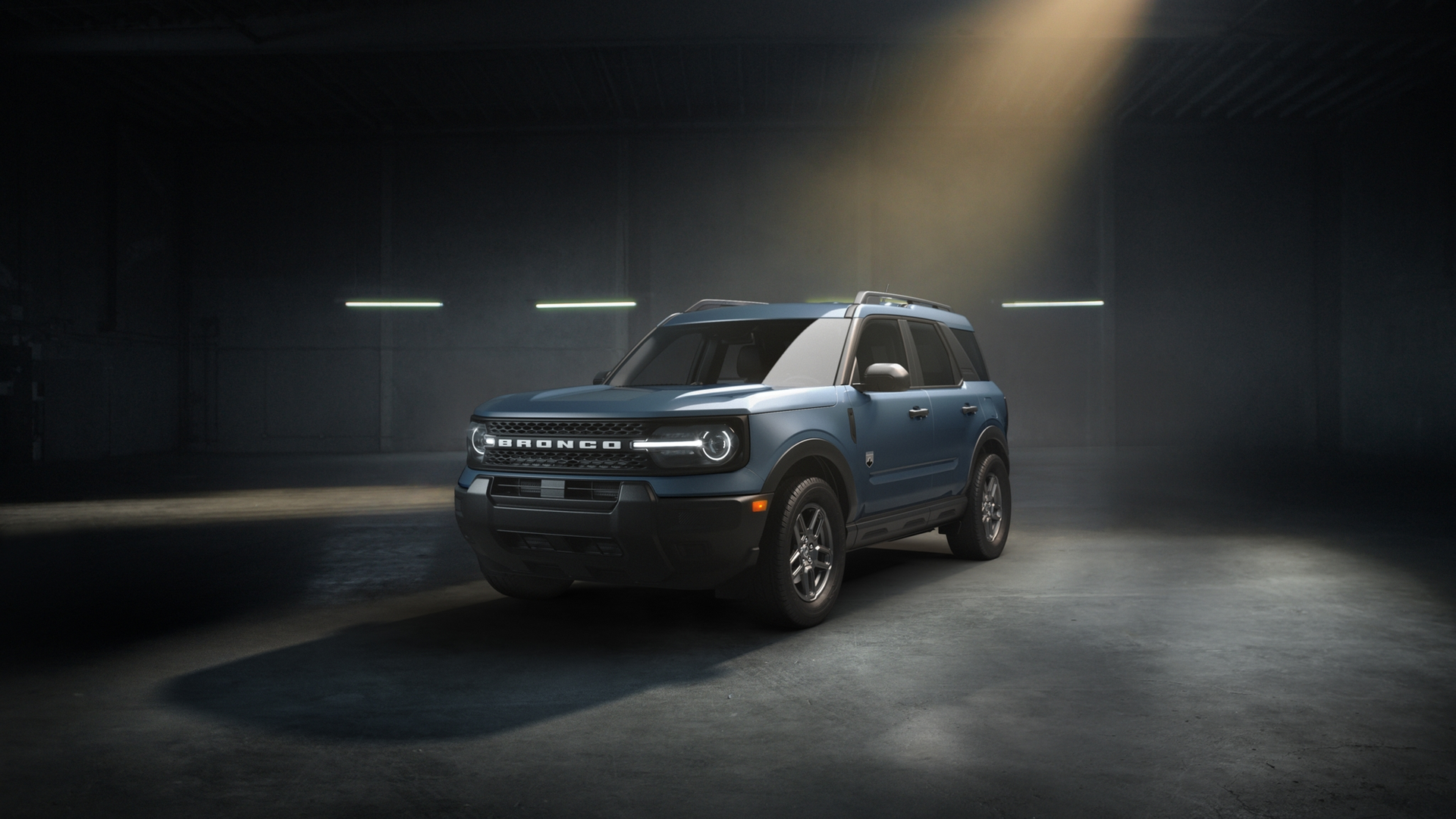
The Baby Bronco Steps Out of the Shadow
When Ford announced the return of the Bronco nameplate, they did something clever and controversial: they launched two vehicles. The massive, body-on-frame Bronco targeted the Jeep Wrangler, while the Ford Bronco Sport targeted... everyone else. Do not let the Sport badge fool you; this is not a watered-down marketing exercise. It is a purpose-built compact utility vehicle designed to bridge the gap between the mundane commute and the muddy trail.
When you browse the Bronco Sport listings on Hugegarage, you are exploring a vehicle that redefines the C-Segment SUV. While it shares a chassis platform (the C2) with the Ford Escape, the engineering differences are profound. With a strengthened suspension, unique geometry, and a specialized All-Wheel Drive (AWD) system, the Bronco Sport is designed for the Weekend Warrior the driver who spends Monday through Friday in the office but disappears into the National Forests on Saturday morning.
The Safari Aesthetic: The Bronco Sport's distinct stepped roofline isn't just a callback to the 1990s Land Rover Discovery; it is functional engineering. It provides massive headroom for rear passengers and allows for two mountain bikes to be stored upright in the cargo area with the front wheels removed. Form follows function.
Engineering the Unibody: More Than a Reskin
To understand the Bronco Sport, you must understand its skeleton. Unlike the Big Bronco, which uses a truck frame, the Sport uses a Unibody Construction. This means it drives like a car on the highwayâsmooth, quiet, and stableâbut it has been beefed up for abuse.
The H.O.S.S. Suspension
Ford calls it the High-Performance Off-Road Stability Suspension (H.O.S.S.).
Every Bronco Sport gets it, but the tuning varies. It features unique springs and dampers designed to absorb washboard gravel roads without shaking the passengers to pieces. The suspension travel is significantly longer than a standard Ford Escape, providing better articulation over rocks.
Under the Hood: The Tale of Two Engines
The personality of the Bronco Sport changes drastically depending on which engine you choose. This is the most critical decision for a buyer.
- 1.5L EcoBoost Dragon (The Standard)
- Configuration: Turbocharged Inline-3 Cylinder
Specs: 181 HP / 190 lb-ft Torque
The Vibe: Don't let 3-cylinder scare you. It is punchy and efficient (25+ MPG). It uses cylinder deactivation to run on 2 cylinders during highway cruising. It is perfectly adequate for city driving and light trails. - 2.0L EcoBoost (The Badlands Exclusive)
- Configuration: Turbocharged Inline-4 Cylinder
Specs: 250 HP / 277 lb-ft Torque
The Vibe: This engine turns the Sport into a rocket. It is the same engine found in the larger Ford Edge. In a vehicle this small, it provides effortless passing power and, crucially, the low-end torque needed for steep off-road climbs.
The Badlands AWD System: A Technical Deep Dive
This is where the Bronco Sport separates itself from the Toyota RAV4 and Subaru Forester.
Most trims (Base, Big Bend, Outer Banks) use a standard AWD system that sends power to the rear wheels when the fronts slip. It works fine for snow and dirt roads.
The Badlands and Heritage Limited trims, however, use a Twin-Clutch Rear Drive Unit developed by GKN.
How it works: Instead of a standard open differential in the rear, there are two clutchesâone for the left wheel, one for the right.
The Result: The computer can lock both clutches to simulate a Locking Rear Differential, forcing both rear wheels to turn at the same speed. Or, it can send 100% of the rear torque to a single wheel that has traction. This Torque Vectoring capability allows the Badlands to climb obstacles that would leave other crossovers spinning their wheels helplessly.
G.O.A.T. Modes: Tech for the Trail
Ford's Goes Over Any Type of Terrain system adjusts the throttle mapping, transmission shift points, and traction control.
Standard Modes: Sand, Slippery, Sport, Eco, Normal.
Badlands Exclusives:
- Mud/Ruts: Relaxes stability control to allow wheel spin (to clear mud from tires).
- Rock Crawl: Holds the transmission in 1st gear, sharpens steering, and engages the rear lock simulation for maximum traction at low speeds.
Interior Utility: The Life Hack Vehicle
The interior design team clearly spent time camping. The cabin is filled with Easter Eggs and practical features that make outdoor life easier.
- The Bottle Opener: Located inside the rear hatch jamb. You will never be thirsty at a campsite.
- Floodlights: Two adjustable LED lights are built into the liftgate. When the hatch is open, they illuminate up to 129 square feet of workspace behind the car.
- MOLLE Straps: The back of the front seats features military-style MOLLE grids for attaching carabiners, first aid kits, or water bottles.
- Rubberized Flooring: (Badlands trim) The entire floor and the backs of the rear seats are rubber. You can hose it out after a muddy dog jumps in.
- Under-Seat Storage: The rear passenger seat cushion flips up to reveal a hidden waterproof bin for wet gear or valuables.
Buyer's Guide: Choosing Your Trim
Navigating the Bronco Sport lineup can be confusing. Here is the Hugegarage recommendation:
1. The Value Pick: Big Bend
If you primarily drive on pavement but want the look and capability for snowy commutes, the Big Bend is the sweet spot. It adds alloy wheels, automatic climate control, and the easy-to-clean cloth interior without breaking the bank.
2. The Style Pick: Heritage Edition
Released later in the cycle, the Heritage trims feature Oxford White roofs, white grille lettering, and retro steelie-look alloy wheels painted white. It channels the 1966 Bronco vibe perfectly. Be aware: the standard Heritage has the 1.5L engine; the Heritage Limited has the 2.0L.
3. The Real Deal: Badlands
If you actually plan to off-road, you must buy the Badlands.
The upgrade includes the bigger 2.0L engine, the advanced Twin-Clutch AWD, metal skid plates (to protect the oil pan and gas tank), Front Tow Hooks, and aggressive All-Terrain Tires (Falken Wildpeak). It is significantly more capable than the lower trims.
Common Issues & Maintenance
Since its 2021 launch, a few patterns have emerged.
1. Brake Squeal
Many early owners reported loud squealing brakes in reverse. Ford issued a TSB (Technical Service Bulletin) to replace the rear brake caliper bushings and pads to dampen the noise.
2. 1.5L Water Pump
The 1.5L engine has had isolated reports of water pump leaks. Keep an eye on your coolant levels. The 2.0L engine is widely considered the more robust powerplant for long-term ownership.
3. Recall History
The Bronco Sport has had several recalls regarding fuel injectors and braking boosters. Always run the VIN on the NHTSA website or check the CarFax to ensure all recall work has been performed before buying used.
Conclusion: The Best of Both Worlds
The Ford Bronco Sport succeeds because it is honest. It doesn't pretend to be a rock-crawling monster like its big brother, but it offers significantly more capability than the average grocery getter. It fits in a compact parking spot, gets decent gas mileage, and yet can confidently tackle a muddy trail to a remote campsite. For the modern adventurer who needs one car to do it all, the Bronco Sport is a formidable choice. Discover the specs and find your adventure machine below.