
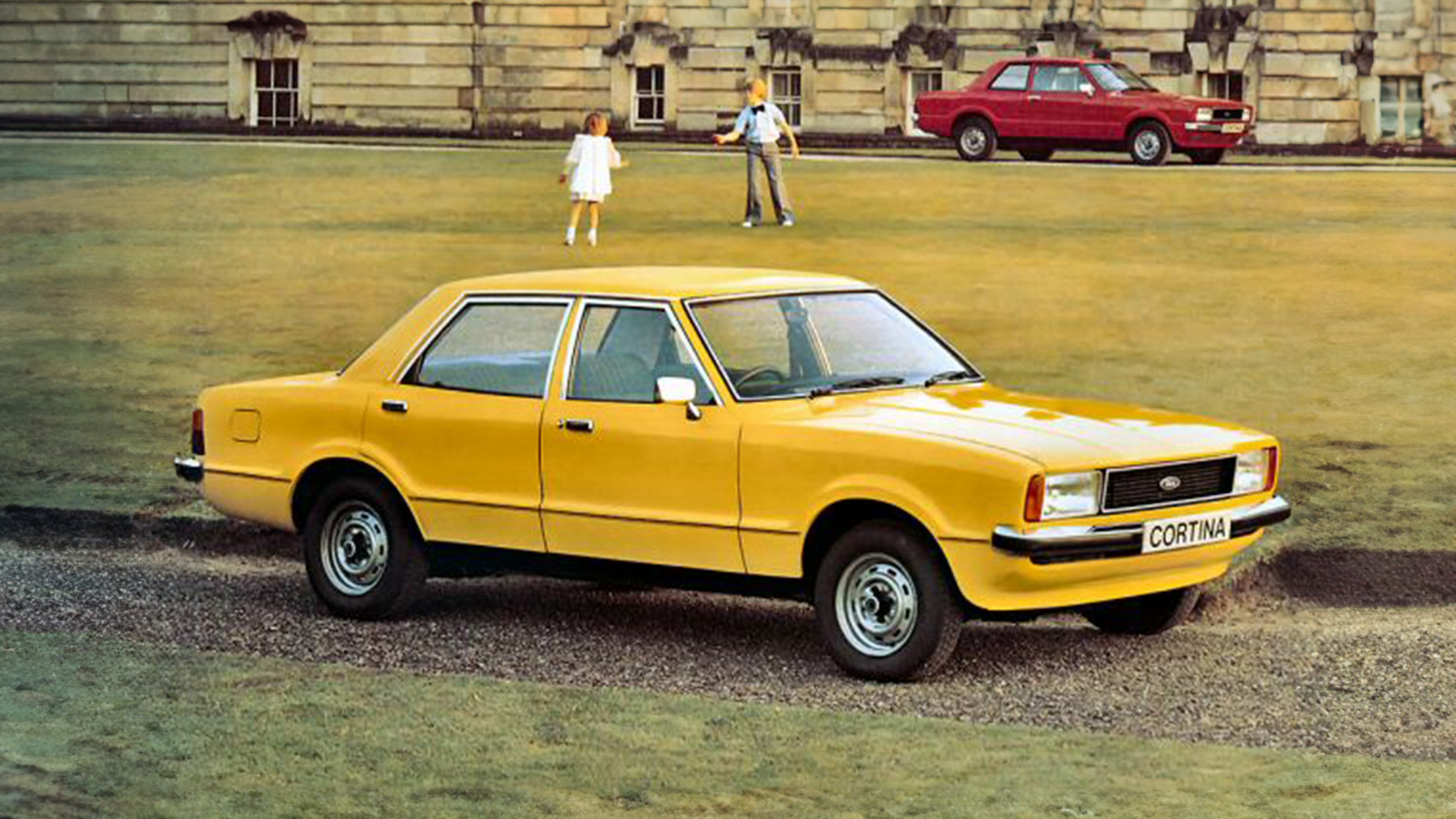
The People's Champion
In 1962, Ford of Britain launched a car named after an Italian ski resort: the Cortina. It was designed to be cheap to buy, cheap to run, and spacious enough for a family. It succeeded beyond anyone's wildest dreams. For twenty years, the Cortina was the best-selling car in the UK. It was the car you learned to drive in, the car your dad drove to work, and the car the police chased bad guys in (as seen in The Sweeney).
When you browse the Cortina listings on Hugegarage, you are looking at the evolution of the traditional three-box sedan. It started as a crisp, finned 60s cruiser and evolved into a muscular, Coke-bottle 70s icon. While it was never sold in large numbers in the USA (where it was briefly marketed as the Ford Consul Cortina), its DNA lives on in the engines and suspension designs used in everything from the Pinto to the Lotus Seven.
The Lotus Legend: The most famous Cortina is the Lotus Cortina (Mk1 and Mk2). Ford asked Colin Chapman of Lotus to sprinkle his magic on the family sedan. He fitted a 1.6L Twin-Cam engine, aluminum body panels (on early models), and revised suspension. The result was a white sedan with a green stripe that terrorized Jaguars and Mustangs on race tracks across Europe. It is the holy grail of Ford collecting.
Mk1: The "Consul" Cortina (1962â1966)
The original. Recognizable by its round peace sign taillights (on early models) and sharp tailfins.
The Engine: The reliable Kent crossflow engine.
The GT: The sporting version with a Weber carburetor and stiffer suspension.
Mk2: The Boxier Evolution (1966â1970)
Wider, boxier, and more spacious. This was the peak of 60s British design.
1600E: The Executive model. It featured a wood dashboard, bucket seats, and driving lights. It was the aspirational car for middle management.
Mk3: The Coke Bottle (1970â1976)
In 1970, the Cortina got sexy. Influenced by the American Detroit styling, it gained a Coke-bottle waistline (like a Dodge Charger). It shared its platform with the German Ford Taunus for the first time.
The GXL: The top trim with a vinyl roof and quad headlights. As seen in the TV show Life on Mars.
Mk4 Mk5: The Final Years (1976â1982)
The styling became squarer and more conventional. By the early 80s, the Cortina was showing its age against modern front-wheel-drive rivals.
The End: In 1982, Ford replaced the Cortina with the radical Ford Sierra. The public was initially outraged, mourning the loss of their beloved Cortina, but progress was inevitable.
Common Issues Maintenance
1. Rust (Everywhere)
The Cortina rusts with enthusiasm. Check the McPherson strut tops, the sills, the floor pans, and the boot floor. A rust-free original is a unicorn.
2. Void Bushings
The rear suspension void bushings wear out, causing the rear axle to steer the car (passive rear steer). Replacing them with polyurethane bushings tightens up the handling significantly.
Conclusion: The Dad Car Classic
The Ford Cortina is not a supercar. It is a time machine to a simpler era of motoring. Whether you want a race-bred Lotus replica or a brown Mk3 with a vinyl roof, the Cortina offers a driving experience that is full of character. It is lightweight, easy to fix, and guaranteed to start a conversation with anyone over the age of 50. Explore the specs below.