
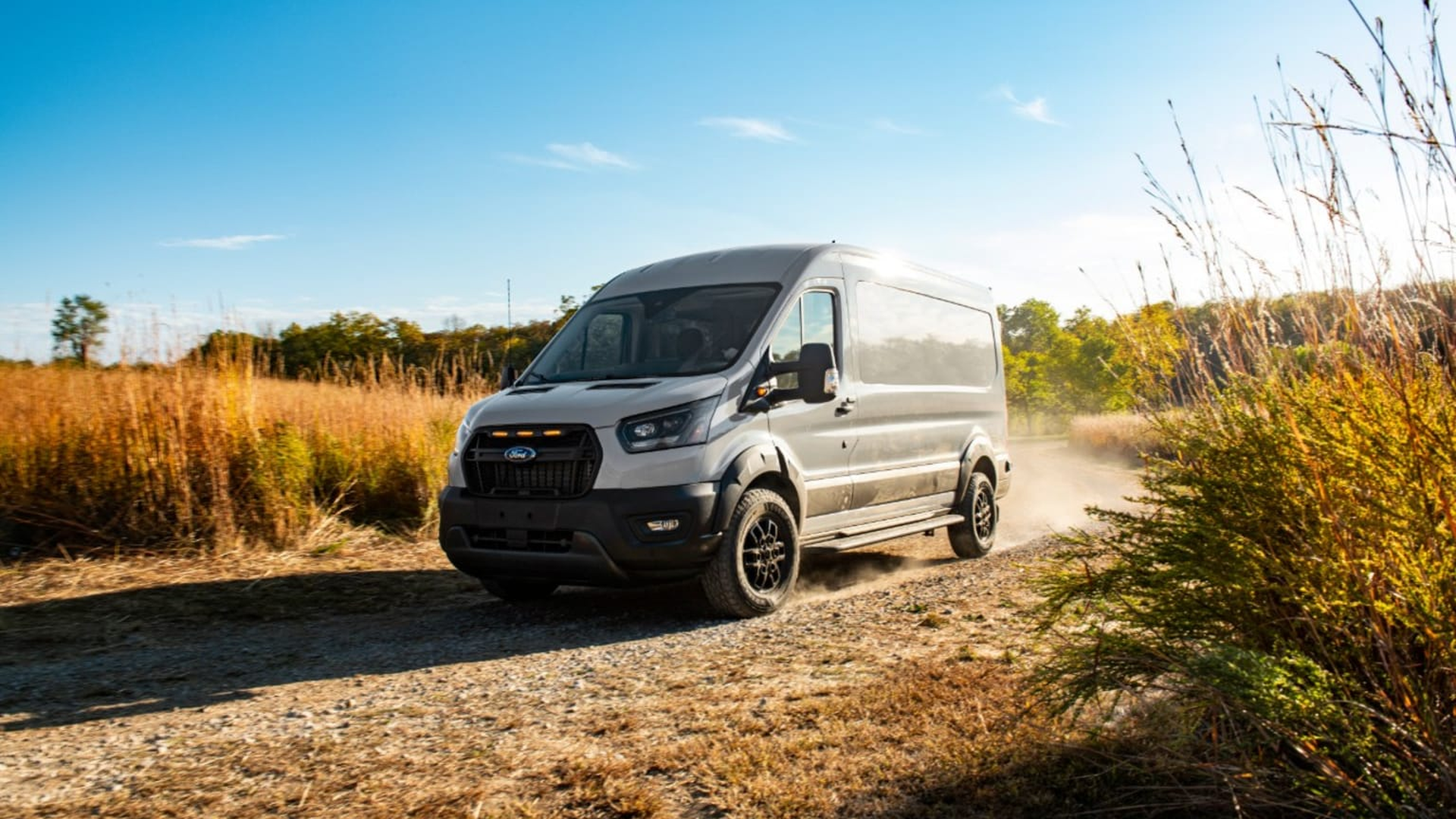
The Van That Built Modern America
Before the sleek, unibody Ford Transit arrived from Europe, there was only the Ford E-Series (historically known as the Econoline). For 53 consecutive years (1961-2014), it was the best-selling van in the United States. It delivered your packages, took you to the airport, carried your tools, and served as the ambulance that saved your life.
When you browse the E-Series listings on Hugegarage, you are seeing two distinct eras. The Cargo/Passenger Vans (pre-2015) are the classic workhorses you see on every job site. The Cutaway Chassis (ongoing) are the front cabs you see attached to U-Haul trucks, airport shuttles, and RVs. The E-Series survived because it does one thing better than any other vehicle: it carries extreme weight on a simple, ladder-frame chassis that any mechanic in America can fix with a hammer and a wrench.
The "E" Nomenclature: Much like the F-Series trucks, the vans followed a weight rating system:
- E-150: Half-ton (5 lugs). The light-duty family hauler.
- E-250: Three-quarter ton (8 lugs). The standard plumber/electrician van.
- E-350: One-ton. The heavy hauler.
- E-450: Super Duty. Used almost exclusively for shuttle buses and heavy RVs.
The Golden Era: 1992â2014 (Gen 4)
This is the body style everyone recognizes. In 1992, Ford smoothed out the aerodynamics, but the chassis remained ancient.
The Engine Dynasty
The E-Series used the same engines as the F-Series trucks, but they are infinitely harder to work on because the engine is buried under the dashboard (the "Doghouse").
- 4.9L Inline-6 (The Legend)
- Used until 1996. Unkillable, high-torque, but slow. If you find a clean one, buy it.
- 5.4L Triton V8
- The volume seller. Reliable, but prone to the same spark plug ejection and coil pack issues as the F-150. In a van, changing the rear four spark plugs requires removing the front seats and the interior engine cover.
- 6.8L Triton V10
- The RV King. This engine is a beast. It produces massive torque and is arguably smoother than the V8s. It is the standard engine for Class C motorhomes. Expect 8 MPG, but it will pull a house.
- 7.3L Power Stroke Diesel
- Found in E-350s until 2003. These vans are unicorns. A diesel E-350 4x4 conversion (Quigley) is the holy grail of the "Overland" community, often selling for $50,000+.
The Death of the Cargo Van (2014)
In 2014, Ford ceased production of the E-Series van body to make way for the Transit. The Transit offered better fuel economy (V6 vs V8/V10) and a high roof. However, the Transit's unibody construction could not support the extreme weight of heavy fiberglass RV bodies or armored trucks. Thus, the E-Series Cutaway lived on.
The Modern E-Series (2015âPresent)
You can still buy a brand new 2024 E-Series, but only as a chassis cab. It received a major update in 2021.
The 7.3L "Godzilla" V8
The V10 was finally retired. The new 7.3L Pushrod V8 is now the standard engine.
Specs: 350 HP / 468 lb-ft Torque (E-Series Tune).
Why it matters: This engine is physically smaller than the overhead-cam V10, allowing for better airflow in the cramped engine bay. It runs cooler and provides better low-end torque for getting a heavy RV moving.
The RV Connection: Class C Motorhomes
If you have ever rented a Cruise America RV, you have driven an E-450.
Why E-Series? The "Twin-I-Beam" front suspension is ancient, but it is incredibly durable. It can withstand the constant pounding of a 14,000-lb house swaying above it.
Driving Tip: E-Series RVs tend to "wander" on the highway. This is because the heavy rear weight lifts the front suspension, changing the caster angle. Upgrading to heavy-duty sway bars and a steering stabilizer is the first modification any RV owner should make.
Quigley 4x4 Conversions
Ford never built a factory 4x4 E-Series.
However, Quigley Motor Company in Pennsylvania has been converting them since the 70s with Ford's blessing (keeping the factory warranty). They install a solid front axle and transfer case from the F-Series.
These vans are coveted by skiers, surfers, and off-roaders. A Quigley E-350 allows you to have a vehicle with the interior space of a studio apartment that can also climb a mountain.
Common Issues & Maintenance
1. The "Doghouse" Heat
Because the engine is between the driver and passenger, the center console gets hot. The noise level is also significantly higher than in a pickup truck. Adding sound deadening (Dynamat) under the doghouse cover is a popular mod.
2. Ball Joints
The heavy Twin-I-Beam suspension eats ball joints. If your van steers vaguely or clunks over bumps, check the front end. It is a wear item every 50,000 miles on heavy vehicles.
3. Spark Plug Access
Mechanics charge a "van tax" for working on the E-Series. A simple tune-up that takes 1 hour on an F-150 can take 4 hours on an E-Series because of the limited access.
Conclusion: The Last of the Dinosaurs
The Ford E-Series is a dinosaur, but it is a T-Rex. It survived the meteor that killed the other body-on-frame vans because it is simply too strong to die. For the average plumber, the modern Transit is a better daily office. But for the heavy haulersâthe RVers, the shuttle drivers, the ambulance fleetsâthe E-Series remains the only chassis tough enough to handle the burden. It is the unglamorous backbone of American infrastructure. Explore the heavy-duty specs below.